Kirjojen hintavertailu. Mukana 12 016 292 kirjaa ja 12 kauppaa.

Kirjahaku

Etsi kirjoja tekijän nimen, kirjan nimen tai ISBN:n perusteella.

46 kirjaa tekijältä Robert Forczyk

Bf 110 Vs Lancaster

Bf 110 Vs Lancaster

Robert Forczyk

Osprey Publishing
2013
nidottu
The RAF introduced the Avro Lancaster in 1942 and used it to spearhead this aerial offensive. In response, the Luftwaffe created an elite nightfighter force based primarily upon the Bf 110.The Luftwaffe was quick to equip it with airborne radar that allowed it to intercept and destroy Lancasters over Germany. In turn, the RAF adopted countermeasures such as the Monica rearward-looking radar to alert Lancaster crews to the approach of nightfighters. In May 1943 the Luftwaffe suddenly developed a novel technical and tactical approach to attacking RAF bombers.The new tactic proved amazingly successful, and British bombers could be attacked from below with no warning. For its part, the RAF failed to detect the new German tactic for six crucial months, during which time its Lancaster bombers were almost defenceless against this new threat. In time, however, the German advantage of surprise was lost and the RAF developed countermeasures to deal with the new threat. The duel between upgraded Bf 110s and Lancasters in the night skies over Germany became increasingly dominated by cutting-edge technology, which would determine the efficacy of strategic bombing.Featuring specially commissioned full-colour artwork, this is the gripping story of the struggle between the British Commonwealth’s mighty four-engined Avro Lancaster heavy bomber and Nazi Germany’s Bf 110 nightfighter, equipped with airborne radar and innovative weaponry.
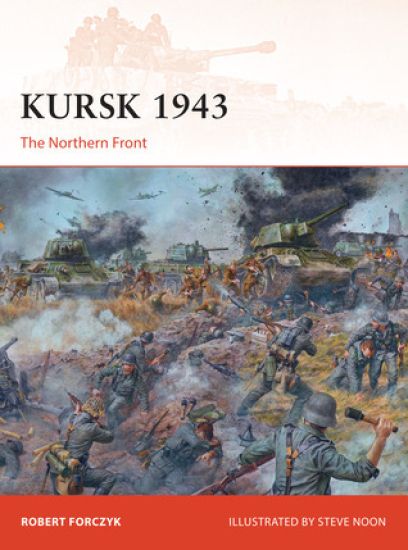
Kursk 1943

Kursk 1943

Robert Forczyk

Osprey Publishing
2014
nidottu
The Kursk campaign was the major German offensive of 1943 and the last strategic offensive the Germans were to launch on the Eastern Front in World War II.In the summer of 1943, recoiling from defeat at Stalingrad, Hitler conducted a limited objective offensive to eliminate the Soviet Kursk salient. Operating a classic pincer attack of the kind that succeeded during the 1942 Kharkov campaign he hoped that the resulting heavy losses inflicted on the Red Army would give the Wehrmacht time to recover its strength. However, the Soviet anticipation of the attack led to extensive losses on both sides as Soviet anti-tank mines and fierce fighting pushed the Germans back, liberating the German-held Orel in the process.Focusing on the northern front of the battle with Generaloberst, Walter Model’s forces pitted against General Rokossovsky’s Central Front between 5 July and 18 August, this volume will explore both the German offensive and the Soviet counteroffensive. Using documents from both sides, extensive photographs – both contemporary and modern, maps and bird’s-eye-views this title will shed new light on this often ignored part of the battle.
Tank Warfare on the Eastern Front 1943-1945

Tank Warfare on the Eastern Front 1943-1945

Robert Forczyk

Pen Sword Military
2016
sidottu
By 1943, after the catastrophic German defeat at Stalingrad, the Wehmacht's panzer armies gradually lost the initiative on the Eastern Front. The tide of the war had turned. Their combined arms technique, which had swept Soviet forces before it during 1941 and 1942, had lost its edge. Thereafter the war on the Eastern Front was dominated by tank-led offensives and, as Robert Forczyk shows, the Red Army's mechanized forces gained the upper hand, delivering a sequence of powerful blows that shattered one German defensive line after another. His incisive study offers fresh insight into how the two most powerful mechanized armies of the Second World War developed their tank tactics and weaponry during this period of growing Soviet dominance. He uses German, Russian and English sources to provide the first comprehensive overview and analysis of armoured warfare from the German and Soviet perspectives. This major study of the greatest tank war in history is compelling reading.
Toulon 1793

Toulon 1793

Robert Forczyk

Osprey Publishing
2005
nidottu
In August 1793, revolutionary France was in a precarious position, surrounded by enemies. In Toulon, a coup had handed over the entire French fleet to the British navy. For France to survive, Toulon had to be retaken, and France's saviour materialised in the shape of Napoleon Bonaparte. He organised guns and batteries to bombard the Allied fleet and on 17 December 1793, when the French attacked, he was able to take one of the key Allied positions. This book describes the eventual French victory at Toulon which saved the Revolution and promoted the young Napoleon Bonaparte, beginning his meteoric rise to power and catalysing the effect on Europe during the rest of the nineteenth century.
Moscow 1941

Moscow 1941

Robert Forczyk

Osprey Publishing
2006
nidottu
The story of Operation Typhoon, the largest German operational attack of the war and Hitler's desperate attempt to seize Moscow.Suffering a staggering loss of over 2 million troops by September 1941, Soviet forces were faced with the prospect of Hitler victoriously re-directing his powerful German armies toward the heart of Soviet Russia - Moscow. However, the season was late and the Germans found themselves in a race to launch a final decisive attack before the arrival of the dreaded Russian winter. Stalin desperately sought to play for time by mustering all available military resources to save his capital.With expert knowledge of the subject, author Robert A. Forczyk successfully manages to bring to life the battle which saw the most horrific losses for the Soviet defending forces and marked the first defeat of the Wehrmacht.
Panther vs T-34

Panther vs T-34

Robert Forczyk

Osprey Publishing
2007
nidottu
This book describes the design and development of these two deadly opponents, the Panther and the T-34, analysing their strengths and weaknesses and assessing their tactics, weaponry and training. Moreover it gives an insight into the lives of the tank crews themselves who were caught up in the largest land conflict of World War II in some of the most important engagements in the history of warfare. This was a duel between the titans of the Soviet and German armed forces in a ruthless and relentless death match that would determine the war on the Eastern Front and indeed the fate of Nazi Germany.
Sevastopol 1942

Sevastopol 1942

Robert Forczyk

Osprey Publishing
2008
nidottu
A detailed, illustrated examination of the various factors at play during Operation Sturgeon Haul.In late July 1941, Hitler ordered Army Group South to seize the Crimea as part of its operations to secure the Ukraine and the Donets Basin, in order to protect the vital Romanian oil refineries at Ploesti from Soviet air attack. After weeks of heavy fighting, the Germans breached the Soviet defences and overran most of the Crimea. By November 1941 the only remaining Soviet foothold in the area was the heavily fortified naval base at Sevastopol.Operation Sturgeon Haul, the final assault on Sevastopol, was one of the very few joint service German operations of World War II, with two German corps and a Romanian corps supported by a huge artillery siege train, the Luftwaffe's crack VIII Flieger Korps and a flotilla of S-Boats provided by the Kriegsmarine. This volume closely examines the impact of logistics, weather and joint operational planning upon the last major German victory of World War II.
Russian Battleship vs Japanese Battleship

Russian Battleship vs Japanese Battleship

Robert Forczyk

Osprey Publishing
2009
nidottu
The first major clash between a European and Asian state in the modern era signalled the beginning of Japan's rise as a major power on the world stage. Watched by the rest of the world's superpowers, this incredibly violent war was disastrous for the Russians who, despite their superior numbers, were defeated by the Japanese underdogs in a spectacular fashion. The key technical elements of firepower, protection, maneuverability and communications for each side are covered in detail and accompanied by first-hand accounts and specially commissioned artwork to explain and illustrate this historically significant duel.
Warsaw 1944

Warsaw 1944

Robert Forczyk

Osprey Publishing
2009
nidottu
This illustrated account tells the story of the dramatic uprising of the Polish Home Army in Warsaw in 1944.Defeated and occupied in 1939, Poland had suffered under the Nazi heel for nearly five years. Undaunted, however, the Poles formed an underground army, the Armia Krajowa (Home Army), and waited for a moment of German weakness. That moment seemed to have arrived in July 1944 as the Soviet armies began to advance into eastern Poland. The AK launched its revolt in Warsaw on 1 August 1944.Though its 5,000 fighters achieved some initial successes, the Germans were able to retain control over both the Vistula River bridges and the airbase, dooming the revolt to isolation and defeat. The SS was put in charge of suppressing the rebellion, beginning a wave of atrocities shocking even by Eastern Front standards.Featuring full-colour maps and archive photography throughout, this volume describes the desperate rebellion and its outcomes.
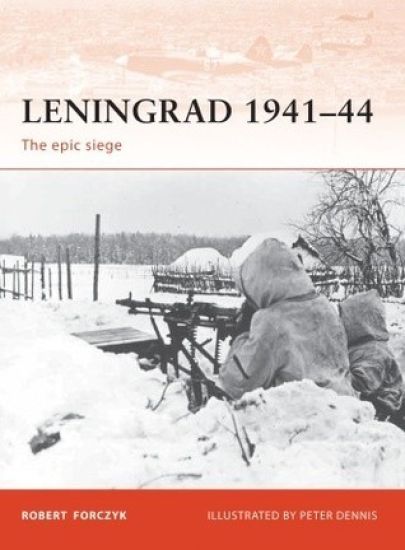
Leningrad 1941–44

Leningrad 1941–44

Robert Forczyk

Osprey Publishing
2009
nidottu
An in depth study of the siege of Leningrad with particular emphasis on the garrison's defences.Hitler's protracted siege of Leningrad resulted in one of the most brutal campaigns on the Eastern Front during World War II. The German Army Group North was able to isolate the city and its garrison for a period of 900 days, during which an estimated 1.5 million Soviets died from combat, disease and starvation.For over two years, German forces pounded the city with artillery and air assaults while the Soviets made repeated efforts on the frozen swamplands of the Volkhov Front to break through. Finally, in January 1944, the Soviets were able to break Army Group North's front and relieve Leningrad.While most histories of the siege of Leningrad focus on the plight of the starving civil population, this refreshing title instead examines the strength of the garrison's defenses – which ultimately prevented the Germans from capturing the city – and the growing sophistication of Soviet offensive tactics.Dr Forczyk also provides an assessment of how weather and terrain factors shaped the campaign in this superb addition to the history of the Eastern Front.
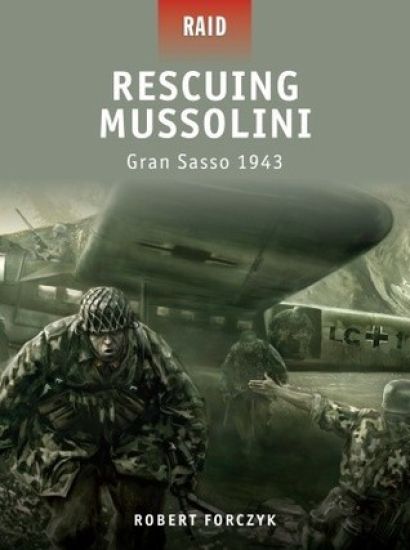
Rescuing Mussolini

Rescuing Mussolini

Robert Forczyk

Osprey Publishing
2010
nidottu
The successful rescue of imprisoned Italian dictator Benito Mussolini from atop the Gran Sasso plateau was one of the most dramatic special forces operations in military history. Arrested by his own officers in July 1943, Mussolini had been whisked away to an isolated and heavily guarded mountaintop resort, the Hotel Campo Imperatore which could only be reached by a heavily guarded cable car station. The Germans, led by SS Haupsturmfuhrer Otto Skorzeny, launched a daring Glider-borne assault, which surprised the Italian guards and secured Mussolini without a shot being fired. However, when the original escape plan had to be scrapped, the Germans organize a desperate, last minute airborne extraction to escape before the Italians could launch a counter attack.
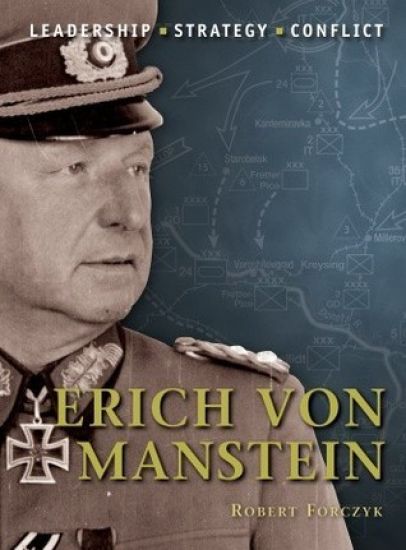
Erich von Manstein

Erich von Manstein

Robert Forczyk

Osprey Publishing
2010
nidottu
Erich von Manstein was one of the most successful German commanders of World War II. His military mind proved outstanding in many a conflict but perhaps his greatest triumph was his ingenious operational plan that led to the rapid defeat of France in May 1940. Manstein also showed great skill under adversity by commanding a furious rebuff to the Soviet armies in 1943, whilst Germany were retreating. However, his skill could not reverse Germany's declining fortunes and Manstein's frequent disagreement's with Hitler over military strategy led to his dismissal. Robert Forczyk tells the story of one of Germany's most valuable military talents, from his early years to his post-war conviction and his later career.
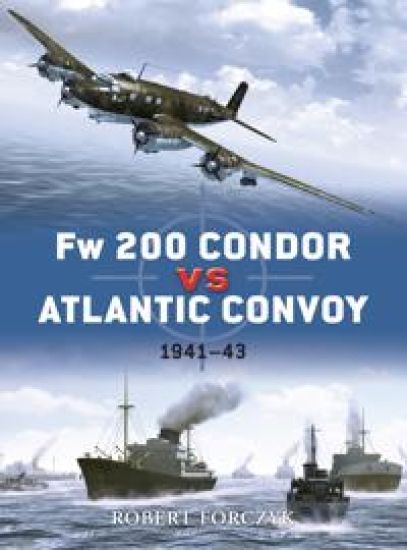
Fw 200 Condor vs Atlantic Convoy

Fw 200 Condor vs Atlantic Convoy

Robert Forczyk

Osprey Publishing
2010
nidottu
After the fall of France in 1940, Germany attempted to strangle Britain into submission by attacking the Atlantic Convoys, which brought much need supplies and war material from the USA and Canada. While the U-boats attacked from beneath the seas, the Germans modified a civilian airliner to create the Fw-200 Condor to attack from the skies. By the summer of 1941, the Condor attacks had succeeded to the extent that Winston Churchill called them 'the scourge of the Atlantic'. This book discusses the development of the Condor, and analyzes the various Allied responses, including the development of the Hurricat, a modified hurricane that could be launched via catapult from modified merchant ships.
German Commerce Raider vs British Cruiser

German Commerce Raider vs British Cruiser

Robert Forczyk

Osprey Publishing
2010
nidottu
During World War II, the Kriegsmarine armed a number of merchant vessels with concealed guns and torpedo tubes for surprise attacks against Allied shipping. To counter this deadly threat, the Royal Navy employed cruisers and their intelligence-gathering apparatus to find and destroy the disguised German commerce raiders. This Duel title covers the deadly game of cat and mouse, fought by these surface vessels during World War II.
Nez Perce 1877

Nez Perce 1877

Robert Forczyk

Osprey Publishing
2011
nidottu
A history of the campaign that saw the US Army's pursuit and final capture of the Nez Perce Indians under Chief Joseph.With the wars between the US and the Native Americans drawing to a close, one tribe in Eastern Oregon continued to resist. The Nez Perce, led by the 'Red Napoleon' Chief Joseph, refused to surrender and accept resettlement. Instead, Chief Joseph organized a band of 750 warriors and set off for the Canadian border, pursued by 2,000 US Army troops under Major-General Oliver Howard.The army chased the natives for three months, fighting 13 actions. Finally, just 40 miles from the Canadian border, the Army ran Chief Joseph to the ground, and forced him to surrender after a five-day battle near Bear Paw Mountain.Packed with illustrations, maps and detailed description, this book explores the various actions fought, from the beginnings of the campaign to the final surrender.
Walther Model

Walther Model

Robert Forczyk

Osprey Publishing
2011
nidottu
A military biography of one of the most successful and popular German generals of World War II.This volume details the military career and accomplishments of Walther Model, the youngest Generalfeldmarschall in the Wehrmacht in World War II and Hitler's favourite commander. Model was a tough and tenacious commander, particularly when on the defensive, and his career rise was virtually unprecedented in German military history.Model really made his mark late in the war, when time was already running out for the Third Reich, but time and again he was rushed from one crumbling front to the next and succeeded in temporarily restoring the situation. Above all, Model deserves recognition as one of the great defensive commanders of modern military history.
Demyansk 1942–43

Demyansk 1942–43

Robert Forczyk

Osprey Publishing
2012
nidottu
A highly illustrated account of the battle for the Demyansk Pocket on the Eastern Front in World War II.The fighting around the town of Demyansk was one of the longest encirclement battles on the Eastern Front during World War II, stretching from February 1942 to February 1943. Originally, the German 16. Armee occupied Demyansk in the autumn of 1941 because it was key terrain that would be used as a springboard for an eventual offensive into the Valdai Hills. Instead, the Soviet winter counteroffensive in February 1942 encircled the German II Armeekorps and other units, inside the Demyansk Pocket.Yet despite severe pounding from five Soviet armies, the embattled German troops held the pocket and the Luftwaffe organized a major aerial resupply effort to sustain the defenders. For the first time in military history, an army was supplied entirely by air. In February 1943, Marshal Timoshenko was ordered to launch an offensive to cut off the base of the salient and annihilate the 12 divisions.At the same time, Hitler finally came to his senses after the Stalingrad debacle and authorized the 16. Armee to withdraw from the pocket. This volume will conclude with the drama of a German Army-sized withdrawal under fire in winter, under attack from three sides.
Georgy Zhukov

Georgy Zhukov

Robert Forczyk

Osprey Publishing
2012
nidottu
Zhukov was the dominant figure in the Red Army during World War II even though his actual job title varied from day to day.Serving as a senior General Staff representative from the Stavka, Zhukov moved from one critical sector to the next, serving as advisor, coordinator and de facto front commander as required. There is no doubt that Zhukov played a critical role in salvaging the critical situation in the autumn of 1941 and leading the Red Army to an amazing reversal of fortunes in 1942–43 and eventual victory in 1944–45.However, Zhukov's methods were brutal and contributed to massive Soviet casualties, while he continued to keep his hand in political affairs as well. As the most recognized Soviet soldier of World War II, Zhukov's post-war fall from grace was precipitous and it was not until the fall of the Soviet Union that his reputation was restored.This book presents a analysis of Zhukov's military career, highlighting the strategies and tactics that made him such as successful military leader.
Kampen om Leningrad 1941-1944

Kampen om Leningrad 1941-1944

Robert Forczyk

Ares forlag
2014
nidottu
Kampen om Leningrad 1941 - 1944 ble en av de lengste slagene under den andre verdenskrig. De tyske styrkene i Armegruppe Nord beleiret den russiske byen Leningrad, ved Østersjøen, i over 900 dager. Harde kamper raste mellom de tyske beleirerne og de russiske Røde armé-soldatene i nesten tre lang år. Tusenvis av sivile og soldater ble drept, enten av granater og kuler eller av sult og tæring. Boken er rikt illustrert med bilder, malerier og kart.