Kirjojen hintavertailu. Mukana 12 390 323 kirjaa ja 12 kauppaa.

Kirjahaku

Etsi kirjoja tekijän nimen, kirjan nimen tai ISBN:n perusteella.

27 kirjaa tekijältä Sarah Keyes, Hannah Keyes

History Twittified

History Twittified

Sarah Keyes; Hannah Keyes

Lulu.com
2017
nidottu
Discover Twitter through the ages! Ever wonder what Genghis Khan, Aristotle, or George Washington might have tweeted? How about what might have happened if Henry VIII tried online dating via social media? Or what if the sinking of the Titanic was told in real time, tweet by tweet? Time to end the American Civil War? There's an app for that! Find out all this for yourself and more, each age tweeted with cheeky and comical wit in this humorous history book!
Nick's Joke Book

Nick's Joke Book

Sarah Keyes; Hannah Keyes

Lulu.com
2017
pokkari
Saddle up for a field day with some tacky jokes! Join Nick, Toccet's goofiest field buddy, for some hilarious horse humor! From hay to neigh puns and everything in between, Nick is sure to be horsing around and making some laughs--but he hopes his jokes are not too lame!
Dorito's Great Escape

Dorito's Great Escape

Sarah Keyes; Hannah Keyes

Lulu.com
2017
pokkari
One fine winter day, all was going well--until a bright flash of orange darted across the field. Dorito has escaped! Join this plucky pony on his mischievous adventure boldly going where no lesson pony has gone before. Toccet and her buddies look on as Dorito has his fun!
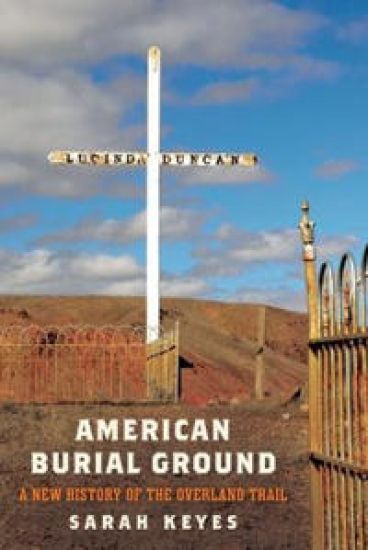
American Burial Ground

American Burial Ground

Sarah Keyes

UNIVERSITY OF PENNSYLVANIA PRESS
2023
sidottu
In popular mythology, the Overland Trail is typically a triumphant tale, with plucky easterners crossing the Plains in caravans of covered wagons. But not everyone reached Oregon and California. Some 6,600 migrants perished along the way and were buried where they fell, often on Indigenous land. As historian Sarah Keyes illuminates, their graves ultimately became the seeds of U.S. expansion. By the 1850s, cholera epidemics, ordinary diseases, and violence had remade the Trail into an American burial ground that imbued migrant deaths with symbolic power. In subsequent decades, U.S. officials and citizens leveraged Trail graves to claim Native ground. Meanwhile, Indigenous peoples pointed to their own sacred burial grounds to dispute these same claims and maintain their land. These efforts built on anti-removal campaigns of the 1820s and 30s, which had established the link between death and territorial claims on which the significance of the Overland Trail came to rest. In placing death at the center of the history of the Overland Trail, American Burial Ground offers a sweeping and long overdue reinterpretation of this historic touchstone. In this telling, westward migration was a harrowing journey weighed down by the demands of caring for the sick and dying. From a tale of triumph comes one of struggle, defined as much by Indigenous peoples' actions as it was by white expansion. And, finally, from a migration to the Pacific emerges instead a trail of graves. Graves that ultimately undergirded Native dispossession.