Kirjojen hintavertailu. Mukana 11 515 673 kirjaa ja 12 kauppaa.

Kirjahaku

Etsi kirjoja tekijän nimen, kirjan nimen tai ISBN:n perusteella.

99 kirjaa tekijältä Simone Weil

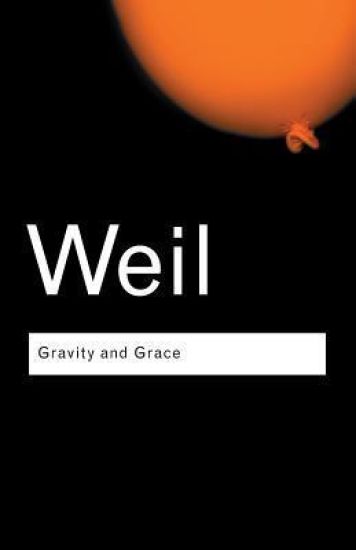
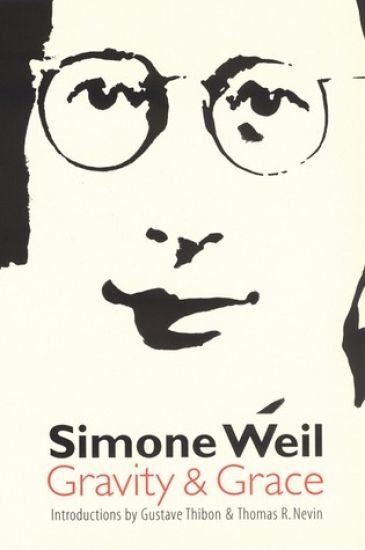
Gravity and Grace

Gravity and Grace

Simone Weil

Routledge
2002
sidottu
Gravity and Grace was the first ever publication by the remarkable thinker and activist, Simone Weil. In it Gustave Thibon, the farmer to whom she had entrusted her notebooks before her untimely death, compiled in one remarkable volume a compendium of her writings that have become a source of spiritual guidance and wisdom for countless individuals. On the fiftieth anniversary of the first English edition - by Routledge & Kegan Paul in 1952 - this Routledge Classics edition offers English readers the complete text of this landmark work for the first time ever, by incorporating a specially commissioned translation of the controversial chapter on Israel. Also previously untranslated is Gustave Thibon's postscript of 1990, which reminds us how privileged we are to be able to read a work which offers each reader such 'light for the spirit and nourishment for the soul'. This is a book that no one with a serious interest in the spiritual life can afford to be without.
Gravity and Grace

Gravity and Grace

Simone Weil

Routledge
2002
nidottu
Gravity and Grace was the first ever publication by the remarkable thinker and activist, Simone Weil. In it Gustave Thibon, the farmer to whom she had entrusted her notebooks before her untimely death, compiled in one remarkable volume a compendium of her writings that have become a source of spiritual guidance and wisdom for countless individuals. On the fiftieth anniversary of the first English edition - by Routledge & Kegan Paul in 1952 - this Routledge Classics edition offers English readers the complete text of this landmark work for the first time ever, by incorporating a specially commissioned translation of the controversial chapter on Israel. Also previously untranslated is Gustave Thibon's postscript of 1990, which reminds us how privileged we are to be able to read a work which offers each reader such 'light for the spirit and nourishment for the soul'. This is a book that no one with a serious interest in the spiritual life can afford to be without.
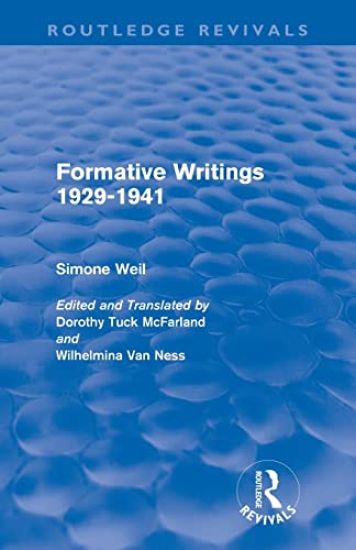
Formative Writings (Routledge Revivals)
This volume, first published in English in 1987 makes available an important part of Weil’s early writings. Although primarily known as a religious thinker, she devoted enormous energy in her formative years to her work as a political activist and as a philosopher/teacher. This book reveals these other sides of Weil and demonstrates the lines of continuity underlying her whole thought.Written between 1929 and 1941 the book covers a crucial and transitional period in Weil’s life. Taken together they represent invaluable primary source material on the evolution of Weil’s life and on her chosen method of abstracting elements from her personal experience and transmuting that experience into considered thought. Even when highly theoretical, her writing was always concerned with the application of her intelligence to concrete problems of human existence.
Formative Writings (Routledge Revivals)
This volume, first published in English in 1987 makes available an important part of Weil’s early writings. Although primarily known as a religious thinker, she devoted enormous energy in her formative years to her work as a political activist and as a philosopher/teacher. This book reveals these other sides of Weil and demonstrates the lines of continuity underlying her whole thought.Written between 1929 and 1941 the book covers a crucial and transitional period in Weil’s life. Taken together they represent invaluable primary source material on the evolution of Weil’s life and on her chosen method of abstracting elements from her personal experience and transmuting that experience into considered thought. Even when highly theoretical, her writing was always concerned with the application of her intelligence to concrete problems of human existence.
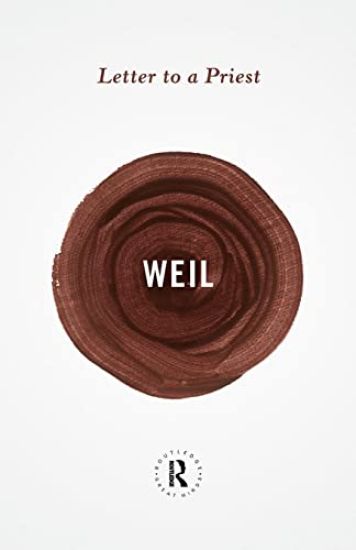
Letter to a Priest

Letter to a Priest

Simone Weil

Routledge
2013
nidottu
Hailed by Albert Camus as ‘the only great spirit of our times’, Simone Weil was one of great essayists and activists of the twentieth century. Her writings on the nature of religious faith and spirituality have inspired many subsequent thinkers. Wrestling with the moral dilemmas entailed by commitment to the Catholic Church, Letter to a Priest is a brilliant meditation on the perennial battle between faith and doubt and resonates today as much as when it was first written. This edition also includes one of her most inspiring and celebrated essays, ‘Human Personality’, where Weil offers a moving and unorthodox account of the preciousness of human beings.With a new foreword by Raimond Gaita.
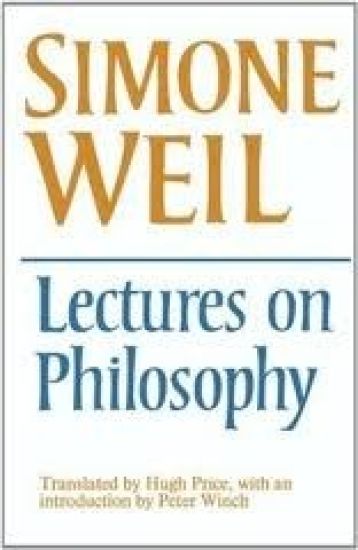
Lectures on Philosophy

Lectures on Philosophy

Simone Weil

Cambridge University Press
1978
pokkari
Simone Weil’s Leçons de Philosophie are derived from a course she taught at the lycée for girls at Roanne in 1933–4. Anne Reynaud-Guérithault was a pupil in the class; her notes are not a verbatim record but are a very full and, as far as one can judge, faithful rendering, often catching the unmistakable tone of Simone Weil’s voice as well as the force and the directness of her thought. The lectures form a good general introduction to philosophy, ranging widely over problems about perception, mind, language, reasoning and problems in moral and political philosophy too. Her method of presentation is a characteristic combination of abstract argument, personal experience and literary or historical reference. Peter Winch points out in his introduction to the book some of the more systematic connections in her philosophical work (and between this philosophical work and her other concerns), and makes a number of suggestive comparisons between Simone Weil and Wittgenstein. The translation is by Hugh Price from the Plon edition of 1959. Dr Price has added some notes to explain references in the text that might be unfamiliar to English speaking students beginning philosophy.
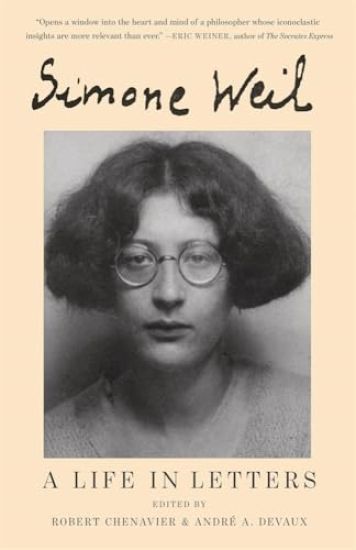
A Life in Letters

A Life in Letters

Simone Weil

HARVARD UNIVERSITY PRESS
2024
sidottu
The inspiring letters of philosopher, mystic, and freedom fighter Simone Weil to her family, presented for the first time in English.Now in the pantheon of great thinkers, Simone Weil (1909–1943) lived largely in the shadows, searching for her spiritual home while bearing witness to the violence that devastated Europe twice in her brief lifetime. The letters she wrote to her parents and brother from childhood onward chart her intellectual range as well as her itinerancy and ever-shifting preoccupations, revealing the singular personality at the heart of her brilliant essays.The first complete collection of Weil’s missives to her family, A Life in Letters offers new insight into her personal relationships and experiences. The letters abound with vivid illustrations of a life marked by wisdom as much as seeking. The daughter of a bourgeois Parisian Jewish family, Weil was a troublemaking idealist who preferred the company of miners and Russian exiles to that of her peers. An extraordinary scholar of history and politics, she ultimately found a home in Christian mysticism. Weil paired teaching with poetry and even dabbled in mathematics, as evidenced by her correspondence with her brother, André, who won the Kyoto Prize in 1994 for the famed Weil Conjectures.A Life in Letters depicts Simone Weil’s thought taking shape amid political turmoil, as she describes her participation in the Spanish struggle against fascism and in the transatlantic resistance to the Nazis. An introduction and notes by Robert Chenavier contextualize the letters historically and intellectually, relating Weil’s letters to her general body of writing. This book is an ideal entryway into Weil’s philosophical insights, one for both neophytes and acolytes to treasure.
A Life in Letters

A Life in Letters

Simone Weil

HARVARD UNIVERSITY PRESS
2026
pokkari
The inspiring letters of philosopher, mystic, and freedom fighter Simone Weil to her family, presented for the first time in English. Now in the pantheon of great thinkers, Simone Weil (1909-1943) lived largely in the shadows. Assembled here, the letters she wrote to her parents and brother from childhood onward chart her intellectual range as well as her itinerancy and shifting preoccupations, revealing the singular personality at the heart of her brilliant essays. The daughter of a bourgeois Parisian Jewish family, Weil was a troublemaking idealist who preferred the company of miners and Russian exiles to that of her peers. A scholar of history and politics, she ultimately found a home in Christian mysticism. Weil paired teaching with poetry and even dabbled in mathematics, as evidenced by her correspondence with her brother, Andr , who won the Kyoto Prize in 1994 for the famed Weil Conjectures. The first complete collection of Simone Weil's missives to her family, A Life in Letters vividly illustrates her thought taking shape as she joins the Spanish struggle against fascism and the transatlantic resistance to the Nazis. An introduction and notes contextualize the letters historically and intellectually, providing an ideal entryway into Weil's treasured philosophical insights.
Gravity and Grace

Gravity and Grace

Simone Weil

Bison Books
1997
pokkari
Simone Weil, the French philosopher, political activist, and religious mystic, was little known when she died young in 1943. Four years later the philosopher-farmer Gustave Thibon compiled La pesanteur et la grâce from the notebooks she left in his keeping. In 1952 this English translation accelerated the fame and influence of Simone Weil. The striking aphorisms in Gravity and Grace reflect the religious philosophy of Weil's last years. Written at the onset of World War II, when her health was deteriorating and her left-wing social activism was giving way to spiritual introspection, this masterwork makes clear why critics have called Simone Weil "a great soul who might have become a saint" and "the Outsider as saint, in an age of alienation."
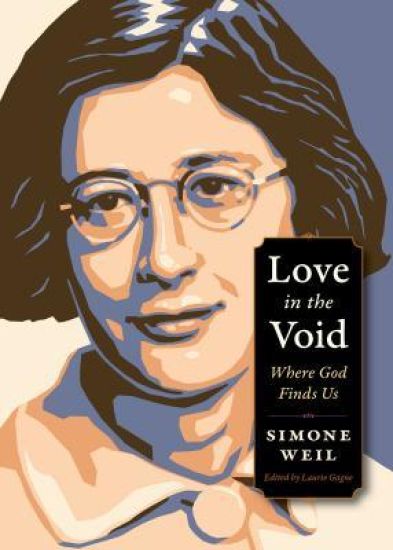
Love in the Void

Love in the Void

Simone Weil

Plough Publishing House
2018
pokkari
Simone Weil, the great mystic and philosopher for our age, shows where anyone can find God.Why is it that Simone Weil, with her short, troubled life and confounding insights into faith and doubt, continues to speak to today’s spiritual seekers? Was it her social radicalism, which led her to renounce privilege? Her ambivalence toward institutional religion? Her combination of philosophical rigor with the ardor of a mystic?Albert Camus called Simone Weil “the only great spirit of our time.” André Gide found her “the most truly spiritual writer of this century.” Her intense life and profound writings have influenced people as diverse as T. S. Eliot, Charles De Gaulle, Pope Paul VI, and Adrienne Rich.The body of work she left—most of it published posthumously—is the fruit of an anguished but ultimately luminous spiritual journey.After her untimely death at age thirty-four, Simone Weil quickly achieved legendary status among a whole generation of thinkers. Her radical idealism offered a corrective to consumer culture. But more importantly, she pointed the way, especially for those outside institutional religion, to encounter the love of God – in love to neighbor, love of beauty, and even in suffering.
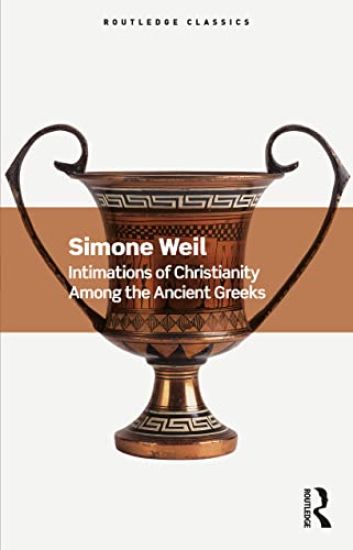
Intimations of Christianity Among the Ancient Greeks
Simone Weil (1909–1943) is one of the most brilliant and unorthodox religious and philosophical minds of the twentieth century. She was also a political activist, worked in the Renault car factory in France in the 1930s and fought briefly as an anarchist in the Spanish Civil War, before her tragic early death in England at the age of thirty-four. Her work spans an astonishing variety of subjects, from ancient Greek philosophy and Christianity to oppression, political freedom and French national identity.Intimations of Christianity Among the Ancient Greeks sees Weil apply her unique and piercing intellect to early Greek thought, where she finds fundamental precursors to Christian religious ideas. She argues, provocatively, that concepts fundamental to Christianity such as incarnation, redemption, suffering and resurrection are Greek as well as Christian and that there is much we can learn, spiritually and philosophically, from their entwinement. This Routledge Classics edition includes a new Foreword by Christopher Hamilton.
Intimations of Christianity Among the Ancient Greeks
Simone Weil (1909–1943) is one of the most brilliant and unorthodox religious and philosophical minds of the twentieth century. She was also a political activist, worked in the Renault car factory in France in the 1930s and fought briefly as an anarchist in the Spanish Civil War, before her tragic early death in England at the age of thirty-four. Her work spans an astonishing variety of subjects, from ancient Greek philosophy and Christianity to oppression, political freedom and French national identity.Intimations of Christianity Among the Ancient Greeks sees Weil apply her unique and piercing intellect to early Greek thought, where she finds fundamental precursors to Christian religious ideas. She argues, provocatively, that concepts fundamental to Christianity such as incarnation, redemption, suffering and resurrection are Greek as well as Christian and that there is much we can learn, spiritually and philosophically, from their entwinement. This Routledge Classics edition includes a new Foreword by Christopher Hamilton.
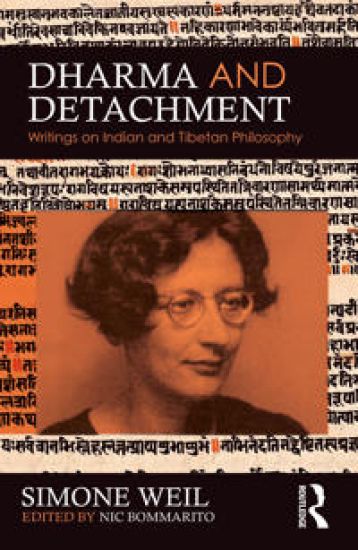
Dharma and Detachment: Writings on Indian and Tibetan Thought
Simone Weil was one of the most profound and thought-provoking thinkers of the twentieth century. An intellectual prodigy from an early age in both the sciences and the arts, she was at different times a teacher, factory and farm labourer, and political activist, spending a brief period in Spain during the Spanish Civil War. Her writings, which span philosophy, politics, religion and spirituality, are marked by a both passionate and contemplative attempt to understand profound questions about the good, God, human thought and action, and suffering and beauty.However, considerably less known is Weil's fascination with the texts and ideas of Indian and Tibetan thought, which she both thought and wrote about extensively. Dharma and Detachment: Writings on Indian and Tibetan Thought is the first volume to draw together some of Weil's most interesting and important writings on eastern thought.Expertly edited and introduced by Nicolas Bommarito, the anthology contains writings drawn from Weil's extensive Notebooks. The extracts show how she moves seamlessly between Plato, Catholicism, mathematics, the Bhagavad-Gita, and Buddhism, engaging with texts in the original Sanskrit. To help the reader gain a full insight into Weil's thought, the volume also includes – along with Weil's own writings – key passages from the classical texts that inspired her, especially the Bhagavad-Gita and the Upanisòads. In addition to a helpful Introduction by Nicolas Bommarito setting out the background to Weil's life and her engagement with Indo-Tibetan texts, he also explains fundamental Indo-Tibetan philosophical terms such as atman, the three gunòas, karma and detachment. A glossary is also included, making the volume an ideal starting point for those unfamiliar with Indo-Tibetan philosophy and seeking a clear path into Weil's engagement with these texts and ideas.Dharma and Detachment: Writings on Indian and Tibetan Thought will be of great interest to all readers and students of Simone Weil's work, as well as to those interested in Indian and Tibetan philosophy, religion, and phenomenology.
Dharma and Detachment: Writings on Indian and Tibetan Thought
Simone Weil was one of the most profound and thought-provoking thinkers of the twentieth century. An intellectual prodigy from an early age in both the sciences and the arts, she was at different times a teacher, factory and farm labourer, and political activist, spending a brief period in Spain during the Spanish Civil War. Her writings, which span philosophy, politics, religion and spirituality, are marked by a both passionate and contemplative attempt to understand profound questions about the good, God, human thought and action, and suffering and beauty.However, considerably less known is Weil's fascination with the texts and ideas of Indian and Tibetan thought, which she both thought and wrote about extensively. Dharma and Detachment: Writings on Indian and Tibetan Thought is the first volume to draw together some of Weil's most interesting and important writings on eastern thought.Expertly edited and introduced by Nicolas Bommarito, the anthology contains writings drawn from Weil's extensive Notebooks. The extracts show how she moves seamlessly between Plato, Catholicism, mathematics, the Bhagavad-Gita, and Buddhism, engaging with texts in the original Sanskrit. To help the reader gain a full insight into Weil's thought, the volume also includes – along with Weil's own writings – key passages from the classical texts that inspired her, especially the Bhagavad-Gita and the Upanisòads. In addition to a helpful Introduction by Nicolas Bommarito setting out the background to Weil's life and her engagement with Indo-Tibetan texts, he also explains fundamental Indo-Tibetan philosophical terms such as atman, the three gunòas, karma and detachment. A glossary is also included, making the volume an ideal starting point for those unfamiliar with Indo-Tibetan philosophy and seeking a clear path into Weil's engagement with these texts and ideas.Dharma and Detachment: Writings on Indian and Tibetan Thought will be of great interest to all readers and students of Simone Weil's work, as well as to those interested in Indian and Tibetan philosophy, religion, and phenomenology.
Letter to a Priest

Letter to a Priest

Simone Weil

Routledge
2016
sidottu
Hailed by Albert Camus as ‘the only great spirit of our times’, Simone Weil was one of great essayists and activists of the twentieth century. Her writings on the nature of religious faith and spirituality have inspired many subsequent thinkers. Wrestling with the moral dilemmas entailed by commitment to the Catholic Church, Letter to a Priest is a brilliant meditation on the perennial battle between faith and doubt and resonates today as much as when it was first written. This edition also includes one of her most inspiring and celebrated essays, ‘Human Personality’, where Weil offers a moving and unorthodox account of the preciousness of human beings.With a new foreword by Raimond Gaita.
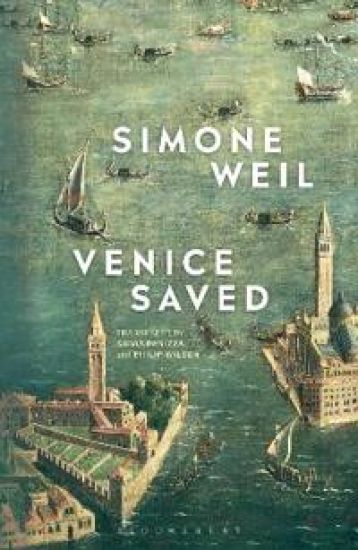
Venice Saved

Venice Saved

Simone Weil

Bloomsbury Academic
2019
nidottu
Towards the end of her life, the French philosopher and mystic Simone Weil (1909-43) was working on a tragedy, Venice Saved. Appearing here in English for the first time, this play explores the realisation of Weil’s own thoughts on tragedy. A figure of affliction, a central theme in Weil's religious metaphysics, the central character offers a unique insight into Weil’s broader philosophical interest in truth and justice, and provides a fresh perspective on the wider conception of tragedy itself.The play depicts the plot by a group of Spanish mercenaries to sack Venice in 1618 and how it fails when one conspirator, Jaffier, betrays them to the Venetian authorities, because he feels compassion for the city's beauty. The edition includes notes on the play by the translators as well as introductory material on: the life of Weil; the genesis and purport of the play; Weil and the tragic; the issues raised by translating Venice Saved. With additional suggestions for further reading, the volume opens up an area of interest and research: the literary Weil.
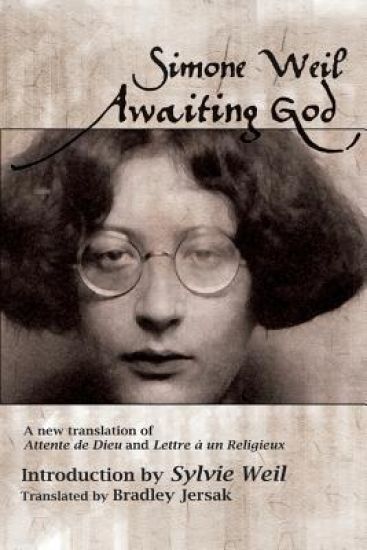
Awaiting God: A new translation of Attente de Dieu and Lettre a un Religieux

Awaiting God: A new translation of Attente de Dieu and Lettre a un Religieux

Simone Weil

Createspace Independent Publishing Platform
2013
nidottu
Awaiting God (218 pages) combines a fresh translation (by Weil scholar, Brad Jersak) of Simone Weil's 'Waiting for God' and 'Letter to a Priest' (Attente de Dieu and Lettre un Religieux) in one volume. These works are considered Weil's primary essays and letters. In addition, Simone Weil's niece has contributed an introductory article entitled, 'Simone Weil and the Rabbi's: Compassion and Tsedekah, ' which puts Weil's relationship with Jewish thought into perspective. She includes source material from the Rabbis that put Weil (however reluctantly) in line with rabbinical thought throughout her major themes.The book is the ideal English introduction to the works and thought of Simone Weil, including important preface material (by Jersak) on how to read her work, as well as her relationship to Roman Catholicism and Judaism. The book includes: Part 1 - Essays1. Reflections on the Right Use of School Studiesin View of the Love of God2. The Love of God and Affliction3. Forms of the Implicit Love of Goda. Love of Neighbor b. Love of the Order of the World c. Love of Religious Practicesd. Friendship e. Implicit and Explicit Love / 994. Concerning the Our Father Part 2 - LettersPreface to her letters: Weil on Catholicism and Judaism5. Hesitations Prior to Baptism / Jan 1942 - Fr. Perrin 6. Hesitations Prior to Baptism / 1942 - Fr. Perrin7. Departure from France / Apl 1942 - Fr. Perrin 8. Spiritual Autobiography / May 1942 - Fr. Perrin 9. Intellectual Vocation / May 1942 - S. 10. Last Thoughts / May 1942 - Fr. Perrin 11. Letter to a Priest / Nov 1942 - Fr. Couturie
War And The Iliad

War And The Iliad

Simone Weil

NYRB Classics
2005
nidottu
War and the Iliad is a perfect introduction to the range of Homer's art as well as a provocative and rewarding demonstration of the links between literature, philosophy, and questions of life and death. Simone Weil's The Iliad, or the Poem of Force is one of her most celebrated works-an inspired analysis of Homer's epic that presents a nightmare vision of combat as a machine in which all humanity is lost. First published on the eve of war in 1939, the essay has often been read as a pacifist manifesto. Rachel Bespaloff was a French contemporary of Weil's whose work similarly explored the complex relations between literature, religion, and philosophy. She composed her own distinctive discussion of the Iliad in the midst of World War II-calling it "her method of facing the war"-and, as Christopher Benfey argues in his introduction, the essay was very probably written in response to Weil. Bespaloff's account of the Iliad brings out Homer's novelistic approach to character and the existential drama of his characters' choices; it is marked, too, by a tragic awareness of how the Iliad speaks to times and places where there is no hope apart from war.This edition brings together these two influential essays for the first time, accompanied by Benfey's scholarly introduction and an afterword by the great Austrian novelist Hermann Broch.
On The Abolition of All Political Parties
An NYRB Classics Original Simone Weil--philosopher, activist, mystic--is one of the most uncompromising of modern spiritual masters. In "On the Abolition of All Political Parties" she challenges the foundation of the modern liberal political order, making an argument that has particular resonance today, when the apathy and anger of the people and the self-serving partisanship of the political class present a threat to democracies all over the world. Dissecting the dynamic of power and propaganda caused by party spirit, the increasing disregard for truth in favor of opinion, and the consequent corruption of education, journalism, and art, Weil forcefully makes the case that a true politics can only begin where party spirit ends. This volume also includes an admiring portrait of Weil by the great poet Czeslaw Milosz and an essay about Weil's friendship with Albert Camus by the translator Simon Leys.
Quelques réflexions sur les origines de l'hitlérisme
La mont e du nazisme et les horreurs du r gime v hicul par Adolf Hitler avaient-ils des ant c dents dans l'histoire ? De qui s'est-il inspir ? Dans quelle mesure, par exemple, la Rome antique fut-elle un mod le pour le F hrer ? Simone Weil soumet plusieurs pistes de r flexions qui visent percevoir ici un ensemble de m canismes dont elle souligne les enchev trements, la complexit , mettant in fine jour les racines de la folie hitl rienne. Son expos se compose de trois grandes parties: Permanence et changements des caract res nationaux; Hitler et la politique ext rieure de la Rome antique; Hitler et le r gime int rieur de l'empire romain.