

Kirjahaku
Etsi kirjoja tekijän nimen, kirjan nimen tai ISBN:n perusteella.
309 kirjaa tekijältä Sinclair Lewis



Cheap and Contented Labor: The Picture of a Southern Mill Town in 1929
Sinclair Lewis
Literary Licensing, LLC
2011
sidottu
""Cheap and Contented Labor: The Picture of a Southern Mill Town in 1929"" is a non-fiction book written by the famous American author, Sinclair Lewis. The book provides a detailed and vivid description of life in a small mill town in the American South during the late 1920s.Lewis takes the reader on a journey through the town, exploring its history, culture, and economy. He delves into the lives of the workers in the town's textile mills, describing their working conditions, wages, and daily struggles. He also examines the town's social structure, including the relationships between the mill owners and the workers, as well as the racial and class divides that existed in the community.Throughout the book, Lewis provides a critical analysis of the economic and social systems that dominated the town, highlighting the exploitation of workers by mill owners and the government's failure to provide adequate support for those in need. He also explores the impact of the Great Depression on the town and its residents.Overall, ""Cheap and Contented Labor"" is a powerful and insightful portrayal of life in a Southern mill town during a time of great change and upheaval in American history. It sheds light on the struggles and hardships faced by working-class Americans and provides a valuable perspective on the economic and social forces that shaped their lives.""This scarce antiquarian book is a facsimile reprint of the old original and may contain some imperfections such as library marks and notations. Because we believe this work is culturally important, we have made it available as part of our commitment for protecting, preserving, and promoting the world's literature in affordable, high quality, modern editions, that are true to their original work.

Cheap and Contented Labor: The Picture of a Southern Mill Town in 1929
Sinclair Lewis
Literary Licensing, LLC
2011
nidottu


The Job is a novel written by Sinclair Lewis that explores the life of a young man named Aloysius ""Al"" Timberman. The story is set in the early 1900s and follows Al as he navigates his way through various jobs and social situations in pursuit of success and happiness.Al begins his journey as a college student, but soon drops out to pursue a career in advertising. He quickly rises through the ranks and becomes a successful ad man, but finds himself unfulfilled and disillusioned with the corporate world. He quits his job and embarks on a series of odd jobs, including working as a dishwasher and a door-to-door salesman.Throughout the novel, Al struggles with his identity and his place in the world. He is torn between his desire for material success and his longing for something more meaningful. He also grapples with issues of class and social status, as he comes from a working-class background but aspires to be part of the upper echelons of society.The Job is a poignant and thought-provoking novel that offers a compelling portrait of a young man's journey through life. It explores themes of ambition, identity, and the American Dream, and offers a commentary on the social and economic realities of early 20th century America.This is a new release of the original 1926 edition.This scarce antiquarian book is a facsimile reprint of the old original and may contain some imperfections such as library marks and notations. Because we believe this work is culturally important, we have made it available as part of our commitment for protecting, preserving, and promoting the world's literature in affordable, high quality, modern editions, that are true to their original work.





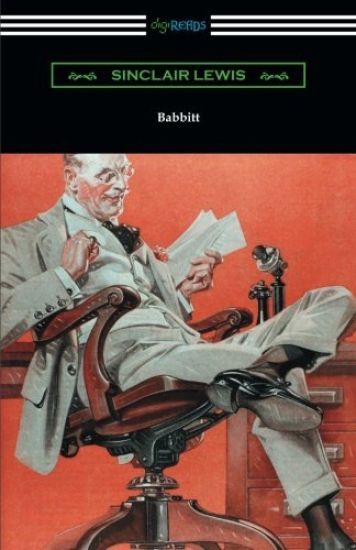
First published in 1922, "Babbitt" is Sinclair Lewis' satire of American culture in the early part of the 20th century. In the years following World War I Americans began to idealize the middle-class lifestyle as a symbol of success, one crucial to the American identity. The successful self-made family man living in a Midwestern town began to symbolize the "American Dream". The titular character of this novel, George F. Babbitt, is one such man. Babbitt is a successful middle-aged partner in a real estate firm who is married with three kids living in the fictional Midwestern town of Zenith. While having achieved the "American Dream" Babbitt gradually begins to feel a lack of fulfillment with how his life has turned out. He is a man unaware of the contemporary social and economic conditions that exist outside his own small circle. This lack of awareness begins to become increasingly apparent to him and a feeling of consternation sets in. Controversial upon its first publication for its criticism of what many Americans believed to be the ideal life, "Babbitt" is at once the tale of a middle-life crisis and a satirical critique of the vacuity of middle-class American life. This edition is printed on premium acid-free paper and includes an introduction by Hugh Walpole.
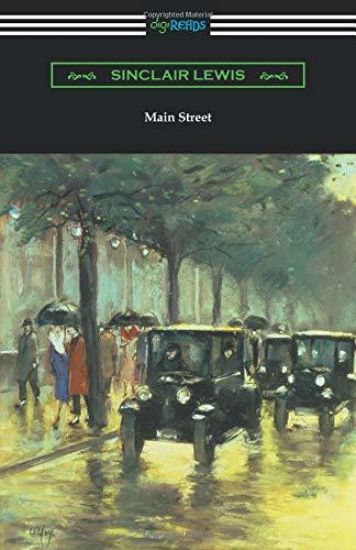
First published in 1920, "Main Street" is a biting and satirical look at small town America. Set in the 1910s it follows the struggles of its heroine, Carol Milford, to adapt to small town life. Carol, a young and progressive librarian living in St Paul, Minnesota, falls in love with and marries Will Kennicott, a doctor who dreams of returning to the small town of his childhood. Carol agrees and they move to Gopher Prairie, Minnesota, a town modeled on Sinclair's own hometown of Sauk Centre, Minnesota. Carol is disappointed by the town's drab appearance and it's provincial, small-minded inhabitants. Brimming with optimism and tenacity, she sets out to convince the town to modernize and embrace her progressive values. Her ideas are not received as she hoped and instead she is resisted at every turn and derided by her fellow townsfolk. For all its seeming bleakness, Carol is ever optimistic and refuses to give up or believe the fight isn't worth fighting. "Main Street" exemplifies Lewis' "vigorous and graphic art of description and his ability to create, with wit and humour, new types of characters", which was cited by the Nobel Prize for Literature committee when he was awarded the prize in 1930. This edition is printed on premium acid-free paper.

First published in 1925, Sinclair Lewis' "Arrowsmith" is the fascinating tale of a man torn between the pursuit of scientific knowledge and the demands of everyday domestic life. "Arrowsmith" was published to great critical acclaim, being awarded the Pulitzer Prize in 1926, and has endured as the author's most popular novel. It is the story of Martin Arrowsmith, an intelligent and scientific young man who leaves his small Midwestern hometown to attend medical school and become a doctor. Along the way he lives his personal life haphazardly while he struggles to devote more of his time and attention to his scientific endeavors. The tension between his family and his life of rigorous and exacting scientific pursuit come to a dramatic head during an outbreak of bubonic plague on a tropical island. Martin must make difficult decisions between his principles, his research, and his ethical obligations. "Arrowsmith" is a well-researched and detailed description of medical training and practice, as well as an intense character study and thought-provoking examination of the tension that exists between everyday life and the rigorous pursuit of scientific inquiry. This edition is printed on premium acid-free paper.