Kirjojen hintavertailu. Mukana 11 244 527 kirjaa ja 12 kauppaa.

Kirjahaku

Etsi kirjoja tekijän nimen, kirjan nimen tai ISBN:n perusteella.

44 kirjaa tekijältä Stuart Reid

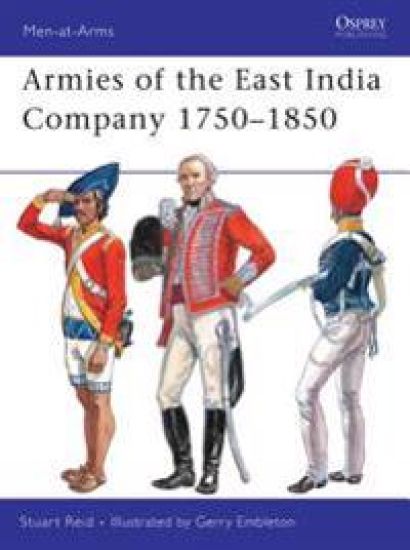
Armies of the East India Company 1750–1850
Contrary to popular belief, the capture of India was not accomplished by the British Army, but by the private armies of the East India Company, which grew in size to become larger than that of any European sovereign state. This is the history of this army, examining the many conflicts they fought, their equipment and training, with its regiments of horse, foot and guns, which rivalled those of most European powers. The uniforms, combining traditional Indian and British dress are illustrated in detail and make for a colourful account of a private band of adventurers that successfully captured the jewel of the British Empire.
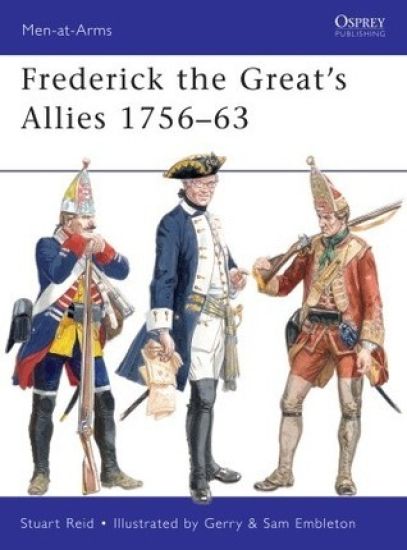
Frederick the Great’s Allies 1756–63

Frederick the Great’s Allies 1756–63

Stuart Reid

Osprey Publishing
2010
nidottu
The Seven Years' War in Germany was characterised by an increasing use of 'light' troops in conjunction with regular infantry and cavalry as part of an ongoing evolution in military tactics. This book draws attention to these tactical developments and also provides an analysis of the allied army that fought alongside Frederick the Great in Germany. Composed of troops from the electorate of Hanover and contingents from Hessen-Kassel, Brunswick and Prussia, this force was funded by Britain and led by a Prussian officer, Prince Ferdinand of Brunswick. Later, British troops joined this army as it operated throughout western Germany, and together the allied army won a great victory at the famous battle of Minden in 1759.
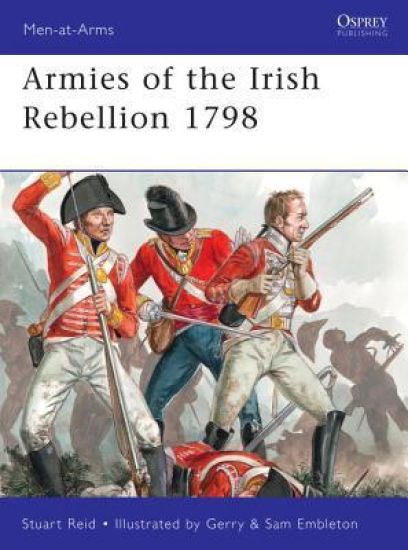
Armies of the Irish Rebellion 1798

Armies of the Irish Rebellion 1798

Stuart Reid

Osprey Publishing
2011
nidottu
In 1798, the Irish rose up against the corrupt English government run out of Dublin.Joined by both Protestants and Catholics, the rebellion quickly spread across the country. Although the Irish peasantry were armed mostly with pikes, they were able to overwhelm a number of small, isolated British outposts. However, even with the half-hearted assistance of the French, the Irish could not compete with the organized ranks of the British Army when under competent leadership. In a brutal turning of the tide, the Redcoats plowed through the rebels.In just three months, between 15,000 and 30,000 people died, most of them Irish. This book tells the story of this harsh, but fascinating, period of Irish history and covers the organization and uniforms of the forces involved.
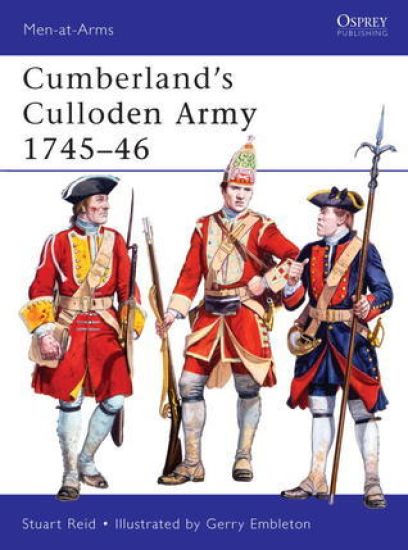
Cumberland’s Culloden Army 1745–46

Cumberland’s Culloden Army 1745–46

Stuart Reid

Osprey Publishing
2012
nidottu
In August 1745 Charles Edward Stuart, the 'Young Pretender', landed in Scotland and sparked the Second Jacobite Rising.The Jacobite forces seized Perth, then Edinburgh, where they proclaimed the Young Pretender's father King James VIII; they trounced their Hanoverian opponents at Prestonpans and crossed into England, getting as far south as Derby before withdrawing into Scotland. Far from universally popular north of the border, the Jacobite army bested another Hanoverian army at Falkirk and besieged Stirling, only to be routed by the Duke of Cumberland's army at Culloden in April 1746, a crushing defeat that ended any prospect of a Stuart restoration.Featuring full-colour artwork depicting the distinctive uniforms of Cumberland's men, this exhaustively researched study offers a wealth of detail of regimental strengths and casualties and includes an extended chronology that places individual units in specific places throughout the campaign that culminated at Culloden.
British Redcoat 1740–93

British Redcoat 1740–93

Stuart Reid

Osprey Publishing
1996
nidottu
During this period, the British army earned itself a formidable reputation as a fighting force. However, due to its role as a police force at home, and demonisation by American propaganda, the army was viewed as little removed from a penal institution run by aristocratic dilettantes. This view, still held by many today, is challenged by Stuart Reid, who paints a picture of an increasingly professional force. This was an important time of change and improvement for the British Army, and British Redcoat 1740-1793 fully brings this out in its comprehensive examination of the lives, conditions and experiences of the late 18th-century infantryman.
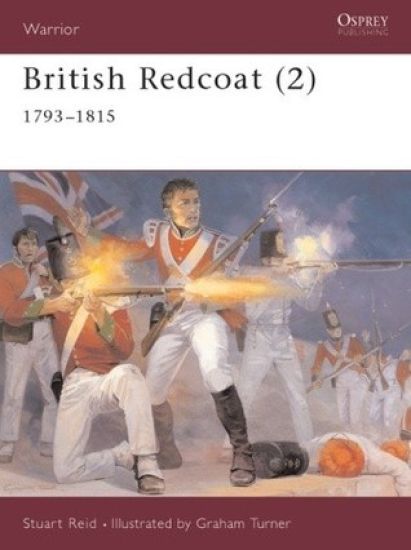
British Redcoat 1793-1815

British Redcoat 1793-1815

Stuart Reid

Osprey Publishing
1997
nidottu
In 1783 the British army struggled home from North America in a shattered condition. It had acquitted itself well, but its regiments were now woefully understrength, and it was not until 1789 that they were again fit for service. Little more than three years later, Republican France declared war, and, apart from two short periods, the army was to be heavily engaged around the globe for the next 23 years. Beginning where Warrior 19 British Redcoat 1740-93 ends, Stuart Reid shows how the army was re-organised, re-equipped, re-trained and led from the bitter struggle in the West Indies to the final reckoning at Waterloo.
King George's Army 1740–93 (2)

King George's Army 1740–93 (2)

Stuart Reid

Osprey Publishing
1995
nidottu
The 18th century was marked by a steady growth in central control of the British Army and a corresponding decrease in the influence enjoyed by individual commanding officers. The most obvious sign of this process was the increasing uniformity of the clothing issued each year to the soldiers. Nevertheless, as far as those who devised the Clothing Regulations were concerned, it was a constant, and invariably quite uphill struggle to enforce compliance. This companion volume to Men-at-Arms 285 takes a further look at the infantry uniforms of the mid-18th century British Army, also covering the various auxiliary infantry formations, such as the Militia, Volunteers, Marines and the troops of the East India Company. Men-at-Arms 273, 285, 289, 290 and 292 are also available in a single volume special edition as 'Soldiers of the Revolutionary War'.
King George’s Army 1740 - 93 (3)

King George’s Army 1740 - 93 (3)

Stuart Reid

Osprey Publishing
1996
nidottu
The 18th century was marked by a steady growth in central control of the British Army and a corresponding decrease in the influence enjoyed by individual commanding officers. The most obvious sign of this process was the increasing uniformity of the clothing issued each year to the soldiers. Nevertheless, as far as those who devised the Clothing Regulations were concerned, it was a constant, and invariably quite uphill struggle to enforce compliance. This companion volume to Men-at-Arms 285 and Men-at-Arms 289 examines the organization and uniforms of King George's cavalry and artillery together with those of the Board of Ordnance.
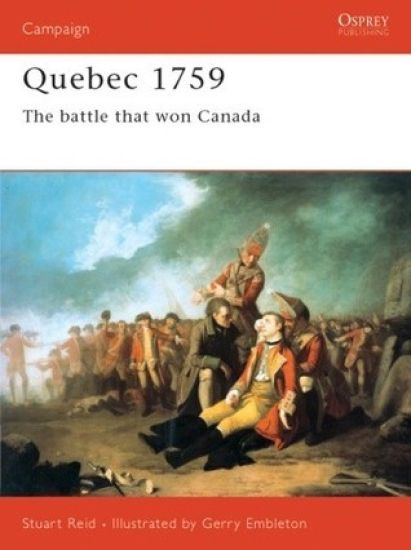
Quebec 1759

Quebec 1759

Stuart Reid

Osprey Publishing
2003
nidottu
'What a scene!' wrote Horace Walpole. 'An army in the night dragging itself up a precipice by stumps of trees to assault a town and attack an enemy strongly entrenched and double in numbers!' It was indeed a drama, as Major-General James Wolfe's army scaled the cliffs above St. Lawrence to stand with the French Canadian capital before them; and in one short sharp exchange of fire, tumble the Marquis de Montcalm's French army into bloody ruin. Sir John Fortescue famously described it as the 'most perfect volley ever fired on a battlefield', and this book explores how in just a few hectic minutes, one of the British Army's most consummate professionals decided the fate of a continent.
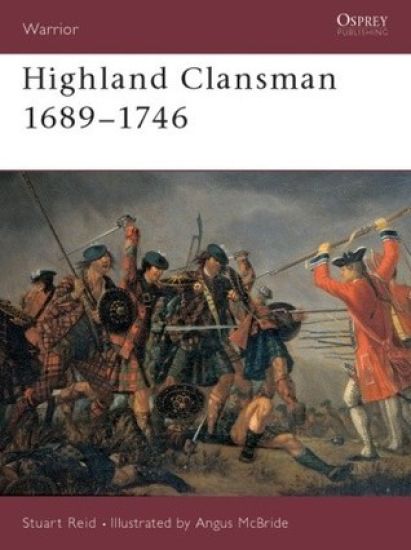
Highland Clansman 1689–1746

Highland Clansman 1689–1746

Stuart Reid

Osprey Publishing
1997
nidottu
The Scottish clans were comprised of an agricultural peasantry dominated by a warrior aristocracy. The author details the development of this clan system and their interaction with one another, which often led to conflict. The rise and fall of the Jacobite cause under Bonny Prince Charlie in the 1745 rebellion is extensively covered, and their battle tactics at Culloden are analyzed as to why they were so utterly defeated.
Scots Armies of the English Civil Wars

Scots Armies of the English Civil Wars

Stuart Reid

Osprey Publishing
1999
nidottu
In the summer of 1642 the First Civil War between king and parliament had broken out in England. Initially both sides were confident of victory, but after the first campaigns ended in stalemate they began looking for allies. The meddling of the Stuart Kings with Scotland's religious traditions provoked the National Covenant, and later the Solemn League and Covenant. Yet many Scots continued to support the King, and after his execution, his exiled son.This compact volume by Stuart Reid examines the Scots armies who fought in the English Civil Wars, and features numerous illustrations and photographs, including full page colour plates by Graham Turner.
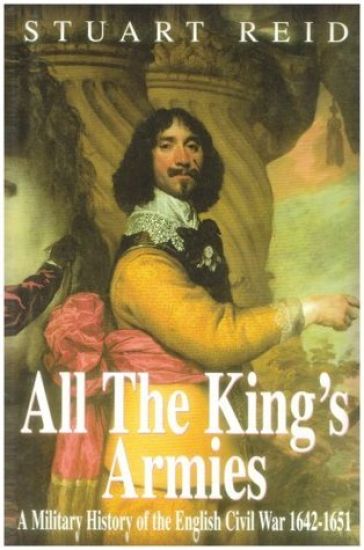
All the Kings's Armies

All the Kings's Armies

Stuart Reid

Spellmount Publishers Ltd
1998
sidottu
A military history of the English Civil War which offers a detailed and lucid examination of the principal campaigns and battles; commenting upon the development of tactics and the extent to which in the King's armies both strategy and tactics were moulded by a chronic shortage of ammunition.
Wolfe

Wolfe

Stuart Reid

Spellmount Publishers Ltd
2000
nidottu
This military biography examines Wolfe's career from the early years through to the Battle of Quebec, to give insight into what made Wolfe such an effective soldier.
1745

1745

Stuart Reid

Spellmount Publishers Ltd
2000
nidottu
With this work, the author contends that the Highland rebellion was not a despairing last stand by a Celtic civilisation, and that Jacobite loyalties were not solely determined by the Highland line, Gaelic culture, or religion.
All the King's Armies

All the King's Armies

Stuart Reid

Spellmount Publishers Ltd
2007
nidottu
On 23 September 1642 Prince Rupert’s cavalry triumphed outside Worcester in the first major clash on the English Civil War. Almost precisely nine years later, on 3 September 1651, that war was won by Oliver Cromwell’s famous Ironsides outside the same city and in part upon the same ground. Stuart Reid provides a detailed yet readable new military history – the first to be published for over twenty years – of the three conflicts between 1642 and 1651 known as the English Civil War. Prince Rupert, Oliver Cromwell Patrick Ruthven, Alexander Leslie and Sir Thomas Fairfax all play their parts in this fast-moving narrative. At the heart of the book are fresh interpretations, not only of the key battles such as Marston Moor in 1644, but also of the technical and economic factors which helped shape strategy and tactics, making this a truly comprehensive study of one of the most famous conflicts in British history. This book is a must for all historians and enthusiasts of seventeenth-century English history.