Kirjojen hintavertailu. Mukana 11 699 587 kirjaa ja 12 kauppaa.

Kirjahaku

Etsi kirjoja tekijän nimen, kirjan nimen tai ISBN:n perusteella.

62 kirjaa tekijältä Terry Eagleton

Marxism and Literary Criticism

Marxism and Literary Criticism

Terry Eagleton

Routledge
2002
sidottu
Is Marx relevant any more? Why should we care what he wrote? What difference could it make to our reading of literature? Terry Eagleton, one of the foremost critics of our generation, has some answers in this wonderfully clear and readable analysis. Sharp and concise, it is, without doubt, the most important work on literary criticism that has emerged out of the tradition of Marxist philosophy and social theory since the nineteenth century.
Marxism and Literary Criticism

Marxism and Literary Criticism

Terry Eagleton

Routledge
2002
nidottu
Is Marx relevant any more? Why should we care what he wrote? What difference could it make to our reading of literature? Terry Eagleton, one of the foremost critics of our generation, has some answers in this wonderfully clear and readable analysis. Sharp and concise, it is, without doubt, the most important work on literary criticism that has emerged out of the tradition of Marxist philosophy and social theory since the nineteenth century.
Marxism and Literary Criticism

Marxism and Literary Criticism

Terry Eagleton

University of California Press
1976
pokkari
Marxist literary criticism is becoming increasingly important in Europe as a whole, and interest in the subject is rapidly growing in this country. In this book, Dr. Eagleton analyses the major issues that the subject presents, discussing the writing of Marx and Engels themselves and the work of such critics as Plekhanov, Trotsky, Lenin, Lukacs, Goldmann, Caudwell, Benjamin and Brecht. They are seen from four viewpoints central to Marxist thought: the relation of literature to history, the problem of 'form' and 'content' in literature, the question of literature and political commitment, and the importance of production and technology in art. Dr. Eagleton's exploration of these critical stances throws useful light on the connection between the Marxist approach and structuralism. The author stresses, however, that Marxist criticism cannot be seen simply in academic terms. In his preface he rejects the illusion of 'neutrality' in such a field, and writes: 'Marxist criticism is part of a larger body of theoretical analysis which aims to understand ideologies - the ideas, values and feelings by which men experience their societies at various times.And certain of those ideas, values and feelings are available to us only in literature. To understand ideologies is to understand both the past and the present more deeply, and such understanding contributes to our liberation.' Dr. Eagleton shows the part that Marxist criticism has to play in defining the crucial link between literature and historical conditions, and in so doing has produced a book that is both constructive and committed.
Ideology

Ideology

Terry Eagleton

Longman
1994
nidottu
This collection of readings on the concept of ideology is brought together by the Marxist critic, Terry Eagleton. His introduction traces the historical evolution of ideology and examines in a more theoretical style the various meanings of the word and their significance. The readings begin with the first English translations of some of the writing of the French founder of the concept in the eighteenth century. They then move from the enlightenment to Hegel and Marxism, with particular emphasis on Marx and Engels themselves. They also look at other eighteenth-century traditions of thought such as Nietzche and Freud. All the readings are theoretical rather than examples of `ideology at work' and will be of interest to undergraduate students of cultural, political and historical studies concerned with ideology, as well as students of English literature.
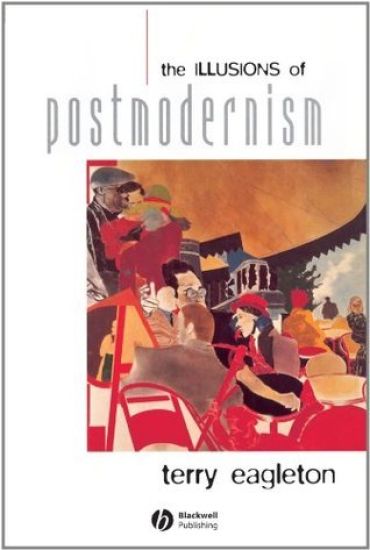
The Illusions of Postmodernism

The Illusions of Postmodernism

Terry Eagleton

JOHN WILEY AND SONS LTD
1996
nidottu
In this brilliant critique, Terry Eagleton explores the origins and emergence of postmodernism, revealing its ambivalences and contradictions. Above all he speaks to a particular kind of student, or consumer, of popular "brands" of postmodern thought.
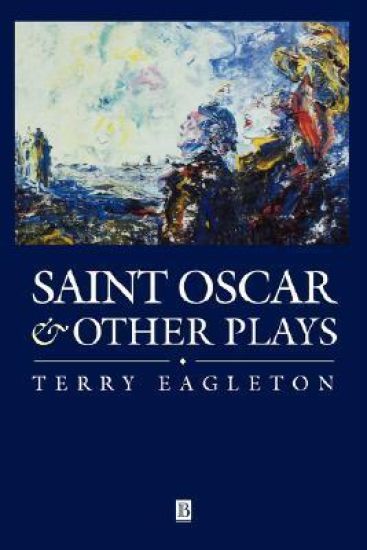
Saint Oscar and Other Plays

Saint Oscar and Other Plays

Terry Eagleton

Blackwell Publishers
1997
nidottu
This is the first collection of Terry Eagleton's work for the theatre - St Oscar, The White, the Gold and the Gangrene, Disappearances, and Gods Locusts. The first two originally toured Ireland respectively in productions by Field Day of Derry and Dubbeljoint of Belfast. God's Locusts was broadcast on BBC Radio 3.
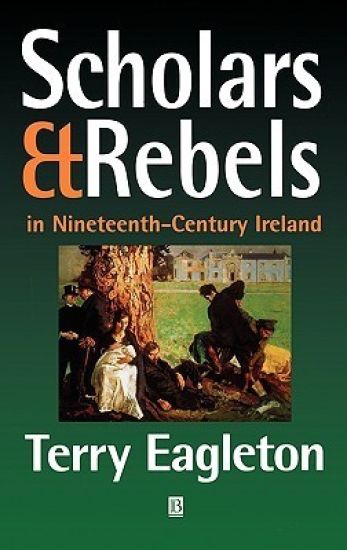
Scholars and Rebels

Scholars and Rebels

Terry Eagleton

Blackwell Publishers
1999
sidottu
Scholars and Rebels must be essential reading for all those concerned to understand not just the complexities of nineteenth-century Irish intellectual culture and the emergent Irish Revival, but the formation also of Irish culture in the twentieth century.
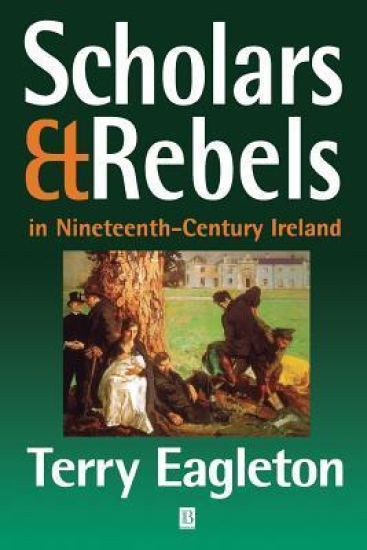
Scholars and Rebels

Scholars and Rebels

Terry Eagleton

Blackwell Publishers
1999
nidottu
Scholars and Rebels must be essential reading for all those concerned to understand not just the complexities of nineteenth-century Irish intellectual culture and the emergent Irish Revival, but the formation also of Irish culture in the twentieth century.
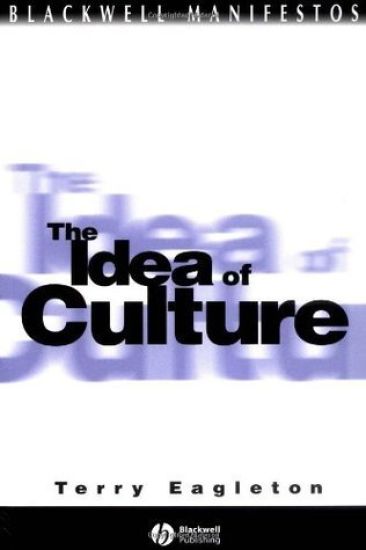
The Idea of Culture

The Idea of Culture

Terry Eagleton

JOHN WILEY AND SONS LTD
2000
nidottu
Terry Eagleton's book, in this vital new series from Blackwell, focuses on discriminating different meanings of culture, as a way of introducing to the general reader the contemporary debates around it.
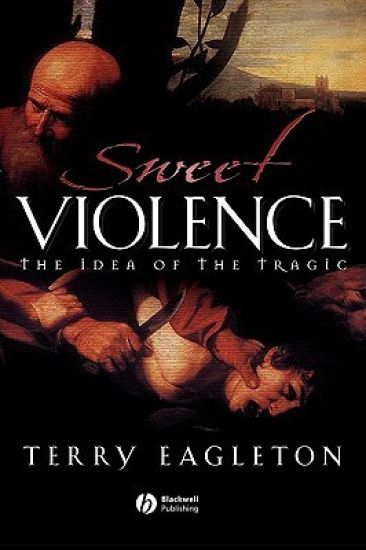
Sweet Violence

Sweet Violence

Terry Eagleton

JOHN WILEY AND SONS LTD
2002
nidottu
Terry Eagleton's Tragedy provides a major critical and analytical account of the concept of 'tragedy' from its origins in the Ancient world right down to the twenty-first century. A major new intellectual endeavour from one of the world's finest, and most controversial, cultural theorists. Provides an analytical account of the concept of 'tragedy' from its origins in the ancient world to the present day. Explores the idea of the 'tragic' across all genres of writing, as well as in philosophy, politics, religion and psychology, and throughout western culture. Considers the psychological, religious and socio-political implications and consequences of our fascination with the tragic.
Beckett and Nothing

Beckett and Nothing

Terry Eagleton

Manchester University Press
2010
sidottu
Beckett and nothing invites its readership to understand the complex ways in which the Beckett canon both suggests and resists turning nothing into something by looking at specific, sometimes almost invisible ways in which ‘little nothings’ pervade the Beckett canon.The volume has two main functions: on the one hand, it looks at ‘nothing’ not only as a content but also a set of rhetorical strategies to reconsider afresh classic Beckett problems such as Irishness, silence, value, marginality, politics and the relationships between modernism and postmodernism and absence and presence. On the other, it focuses on ‘nothing’ in order to assess how the Beckett oeuvre can help us rethink contemporary preoccupations with materialism, neurology, sculpture, music and television. The volume is a scholarly intervention in the fields of Beckett studies which offers its chapters as case studies to use in the classroom. It will prove of interest to advanced students and scholars in English, French, Comparative Literature, Drama, Visual Studies, Philosophy, Music, Cinema and TV studies.
Beckett and Nothing

Beckett and Nothing

Terry Eagleton

Manchester University Press
2012
nidottu
Beckett’s reception was characterised in its early stages by a sustained attention to nothing as a philosophical concept. Theodor Adorno, however, was quick to argue that Beckett’s plays resisted – unlike Sartre’s – having their nothing transformed into something. This Beckettian nothing, moreover, is often invested with the aura of the genius, either for eulogical or dismissive purposes. This volume invites its readership to understand the complex ways in which the Beckett canon both suggests and resists turning nothing into something by looking at specific, sometimes almost invisible ways in which ‘little nothings’ pervade the Beckett canon.The volume has two main functions: on the one hand, it looks at ‘nothing’ not only as a content but also a set of rhetorical strategies to reconsider afresh classic Beckett problems such as Irishness, silence, value, marginality, politics and the relationships between modernism and postmodernism and absence and presence. On the other, it focuses on ‘nothing’ in order to assess how the Beckett oeuvre can help us rethink contemporary preoccupations with materialism, neurology, sculpture, music and television. Both advanced students and scholars of Beckett will find the volume of interest. It comprises jargon-free chapters that analyse Beckett’s prose, drama, film, television, manuscripts and marginalia. It will prove of interest to advanced students and scholars in English, French, Comparative Literature, Drama, Visual Studies, Philosophy, Music, Cinema and TV studies.An electronic edition of this book is freely available under a Creative Commons (CC BY-NC-ND) licence.
Hope without Optimism

Hope without Optimism

Terry Eagleton

University of Virginia Press
2015
sidottu
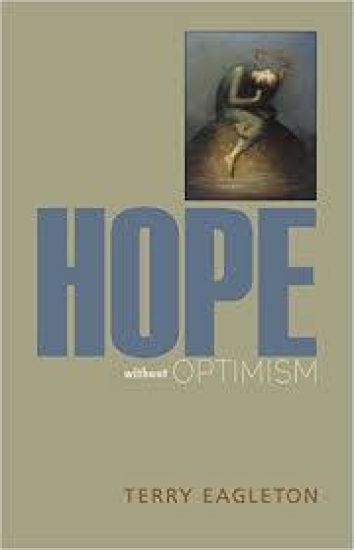
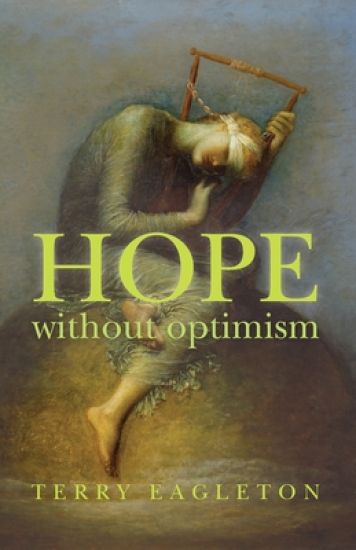
In his latest book, Terry Eagleton, one of the most celebrated intellects of our time, considers the least regarded of the virtues. His compelling meditation on hope begins with a firm rejection of the role of optimism in life's course. Like its close relative, pessimism, it is more a system of rationalization than a reliable lens on reality, reflecting the cast of one's temperament in place of true discernment. Eagleton turns then to hope, probing the meaning of this familiar but elusive word: Is it an emotion? How does it differ from desire? Does it fetishize the future? Finally, Eagleton broaches a new concept of tragic hope, in which this old virtue represents a strength that remains even after devastating loss has been confronted.In a wide-ranging discussion that encompasses Shakespeare's Lear, Kierkegaard on despair, Aquinas, Wittgenstein, St. Augustine, Kant, Walter Benjamin's theory of history, and a long consideration of the prominent philosopher of hope, Ernst Bloch, Eagleton displays his masterful and highly creative fluency in literature, philosophy, theology, and political theory. Hope without Optimism is full of the customary wit and lucidity of this writer whose reputation rests not only on his pathbreaking ideas but on his ability to engage the reader in the urgent issues of life.Page-Barbour Lectures
Hope Without Optimism

Hope Without Optimism

Terry Eagleton

University of Virginia Press
2021
pokkari
In his latest book, Terry Eagleton, one of the most celebrated intellects of our time, considers the least regarded of the virtues. His compelling meditation on hope begins with a firm rejection of the role of optimism in life’s course. Like its close relative, pessimism, it is more a system of rationalization than a reliable lens on reality, reflecting the cast of one’s temperament in place of true discernment. Eagleton turns then to hope, probing the meaning of this familiar but elusive word: Is it an emotion? How does it differ from desire? Does it fetishize the future? Finally, Eagleton broaches a new concept of tragic hope, in which this old virtue represents a strength that remains even after devastating loss has been confronted.In a wide-ranging discussion that encompasses Shakespeare’s Lear, Kierkegaard on despair, Aquinas, Wittgenstein, St. Augustine, Kant, Walter Benjamin’s theory of history, and a long consideration of the prominent philosopher of hope, Ernst Bloch, Eagleton displays his masterful and highly creative fluency in literature, philosophy, theology, and political theory. Hope without Optimism is full of the customary wit and lucidity of this writer whose reputation rests not only on his pathbreaking ideas but on his ability to engage the reader in the urgent issues of life.For sale in Latin America only.
Nationalism, Colonialism, and Literature

Nationalism, Colonialism, and Literature

Terry Eagleton

University of Minnesota Press
1990
nidottu
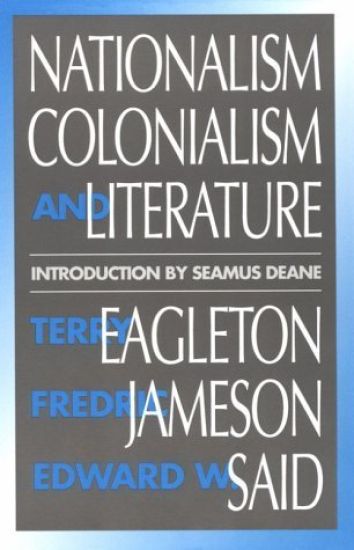
The three essays constituting this volume were originally published as individual pamphlets by the Field Day Theatre Company, in Derry, Northern Ireland. Each deals with the question of nationalism and the role of cultural production as a force in understanding and analyzing the aftermath of colonization. The authors’ diverse perspectives are demonstrated by the essays’ respective titles: Eagleton, Nationalism: Irony and Commitment; Jameson, Modernism and Imperialism; and Said, Yeats and Decolonization. The essays have implication beyond their immediate topics, bearing upon questions of feminism, decolonization, and modernism to illuminate problems that belong to other groups and regions.
Literary Theory

Literary Theory

Terry Eagleton

University of Minnesota Press
2008
nidottu
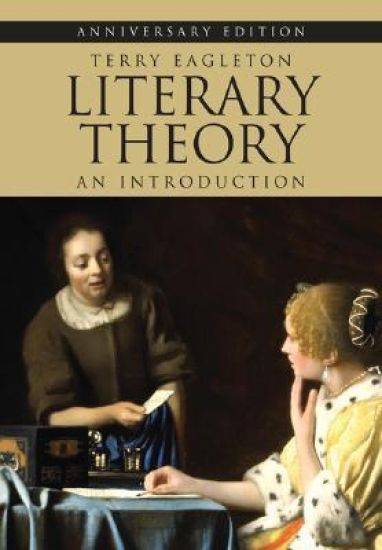
“This concise and lucid volume offers a satisfying survey of all the major theories, from structuralism in the 1960s to deconstruction today, that have made academic criticism both intriguing and off-putting to the outsider.” -New York Times Book Review “Literary Theory has the kind of racy readability that one associates more often with English critics who have set their faces resolutely against theory. It’s not just a brilliant polemical essay; it’s also a remarkable feat of condensation, explication, and synthesis.” -Sunday Times (London) “A concise guide to the most interesting and mystifying trends in the study of literature over the last fifty years.” -The Nation This classic work covers all of the major movements in literary studies in this century. Noted for its clear, engaging style and unpretentious treatment, Literary Theory has become the introduction of choice for anyone interested in learning about the world of contemporary literary thought. On the twenty-fifth anniversary of Literary Theory’s debut, Terry Eagleton reflects on the state of theory in academia today, the growth of antitheory (itself an interesting theoretical subject), its common-if problematic-place among survey coursework, and theory’s continued relevance to scholarly pursuits. In this contemporary, retrospective moment, as scholars critically analyze the incredibly broad impact of the theoretical movement, Literary Theory remains an essential initiation to the intellectually stimulating world of theoretical analysis. Terry Eagleton is John Edward Taylor professor of English literature at the University of Manchester. His numerous books include The Meaning of Life, How to Read a Poem, and After Theory.
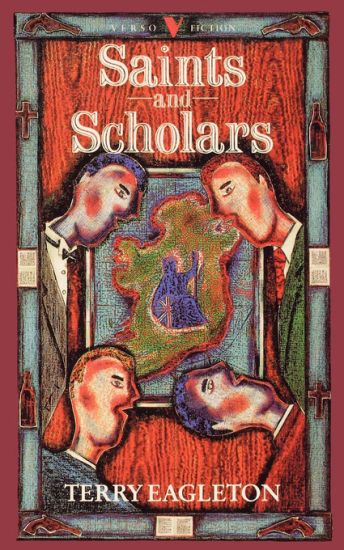
Saints and Scholars

Saints and Scholars

Terry Eagleton

Verso Books
1987
nidottu
In 1916, in a remote cottage on the west coast of Ireland, an unlikely collection of fugitives gathers. Ludwig Wittgenstein has run away from Cambridge and English insularity. His traveling companion, Nikolai Bakhtin (brother of the Marxist aesthetician), has been through the gamut of revolutionary sects and is now devoting himself to gluttony. Into their retreat stumble James Connolly, now on the run from the British government, and Leopold Bloom, fleeing Ulysses and his broken marriage. Being men of ideas, they begin to talk. And then, being men of principles, they begin to argue ...
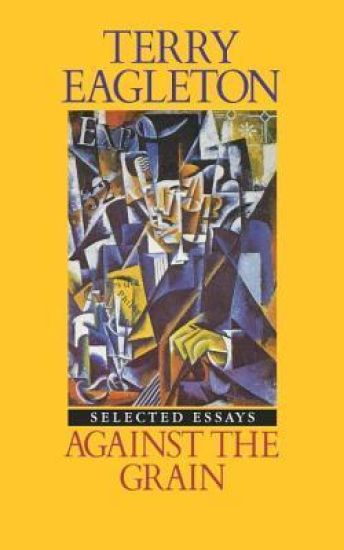
Against the Grain

Against the Grain

Terry Eagleton

Verso Books
1986
nidottu
These essays (and a ballad) have their origins in Terry Eagleton's continuing engagement with the possibilities of a literary criticism that is both materialist and open to diverse currents of thought in the human sciences.Eagleton's combative intelligence here explores the encounter between Marxism and contemporary European and American literary theory. Included are a survey of the Althusserian contribution to literary analysis; thoughts on the fraught relations between Marxism and poststructuralism; and a brilliant evocation of the affinities and tensions between Wittgenstein, Derrida and Bakhtin.Intellectual figures in this wide-ranging topography include Jacques Derrida; the radical critic Fredric Jameson; the apostle of deconstruction, Paul de Man; the liberal humanist John Bayley; Bertoit Brecht; William Empson and Pierre Machersy. The volume also includes Eagleton's brilliant reading of Conrad's The Secret Agent.Against the Grain is an excellent introduction to the range of Terry Eagleton's thought and his considerable body of work. It is also a useful primer for all readers interested in the vitality of literary theory today.
Ideology

Ideology

Terry Eagleton

Routledge
2017
sidottu
This collection of readings on the concept of ideology is brought together by the Marxist critic, Terry Eagleton. His introduction traces the historical evolution of ideology and examines in a more theoretical style the various meanings of the word and their significance. The readings begin with the first English translations of some of the writing of the French founder of the concept in the eighteenth century. They then move from the enlightenment to Hegel and Marxism, with particular emphasis on Marx and Engels themselves. They also look at other eighteenth-century traditions of thought such as Nietzche and Freud. All the readings are theoretical rather than examples of `ideology at work' and will be of interest to undergraduate students of cultural, political and historical studies concerned with ideology, as well as students of English literature.