
Kirjahaku
Etsi kirjoja tekijän nimen, kirjan nimen tai ISBN:n perusteella.
23 kirjaa tekijältä Theodore Ziolkowski
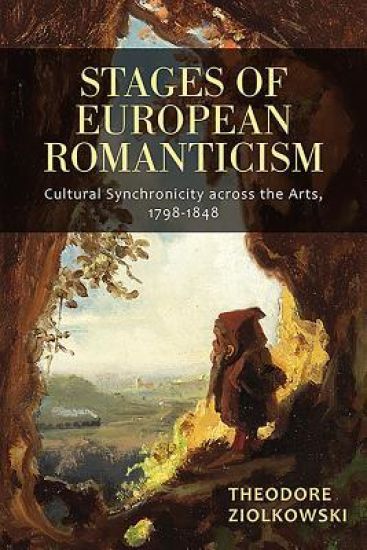
Employs an innovative approach by "stages" to offer a unified vision of European Romanticism over the half-century of its growth and decline. Romanticism was a truly European phenomenon, extending roughly from the French Revolution to the 1848 revolutions and embracing not only literature and drama but also music and visual arts. Because of Romanticism's vast scope, most treatments have restricted themselves to single countries or to specific forms, notably literature, art, or music. This book takes a wider view by considering in each of six chapters representative examples of works - from across Europe and across a range of the arts - that were created in a single year. For instance, in the first chapter, focusing on the year 1798, Beethoven's Pathétique sonata, Wordsworth and Coleridge's Lyrical Ballads,Tieck's novel Franz Sternbalds Wanderungen, and Goya's painting El sueño de la razón. The following chapters treat works from the years 1808, 1818, 1828, 1838, and 1848. This approach by "stages" makes it possible to determine characteristics of six stages of Romanticism in its historical and intellectual context and to note the conspicuous differences between these stages as European Romanticism developed-for example, the waxing and waning of religious themes, the shifting visions of landscape, the gradual ironic detachment from early Romanticism. In sum, the volume offers a unified vision of European Romanticism in all its aesthetic forms over the half-centuryof its growth and decline. Theodore Ziolkowski is Professor Emeritus of German and Comparative Literature, Princeton University.
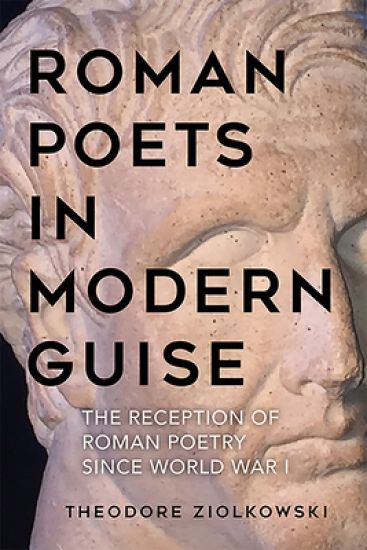
Identifies and explores Roman modes of poetry as received by twentieth- and twenty-first-century Anglo-American, German, and French poets. Analogies with Rome have been a powerful motif in American thought - and poetry - since the Founding Fathers. They resurged in the twentieth century, and especially after World War II, when the US saw its mission as analogous to that of Augustan Rome - a theme conspicuous in Robert Frost's poem for the Kennedy inauguration, which prophesied "The glory of a next Augustan age." This theme showed up in the poetry of other countries too. The Roman mode that Frost proclaimed was evident in not only American, but also French and German treatments of Virgil's Eclogues. Horace figures in poets from Bertolt Brecht and Ezra Pound down to James Wright. The Augustan poets were displaced during the more cynical postwar years by their Republican counterparts: the poet/scientist Lucretius (especially in Germany), the poet/lover Catullus, and the outsider Propertius. And the poets of the empire - Ovid, Seneca, and Juvenal - added certain dissonances to the Roman harmony. In a period when all the arts have looked increasingly to the past for models, the Roman poets have offered modern ones a wide variety of attitudes - from the patriotic fervor of Virgil and Horace to the cultural cynicism of Juvenal. All these tones are evident in the Anglo-American, German, and French examples discussed in this book.