
Kirjahaku
Etsi kirjoja tekijän nimen, kirjan nimen tai ISBN:n perusteella.
82 kirjaa tekijältä Tim Chester

How does the eschatological future impinge on the present? Is the kingdom of God present outside the confession of Christ in movements towards social justice? Is Christian hope a stimulus to social involvement or an alternative? And how does the present impinge on the eschatological future? What is the relationship between our actions now and the new creation? Is there eschatological continuity between the two? Jurgen Moltmann, one of our most influential contemporary theologians, has had much to say both on eschatology and its relationship to mission. This book explores his thought along with evangelical responses to it. Eschatology has been central to evangelical debates about social involvement ever since the Laussanne Congress in 1974. The book examines how evangelicals themselves have related hope and mission. The book highlights the important contribution Moltmann has made while offering a critique of his thought from an evangelical perspective. In so doing, it touches on pertinent issues for evangelical missiology. The conclusion takes John Calvin as a starting point, proposing 'an eschatology of the cross' which offers a critique of the over-realized eschatologies in liberation theology and triumphalistic forms of evangelicalism.
How do we respond to the silent appeal in the dark eyes of the child in the charity catalogue, or the blanketed figure in the cold shop-doorway? Should we share the gospel with them, or a bowl of soup? Throughout history, men and women such as Wilberforce, Shaftesbury, Carey and Booth have recognized a call to help the needy. Others have argued that our first task is evangelism, that Christians should not meddle in politics, that social action is a distraction. Do we serve Christ through preaching his Word, or should we use words only when necessary? Tim Chester argues passionately that evangelism and social action are inseparable as two arms of the church's mission. He presents a biblical case for truly evangelical social action that is shaped and inspired by the gospel. He urges conservatives not to marginalize those who uphold the cause of the oppressed, and those involved in social action not to neglect the preaching of the Word.
Do you say 'yes' to requests when really you mean to say 'no'- Do you feel permanently trapped by your 24/7 lifestyle? While offering practical help to busy Christians, Tim Chester also opts for root-and-branch treatment: you need to deal radically with the things that are driving you. If you're busy because of the following: 'I need to prove myself' 'Otherwise things get out of control' 'I like the pressure/money' think again! At the root of our 'slavery' are serious misunderstandings, often reinforced by our culture. If we want to be free, then we need to counteract them with God's word. It's important to manage our time, but it's more important to manage our hearts. God has promised his rest to all who are weary and burdened (Matthew 11:28). It's up to us to accept it.
Many books are written by experts. This book isn't one of them,' admits Tim Chester. 'It was written out of my own struggle to change. My long battle with particular issues set me searching the Bible as well as writings from the past. This book shares the amazing truths I discovered that now give me hope. 'For years I wondered if I'd ever overcome certain sins. And while I can't claim to have conquered sin - for no one ever can do - here are discoveries that have led to change in my life and in the lives of others.' You may be: A new Christian, struggling to change the habits of your former way of life. An older Christian, feeling you've plateaued: you grew quickly when you first believed but now your Christian life is much of a muchness. A Christian who's fallen into sin in a big way, wondering how you'll ever get back on track. Other books describe how we should live, but this book outlines how we can change. It's about hope: the hope we have in Jesus, hope for forgiveness, and hope for real and lasting change. God promises liberating grace and transforming power to his people.
The cross and resurrection provide the pattern for discipleship today, calling Christians to a radical new way of living. The Ordinary Hero invites us to : live out the radical implications of grace apply the way of the cross: sacrificial love and service, to every area of life accept the pattern of suffering followed by glory as normal pursue spiritual power, not for its own sake, but in order to live the weakness of the cross embark on risk-taking lives because we're focussed on the world to come Says the author, 'This book strikes a note that is rarely heard today. In particular, the important themes of suffering followed by glory, and the hiddenness of the Christian life, are all but absent in contemporary Christian thought.' The book concludes with a powerful story of an ordinary hero.
You long to be free but... Pornography has reached epidemic proportions. And in God's eyes porn is ugly. It devalues other human beings and the good gift of sex in favour of a destructive imitation. Tim Chester points us to something infinitely better, something that captivates without causing shame, remorse or embarrassment: the glory and beauty of Christ. We are made to be satisfied with God alone, and told to avoid the sin that hinders our relationship with him. Tim exposes the lies and deceptions of porn, inviting us to be fully free, and showing positively and practically how this can be possible in daily life. We can be captured by a better vision.
Meals have always been important across societies and cultures - a time for friends and families to come together. An important part of relationships, meals are vital to our social health. Or as author Tim Chester puts it, 'Food connects.' Tim argues that meals are also deeply theological - an important part of Christian fellowship and mission. He observes that Luke's Gospel is full of stories of Jesus at meals. And these meals represent something bigger. In six chapters Tim shows how they enact grace, community, hope, mission, salvation and promise. Moving from New Testament times to today, the author applies biblical truth to challenge our contemporary understandings of hospitality. He urges sacrificial giving and loving around the table, helping readers consider how meals can be about serving others and sharing the grace of Christ.
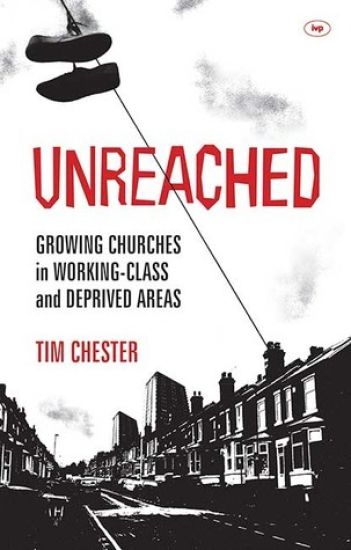
Think of the thriving evangelical churches in your area. Chances are they will be in the 'nice' areas of town and their leaders will be middle class. Tim Chester once attended a lecture where the speaker showed a map of Sheffield. The council wards were coloured different shades, according to social indicators: educational achievement, household income, benefit recipients, social housing, criminal activity, and so on. Slide after slide showed that the east side of the city was the needy, socially deprived half, compared to the more prosperous west. Where are the churches? Counting all the various tribes of evangelicalism, the large churches are on the west side. The working-class and deprived areas of our cities are not being reached with the gospel. There are many exciting exceptions, but the pattern is clear. According to Mez McConnell from Niddrie Community Church in Edinburgh, of the fifty worst housing schemes in Scotland, half have no church, and most of the others only have a dying church. Very few have an evangelical witness. This book is about reaching deprived, urban, working-class areas, often estates or schemes. It offers us the combined experience of the Reaching the Unreached working group, an informal network of Christian leaders from different parts of the UK. This book doesn't claim to be the final word. But it presents us with a vision of what can be done. We pray that it will capture imaginations and start a vital process in our hearts and minds.







This study guide on Christian marriage focuses on how the Gospel shapes the practical realities of everyday life. Author Tim Chester lifts the lid on many of the common pressure points that modern couples face, and shows how a proper understanding of the Gospel can shape a response.
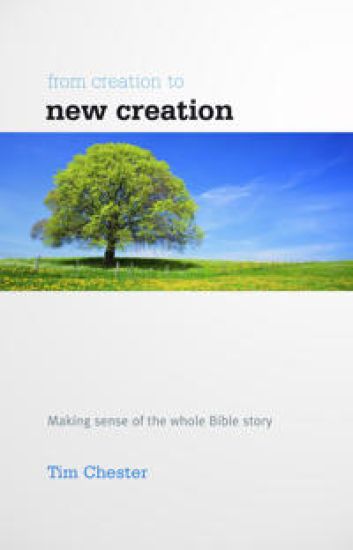
Packed with diagrams, illustrations and timelines, this accessible Bible overview unlocks the storyline of the whole Bible how God promised and then brought about the plan to save our fallen world. But this is no book of arid theological ideas. It is a story that will encourage effective, active Christian living in today's world.