Kirjojen hintavertailu. Mukana 12 390 323 kirjaa ja 12 kauppaa.

Kirjahaku

Etsi kirjoja tekijän nimen, kirjan nimen tai ISBN:n perusteella.

38 kirjaa tekijältä Tim Hollis

Rock City

Rock City

Tim Hollis

Arcadia Publishing Library Editions
2017
sidottu
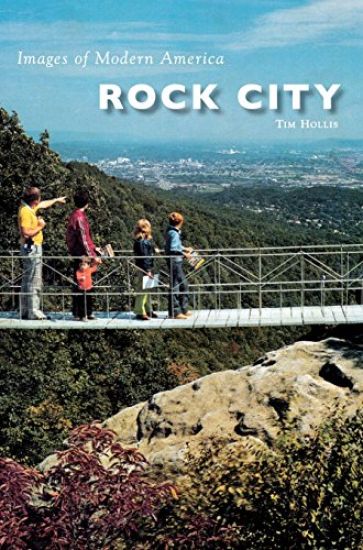
Since May 21, 1932, tourists have been making the trip to the top of Lookout Mountain to stroll through what pioneers as far back as the 1820s called the rock city. This collection of huge boulders in a wild array of shapes and sizes was developed as an attraction by Garnet Carter, the inventor of modern miniature golf, and his wife, Frieda, a devotee of European fairy tales. Rock City Gardens quickly became one of the most famous tourist attractions in the Southeast, especially after Carter started a program of painting advertisements on barn roofs. During the post World War II baby-boom era, Rock City became even more of a destination with the additions of Fairyland Caverns and Mother Goose Village."
Memories of Downtown Birmingham: Where All the Lights Were Bright
The bright lights of Birmingham's theater and retail district have shone over the Magic City for nearly one hundred years during the good times and the bad. During the early 1900s, small businesses, largely founded by immigrants who arrived in Birmingham with almost nothing, exploded into immensely popular shopping and entertainment destinations. The stories of entrepreneurs and immigrants like Louis Pizitz and his business rival, Adolph Loveman, exemplify the kind of rags-to-riches tales that make up much of the city's character. The theaters in the district, some with themed restrooms, inspired the head of Paramount Pictures to dub Birmingham's Alabama Theatre the Showplace of the South." Author Tim Hollis celebrates and revives the spirit of the beloved department stores and famous theaters from the era of silent movies to the days of integration and change to today."
Stuckey's

Stuckey's

Tim Hollis

Arcadia Publishing Library Editions
2017
sidottu
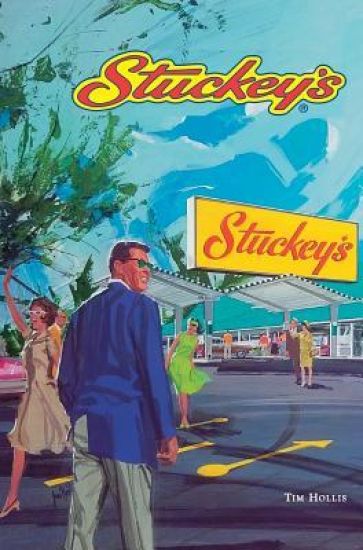
Beginning as a single roadside stand selling pecans in Eastman, Georgia, by the 1950s, the name Stuckey's was synonymous throughout the South with candy, souvenirs, clean restrooms, and the other necessities of automobile travel. During the 1960s, the Stuckey's stores moved into the new frontier of the interstate highways, where quite often they sat alone at the exits like oases in the middle of a desert. Their bright aqua-colored rooftops were a welcome beacon for those who had been driving long distances. Travel has changed a lot since then, but Stuckey's can still be found along the nation's highways, still providing dozens of types of candy and nuts, plus the same mix of souvenirs, as always. Anyone need a rubber alligator or a pecan log?
Loveman's: Meet Me Under the Clock

Loveman's: Meet Me Under the Clock

Tim Hollis

History Press Library Editions
2012
sidottu
In an era when local department stores still thrived, Birmingham shoppers had different stores from which to choose. But when customers sought more than bargain prices, when they demanded unparalleled quality and outright luxury, they chose Loveman's. The first store opened in Birmingham in 1887, and the chain eventually grew to include locations in Huntsville and Montgomery, embracing those from throughout the state who valued an upscale shopping experience. Weathering the Great Depression, a devastating fire that destroyed the original location in 1934 and historic civil rights protests in the early 1960s, Loveman's proved to be an enduring name through many eras of change until finally closing its doors in 1980. Now, Birmingham historian Tim Hollis chronicles the sterling history of this celebrated store's commitment to excellence.
See Alabama First: The Story of Alabama Tourism

See Alabama First: The Story of Alabama Tourism

Tim Hollis

History Press Library Editions
2013
sidottu
Tourism in the Southeast is often associated with Florida--a state that essentially defined the industry in America. Yet Alabama has a fascinating history of tourism all its own. It all began with an enterprising politician. In 1916, John Hollis Bankhead went to great lengths to ensure that one of America's first transcontinental highways went directly through Alabama. Though it was a less efficient route for highway travelers, it marked the birth of Alabama's fledgling tourism industry, which grew exponentially with each passing decade. Since he was a boy, author Tim Hollis has traveled from the Shoals to the coast and amassed an unrivaled knowledge of Alabama tourism. From restored and preserved historic destinations to campy tourist traps and outrageous roadside attractions, this is the complete story of tourism in Alabama.
Lost Attractions of Silver Springs

Lost Attractions of Silver Springs

Tim Hollis

History Press Library Editions
2018
sidottu
For more than fifty years, there was no more iconic Florida tourist attraction than Silver Springs. Its sheer popularity meant that the area around it--indeed, the entirety of Marion County--serviced the entertainment, gas, food and lodging needs of millions of tourists annually. Visitors flocked to places like Ross Allen's Reptile Institute, Tommy Bartlett's Deer Ranch and natural spots like Rainbow Springs and Ocala Caverns. As Florida tourism moved into the theme park era, scores of smaller attractions and their related businesses were abandoned. Author Tim Hollis revisits these once-thriving attractions.
Lost Attractions of Georgia

Lost Attractions of Georgia

Tim Hollis

History PR
2021
sidottu
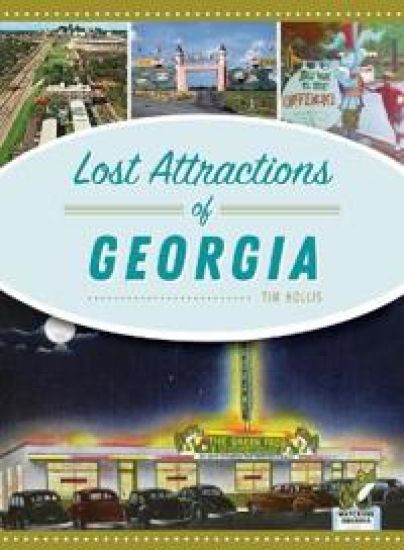
While Atlanta has been a major tourist destination since the Civil War, travelers rarely encountered the rest of Georgia unless they were on their way to Florida. That meant scores of attractions, motels, restaurants and gas stations sprang up along the major and minor routes, all vying for their own piece of those Yankee dollars. In Lost Attractions of Georgia, author Tim Hollis introduces us to such defunct sights as Storyland and the Georgia Game Park, as well as now-extinct elements of popular attractions, including Six Flags Over Georgia, Rock City, Stone Mountain Park and others.
Lost Attractions of Florida's Miracle Strip
Beginning in the early 1950s, the 130 miles of Florida coastline stretching from Panama City to Pensacola were branded as the Miracle Strip. Between those cities, oddities sprang up: goofy miniature golf courses, neon-bedecked motels, reptile farms and attractions that sought to re-create environments ranging from the South Pacific to the ghost towns of the Old West. In total, it was a marketing effort that worked brilliantly. Tourists flocked to the Strip, and now they can return. Author Tim Hollis presents a colorful array of these now-vanished sights, from the garish Miracle Strip Amusement Park to such oddities as Castle Dracula and the Museum of the Sea and Indian.
Vintage Tennessee Signs

Vintage Tennessee Signs

Tim Hollis

History Pr
2022
sidottu
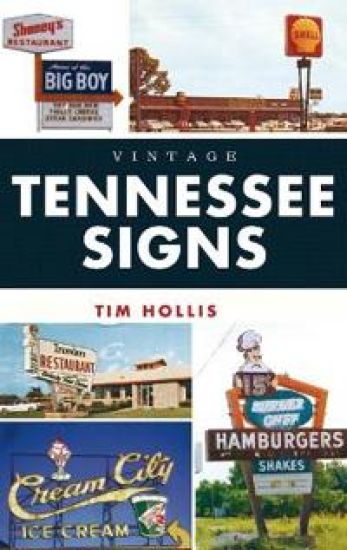
Many people have never stopped to realize how many of their fond memories involve advertising signs. Although these neon spectaculars, billboards and even signs painted directly onto brick walls were created expressly to persuade customers or tourists to patronize businesses, many such signs remained in place for so long that they became landmarks in their own right. Signs like the Shoney's Big Boy towering over the area and the iconic Bilmar Motor Inn sign are now a part of history. Author Tim Hollis has scoured various archives to compile some of the best remembered, or most obscure, signs to dot the Tennessee landscape, whether for tourist attractions, restaurants, department stores, gas stations or many other roadside fixtures.
Hi There, Boys and Girls! America's Local Children's TV Programs
Whatever happened to Bozo the Clown, to Aunt Norma, to Solomon C. Whiskers, those television celebrities who hammed it up between cartoons and contests during local kids' shows? In Hi There, Boys and Girls! America's Local Children's TV Programs, Tim Hollis tracks down the story of every known local children's TV show from markets across the United States. There have been many books about children's television on the networks, and such shows as Captain Kangaroo, Howdy Doody, and Sesame Street are legends in broadcasting. However, the local branch of children's programming has received much less attention. For every performer on the scale of a Captain Kangaroo or a Buffalo Bob, there were five or six local personalities who were just as beloved by their viewers--and sometimes even more so--since these local stars could be counted on for appearances at stores, children's hospitals, and shopping centers, where kids could meet them face-to-face. Anyone over the age of thirty who grew up with a TV set will remember at least one or two of these productions. Whether it was hosted by a cowboy character, a clown such as the one on the many-franchised Bozo shows, a policeman, a sea captain who showed Popeye cartoons, or one of the gentle and lovely ladies who presided over Romper Room, these hometown stars were some of the Baby Boomers' first friends. Although children loved them, these hard-working performers garnered less respect from the rest of the TV industry. Hi There, Boys and Girls! includes a capsule history of this programming from the earliest days of radio to the early 1970s, when a combination of social changes and broadcast regulations sent most of the hosts into retirement. Walt Disney once observed that while there is very little adult in a child, there is a lot of child in every adult. This book will bring back a flood of long-submerged memories for anyone who was a child during this golden era. Tim Hollis lives in Birmingham, Alabama. His previous books include Dixie Before Disney: 100 Years of Roadside Fun (University Press of Mississippi) and Cousin Cliff: 40 Magical Years in Television.
Florida's Miracle Strip

Florida's Miracle Strip

Tim Hollis

University Press of Mississippi
2004
nidottu
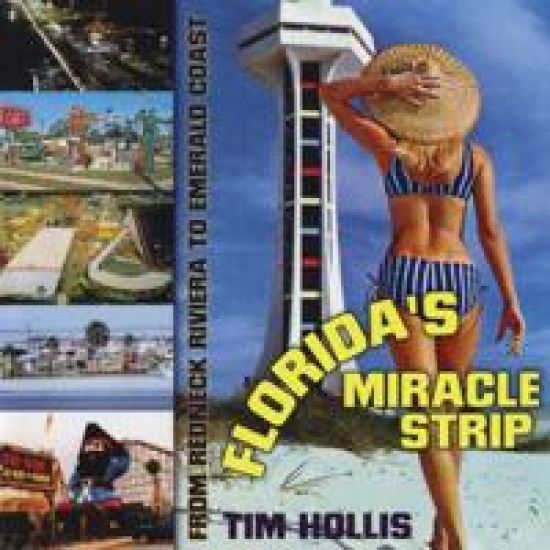
Since World War II, tourists have flocked to Florida's northwest Gulf Coast and sun and fun spots at Panama City Beach, Fort Walton Beach, and Pensacola Beach. Every year those visitors number in the millions. For those who long to recall how the vacationland appeared thirty, forty, or even fifty years ago, Tim Hollis has written Florida's Miracle Strip: From Redneck Riviera to Emerald Coast. In a style that informs and entertains, Hollis describes the rise of early developments, such as Long Beach Resort, and major tourist attractions, such as the Gulfarium and the Miracle Strip Amusement Park. With heartfelt nostalgia and a dose of tongue-in-cheek, he reminisces on the motels and tourist cottages; the restaurants, such as Captain Anderson's and Staff's; the elaborate miniature golf courses, such as Goofy Golf and its many imitators. He takes a special delight in recovering the memories of those quirky businesses that now exist only in faded photographs and aging postcards, such wacky tourist traps as Castle Dracula, Petticoat Junction, Tombstone Territory, and the Snake-A-Torium. In the book, Hollis examines how this area became known as the ""Miracle Strip,"" and how the local chambers of commerce got so tired of that image that the name gradually fell into disuse. The book is illustrated with a profusion of vintage photos and advertisements, most of which have not been seen in print since their original appearances. For the nostalgia lover, the snowbird, the tourist seeking yesteryear, Florida's Miracle Strip: From Redneck Riviera to Emerald Coast will be a welcome traveling companion. Tim Hollis is the author of Hi There, Boys and Girls! America's Local Children's TV Programs and Dixie Before Disney: 100 Years of Roadside Fun, both from University Press of Mississippi.
Toons in Toyland

Toons in Toyland

Tim Hollis

University Press of Mississippi
2015
sidottu
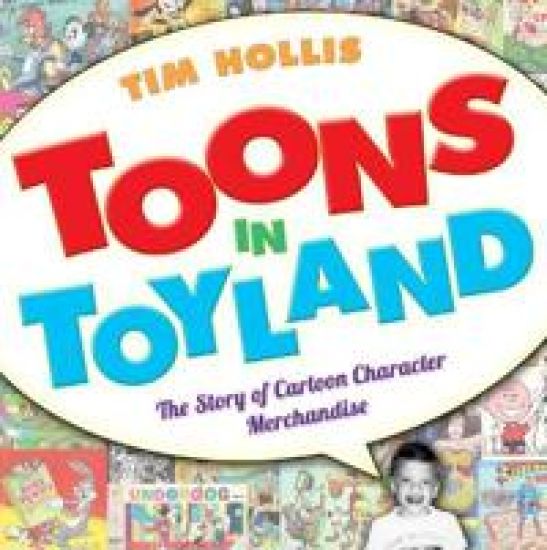
Every living American adult likely prized one childhood toy that featured the happy image of an animated cartoon or comic strip character. There is an ever-growing market for these collectibles, and stacks of books pose as pricing guides. Yet Tim Hollis is the first to examine the entire story of character licensing and merchandising from a historical view.Toons in Toyland focuses mainly on the post-World War II years, circa 1946-1980, when the last baby boomers were in high school. During those years, the mass merchandising of cartoon characters peaked. However, the concept of licensing cartoon characters for toys, trinkets, and other merchandise dates back to the very first newspaper comics character, the Yellow Kid, who debuted in 1896 and was soon appearing on a variety of items. Eventually, cartoon producers and comic strip artists counted on merchandising as a major part of their revenue stream. It still plays a tremendous role in the success of the Walt Disney Company and many others today.Chapters examine storybooks (such as Little Golden Books), comic books, records, board games, jigsaw puzzles, optical toys (including View-Master and Kenner's Give-a-Show Projector), and holiday paraphernalia. Extending even beyond toys, food companies licensed characters galore--remember the Peanuts characters plugging bread and Dolly Madison snacks? And roadside attractions, amusement parks, campgrounds, and restaurants--think Yogi Bear and Jellystone Park Campgrounds--all bought a bit of cartoon magic to lure the green waves of tourists' dollars.
Ain't That a Knee-Slapper

Ain't That a Knee-Slapper

Tim Hollis

University Press of Mississippi
2008
nidottu
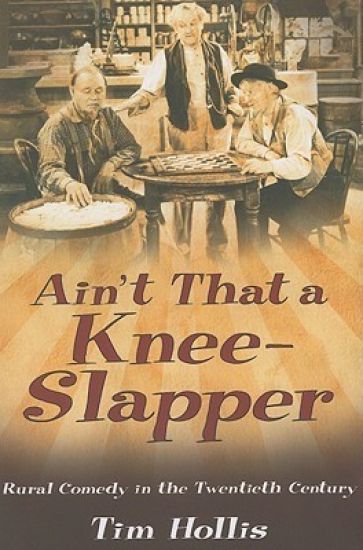
There was a time when rural comedians drew most of their humor from tales of farmers' daughters, hogs, hens, and hill country high jinks. Lum and Abner and Ma and Pa Kettle might not have toured happily under the ""Redneck"" marquee, but they were its precursors. In Ain't That a Knee-Slapper: Rural Comedy in the Twentieth Century, author Tim Hollis traces the evolution of this classic American form of humor in the mass media, beginning with the golden age of radio, when such comedians as Bob Burns, Judy Canova, and Lum and Abner kept listeners laughing. The book then moves into the motion pictures of the 1930s, 1940s, and 1950s, when the established radio stars enjoyed second careers on the silver screen and were joined by live-action renditions of the comic strip characters Li'l Abner and Snuffy Smith, along with the much-loved Ma and Pa Kettle series of films. Hollis explores such rural sitcoms as The Real McCoys in the late 1950s and from the 1960s, The Andy Griffith Show, The Beverly Hillbillies, Green Acres, Hee Haw, and many others. Along the way, readers are taken on side trips into the world of animated cartoons and television commercials that succeeded through a distinctly rural sense of fun. While rural comedy fell out of vogue and networks sacked shows in the early 1970s, the emergence of such hits as The Dukes of Hazzard brought the genre whooping back to the mainstream. Hollis concludes with a brief look at the current state of rural humor, which manifests itself in a more suburban, redneck brand of standup comedy. Tim Hollis is the author of numerous books, including Hi There, Boys and Girls! America's Local Children's TV Programs and (with Greg Ehrbar) Mouse Tracks: The Story of Walt Disney Records.
Vintage Tennessee Signs

Vintage Tennessee Signs

Tim Hollis

History Press
2022
nidottu
Many people have never stopped to realize how many of their fond memories involve advertising signs. Although these neon spectaculars, billboards and even signs painted directly onto brick walls were created expressly to persuade customers or tourists to patronize businesses, many such signs remained in place for so long that they became landmarks in their own right. Signs like the Shoney's Big Boy towering over the area and the iconic Bilmar Motor Inn sign are now a part of history. Author Tim Hollis has scoured various archives to compile some of the best remembered, or most obscure, signs to dot the Tennessee landscape, whether for tourist attractions, restaurants, department stores, gas stations or many other roadside fixtures.
Birmingham's Theater and Retail District

Birmingham's Theater and Retail District

Tim Hollis

Arcadia Publishing (SC)
2005
nidottu
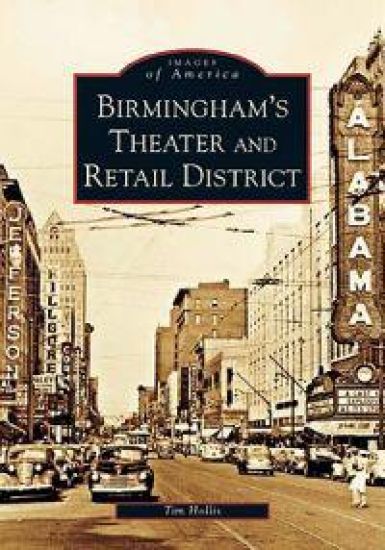
From the 1890s to the 1970s, the thriving area of Birmingham between Eighteenth and Twenty-first Streets along First, Second, and Third Avenues was the bustling heart of this quickly growing city. Before the age of the shopping mall, the downtown was the center of retail and entertainment in Birmingham. Along these streets, entrepreneurial immigrants built department stores--including Pizitz and Loveman, Joseph, and Loeb--while the marquees of the Alabama, Ritz, and Lyric theaters, among others, shined over the busy downtown sidewalks.