Kirjojen hintavertailu. Mukana 12 461 848 kirjaa ja 12 kauppaa.

Kirjahaku

Etsi kirjoja tekijän nimen, kirjan nimen tai ISBN:n perusteella.

1000 tulosta hakusanalla "Civilization"

Civilization

Civilization

Roger Osborne

Vintage
2008
pokkari
Ever since the attacks of 11th September, western leaders have described a world engaged in 'a fight for civilization'. Sweeping in its scope and comprehensive in its coverage, Civilzation tells the story of the western world from its origins to the present.
Civilization

Civilization

Niall Ferguson

Penguin Books Ltd
2018
pokkari
Winner of the Estoril Global Issues Distinguished Book Prize 2013In 1412, Europe was a miserable backwater ravaged by plague, bad sanitation and incessant war, while the Orient was home to dazzling civilizations. Yet, somehow, the West came to dominate the Rest for most of the next half millennium.In this vital, brilliant book, Niall Ferguson reveals the six 'killer applications' that the Rest lacked: competition, science, property rights, medicine, consumerism and the work ethic. And he asks: do we still have these winning tools? Or is this the end of Western ascendancy?'Brilliantly written, full of wit and virtuosity, stuffed with memorable lines and gorgeous bits of information. A great read' The Times'A dazzling history of Western ideas ... epic' Economist'Vivid and fascinating' Daily Telegraph'Superb ... brings history alive ... dazzling' Independent'This is sharp. It feels urgent. Ferguson ... twists his knife with great literary brio' Andrew Marr, Financial Times
Civilization

Civilization

E.A. Heaman

MCGILL-QUEEN'S UNIVERSITY PRESS
2022
sidottu
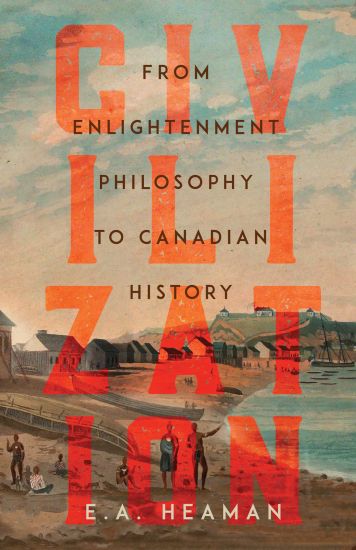
Colonial Canada changed enormously between the 1760s and the 1860s, the Conquest and Confederation, but the idea of civilization seen to guide those transformations changed still more. A cosmopolitan and optimistic theory of history was written into the founding Canadian constitution as a check on state violence, only to be reversed and undone over the next century. Civilization was hegemony, a contradictory theory of unrestrained power and restraints on that power. Occupying a middle ground between British and American hegemonies, all the different peoples living in Canada felt those contradictions very sharply. Both Britain and America came to despair of bending Canada violently to their will, and new forms of hegemony, a greater reckoning with soft power, emerged in the wake of those failures.E.A. Heaman shows that the view from colonial Canada matters for intellectual and political history. Canada posed serious challenges to the Scottish Enlightenment, the Pax Britannica, American manifest destiny, and the emerging model of the nation-state. David Hume’s theory of history shaped the Canadian imaginary in constitutional documents, much-thumbed histories, and a certain liberal-conservative political and financial orientation. But as settlers flooded across the continent, cosmopolitanism became chauvinism, and the idea of civilization was put to accomplishing plunder and predation on a transcontinental scale. Case studies show crucial moments of conceptual reversal, some broadly representative and some unique to Canada. Dissecting the Seven Years’ War, domestic relations, the fiscal military state, liberal reform, social statistics, democracy, constitutionalism, and scholarly history, Heaman shows how key British and Canadian public figures grappled with the growing gap between theory and practice.By historicizing the concept of civilization, this book connects Enlightenment ideals and anti-colonialism, shown in contest with colonialism in Canada before Confederation.
Civilization

Civilization

E.A. Heaman

MCGILL-QUEEN'S UNIVERSITY PRESS
2022
nidottu
Colonial Canada changed enormously between the 1760s and the 1860s, the Conquest and Confederation, but the idea of civilization seen to guide those transformations changed still more. A cosmopolitan and optimistic theory of history was written into the founding Canadian constitution as a check on state violence, only to be reversed and undone over the next century. Civilization was hegemony, a contradictory theory of unrestrained power and restraints on that power. Occupying a middle ground between British and American hegemonies, all the different peoples living in Canada felt those contradictions very sharply. Both Britain and America came to despair of bending Canada violently to their will, and new forms of hegemony, a greater reckoning with soft power, emerged in the wake of those failures.E.A. Heaman shows that the view from colonial Canada matters for intellectual and political history. Canada posed serious challenges to the Scottish Enlightenment, the Pax Britannica, American manifest destiny, and the emerging model of the nation-state. David Hume’s theory of history shaped the Canadian imaginary in constitutional documents, much-thumbed histories, and a certain liberal-conservative political and financial orientation. But as settlers flooded across the continent, cosmopolitanism became chauvinism, and the idea of civilization was put to accomplishing plunder and predation on a transcontinental scale. Case studies show crucial moments of conceptual reversal, some broadly representative and some unique to Canada. Dissecting the Seven Years’ War, domestic relations, the fiscal military state, liberal reform, social statistics, democracy, constitutionalism, and scholarly history, Heaman shows how key British and Canadian public figures grappled with the growing gap between theory and practice.By historicizing the concept of civilization, this book connects Enlightenment ideals and anti-colonialism, shown in contest with colonialism in Canada before Confederation.
Civilization
Discover how humans created their world from the objects they left behind - from the US Constitution to the first iPhone - in DK's latest history book. From the beginning of human history, the one thing that has defined us is our talent for making things, from basic technology and everyday objects, such as bowls and hand axes, to high-tech inventions, such as supersonic aircraft, smart devices, and Mars rovers.Objects speak volumes about a civilization, telling us how our ancestors lived - as well as what they believed in and valued. A bronze cat mummy shows us how highly the ancient Egyptians valued their feline companions, while a mechanical tiger toy tells the story of rising tensions between an Indian sultan and European colonisers. With stunning, specially commissioned photography, Civilization shows you the objects that our ancestors treasured - from the jewellery worn by the Mesopotamians to the prized ritual vessels used by the people of the Shang dynasty - and gives you an insight into what gave each culture its own identity. From astrolabes and aeroplanes to vacuum cleaners and X-rays, DK uses its hallmark visual style to weave the extraordinary legacy of our creativity into a unique view of world history that will change the way you see the objects all around us.
Civilization

Civilization

William A Ewing; Holly Roussell

Thames Hudson Ltd
2018
sidottu
We hurtle together into the future at ever-increasing speed – or so it seems to the collective psyche. Every day and every hour, human civilization expands, evolves and mutates. While we frequently lapse into celebrating the individual at the expense of the group, in science and art, at work and at play, at home and in transit, we increasingly live the collective life. Civilization shows how contemporary photography, notably art photography, is fascinated by, and attempts to decode and communicate, the way we live today. This landmark publication is accompanied by an internationally touring exhibition produced by the Foundation for the Exhibition of Photography – a global cultural event for a global subject. Civilization is presented through eight thematic chapters, each led by breathtaking imagery and accompanied by essays, quotes, commentaries and captions to provide a deeper understanding of its theme. Visually epic and ambitiously popular in approach, it will reach out beyond the boundaries of the photography world to connect with audiences worldwide.
Civilization

Civilization

William A Ewing; Holly Roussell

THAMES HUDSON LTD
2023
nidottu
Our fast-changing world seen through the lenses of 140 leading contemporary photographers around the globe. With close to 500 images, many previously unpublished, this landmark publication takes stock of the material and spiritual cultures that make up ‘civilization’. Ranging from the ordinary to the extraordinary, from our great collective achievements to our ruinous collective failings, Civilization: The Way We Live Now explores the complexity of contemporary civilization through the rich, nuanced language of photography. Featuring images by some 140 photographers – from Reiner Riedler’s families at leisure parks, Raimond Wouda’s high schools, Wang Qingsong’s Work, Work, Work and Cindy Sherman’s Society Portraits, to Lauren Greenfield’s displays of ostentatious wealth, Edward Burtynsky’s oil fields, Pablo Lopez Luz’s views on a sprawling contemporary megalopolis, Thomas Struth’s images of high technology, Xing Danwen’s electronic wastelands and Taryn Simon’s Contraband, Civilization draws together the threads of humankind’s ever-changing, frenetic, collective life across the globe. Visually epic, Civilization is presented through eight thematic chapters, each featuring powerful imagery and accompanied by provocative essays, quotes and concise statements by the artists themselves.
Civilization

Civilization

V. F. Lenzen; Stephen C. Pepper; George P. Adams; D. S. Mackay; Edward W. Strong; A. I. Melden; William R. Dennes

University of California Press
2022
pokkari
In this collection of essays first published in 1941, the authors grapple with fundamental questions about the nature and evaluation of human social patterns. Their republication invites reflection on whether the intervening decades of historical turbulence and philosophical progress have addressed these enduring issues or if the analyses remain relevant. Professor Lenzen’s exploration of the scientific revolution highlights the interplay of philosophical decisions and practical conditions, such as the rejection of Aristotelian physics in favor of mathematical methods. While he underestimated the impact of military pressures on scientific progress, his central theses about the conceptual underpinnings of breakthroughs remain intact. Similarly, Professor Melden’s critique of "sociologism" and his insights into the conditions for objective judgment in the social sciences retain their pertinence in addressing the persistent challenges of relativism and explanatory frameworks. The essays also delve into the relationship between freedom and organization, a tension explored by Professors Pepper and Mackay, whose analyses of research and communication structures are even more relevant today. At a deeper level, the works of Professors Adams, Strong, and the concluding essay tackle the philosophical core of civilization: the nature and validity of value norms. Adams’ Platonic interpretations and Strong’s naturalistic inquiries provide complementary perspectives on the grounding of values in human needs and aspirations. The concluding essay seeks to reconcile descriptive and normative perspectives on civilization while bridging natural and spiritual values. Collectively, these studies aim to stimulate rigorous reflection on civilization's intellectual and moral underpinnings, a task as vital now as when these ideas were first articulated. This title is part of UC Press's Voices Revived program, which commemorates University of California Press’s mission to seek out and cultivate the brightest minds and give them voice, reach, and impact. Drawing on a backlist dating to 1893, Voices Revived makes high-quality, peer-reviewed scholarship accessible once again using print-on-demand technology. This title was originally published in 1959.
Civilization

Civilization

V. F. Lenzen; Stephen C. Pepper; George P. Adams; D. S. Mackay; Edward W. Strong; A. I. Melden; William R. Dennes

University of California Press
2022
sidottu
In this collection of essays first published in 1941, the authors grapple with fundamental questions about the nature and evaluation of human social patterns. Their republication invites reflection on whether the intervening decades of historical turbulence and philosophical progress have addressed these enduring issues or if the analyses remain relevant. Professor Lenzen’s exploration of the scientific revolution highlights the interplay of philosophical decisions and practical conditions, such as the rejection of Aristotelian physics in favor of mathematical methods. While he underestimated the impact of military pressures on scientific progress, his central theses about the conceptual underpinnings of breakthroughs remain intact. Similarly, Professor Melden’s critique of "sociologism" and his insights into the conditions for objective judgment in the social sciences retain their pertinence in addressing the persistent challenges of relativism and explanatory frameworks. The essays also delve into the relationship between freedom and organization, a tension explored by Professors Pepper and Mackay, whose analyses of research and communication structures are even more relevant today. At a deeper level, the works of Professors Adams, Strong, and the concluding essay tackle the philosophical core of civilization: the nature and validity of value norms. Adams’ Platonic interpretations and Strong’s naturalistic inquiries provide complementary perspectives on the grounding of values in human needs and aspirations. The concluding essay seeks to reconcile descriptive and normative perspectives on civilization while bridging natural and spiritual values. Collectively, these studies aim to stimulate rigorous reflection on civilization's intellectual and moral underpinnings, a task as vital now as when these ideas were first articulated. This title is part of UC Press's Voices Revived program, which commemorates University of California Press’s mission to seek out and cultivate the brightest minds and give them voice, reach, and impact. Drawing on a backlist dating to 1893, Voices Revived makes high-quality, peer-reviewed scholarship accessible once again using print-on-demand technology. This title was originally published in 1959.
Civilization

Civilization

Ellen N. (Ellen Newbold) La Motte

Anson Street Press
2025
nidottu
Ellen Newbold La Motte's "Civilization: Tales of the Orient" offers a compelling glimpse into the cultural landscape where East meets West. Through a series of evocative short stories, La Motte explores the complex interactions and often jarring cultural clashes that arise when different worlds collide. These carefully crafted tales paint a vivid picture of Asian culture and its encounter with Western influences. La Motte's work, originally published in the 20th century, captures the nuances of cultural exchange with a keen eye and subtle understanding. This collection provides a unique perspective on a timeless theme, inviting readers to reflect on the enduring power of cultural heritage and the challenges of navigating a world shaped by diverse perspectives. "Civilization" remains a relevant and insightful exploration of the human experience, reminding us of the importance of empathy and understanding in a globalized world.This work has been selected by scholars as being culturally important, and is part of the knowledge base of civilization as we know it.This work is in the public domain in the United States of America, and possibly other nations. Within the United States, you may freely copy and distribute this work, as no entity (individual or corporate) has a copyright on the body of the work.Scholars believe, and we concur, that this work is important enough to be preserved, reproduced, and made generally available to the public. We appreciate your support of the preservation process, and thank you for being an important part of keeping this knowledge alive and relevant.