Kirjojen hintavertailu. Mukana 11 342 296 kirjaa ja 12 kauppaa.

Kirjahaku

Etsi kirjoja tekijän nimen, kirjan nimen tai ISBN:n perusteella.

74 tulosta hakusanalla "Informality"

Informality

Informality

Barbara Misztal

Routledge
1999
sidottu
For most of the twentieth century, modernity has been characterised by the formalisation of social relations as face to face interactions are replaced by impersonal bureaucracy and finance. As we enter the new millennium, however, it becomes increasingly clear that it is only by stepping outside these formal structures that trust and co-operation can be created and social change achieved. In a brilliant theoretical tour de force, illustrated with sustained case studies of changing societies in the former eastern Europe and of changing forms of interaction within so-called virtual communities, Barbara Misztal, argues that only the society that achieves an appropriate balance between the informality and formality of interaction will find itself in a position to move forward to further democratisation and an improved quality of life.
Informality

Informality

Barbara Misztal

Routledge
1999
nidottu
For most of the twentieth century, modernity has been characterised by the formalisation of social relations as face to face interactions are replaced by impersonal bureaucracy and finance. As we enter the new millennium, however, it becomes increasingly clear that it is only by stepping outside these formal structures that trust and co-operation can be created and social change achieved. In a brilliant theoretical tour de force, illustrated with sustained case studies of changing societies in the former eastern Europe and of changing forms of interaction within so-called virtual communities, Barbara Misztal, argues that only the society that achieves an appropriate balance between the informality and formality of interaction will find itself in a position to move forward to further democratisation and an improved quality of life.
Informality

Informality

Guillermo Perry; Omar S. Arias; Pablo Fajnzylber; William F. Maloney; Andrew Mason; Jaime Saavedra-Chanduvi

World Bank Publications
2007
nidottu
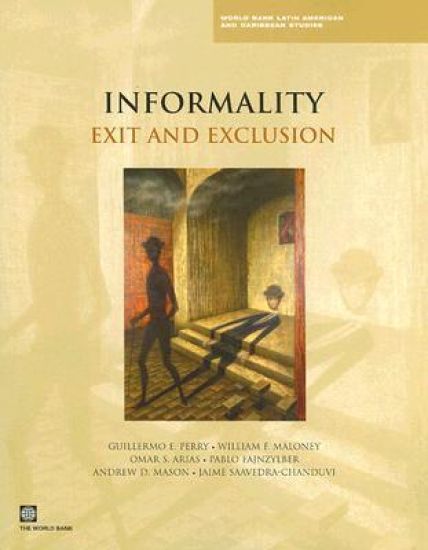
Informality: Exit and Exclusion analyzes informality in Latin America, exploring root causes and reasons for and implications of its growth. The authors use two distinct but complementary lenses: informality driven by ""exclusion"" from state benefits or the circuits of the modern economy, and driven by voluntary ""exit"" decisions resulting from private cost-benefit calculations that lead workers and firms to opt out of formal institutions. They find both lenses have considerable explanatory power to understand the causes and consequences of informality in the region.""Informality: Exit and Exclusion"" concludes that reducing informality levels and overcoming the ""culture of informality"" will require actions to increase aggregate productivity in the economy, reform poorly designed regulations and social policies, and increase the legitimacy of the state by improving the quality and fairness of state institutions and policies. Although the study focuses on Latin America, its analysis, approach, and conclusions are relevant for all developing countries."" Informality: Exit and Exclusion"" will be of value to professionals and academics studying labor market, social protection, tax, microenterprise development, and urban public policies, and to those working in government, international organizations, research institutions, and universities.
Informality through Sustainability
Informality through Sustainability explores the phenomenon of informality within urban settlements and aims to unravel the subtle links between informal settlements and sustainability.Penetrating its global profile and considering urban informality through an understanding of local implications, the authors collectively reveal specific correlations between sites and their local inhabitants. The book opposes simplistic calls to legalise informal settlements or to view them as ‘problems’ to be solved. It comes at a time when common notions of ‘informality’ are being increasingly challenged.In 25 chapters, the book presents contributions from well-known scholars and practitioners whose theoretical or practical work addresses informality and sustainability at various levels, from city planning and urban design to public space and architectural education. Whilst previous studies on informal settlements have mainly focused on cases in developing countries, approaching the topic through social, cultural and material dimensions, the book explores the concept across a range of contexts, including former Communist countries and those in the so-called Global North. Contributions also explore understandings of informality at various scalar levels – region, precinct, neighbourhood and individual building. Thus, this work helps reposition informality as a relational concept at various scales of urbanisation.This book will be of great benefit to planners, architects, researchers and policymakers interested in the interplay between informality and sustainability.
Informality through Sustainability
Informality through Sustainability explores the phenomenon of informality within urban settlements and aims to unravel the subtle links between informal settlements and sustainability.Penetrating its global profile and considering urban informality through an understanding of local implications, the authors collectively reveal specific correlations between sites and their local inhabitants. The book opposes simplistic calls to legalise informal settlements or to view them as ‘problems’ to be solved. It comes at a time when common notions of ‘informality’ are being increasingly challenged.In 25 chapters, the book presents contributions from well-known scholars and practitioners whose theoretical or practical work addresses informality and sustainability at various levels, from city planning and urban design to public space and architectural education. Whilst previous studies on informal settlements have mainly focused on cases in developing countries, approaching the topic through social, cultural and material dimensions, the book explores the concept across a range of contexts, including former Communist countries and those in the so-called Global North. Contributions also explore understandings of informality at various scalar levels – region, precinct, neighbourhood and individual building. Thus, this work helps reposition informality as a relational concept at various scales of urbanisation.This book will be of great benefit to planners, architects, researchers and policymakers interested in the interplay between informality and sustainability.
Informality and Monetary Policy in Japan

Informality and Monetary Policy in Japan

Adrian van Rixtel

Cambridge University Press
2007
pokkari
The success (and misfortunes) of the post-war Japanese economy has been one of the most debated points in modern economics. Many explanations focus on cultural and institutional factors, and in particular the role of 'Informality' (networks organizing business activity and government policy). Adrian van Rixtel, an economist at the European Central Bank, provides a quantitative and qualitative assessment of Informality in the formation of Japanese monetary policy. Having been based in Japan for three years, two years of which were spent at the Institute for Monetary and Economic Studies at the Bank of Japan and the Japanese Ministry of Finance, he is able to bring a unique 'insider-outsider' perspective to the subject.
Informality and Monetary Policy in Japan

Informality and Monetary Policy in Japan

Adrian van Rixtel

Cambridge University Press
2002
sidottu
The success (and misfortunes) of the post-war Japanese economy has been one of the most debated points in modern economics. Many explanations focus on cultural and institutional factors, and in particular the role of 'Informality' (networks organizing business activity and government policy). Adrian van Rixtel, an economist at the European Central Bank, provides a quantitative and qualitative assessment of Informality in the formation of Japanese monetary policy. Having been based in Japan for three years, two years of which were spent at the Institute for Monetary and Economic Studies at the Bank of Japan and the Japanese Ministry of Finance, he is able to bring a unique 'insider-outsider' perspective to the subject.
Informality and the Playing Field in Vietnam's Business Sector

Informality and the Playing Field in Vietnam's Business Sector

Stoyan Tenev; Amanda Carlier; Omar Chaudry; Trang Phuong Nguyen

World Bank Publications
2003
nidottu
Private sector growth will be key to maintaining the dynamism of the Vietnamese economy and allowing the country to achieve its development objectives, the study finds. The authors point out that, above all, private enterprises need space to grow. Regulations that run counter to the logic of normal market practices, that give entrepreneurs few opportunities to enter into contractual relationships, or that penalize them for market success are bound to be circumvented, at significant social cost. By contrast, laws and regulations that are in harmony with market forces will be easier to implement, and their implementation will be supported by the same market forces they are designed to protect. Adapting laws and regulations to the needs of the marketplace will not be enough, however. According to the authors, incentives inside the bureaucracy need to be aligned with development. A government committed to development will find it beneficial to support the growth of the private sector.
Informality Revisited

Informality Revisited

Wiley-Blackwell
2020
nidottu
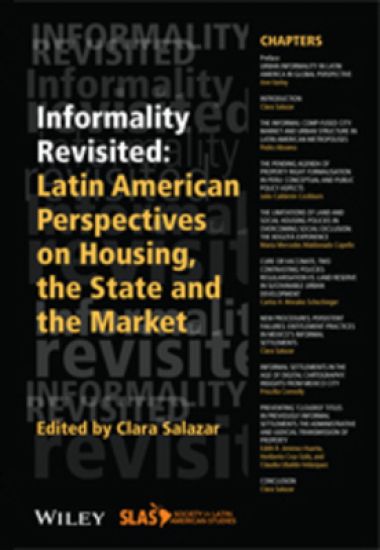
Informality Revisited offers an overview of recent debates about Latin American government programmes for the formalisation of informal settlements and housing provision in a neo-liberal context. Contributions from Latin American researchers analyse the contradictions in government actions and evaluate the consequences for urban poverty. Brings together nine leading Latin American researchers in the field of land and housing policy to address the question of informal urban development, particularly in Brazil, Colombia, Mexico and PeruHighlights the interrelationships between the production of formal and informal urban development and demonstrates how economic and legal reforms intended to make the market more effective and profitable have affected the production of urban spaceExplores how Latin American governments are applying neo-liberal principles to land and housing policiesInvestigates the implications of government actions for the production and commodification of urban land as well as the formalisation of property rights and provision of housing for the urban poor Contributors draw on a wide range of quantitative and qualitative data, including census results and previously unpublished official statistics
Informality and Courts

Informality and Courts

EDINBURGH UNIVERSITY PRESS
2024
sidottu
This volume explores an understudied aspect of courts: The extent to which informal institutions and relational networks (e.g., professional, clientelist, family etc.) relations affect how courts are organised and operate. For instance, to what extent can 'good personal relations' outweigh professional merits in judicial appointment processes? Or in what ways do international or domestic judicial networks help protect courts against other branches of power? Our relational-institutional perspective allows us to better understand a variety of important processes for the comparative study of courts including judicial appointments, judicial decision-making, judicial administration, institutional development, inter-branch relations, corruption, and court reform, among others. More importantly, an emphasis on informality sheds new light on the accountability role of courts in democratic regimes, at a time when democracy worldwide is at risk and authoritarian regimes are on the rise. Bringing together the thoughts of scholars with different levels of seniority and disciplinary expertise, this volume offers cross-national engagement with theory, providing systematic analyses of the configuration, operation, and roles of informal institutions and relations, and their importance in different socio-political contexts and legal systems.
Informality in Policymaking

Informality in Policymaking

Emerald Publishing Limited
2024
sidottu
This book contains an Open Access chapter. Public policy actors spend considerable time writing policy, advising politicians, eliciting stakeholder views on policy concerns, and implementing initiatives. Yet, they also ‘hang out’ chatting at coffee machines, discuss developments in the hallway walking from one meeting to another, or wander outside to carparks for a quick word and to avoid prying eyes. Rather than interrogating the rules and procedures which govern how policies are made, this volume asks readers to begin with the informal as a concept and extend this to what people do, how they relate to each other, and how this matters. Emerging from a desire to enquire into the lived experience of policy professionals, and to conceptualise afresh the informal in the making of public policy, Informality in Policymaking explores how informality manifests in different contexts, spaces, places, and policy arenas, and the implications of this. Including nine empirical chapters, this volume presents studies from around the world and across policy domains spanning the rural and urban, and the local to the supranational. The chapters employ interdisciplinary approaches and integrate creative elements, such as drawings of hand gestures and fieldwork photographs, in conjunction with ethnographic ‘thick descriptions’. In unveiling the realities of how policy is made, this deeply meaningful and thoughtfully constructed collection argues that the formal is only part of the story of policymaking, and thus only part of the solutions it seeks to create. Informality in Policymaking will be of interest to researchers and policymakers alike.
Informality, Labour Mobility and Precariousness
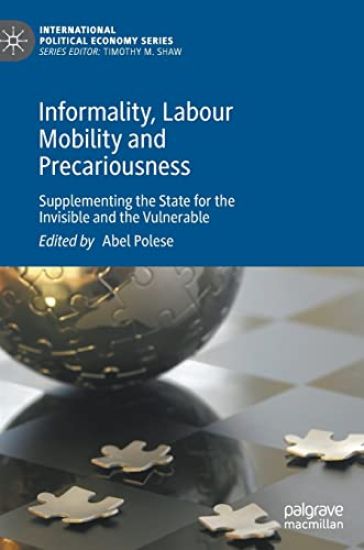
From the erosion of state legitimacy in Lebanon to the use of smartphones in Kyrgyzstan, from a Polish suburb to the music scene in Azerbaijan, this volume attempts to explain why, in a variety of world regions, a substantial number of people tend to ignore or act against state rules. We propose to look at informality beyond simplistic associations of the phenomenon with a single category such as "informal labour" or "corruption". By doing this, we propose to look for a correlation between the emergence, and persistence, of some informal practices and the quality of governance in a given area. We also suggest that a better understanding of the variety of informal practices present in a region can help conceptualising more adequate interventions and eventually improve the socio-economic conditions of its inhabitants.
Informality, Labour Mobility and Precariousness
From the erosion of state legitimacy in Lebanon to the use of smartphones in Kyrgyzstan, from a Polish suburb to the music scene in Azerbaijan, this volume attempts to explain why, in a variety of world regions, a substantial number of people tend to ignore or act against state rules. We propose to look at informality beyond simplistic associations of the phenomenon with a single category such as "informal labour" or "corruption". By doing this, we propose to look for a correlation between the emergence, and persistence, of some informal practices and the quality of governance in a given area. We also suggest that a better understanding of the variety of informal practices present in a region can help conceptualising more adequate interventions and eventually improve the socio-economic conditions of its inhabitants.
Informality and the City

Informality and the City

Springer Nature Switzerland AG
2022
sidottu
This book advances the agenda of informality as a transnational phenomenon, recognizing that contemporary urban and regional challenges need to be addressed at both local and global levels. This project may be considered a call for action. Its urgency derives from the impact of the pandemic combined with the effects of climate change in informal settlements around the world. While the notion of “the informal” is usually associated with the analysis and interventions in informal settlements, this book expands the concept of informality to acknowledge its interdisciplinary parameters.The book is geographically organized into five sections. The first part provides a conceptual overview of the notion of “the informal,” serving as an introduction and reflection on the subject. The following sections are dedicated to the principal regions of the Global South—Latin America, US–Mexico Borderlands, Asia, and Africa—while considering the interconnections and correspondencesbetween urbanism in the Global South and the Global North.This book offers a critical introduction to groundbreaking theories and design practices of informality in the built environment. It provides essential reading for scholars, professionals, and students in urban studies, architecture, city planning, urban geography, sociology, anthropology, cultural studies, economics, and the arts. As a critical survey of informality, the book examines history, theory, and production across a range of informal practices and phenomena in urbanism, architecture, activism, and participatory design. Authored by a diverse and international cohort of leading educators, theorists, and practitioners, 45 chapters refine and expand the discourse surrounding informal cities.
Informality and the City

Informality and the City

Springer Nature Switzerland AG
2023
nidottu
This book advances the agenda of informality as a transnational phenomenon, recognizing that contemporary urban and regional challenges need to be addressed at both local and global levels. This project may be considered a call for action. Its urgency derives from the impact of the pandemic combined with the effects of climate change in informal settlements around the world. While the notion of “the informal” is usually associated with the analysis and interventions in informal settlements, this book expands the concept of informality to acknowledge its interdisciplinary parameters.The book is geographically organized into five sections. The first part provides a conceptual overview of the notion of “the informal,” serving as an introduction and reflection on the subject. The following sections are dedicated to the principal regions of the Global South—Latin America, US–Mexico Borderlands, Asia, and Africa—while considering the interconnections and correspondencesbetween urbanism in the Global South and the Global North.This book offers a critical introduction to groundbreaking theories and design practices of informality in the built environment. It provides essential reading for scholars, professionals, and students in urban studies, architecture, city planning, urban geography, sociology, anthropology, cultural studies, economics, and the arts. As a critical survey of informality, the book examines history, theory, and production across a range of informal practices and phenomena in urbanism, architecture, activism, and participatory design. Authored by a diverse and international cohort of leading educators, theorists, and practitioners, 45 chapters refine and expand the discourse surrounding informal cities.
Informality in Eastern Europe

Informality in Eastern Europe

Peter Lang AG, Internationaler Verlag der Wissenschaften
2013
sidottu
This volume deals with different aspects of informal structures and practices in Eastern Europe. Its objectives are twofold. It aims at discovering whether or to what extent informal structures and practices in Eastern Europe have meanings, functions, forms and effects different from those that can be observed in the politics and societies of Western Europe. The authors of this volume – most of them are from the region – have been invited to discuss the scientific relevance of the distinction informal / formal in their respective field of research or discipline. This points to the second objective of this volume which is to encourage a more fruitful interaction between disciplines that often disregard each other and which, despite inevitable and essential epistemological differences, have significant shared interests such as the comparative analysis of political phenomena in terms of elementary forms of social organization. The relation between informality and formality in a more methodologically pluralist and ultimately holistic way can be analysed via regards croisés between the disciplines anthropology, political science and sociology. This allows the extension of this comparative and multidisciplinary approach to other themes and phenomena of mutual interests.
Informality in the labor market

Informality in the labor market

Juliano Vargas

Our Knowledge Publishing
2025
pokkari
Historically in Brazil, the phenomenon of informality has been widespread, mainly due to the socio-economic, legal and political context. Since the emergence of the labor market in the country, this situation has persisted in various forms and with various nuances, hindering a better overall performance of the Brazilian economy, as well as denying opportunities for individual and social development over time. Therefore, the aim of this book is to analyze the main conjunctural and structural factors of informality observed in the national labor market in the period between 1980 and 2012, presenting the dimension of this problem and exposing its economic and institutional roots, seeking to contribute new elements to the debate on informality at a national level.
Informality in Policymaking

Informality in Policymaking

Emerald Publishing Limited
2026
nidottu
This book contains an Open Access chapter. Public policy actors spend considerable time writing policy, advising politicians, eliciting stakeholder views on policy concerns, and implementing initiatives. Yet, they also ‘hang out’ chatting at coffee machines, discuss developments in the hallway walking from one meeting to another, or wander outside to carparks for a quick word and to avoid prying eyes. Rather than interrogating the rules and procedures which govern how policies are made, this volume asks readers to begin with the informal as a concept and extend this to what people do, how they relate to each other, and how this matters. Emerging from a desire to enquire into the lived experience of policy professionals,and to conceptualise afresh the informal in the making of public policy, Informality in Policymaking explores how informality manifests in different contexts, spaces, places, and policy arenas, and the implications of this. Including nine empirical chapters, this volume presents studies from around the world and across policy domains spanning the rural and urban, and the local to the supranational. The chapters employ interdisciplinary approaches and integrate creative elements, such as drawings of hand gestures and fieldwork photographs, in conjunction with ethnographic ‘thick descriptions’. In unveiling the realities of how policy is made, this deeply meaningful and thoughtfully constructed collection argues that the formal is only part of the story of policymaking, and thus only part of the solutions it seeks to create. Informality in Policymaking will be of interest to researchers and policymakers alike.
Informality and Courts

Informality and Courts

EDINBURGH UNIVERSITY PRESS
2026
nidottu
This volume explores an understudied aspect of courts: The extent to which informal institutions and relational networks (e.g., professional, clientelist, family etc.) relations affect how courts are organised and operate. For instance, to what extent can ‘good personal relations’ outweigh professional merits in judicial appointment processes? Or in what ways do international or domestic judicial networks help protect courts against other branches of power? Our relational-institutional perspective allows us to better understand a variety of important processes for the comparative study of courts – including judicial appointments, judicial decision-making, judicial administration, institutional development, inter-branch relations, corruption, and court reform, among others. More importantly, an emphasis on informality sheds new light on the accountability role of courts in democratic regimes, at a time when democracy worldwide is at risk and authoritarian regimes are on the rise. Bringing together the thoughts of scholars with different levels of seniority and disciplinary expertise, this volume offers cross-national engagement with theory, providing systematic analyses of the configuration, operation, and roles of informal institutions and relations, and their importance in different socio-political contexts and legal systems.