Kirjojen hintavertailu. Mukana 12 416 437 kirjaa ja 12 kauppaa.

Kirjahaku

Etsi kirjoja tekijän nimen, kirjan nimen tai ISBN:n perusteella.

1000 tulosta hakusanalla A.J. Pollard

Imagining Robin Hood

Imagining Robin Hood

A.J. Pollard

Routledge
2004
sidottu
A series of fifteenth-century texts is revisited to uncover a different story of Sherwood Forest in this new look at the legendary figure of Robin Hood and his real-life career, lineage, and exploits.
Imagining Robin Hood

Imagining Robin Hood

A.J. Pollard

Routledge
2007
nidottu
A.J Pollard takes us back to the earliest surviving stories of Robin Hood, the stories, tales and ballads of the fifteenth century and he re-examines the story of this fascinating figure. Setting out the economic, social and political context of the time, Pollard illuminates the legend of this yeoman hero and champion of justice as never before.Imagining Robin Hood examines:* what a ‘yeoman’ was, and what it meant to a fifteenth-century Englishman* Was Robin Hood hunted as an outlaw, or respected as an officially appointed forest ranger?* Why do we ignore the fact that this celebrated hero led a life of crime?* Did he actually steal from the rich and give to the poor?Answering these questions, the book looks at how Robin Hood was ‘all things to all men’ since he first appeared; speaking to the gentry, the peasants and all those in between. The story of the freedom-loving outlaw tells us much about the English nation, but tracing back to the first stories reveals even more about the society in which the legend arose.An enthralling read for all historians and general readers of this fascinating subject.
Henry V: pocket GIANTS

Henry V: pocket GIANTS

A.J. Pollard

The History Press Ltd
2014
nidottu
Henry V is the best-known military hero in English history: better known than Marlborough or Wellington, or his grandfather, Edward III. He enjoyed more success against the French than any of them, coming tantalisingly close to conquering that vast country and imposing an English dynasty; this in a reign of just nine years, in only seven of which he was at war. Even before he died the heroic myth, later enshrined by Shakespeare, was being created. His victories have become the touchstone of English nationalism, English militarism and English imperialism. For good or ill, Henry V now signifies the one-time ‘Greatness of England’. He was a military genius, yet his megalomania was not always in the best interests of his own kingdom, let alone the people of France who suffered at his hands. Behind the carefully constructed nationalist myth was a cold, calculating, ruthless ruler who, before his early death, revealed ominous tyrannical tendencies.
Richard III and the Princes in the Tower

Richard III and the Princes in the Tower

A.J. Pollard

THE HISTORY PRESS LTD
2024
nidottu
Richard III has divided opinion for over 500 years. Traditionally, he has been perceived as a villain, a bloody tyrant and the monstrous murderer of his innocent nephews. To others he was and remains a wronged victim who did his best for kingdom and family; a noble prince and enlightened statesman tragically slain.Richard III and the Princes in the Tower explores the story of Richard III and the tales that have been woven around the historic events, and discusses his life and reign and the disappearance of the Princes in the Tower. It also assesses the original sources upon which much of the history is based. A number of picture essays explore particular aspects of Richard III’s life and reign: his birth sign of Scorpio, historical paintings, the symbolism of pigs and boars, Richard’s saints, his books, the Princes, and cartoons and caricatures. This classic work is one that no enthusiast should be without.
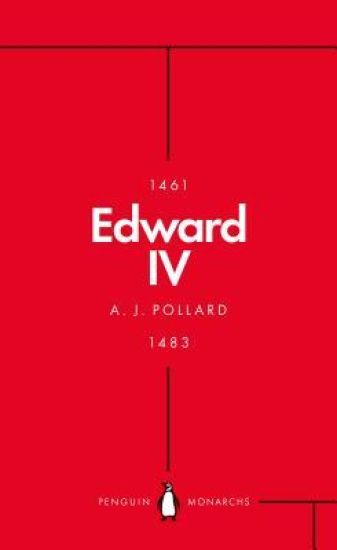
Edward IV (Penguin Monarchs)

Edward IV (Penguin Monarchs)

A J Pollard

Penguin Books Ltd
2019
nidottu
'Edward was a man of considerable charm, who perhaps relied too much upon that charm to keep tensions within his entourage at bay' In 1461 Edward earl of March, a handsome, charismatic eighteen-year old, usurped the English throne during the first and most fierce of the Wars of the Roses. The years that followed witnessed a period that has been described as a golden age. Yet, argues A. J. Pollard, Edward was a man of limited vision, who squandered his talents and failed to secure his own dynasty.
A Handbook of Numerical and Statistical Techniques

A Handbook of Numerical and Statistical Techniques

J. H. Pollard

Cambridge University Press
1979
pokkari
This handbook is designed for experimental scientists, particularly those in the life sciences. It is for the non-specialist, and although it assumes only a little knowledge of statistics and mathematics, those with a deeper understanding will also find it useful. The book is directed at the scientist who wishes to solve his numerical and statistical problems on a programmable calculator, mini-computer or interactive terminal. The volume is also useful for the user of full-scale computer systems in that it describes how the large computer solves numerical and statistical problems. The book is divided into three parts. Part I deals with numerical techniques and Part II with statistical techniques. Part III is devoted to the method of least squares which can be regarded as both a statistical and numerical method. The handbook shows clearly how each calculation is performed. Each technique is illustrated by at least one example and there are worked examples and exercises throughout the volume.
A Perfect Paradise

A Perfect Paradise

A. J. Pollard

Fonthill Media
2019
nidottu
Elizabeth Montagu, the lady of the manor in 1775, described Eryholme as a `perfect paradise’. Today, though but three miles south of Darlington as the crow flies, it is a small and secluded community untouched by modern industry and urban development: `a haven of peace’. Yet it has had an eventful history. Sacked by Normans in 1069 and Scots in 1319; ravaged by famine and plague in the fourteenth century and almost abandoned in the fifteenth, Eryholme was involved in rebellion in 1569 and divided by civil war in 1642. Life became more tranquil in the eighteenth century when it became a cradle of the agricultural revolution, famed for its cattle breeding. Until then, a main branch of the Great North Road, which forded the Tees to Neasham, passed through. After the building of the turnpike from York to Durham, the village was bypassed and gradually became the `rural dot’ it is today. The book tells the story of the landowners, the villagers, their changing fortunes, their religion and their engagement with the wider world over almost thirty generations.
North-Eastern England during the Wars of the Roses
This is the first modern scholarly study of north-eastern England during the Wars of the Roses. For a fleeting period in the late fifteenth century, the North dominated England: it was both the adopted home and the power base of Richard III. But this is more than simply an account of the rise and fall of the last Plantagenet as the Lord of the North. A. J. Pollard analyses regional politics and the interrelationship between province and centre from the beginning of the Neville-Percy feud in the 1450s to the establishment of Tudor authority by 1500. Themes explored include Anglo-Scottish relations, local government, the structure of landed society, the wealth, power, and the outlook of lords and gentry, and the economy of the region. Dr Pollard sets political history in the context of the period, and paints a detailed portrait of lay society, based on intensive research among local records. He shows that, contrary to some recent views, the North-East was in certain significant respects more feudal, more conservative and, by the early sixteenth century, poorer than the South-East of England.
The Worlds of Richard III

The Worlds of Richard III

A. J. Pollard

The History Press Ltd
2001
nidottu
Richard is well known as the most vilified of English kings, we know he had many enemies - indeed they sowed the seeds of the Richard black legend - but what about his many allies in his stronghold of power in Northern England?
Realistic Martial Arts for Violence and Peace: Law, Enforcement, Defense

Realistic Martial Arts for Violence and Peace: Law, Enforcement, Defense

R. Polland Polland B. a.; A. Levitas; N. Nunberg J. D.

Via Media Publishing Company
2016
nidottu
Criminals, police, military forces, and civilians practice martial arts which often utilize weapons. One major difference is weather or not the weapons are handled according to legal guidelines. This special anthology includes insightful writings that focus on aspects of martial arts as they are practiced and used by different people on both sides of the law. Certainly most practicing a martial art are doing so primarily for their health or as a sport. Perhaps they have an interest in self-defense, but often their practice methods are not realistic enough to be truely effective. For this reason, Friman and Polland's first chapter deals with the concern for realistic methods for training martial artists, particularly those involved in law enforcement. In the following chapter on "The Art of Regulation," Dr. Friman argues that the martial arts are more likely to face government regulation when authorities perceive them as posing challenges to the state's monopoly over the means to create and maintain order. In the quest for maintaining order, Alex Levitas shows in the next chapter that martial arts weapons are widely used by police forces in many countries. Applications are illustrated by photographs credited to noted law enforcement pioneers in this area, including Terrence Winston, Robert Fabrey, Roy Bedard, and Robert Koga. Two chapters by Noah Nunberg examine the practical legal aspects of using martial arts techniques while training in the martial arts studio or in defending oneself on the street. Assault and battery are examined in depth as to potential criminal and civil liabilities that may arise. Specific cases and hypothetical situations are referred to for reference and insight. Dr. Rom n and Dr. Garc a write about the scope and legal framework of penitentiary self-defense. This kind of self-defense is defined by the unique characteristics of a confinement context and a very specific regulation aimed at preserving the integrity of prisoners and penitentiary staff, as well as prison facilities. A technical section is also included. In the system known as Comprehensive Penitentiary Defense, Dr. Rom n presents techniques which professionals in this field must master and know how to apply when they face any hazardous situation. These techniques go from peaceful conflict resolution, assertiveness, or body language to joint control, immobilization, or pressures. In the face of regulating martial art practice and weapons useage, the final chapter by Peter Hobart inspects the right to bear arms. Existing criminal laws and recent weapons bans have made it increasingly problematic for legitimate martial artists to own, use, and transport the tools of their trade. This survey of existing state and national weapons laws is intended to help make martial arts practitioners aware of these legal issues. All who read this book-whether involved in professions of law enforcement, military branches, or as a martial arts instructor or practitioner-will find each chapter of vital importance. We hope you will enjoy this anthology as it provides excellent coverage of aspects of the martial arts that are rarely discussed but have profound practicality.
A J. M. Synge Literary Companion

A J. M. Synge Literary Companion

Edward A. Kopper Jr.

Greenwood Press
1988
sidottu
In this 'literary companion,' Kopper includes excellent chapters devoted to (1) brief biography and chronology, (2) Synge's prose, (3) each of his six plays, (4) poems, (5) use of Christian and pagan motifs, (6) use of Irish mythology, (7) literary influences on Synge, (8) Synge's relationship to the Irish Literary Renaissance, (9) Synge's language of women, (10) his use of language generally, and (11) an assessment of Synge's achievement. In addition, Kopper includes a superb select bibliography; a detailed list (with annotation) of characters, locales, and motifs; and stage histories of Synge's plays. . . . Strongly recommended all libraries--academic and public--maintaining 20th-century Anglo-Irish literature collections or general drama/theater collections. Choice This companion to Synge's work covers the important issues in Synge criticism from about 1900 to the present day. Each essay includes a bibliography, and a general bibliography follows. Also included are a brief chronology; a glossary of characters, locales, and motifs; and representative stage histories which also describe productions of Synge's plays in Ireland, the United States, and several other countries. The final essay is the editor's assessment of Synge's overall contribution, and the volume concludes with a general index. This work takes into account the prominence that Synge and other writers of the Irish Renaissance have attained in recent years in the worldwide academic community. The essays deal with Synge's use of language, his place in the Irish Renaissance, his reputation abroad, the forces that influenced his thought and writing, and the foreign productions of his plays. Each essay supplements the author's analysis with bibliographical citations and a synthesis of previous Synge criticism in order to allow for further research. By combining thorough coverage of the basic issues and sources of Synge criticism with fresh approaches provided by a group of distinguished scholars, Kopper has produced an important study of Synge and his milieu. It should prove valuable for college and university courses in modern literature and the Irish Renaissance, modern drama, and the theatre.
'Dear Stuart, ' Writes A. J.

'Dear Stuart, ' Writes A. J.

A J Mittendorf

Lulu.com
2021
pokkari
The original edition of this book was a tribute to Stuart McLean after his death on February 15, 2017, and it was produced as quickly as possible to honour him in a timely manner. Despite our best efforts, however, that edition included too many errors. And, as we discovered much later, several other tales worthy of inclusion were left out because of the pressure of meeting our deadline. Accordingly, we completed this new edition only after several series of proofreading and revision so that we could come as close as humanly possible to perfecting the refined, polished-to-a-high-sheen, smooth-to-the-touch product you hold in your hands now. In addition, the author added sixteen stories, along with his only fan letter to Mr. McLean. Fear not, however, because this volume retains Jess Milton's original introduction, the author's preface and a new introduction by the author for this release. Every story in this volume meets the same criteria as before: Like the stories from "The Story Exchange" segment of The Vinyl Caf , these stories are short (with some exceptions), and they are true, but not without Mr. Mittendorf's honed and studied writing skills. And, like Mr. McLean's Dave & Morley stories, these lean toward the humourous side but include elements of the inspirational. Also, like the Dave & Morely stories, these tales are all interrelated through the characters. The unexpected result of this formula is that, while you read these stories, you become as familiar with the characters as you would in any memoir written with a single, linear plot. So the stories in this volume comprise an "episodic memoir: " One person's life rendered as a series of short, biographical tales. Think about the works of James Harriot, and you'll get the idea. Each story in this book opens and closes as a letter to Mr. McLean because that is how Mr. McLean seemed always to read the "Story Exchange" stories on the air-as letters, even though it is not necessarily how all the writers wrote them. This unique tradition is also the inspiration for this book's title.
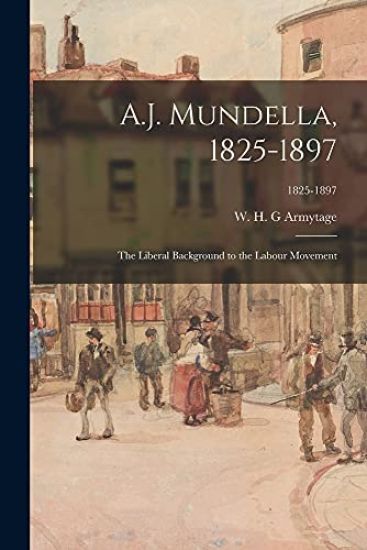
A.J. Mundella, 1825-1897; the Liberal Background to the Labour Movement; 1825-1897
This work has been selected by scholars as being culturally important and is part of the knowledge base of civilization as we know it.This work is in the public domain in the United States of America, and possibly other nations. Within the United States, you may freely copy and distribute this work, as no entity (individual or corporate) has a copyright on the body of the work.Scholars believe, and we concur, that this work is important enough to be preserved, reproduced, and made generally available to the public. To ensure a quality reading experience, this work has been proofread and republished using a format that seamlessly blends the original graphical elements with text in an easy-to-read typeface.We appreciate your support of the preservation process, and thank you for being an important part of keeping this knowledge alive and relevant.
A.J.'s Angel

A.J.'s Angel

L. a. Witt

Independently Published
2019
nidottu
*** LARGE PRINT EDITION *** Luke Emerson is the last person Sebastian Wakefield expects to see strolling into his tattoo shop. But Luke's not back after four years to take up where they left off. Not even to apologize for the cheating that broke them up. Luke wants a custom tattoo, a memorial for someone known only as "A.J." Much as Seb would love to tell Luke to take this ink and shove it, he's a professional. Plus, he's reluctant to admit, he wouldn't mind getting his hands on Luke again. Even if it's just business. Once Luke's in the tattoo chair, though, Seb finds himself struggling with all the anger and resentment he thought he'd left behind-and those aren't the only feelings reignited. Their relationship may have been turbulent, but it was also passionate. Four years clearly hasn't been long enough for the embers of that fire to go cold. A few subtle hints from Luke is all it takes to make Seb consider indulging in some of that physical passion. It shouldn't be that tough to keep his emotions from getting tangled up in sweaty sheets. After all, it's not like he's in love with Luke anymore. Right?This 35,000 word novella was previously published.