Kirjojen hintavertailu. Mukana 11 244 527 kirjaa ja 12 kauppaa.

Kirjahaku

Etsi kirjoja tekijän nimen, kirjan nimen tai ISBN:n perusteella.

1000 tulosta hakusanalla Aaron W Perry

Poesis

Poesis

Aaron W Perry

Earth Water Press
2020
sidottu
POESIS: flowing along a river of time is a collection of poetry written by Aaron William Perry and illustrated by his son Indigo Hunter Chesnutt-Perry. Covering a quarter century, from Aaron's adolescent years to his early forties, this collection of poems is a woven tapestry with many rich themes: nature, mysticism, love, culture, and travel. It reflects a deep appreciation for life, for Earth, for intimacy and sumptuous aesthetics. In this collection, you'll find references to poets like Gary Snyder (Japhy), musicians like John Coltrane, and commemorations of places like the desert southwest, the Rocky Mountains, Greenwich Village in New York City, the Adirondacks, the Puget Sound, the Austrian Alps, Paris, Florence, Corsica, and the Scottish heath. You'll also be granted a glimpse of some very intimate and emotional pieces related to romantic love, loss, and a deep, mystical connection with the life force and natural intelligence suffusing creation. The illustrations, created during his high school years, reveal Hunter's refined technical detail, eye for shape, color, composition, and visual flow, and combine a variety of themes, media, and stylistic expressions. His pieces range from detailed pencil to water color, and from colorful montage to stark monochromatic abstractions.This special project is a father-son collaboration, that celebrates their enduring love, their love of collaboration, and Hunter's high school graduation and transition into adulthood.
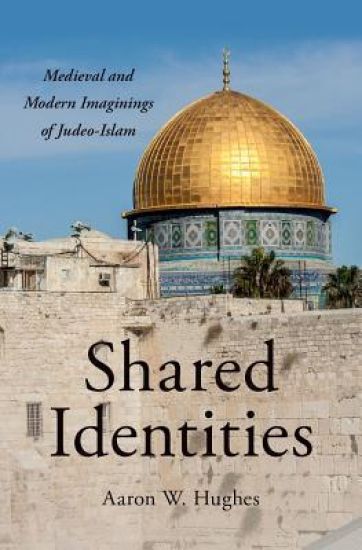
Shared Identities

Shared Identities

Aaron W. Hughes

Oxford University Press Inc
2017
sidottu
In this controversial study, Aaron W. Hughes breaks with received opinion, which imagines two distinct religions, Judaism and Islam, interacting in the centuries immediately following the death of Muhammad in the early seventh century. Tradition describes these relations using tropes such as that of "symbiosis." Hughes instead argues that various porous groups--neither fully Muslim nor Jewish--exploited a shared terminology to make sense of their social worlds in response to the rapid process of Islamicization. What emerged as normative rabbinic Judaism on the one hand, and Sunni and Shi'a Islam on the other were ultimately responses to such marginal groups. The so-called "Golden Age" in places such as Muslim Spain and North Africa continued to see the articulation of this "Islamic" Judaism in the writings of luminaries such as Bahya ibn Paquda, Abraham ibn Ezra, Judah Halevi, and Moses Maimonides. Drawing on social theory, comparative religion, and primary texts, Hughes presents a compelling case for rewriting our understanding of Jews and Muslims in their earliest centuries of interaction. Not content to remain solely in the past, he examines the continued interaction of Muslims and Jews, now reimagined as Palestinians and Israelis, into the present.
An Anxious Inheritance

An Anxious Inheritance

Aaron W. Hughes

OXFORD UNIVERSITY PRESS INC
2022
sidottu
An Anxious Inheritance reveals the tensions between the early framers of Islam and the ever-expandable category of non-Muslims. Examining the encounter with these religious others, and showing how the Qur'an functioned as both a script to understand them and a map to classify them, this study traces the key role that these religious others played in what would ultimately emerge as (Sunni) orthodoxy. This orthodoxy would appear to be the natural outgrowth of the Prophet Muhammad's preaching, but it ultimately amounted to little more than a retroactive projection of later ideas onto the earliest period. Non-Muslims (among them Christians, Jews, Zoroastrians) and the "wrong" kinds of Muslims (e.g., the Shi'a) became integral--by virtue of their perceived stubbornness, infidelity, heresy, or the like--to the understanding of what true religion was not and, just as importantly, what it should be. These non-Muslims were rarely real individuals or groups; rather, they functioned as textual foils that could be conveniently orchestrated, and ultimately controlled, to facilitate Muslim self-definition. Without such religious others proper belief could, quite literally, not be articulated. Shedding new light on the early history of Islam, while also problematizing the binary of orthodoxy/heresy in the study of religion, An Anxious Inheritance makes significant contributions to a number of diverse academic fields.
Rethinking Jewish Philosophy

Rethinking Jewish Philosophy

Aaron W. Hughes

Oxford University Press Inc
2014
sidottu
Jewish thought is, in many ways, a paradox. Is it theology or is it philosophy? Does it use universal methods to articulate Judaism's particularity or does it justify Judaism's particularity with appeals to illuminating the universal? These two sets of claims are difficult if not impossible to reconcile, and their tension reverberates throughout the length and breadth of Jewish philosophical writing, from Saadya Gaon in the ninth century to Emmanuel Levinas in the twentieth. Rather than assume, as most scholars of Jewish philosophy do, that the terms "philosophy" and "Judaism" simply belong together, Hughes explores the juxtaposition and the creative tension that ensues from their cohabitation, examining adroitly the historical, cultural, intellectual, and religious filiations between Judaism and philosophy. Breaking with received opinion, this book seeks to challenge the exclusionary, particularist, and essentialist nature that is inherent to the practice of something problematically referred to as "Jewish philosophy." Hughes begins with the premise that Jewish philosophy is impossible and begins the process of offering a sophisticated and constructive rethinking of the discipline that avoids the traditional extremes of universalism and particularism.
Abrahamic Religions

Abrahamic Religions

Aaron W. Hughes

Oxford University Press Inc
2012
sidottu
Recent years have witnessed the emergence of a virtual cottage industry in all things ''Abrahamic.'' Directly proportionate to the rise of religious exclusivism, perhaps best epitomized by the attacks of 9/11 and the problems now plaguing the Middle East and Afghanistan, there has been a real desire both to find and map a set of commonalities between Judaism, Christianity, and Islam. This is often done, however, for the sake of interfaith dialogue, rather than scholarship. Recently, however, the term "Abrahamic religions" has been used with exceeding frequency in the academy. We now regularly encounter academic books, conferences, and even positions (including endowed chairs) devoted to the so-called "Abrahamic religions." But what exactly are "Abrahamic religions"? Although many perceive him as the common denominator of Judaism, Christianity and Islam, Abraham remains deceptively out of reach. An ahistorical figure, some contend he holds the seeds for historical reconciliation. Touted as symbol of ecumenicism, Abraham can just as easily function as one of division and exclusivity. Like our understanding of Abraham, the category "Abrahamic religions" is vague and nebulous. Usually lost in contemporary discussions is a set of crucial questions: Whence does the term "Abrahamic religions" derive? Who created it and for what purposes? What sort of intellectual work is it perceived to perform? In order to answer these and related questions, Aaron Hughes examines the creation and dissemination of this category in Abrahamic Religions. Part genealogical and part analytical, his study seeks to raise and answer questions about the appropriateness and usefulness of employing "Abrahamic religions" as a vehicle for understanding and classifying data. In so doing, this monograph can be taken as a case study that examines the construction of categories within the academic study of religion, showing how the categories we employ can become more an impediment than an expedient to understanding.
Muslim Identities

Muslim Identities

Aaron W. Hughes

Columbia University Press
2013
sidottu
Rather than focus solely on theological concerns, this well-rounded introduction takes an expansive view of Islamic ideology, culture, and tradition, sourcing a range of historical, sociological, and literary perspectives. Neither overly critical nor apologetic, this book reflects the rich diversity of Muslim identities across the centuries and counters the unflattering, superficial portrayals of Islam that are shaping public discourse today. Aaron W. Hughes uniquely traces the development of Islam in relation to historical, intellectual, and cultural influences, enriching his narrative with the findings, debates, and methodologies of related disciplines, such as archaeology, history, and Near Eastern studies. Hughes's work challenges the dominance of traditional terms and concepts in religious studies, recasting religion as a set of social and cultural facts imagined, manipulated, and contested by various actors and groups over time. Making extensive use of contemporary identity theory, Hughes rethinks the teaching of Islam and religions in general and helps facilitate a more critical approach to Muslim sources. For readers seeking a non-theological, unbiased, and richly human portrait of Islam, as well as a strong grasp of Islamic study's major issues and debates, this textbook is a productive, progressive alternative to more classic surveys.
Muslim Identities

Muslim Identities

Aaron W. Hughes

Columbia University Press
2013
pokkari
Rather than focus solely on theological concerns, this well-rounded introduction takes an expansive view of Islamic ideology, culture, and tradition, sourcing a range of historical, sociological, and literary perspectives. Neither overly critical nor apologetic, this book reflects the rich diversity of Muslim identities across the centuries and counters the unflattering, superficial portrayals of Islam that are shaping public discourse today. Aaron W. Hughes uniquely traces the development of Islam in relation to historical, intellectual, and cultural influences, enriching his narrative with the findings, debates, and methodologies of related disciplines, such as archaeology, history, and Near Eastern studies. Hughes's work challenges the dominance of traditional terms and concepts in religious studies, recasting religion as a set of social and cultural facts imagined, manipulated, and contested by various actors and groups over time. Making extensive use of contemporary identity theory, Hughes rethinks the teaching of Islam and religions in general and helps facilitate a more critical approach to Muslim sources. For readers seeking a non-theological, unbiased, and richly human portrait of Islam, as well as a strong grasp of Islamic study's major issues and debates, this textbook is a productive, progressive alternative to more classic surveys.
The Art of Dialogue in Jewish Philosophy

The Art of Dialogue in Jewish Philosophy

Aaron W. Hughes

Indiana University Press
2007
pokkari
Aaron W. Hughes presents the first major study of dialogue as a Jewish philosophical practice. Examining connections between Jewish philosophy, the literary form in which it is expressed, and the culture in which it is produced, Hughes shows how Jews understood and struggled with their social, religious, and intellectual environments. In this innovative and insightful book, Hughes addresses various themes associated with the literary form of dialogue as well as its philosophical reception: Why did various thinkers choose dialogue? What did it allow them to accomplish? How do the literary features of dialogue construct philosophical argument? As a history of philosophical form, context, and practice, this book will interest scholars and students working at the intersections of religious studies, philosophy, and literature.
The Invention of Jewish Identity

The Invention of Jewish Identity

Aaron W. Hughes

Indiana University Press
2010
pokkari
Jews from all ages have translated the Bible for their particular times and needs, but what does the act of translation mean? Aaron W. Hughes believes translation has profound implications for Jewish identity. The Invention of Jewish Identity presents the first sustained analysis of Bible translation and its impact on Jewish philosophy from the medieval period to the 20th century. Hughes examines some of the most important Jewish thinkers—Saadya Gaon, Moses ibn Ezra, Maimonides, Judah Messer Leon, Moses Mendelssohn, Martin Buber, and Franz Rosenzweig—and their work on biblical narrative, to understand how linguistic and conceptual idioms change and develop into ideas about the self. The philosophical issues behind Bible translation, according to Hughes, are inseparable from more universal sets of questions that affect Jewish life and learning.
Political Intelligence and the Creation of Modern Mexico, 1938–1954

Political Intelligence and the Creation of Modern Mexico, 1938–1954

Aaron W. Navarro

Pennsylvania State University Press
2010
sidottu
Mexican politics in the twentieth century was dominated by two complementary paradigms: the rhetoric of the Mexican Revolution and the existence of an “official” party. The Mexican Revolution has enjoyed a long and voluminous historiography; the “official” party has not. While the importance of the Revolution as a historical period is self-evident, the development of a party based on the political aspirations of the surviving revolutionary elites has not generally sparked as much historical interest. This book traces the path of the party, founded as the Partido Nacional Revolucionario (PNR), through its reformation as the Partido de la Revolución Mexicana (PRM) in 1938 and then as the Partido Revolucionario Institucional (PRI) in 1946, which finally fell from power in 2000. Aaron Navarro shows how the transformation of the PRM into the PRI, the removal of the military from electoral politics, the resettlement of younger officers in the intelligence services, and the inculcation of a new discipline among political elites all produced the conditions that allowed for the dominance of a single-party structure for decades.
Political Intelligence and the Creation of Modern Mexico, 1938–1954

Political Intelligence and the Creation of Modern Mexico, 1938–1954

Aaron W. Navarro

Pennsylvania State University Press
2012
pokkari
Mexican politics in the twentieth century was dominated by two complementary paradigms: the rhetoric of the Mexican Revolution and the existence of an “official” party. The Mexican Revolution has enjoyed a long and voluminous historiography; the “official” party has not. While the importance of the Revolution as a historical period is self-evident, the development of a party based on the political aspirations of the surviving revolutionary elites has not generally sparked as much historical interest. This book traces the path of the party, founded as the Partido Nacional Revolucionario (PNR), through its reformation as the Partido de la Revolución Mexicana (PRM) in 1938 and then as the Partido Revolucionario Institucional (PRI) in 1946, which finally fell from power in 2000. Aaron Navarro shows how the transformation of the PRM into the PRI, the removal of the military from electoral politics, the resettlement of younger officers in the intelligence services, and the inculcation of a new discipline among political elites all produced the conditions that allowed for the dominance of a single-party structure for decades.
Muslim and Jew

Muslim and Jew

Aaron W Hughes

Routledge
2020
nidottu
Muslim and Jew: Origins, Growth, Resentment seeks to show how and why Islam and Judaism have been involved in political and theological self-definitions using the other since the seventh century. This short volume provides a historical and comparative survey of how each religion has thought about the other and, in so doing, about itself. It confines itself to those points at which Judaism and Islam intersect and cross-pollinate, and explores how this delicate process continues into the present with the Israeli–Palestinian conflict. Muslim and Jew thus seeks to move beyond the intersection of a monolithic Judaism and a monolithic Islam and instead examines and organizes the messiness of the encounter as both religions sought to define themselves within, from, and against the other.
Religion in 50 Words

Religion in 50 Words

Aaron W. Hughes; Russell T. McCutcheon

Routledge
2021
sidottu
Religion in 50 Words: A Critical Vocabulary is the first of a two-volume work that seeks to transform the study of religion by offering a radically critical perspective. It does so by providing a succinct and critical examination of the key words used in the modern study of religion. Arranged alphabetically, the book explores the historic roots, varied uses, and current significance and utility of the technical terms used within the current field of religious studies. These are the terms that both students and scholars routinely deploy to think about, describe, and analyze data—sometimes without realizing that they are themselves technical tools in need of attention.Among the topics covered: Belief Critical Culture Definition Environment GenderIdeologyLived religion Material religionOrthodoxy PoliticsRaceSacred/profaneSecularTheory This book submits all of its terms to a critical interrogation and subsequent re-description, thereby allowing a collective reframing of the field. This volume is an indispensable resource for students and academics working in religious studies.
Religion in 50 Words

Religion in 50 Words

Aaron W. Hughes; Russell T. McCutcheon

Routledge
2021
nidottu
Religion in 50 Words: A Critical Vocabulary is the first of a two-volume work that seeks to transform the study of religion by offering a radically critical perspective. It does so by providing a succinct and critical examination of the key words used in the modern study of religion. Arranged alphabetically, the book explores the historic roots, varied uses, and current significance and utility of the technical terms used within the current field of religious studies. These are the terms that both students and scholars routinely deploy to think about, describe, and analyze data—sometimes without realizing that they are themselves technical tools in need of attention.Among the topics covered: Belief Critical Culture Definition Environment GenderIdeologyLived religion Material religionOrthodoxy PoliticsRaceSacred/profaneSecularTheory This book submits all of its terms to a critical interrogation and subsequent re-description, thereby allowing a collective reframing of the field. This volume is an indispensable resource for students and academics working in religious studies.
Law & Side-Law: Family Hostility / Family Empathy
Are you tired of feeling trapped and helpless in the legal system? Are you ready to take control of your life and find true happiness and prosperity? Look no further than Law & Side-Law, the revolutionary new book that will change the way you think about the law. Through our innovative approach to "side-lawyering," we will show you how to navigate the complex legal landscape with ease, using only organic and natural methods. Say goodbye to the 180-degree divisions that have held you back in the past, and hello to 360-degree perspectives that will empower you to achieve your goals. Our interdisciplinary study combines the principles of engineering with positive childhood psychology to create a comprehensive approach to preventing family sustainability problems and crimes before they happen. It's like taking preventative measures to protect yourself from the spread of a disease. Don't let the adversary or legal system keep you down any longer. With Law & Side-Law, you can laugh your way from distress to clarity, and save the princess of data while shooting past the firing lines, mountains, and valleys of 180-degree divisions (wedges to kids). Join us on this sweat pursuit of happiness and effective 360-degree safer solutions for all. Don't miss out on the opportunity to learn the secrets to earning by overlapping happiness and prosperity. Get your copy of Law & Side-Law today
The Honor of Elyon

The Honor of Elyon

Aaron W. Baldwin

Divine River Publishing
2016
nidottu
The King of Eden appears to have gone mad. Dark riders are set to unleash death and destruction across all kingdoms. An unfathomable evil plans to conquer the world in the name of Elyon. The world's only hope lies with a man with no memory of his own identity and the mysterious stranger who may hold the key to his past. So many questions have stalked Benniah Deweago since he washed ashore on the island of Rathua. Who was he? Why would Elyon allow him to be executed by the king who was supposed to be his ally if he is the only man able to stop the Najera? Who was the stranger full of secrets offering his help and possible the answers he had been looking for?
Jewish Philosophy AZ

Jewish Philosophy AZ

Aaron W. Hughes

Edinburgh University Press
2005
nidottu
A concise alphabetical guide to the major thinkers, concepts and issues in the history of Jewish philosophy from antiquity to the present. Jewish Philosophy A-Z covers the major traditions of thought from Philo to Levinas and, since Jewish philosophy has occurred in broader environments (e.g., Hellenistic Alexandria, Medieval Baghdad, Weimar Germany), non-Jewish thinkers who have had an important influence on Jewish philosophy are also included (e.g., Plotinus, Alfarabi, Heidegger). Extensive cross-references allows the reader to examine topics to the desired degree of depth, making it easy to follow connections and pursue larger themes. An important pedagogical resource, Jewish Philosophy A-Z is suitable for undergraduate or postgraduate students as well as the interested general reader.
Jewish Philosophy AZ

Jewish Philosophy AZ

Aaron W. Hughes

Edinburgh University Press
2005
sidottu
A concise alphabetical guide to the major thinkers, concepts and issues in the history of Jewish philosophy from antiquity to the present. Jewish Philosophy A-Z covers the major traditions of thought from Philo to Levinas and, since Jewish philosophy has occurred in broader environments (e.g., Hellenistic Alexandria, Medieval Baghdad, Weimar Germany), non-Jewish thinkers who have had an important influence on Jewish philosophy are also included (e.g., Plotinus, Alfarabi, Heidegger). Extensive cross-references allows the reader to examine topics to the desired degree of depth, making it easy to follow connections and pursue larger themes. An important pedagogical resource, Jewish Philosophy A-Z is suitable for undergraduate or postgraduate students as well as the interested general reader.
Railroads in the Old South

Railroads in the Old South

Aaron W. Marrs

Johns Hopkins University Press
2009
sidottu
Aaron W. Marrs challenges the accepted understanding of economic and industrial growth in antebellum America with this original study of the history of the railroad in the Old South. Drawing from both familiar and overlooked sources, such as the personal diaries of Southern travelers, papers and letters from civil engineers, corporate records, and contemporary newspaper accounts, Marrs skillfully expands on the conventional business histories that have characterized scholarship in this field. He situates railroads in the fullness of antebellum life, examining how slavery, technology, labor, social convention, and the environment shaped their evolution. Far from seeing the Old South as backward and premodern, Marrs finds evidence of urban life, industry, and entrepreneurship throughout the region. But these signs of progress existed alongside efforts to preserve traditional ways of life. Railroads exemplified Southerners' pursuit of progress on their own terms: developing modern transportation while retaining a conservative social order. Railroads in the Old South demonstrates that a simple approach to the Old South fails to do justice to its complexity and contradictions.
I R Physics: The Race for Warp Dynamics

I R Physics: The Race for Warp Dynamics

Aaron W. Wemple

Upright USA Publishing
2014
nidottu
Unlock the secrets of interstellar travel and clean energy with "I R 'Freestyle' Physics. This groundbreaking scientific physics book delves into the concept of warp dynamics and the potential for transfiguration in universal applications. Discover the revolutionary Dynamic Leverage of Angular Momentum (DLAM) Energy Theory, illustrated through real-world examples such as the kinetic and dynamic kinetic energy of a shopping cart in motion. "I R 'Freestyle' Physics" is a must-read for anyone interested in physics, energy, and the future of space travel.