Kirjojen hintavertailu. Mukana 11 699 587 kirjaa ja 12 kauppaa.

Kirjahaku

Etsi kirjoja tekijän nimen, kirjan nimen tai ISBN:n perusteella.

1000 tulosta hakusanalla Adam J. Howell

Weak Verb Morphology

Weak Verb Morphology

Adam J. Howell

ZONDERVAN
2025
nidottu
One of the obstacles to success in learning biblical Hebrew is understanding the various ways weak verbs inflect. Weak Verb Morphology by Adam J. Howell addresses the features and characteristics of the various weak verb patterns. With plenty of examples and thoughtful discussion, Howell's book helps to equip students to identify weak verbs and translate the biblical text with ease.Advancing Biblical Hebrew, edited by Miles V. Van Pelt, is an accessible book series intended for students wanting to press deeper in their Hebrew language acquisition. Each volume provides focused instruction in a specific linguistic category in order to better understand, translate, and interpret the Hebrew Bible. Individual volumes contain an introduction to the topic, a brief history of the topic, detailed descriptions of the topic with numerous examples, and suggested resources for further study.
Ruth: An Illustrated Hebrew Reader's Edition
This beautifully illustrated Hebrew reader of the Book of Ruth brings the biblical text to life with art by Harvey E. Howell (father) and Hebrew helps by Adam J. Howell (his son). This book helps readers internalize the Hebrew language by training them to picture the referents in the text. Footnotes provide glosses for all words occurring fewer than 100 times in the Hebrew Bible. A Complete Glossary of Words in the Book of Ruth is included at the end of the book.
Ruth

Ruth

Adam J. Howell

Faithlife Corporation
2022
nidottu
Maintain your Hebrew. Too often, a former Hebrew student is a lapsed Hebrew student. The paradigms, the syntactical forms, and even the alphabet can be hard to recall. The way to make Hebrew stick, like any language, is to continue to put it to use.In Ruth: Guide to Reading Biblical Hebrew, Adam J. Howell helps intermediate readers of Hebrew work through the text of Ruth with exegetical and syntactical aids. With Howell as a guide, students will be able to mine the riches of the Hebrew text to appreciate the literary and theological significance of the book of Ruth.
Hebrew for Life

Hebrew for Life

Adam J. Howell; Benjamin L. Merkle; Robert L. Plummer; Miles Van Pelt

Baker Academic, Div of Baker Publishing Group
2020
nidottu
Three experienced biblical language professors inspire readers to learn, retain, and use Hebrew for ministry, setting them on a lifelong journey of reading and loving the Hebrew Bible. This companion volume to the successful Greek for Life offers practical guidance, inspiration, and motivation; incorporates research-tested strategies for learning; presents methods not usually covered in other textbooks; and surveys helpful resources for recovering Hebrew after a long period of disuse. It will benefit anyone who is taking (or has taken) a year of Hebrew. Foreword by Miles van Pelt.
Nomination of Adam J. Szubin

Nomination of Adam J. Szubin

United States House of Senate; Committee on Banking; United States Congress

Createspace Independent Publishing Platform
2017
nidottu
Nomination of Adam J. Szubin: hearing before the Committee on Banking, Housing, and Urban Affairs, United States Senate, One Hundred Fourteenth Congress, first session, on nomination of Adam J. Szubin, of the District of Columbia, to be Under Secretary for Terrorism and Financial Crimes, Department of the Treasury, September 17, 2015.
In the Ring With James J. Jeffries

In the Ring With James J. Jeffries

Adam J. Pollack

ADAM J POLLACK
2009
sidottu
In the Ring With James J. Jeffries is Adam Pollack's 4th book in his heavyweight champion series. It describes in meticulous detail Jeffries' bouts from the 1890s up to 1905 (including round by round accounts as well as pre- and post-fight analysis), his opponents, and his training regimen. It discusses the time's heavyweight scene, including contenders, pre-fight hype and negotiations, political and legal obstacles, and the color line. Chapters also include descriptions and analysis of Corbett-Sharkey II, Fitzsimmons-Ruhlin, Fitz-Sharkey II, and Corbett-McCoy, as well as controversies surrounding several bouts. The book is based on next day local newspaper accounts, comparing and contrasting their descriptions and analysis in order to provide an authentic view of how heavyweight boxing was perceived at the time. The use of local primary sources gives readers a rare opportunity to relive Jeffries' career as if they were reading about it at the time he was fighting. The book also includes Jeffries' career record, over 100 photos, 924 footnotes, and an index.
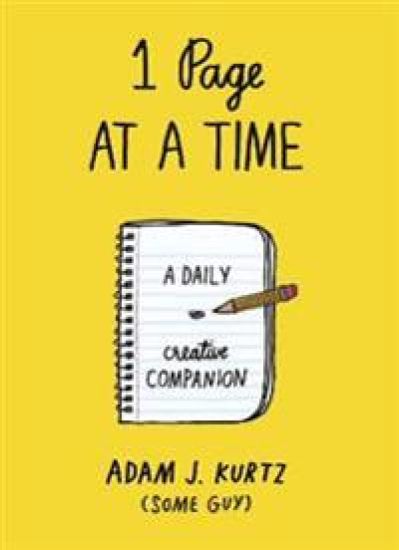
1 Page at a Time

1 Page at a Time

Adam J. Kurtz

Penguin Books Ltd
2014
nidottu
This book could be anything: a journal, a keepsake, a calendar, a friend, all of the above. It gently (and not gently) pushes you through the year, gets you writing about your past, present, and future, facing your fears and then turning the page. Each of the 365 prompts presents a chance to draw, write, make a list, imagine, dream, or otherwise create something new. It's a warm, weird, wonderful counterpart to your inner artist, an engaging invitation to express yourself in ways you may never have imagined.
Pick Me Up

Pick Me Up

Adam J. Kurtz

Tarcher/Putnam,US
2016
pokkari
A quirky, creative companion that offers a pick-me-up on every page On the heels of his internationally successful first book, 1 Page at a Time, graphic designer and illustrator Adam J. Kurtz delivers another intimate and engaging journal for anyone who loves to explore ideas, record thoughts and feelings, and capture those fleeting but amazing moments of everyday life. Unlike a linear journal, this book can be opened up to any page, encouraging and engaging readers time and time again through continued use. Rather than simply complete tasks and turn pages, users are encouraged to leave their mark, and if they land on the same page days or weeks later, they can review, reflect, and revise their previous response. Feeling lonely? Pensive? Peeved? Questioning? This deceptively simple book offers perspective, hope, and a twist of existential metaphor - and is perfect to pick up again and again.
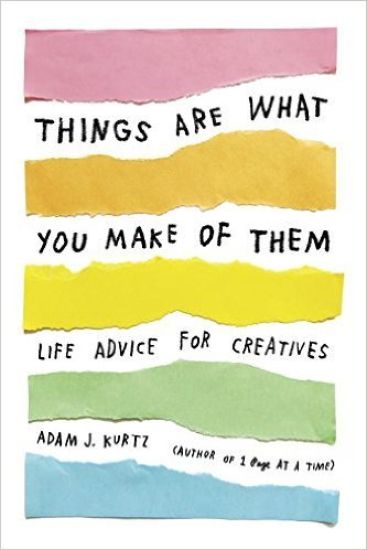
Things Are What You Make of Them

Things Are What You Make of Them

Adam J. Kurtz

Tarcher/Putnam,US
2017
nidottu
Insights and inspiration for anyone who makes art (or anything else) The Ultimate BuzzFeed Books Gift Guide - Official Selection From the creative mind and heart of designer Adam J. Kurtz comes this upbeat rallying cry for creators of all stripes. Expanding on a series of popular essays, this handwritten and heartfelt book shares wisdom and empathy from one working artist to others. Perforated tear-and-share pages make it easy to display themost crucial reminders or to pass a bit of advice on to someone who needs it. As wry and cheeky as it is empathic and empowering, this deceptively simple, vibrantly full-color book will be a touchstone for writers, artists, entrepreneurs, and anyone else who wants to be more creative--even when it would be easier to give up and act normal.
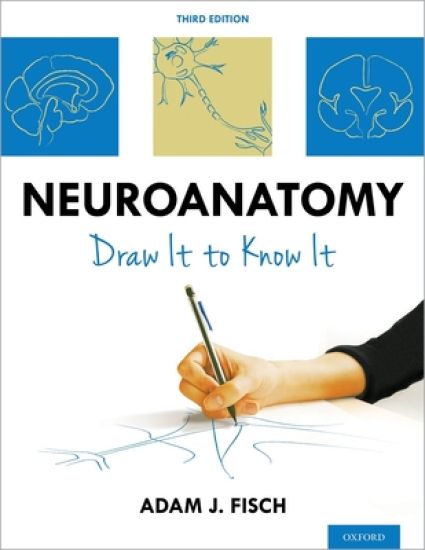
Neuroanatomy

Neuroanatomy

Adam J. Fisch

Oxford University Press Inc
2017
nidottu
Neuroanatomy: Draw It to Know It, Third Edition teaches neuroanatomy in a purely kinesthetic way. In using this book, the reader draws each neuroanatomical pathway and structure, and in the process, creates memorable and reproducible schematics for the various learning points in Neuroanatomy in a hands-on, enjoyable and highly effective manner. In addition to this unique method, Neuroanatomy: Draw It to Know It also provides a remarkable repository of reference materials, including numerous anatomic and radiographic brain images and illustrations from many other classic texts to enhance the learning experience. In the third edition of this now-classic text, the author completely reorganized the book based on user-feedback, taking a more intuitive and easy-to-use approach. For the first time, the illustrations are in full color. No other text in neuroanatomy engages the reader in as direct a manner as this book and none covers the advanced level of detail found while retaining the simplistic approach to the learning which has become the cornerstone of the text. Neuroanatomy: Draw It to Know It is singular in its ability to engage and instruct without overwhelming any level of neuroanatomy student.
Punishment for the Greater Good

Punishment for the Greater Good

Adam J. Kolber

OXFORD UNIVERSITY PRESS INC
2024
sidottu
Over ten million people are incarcerated throughout the world, even though punishment theorists have struggled for centuries to morally justify the practice. Theorists usually address criminal justice under abstract, idealized conditions that assume away real-world uncertainty. We don't have time, however, to wait for a perfect moral theory, and the history of philosophy suggests we will never find it.Punishment for the Greater Goodexamines the justification of punishment in the here and now, recognizing that we lack certainty about matters of both fact and value. Retributivists believe offenders deserve punishment because of their wrongdoing. They treat deserved punishment as intrinsically valuable. Adam Kolber argues that retributivism is too incomplete as a theory to address punishment at present and that the widely popular notion of proportional punishment at its core is both elusive and often undesirable. Rather than seeking retribution, we should reduce total societal suffering by deterring crime, incapacitating dangerous people, and hopefully rehabilitating them. Though this consequentialist approach has fallen out of favor in recent decades, Kolber argues that it is better suited to addressing punishment in the here and now than the approach commonly taken by retributivists. If consequentialism successfully justifies punishment, then contrary to some carceral abolitionists, at least some incarceration under some conditions is justified today. While we will rarely know how to punish for the greatest good, wecanseek to punish for the greater good.
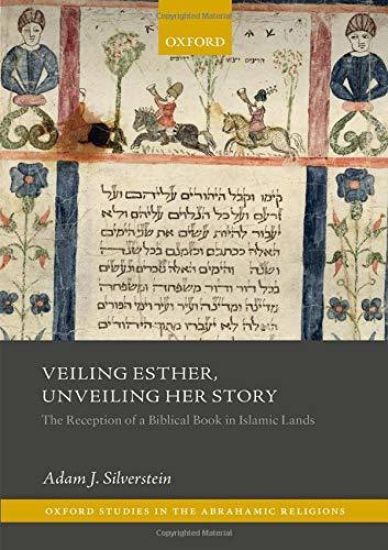
Veiling Esther, Unveiling Her Story

Veiling Esther, Unveiling Her Story

Adam J. Silverstein

Oxford University Press
2018
sidottu
Veiling Esther, Unveiling Her Story: The Reception of a Biblical Book in Islamic Lands examines the ways in which the Biblical Book of Esther was read, understood, and used in Muslim lands, from ancient to modern times. It focuses on case studies covering works from various periods and regions of the Muslim world, including the Qur'an, pre-modern historical chronicles and literary works, the writings of a nineteenth-century Shia feminist, a twentieth-century Iranian encyclopaedia, and others. These case studies demonstrate that Muslim sources contain valuable materials on Esther, which shed light both on the Esther story itself and on the Muslim peoples and cultures that received it. Adam J. Silverstein argues that Muslim sources preserve important pre-Islamic materials on Esther that have not survived elsewhere, some of which offer answers to ancient questions about Esther, such as the meaning of Haman's epithet in the Greek versions of the story, the reason why Mordecai refused to prostrate before Haman, and the literary context of the 'plot of the eunuchs' to kill the Persian king. Throughout the book, Silverstein shows how each author's cultural and religious background influenced his or her understanding and retelling of the Esther story. In particular, he highlights that Persian Muslims (and Jews) were often forced to reconcile or choose between the conflicting historical narratives provided by their religious and cultural heritages respectively.
Islamic History

Islamic History

Adam J. Silverstein

Oxford University Press
2010
nidottu
Does history matter? This book argues not that history matters, but that Islamic history does. This Very Short Introduction introduces the story of Islamic history; the controversies surrounding its study; and the significance that it holds - for Muslims and for non-Muslims alike. Opening with a lucid overview of the rise and spread of Islam, from the seventh to twenty first century, the book charts the evolution of what was originally a small, localised community of believers into an international religion with over a billion adherents. Chapters are also dedicated to the peoples - Arabs, Persians, and Turks - who shaped Islamic history, and to three representative institutions - the mosque, jihad, and the caliphate - that highlight Islam's diversity over time. Finally, the roles that Islamic history has played in both religious and political contexts are analysed, while stressing the unique status that history enjoys amongst Muslims, especially compared to its lowly place in Western societies where history is often seen as little more than something that is not to be repeated. Some of the questions that will be answered are: · How did Islam arise from the obscurity of seventh century Arabia to the headlines of twenty first century media? · How do we know what we claim to know about Islam's rise and development? · Why does any of this matter, either to Muslims or to non-Muslims? ABOUT THE SERIES: The Very Short Introductions series from Oxford University Press contains hundreds of titles in almost every subject area. These pocket-sized books are the perfect way to get ahead in a new subject quickly. Our expert authors combine facts, analysis, perspective, new ideas, and enthusiasm to make interesting and challenging topics highly readable.
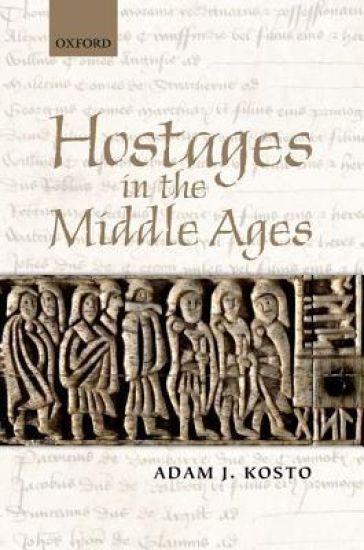
Hostages in the Middle Ages

Hostages in the Middle Ages

Adam J. Kosto

Oxford University Press
2012
sidottu
In medieval Europe hostages were given, not taken. They were a means of guarantee used to secure transactions ranging from treaties to wartime commitments to financial transactions. In principle, the force of the guarantee lay in the threat to the life of the hostage if the agreement were broken but, while violation of agreements was common, execution of hostages was a rarity. Medieval hostages are thus best understood not as simple pledges, but as a political institution characteristic of the medieval millennium, embedded in its changing historical contexts. In the Early Middle Ages, hostageship was principally seen in warfare and diplomacy, operating within structures of kinship and practices of alliance characteristic of elite political society. From the eleventh century, hostageship diversified, despite the spread of a legal and financial culture that would seem to have made it superfluous. Hostages in the Middle Ages traces the development of this institution from Late Antiquity through the period of the Hundred Years War, across Europe and the Mediterranean World. It explores the logic of agreements, the identity of hostages, and the conditions of their confinement, while shedding light on a wide range of subjects, from sieges and treaties, to captivity and ransom, to the Peace of God and the Crusades, to the rise of towns and representation, to political communication and shifting gender dynamics. The book closes by examining the reasons for the decline of hostageship in the Early Modern era, and the rise the modern variety of hostageship that was addressed by the Nuremberg tribunals and the United Nations in the twentieth century.