
Kirjahaku
Etsi kirjoja tekijän nimen, kirjan nimen tai ISBN:n perusteella.
1000 tulosta hakusanalla Alberto Moravia
Alberto Moravia
VDM Publishing House
2010
nidottu
Observera att förlaget som ger ut denna produkt baserar innehållet i sina produkter på fria källor som Wikipedia. Boken är med stor sannolikhet endast ett utdrag ur dessa informationskällor, alltså inte en vanlig bok i den bemärkelsen.

Gli indifferenti - Alberto Moravia (analisi del libro)
LECTURAE.IT
2025
pokkari


The Architecture of Imagery in Alberto Moravia's Fiction
THE UNIVERSITY OF NORTH CAROLINA PRESS
1996
nidottu
Kozma examines the use of metaphor and simile in the works of the twentieth-century Italian fiction writer Alberto Moravia, whose novels include Gli indiferenti (1929) and La Romana (1947). She provides a comprehensive description of types of imagery in Moravia's work, organizing this compendium into a series of categories such as images of thought, nature, food, and the human body.

Die Darstellung des Faschismus in den Werken Alberto Moravias
Michaela-Helga Schiebe
Diplom.de
2003
pokkari
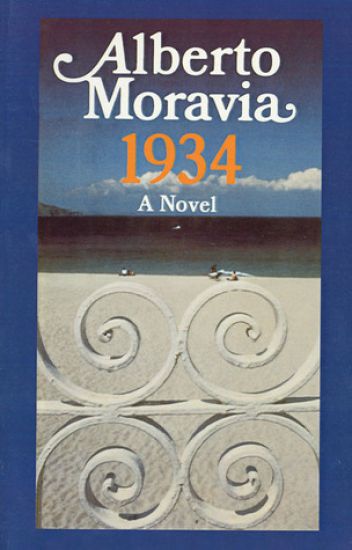
Moravia is not simply painting the portrait of an age but also coming to grips through his art with the great questions of all ages - the erotic, love, death, and the purposes of life. 1934 recapitulates the major themes of his art and at the same time takes us beyond them.

The novels that the great Italian writer Alberto Moravia wrote in the years following the World War II represent an extraordinary survey of the range of human behavior in a fragmented modern society. Boredom, the story of a failed artist and pampered son of a rich family who becomes dangerously attached to a young model, examines the complex relations between money, sex, and imperiled masculinity. This powerful and disturbing study in the pathology of modern life is one of the masterworks of a writer whom as Anthony Burgess once remarked, was "always trying to get to the bottom of the human imbroglio."

Contempt is a brilliant and unsettling work by one of the revolutionary masters of modern European literature. All the qualities for which Alberto Moravia is justly famous--his cool clarity of expression, his exacting attention to psychological complexity and social pretension, his still-striking openness about sex--are evident in this story of a failing marriage. Contempt (which was to inspire Jean-Luc Godard's no-less-celebrated film) is an unflinching examination of desperation and self-deception in the emotional vacuum of modern consumer society.
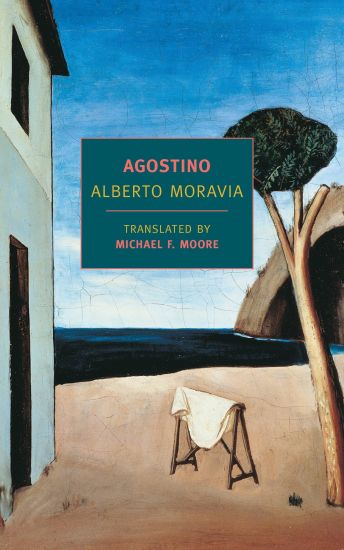
Thirteen-year-old Agostino is spending the summer at a Tuscan seaside resort with his beautiful widowed mother. When she takes up with a cocksure new companion, Agostino, feeling ignored and unloved, begins hanging around with a group of local young toughs. Though repelled by their squalor and brutality, and repeatedly humiliated for his weakness and ignorance when it comes to women and sex, the boy is increasingly, masochistically drawn to the gang and its rough games. He finds himself unable to make sense of his troubled feelings. Hoping to be full of manly calm, he is instead beset by guilty curiosity and an urgent desire to sever, at any cost, the thread of troubled sensuality that binds him to his mother. Alberto Moravia's classic, startling portrait of innocence lost was written in 1942 but rejected by Fascist censors and not published until 1944, when it became a best seller and secured the author the first literary prize of his career. Revived here in a new translation by Michael F. Moore, Agostino is poised to captivate a twenty-first-century audience.

Trouble is the result when Sylvio, a wealthy Italian dilettante with literary aspirations, and his beautiful wife, Leda, move to the country and agree to forgo sex to give Silvio the energy to write a successful novel, especially when Antonio, the local barber, is thrown into the combustible mix. Reprint.


Marcello hides his feelings of guilt for a murder he committed as a child and attempts to conform to society through marriage and a career in the Fascist party

The glitter and cynicism of Rome under Mussolini provide the background of what is probably Alberto Moravia's best and best-known novel -- "The Woman of Rome." It's the story of Adriana, a simple girl with no fortune but her beauty who models naked for a painter, accepts gifts from men, and could never quite identify the moment when she traded her private dream of home and children for the life of a prostitute. One of the very few novels of the twentieth century which can be ranked with the work of Dostoevsky, "The Woman of Rome" also tells the stories of the tortured university student Giacomo, a failed revolutionary who refuses to admit his love for Adriana; of the sinister figure of Astarita, the Secret Police officer obsessed with Adriana; and of the coarse and brutal criminal Sonzogno, who treats Adriana as his private property. Within this story of passion and betrayal, Moravia calmly strips away the pride and arrogance hiding the corrupt heart of Italian Fascism.

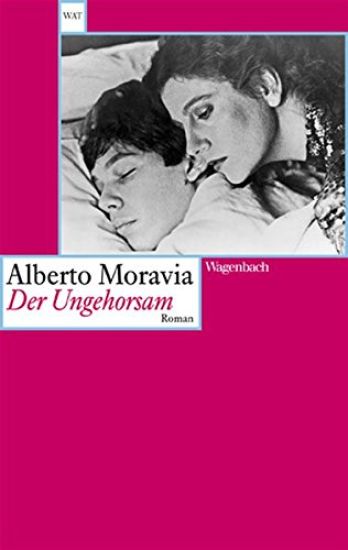

Michele er vitne til sin families kjedsommelige tilværelse. Morens elsker Leo, som kontrollerer den lille familien, er lei av elskerinnens evinnelige sjalusi og finner hennes unge datter Carla mer interessant. Carla selv er så desperat i sin kjedsomhet at hun griper enhver mulighet for avveksling. Michele ser hvordan moren og søsteren er dominert av Leo og av det borgerlige livets trivialiteter. Han kjemper en indre kamp mellom intens forakt som fordrer en reaksjon, og en fullstendig handlingslammende likegyldighet. I løpet av et par dager følger romanen de få karakterene i en dramatisk og på samme tid triviell konflikt med eksistensielle undertoner. Den italienske forfatteren Alberto Moravia var bare 21 år da han i 1929 debuterte med De likeglade, som blir sagt å være en forløper for den eksistensialistiske romanen.
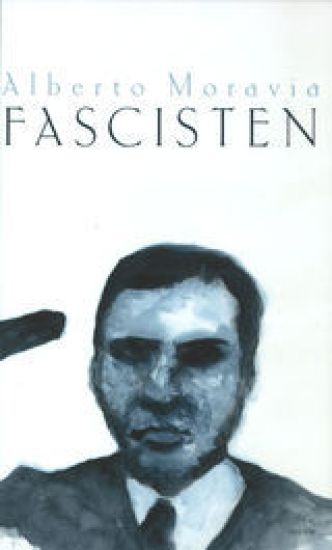
Gjennom hele barndommen hadde Marcello vært like tiltrukket av gjenstander som en skjære. Kanskje skyldtes det at foreldrene, som var mer likeglade enn strenge, aldri hadde tenkt på å tilfredsstille hans trang til å eie; kanskje var det fordi andre, dypere og mer uklare instinkter skjulte seg bak en maske av grådighet. Til stadighet ble han grepet av et ustyrlig begjær etter de mest ulike gjenstander: en blyant med viskelær i enden, en illustrert bok, en sprettert, en linjal, et reiseblekkhus i ebonitt - en hvilken som helst fille.ting kunne piske opp i ham et intenst, irrasjonelt begjær, som siden, så snart den ettertraktede gjenstanden var kommet i hans eie, gled over i en umåtelig, henrykt og forundret tilfredshet. Til sin store skrekk oppdager Marcello allerede som barn at han har en iboende hang til brutalitet. Forferdet av sin egen morbide oppførsel, søker han gjennom hele oppveksten etter det han oppfatter som normalitet. Elsket av sin forlovede og respektert av sine kollegaer, kan det i voksen alder tilsynelatende virke som Marcello besitter en fullstendig kontroll over sitt eget liv. Han ser sin store sjanse til en forfremmelse innen De Hemmelige Tjenester når han en dag blir utnevnt til å likvidere sin tidligere professor ved universitetet, nå leder av motstandsbevegelsen i Paris. Men gjennom et møte med en mystisk kvinne og erkjennelsen av at han selv bare er en brikke i et større spill, begynner normaliteten i Marcellos liv å rakne, og barndommens tilbøyeligheter til det grusomme kommer igjen opp til overflaten. Gjennom sin dype innlevelse i hovedpersonens indre liv, gjør .Alberto Moravia her et forsøk på en inngående analyse av fascismens psykologi og på å avdekke de krefter som får et menneske til å utslette sin egen identitet for å gå opp i massens normalitet.
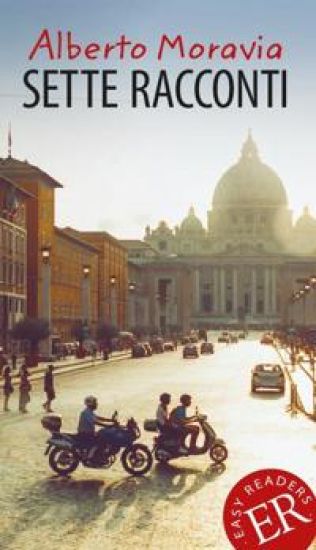
"Sette racconti" è una scelta tratta dai famosi Racconti Romani, in cui popolani e piccolo-borghesi della capitale narrano, in prima persona, le loro avventure o più spesso le loro disavventure. La descrizione del popolo minuto che incontriamo: camerieri, borsaneristi, ladruncoli, trafficanti di ogni genere, anche se non è una realtà sociale, ma una colorita stilizzazione di Moravia, riesce ad affascinare per il tono vivace e l´umorismo acerbo dello scrittore.Easy Readers er bearbejdede og forkortede udgaver af romaner og noveller. De findes på niveau A, B, C og D, hvor A er lettest. Niveauerne relaterer til Common European Framework of Reference for Languages (level A2 til B2).