Kirjojen hintavertailu. Mukana 11 699 587 kirjaa ja 12 kauppaa.

Kirjahaku

Etsi kirjoja tekijän nimen, kirjan nimen tai ISBN:n perusteella.

1000 tulosta hakusanalla Alexandra Parma Cook; Noble David Cook

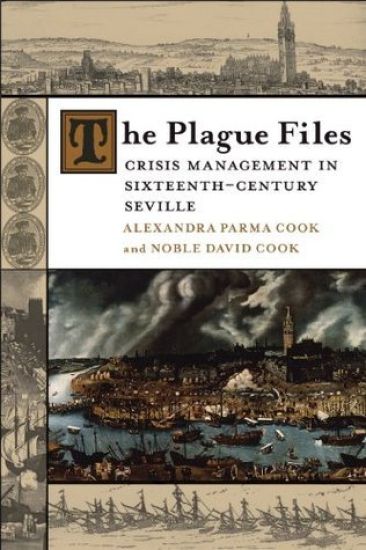
The Plague Files

The Plague Files

Alexandra Parma Cook; Noble David Cook

Louisiana State University Press
2009
sidottu
In the first half of the 1580s, Seville, Spain, confronted a series of potentially devastating crises. In three years, the city faced a brush with deadly contagion, including the plague; the billeting of troops in preparation for Philip II's invasion of Portugal; crop failure and famine following drought and locust infestation; an aborted uprising of the Moriscos (Christian converts from Islam); bankruptcy of the municipal government; the threat of pollution and contaminated water; and the disruption of commerce with the Indies. While each of these problems would be formidable on its own, when taken together, the crises threatened Seville's social and economic order. In The Plague Files, Alexandra Parma Cook and Noble David Cook reconstruct daily life during this period in sixteenth-century Seville, exposing the difficult lives of ordinary men, women, and children and shedding light on the challenges municipal officials faced as they attempted to find solutions to the public health emergencies that threatened the city's residents. Filling several gaps in the historiography of early modern Spain, this volume offers a history of not only Seville's city government but also the medical profession in Andalusia, from practitioner nurses and barber surgeons (who were often the first to encounter symptoms of plague) to well-trained university physicians. All levels of society enter the picture -- from slaves to the local aristocracy. Drawing on detailed records of city council deliberations, private and public correspondence, reports from physicians and apothecaries, and other primary sources, Cook and Cook recount Seville's story in the words of the people who lived it -- the city's governor, the female innkeepers charged with reporting who recently died in their establishments, the physicians who describe the plague victims' symptoms. As Cook and Cook's detailed history makes clear, in spite of numerous emergencies, Seville's bureaucracy functioned with relative normality, providing basic services necessary for the survival of its citizens. Their account of the travails of 1580s Seville provides an indispensable resource for those studying early modern Spain.
The Plague Files

The Plague Files

Alexandra Parma Cook; Noble David Cook

Louisiana State University Press
2012
nidottu
In the first half of the 1580s, Seville, Spain, confronted a series of potentially devastating crises. In three years, the city faced a brush with deadly contagion, including the plague; the billeting of troops in preparation for Philip II's invasion of Portugal; crop failure and famine following drought and locust infestation; an aborted uprising of the Moriscos (Christian converts from Islam); bankruptcy of the municipal government; the threat of pollution and contaminated water; and the disruption of commerce with the Indies. While each of these problems would be formidable on its own, when taken together, the crises threatened Seville's social and economic order. In The Plague Files, Alexandra Parma Cook and Noble David Cook reconstruct daily life during this period in sixteenth-century Seville, exposing the difficult lives of ordinary men, women, and children and shedding light on the challenges municipal officials faced as they attempted to find solutions to the public health emergencies that threatened the city's residents. Filling several gaps in the historiography of early modern Spain, this volume offers a history of not only Seville's city government but also the medical profession in Andalusia, from practitioner nurses and barber surgeons (who were often the first to encounter symptoms of plague) to well-trained university physicians. All levels of society enter the picture -- from slaves to the local aristocracy. Drawing on detailed records of city council deliberations, private and public correspondence, reports from physicians and apothecaries, and other primary sources, Cook and Cook recount Seville's story in the words of the people who lived it -- the city's governor, the female innkeepers charged with reporting who recently died in their establishments, the physicians who describe the plague victims' symptoms. As Cook and Cook's detailed history makes clear, in spite of numerous emergencies, Seville's bureaucracy functioned with relative normality, providing basic services necessary for the survival of its citizens. Their account of the travails of 1580s Seville provides an indispensable resource for those studying early modern Spain.
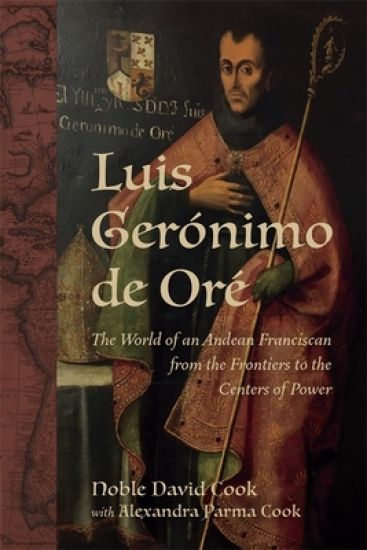
Luis Gerónimo de Oré

Luis Gerónimo de Oré

Alexandra Parma Cook; Noble David Cook

LOUISIANA STATE UNIVERSITY PRESS
2023
sidottu
Born in a provincial city in the Peruvian Andes, the Franciscan linguist and theologian Luis Gerónimo de Oré (1554–1630) lived during a critical period in the formation of the modern world, as the global empire of Spain engaged in a nearly continuous struggle over resources and religion.In the first full-length biography of Oré, Noble David Cook and Alexandra Parma Cook reconstruct the friar's life and the communities in which he circulated, tracing the career of this first-generation Creole from his roots in Huamanga to his work in Andean missions, his activities at the royal courts of Spain and throughout Spanish America, until his final years as bishop of Concepción, Chile. While serving in Peru's Colca Valley, Oré composed multilingual texts, translating doctrinal concepts into the indigenous languages Quechua and Aymara, alongside Latin and Spanish, which missionaries and secular clergy frequently used in their conversion efforts. As commissioner to Cuba and La Florida, he inspected the frontier missions along the coast of what became the southeastern United States and wrote an influential history of these outposts and their environment. After Philip III dispatched him to Concepción, Oré spent his last years working in the southernmost end of the Americas, where he continued his advocacy for indigenous justice and engaged in heated arguments with the governor over defensive war, royal patronage, and Indian enslavement.Drawn from research conducted in Spain and Latin America over several decades, this consequential biography recovers from obscurity a colonial friar whose legacy continues in the Andean world today.
Good Faith and Truthful Ignorance

Good Faith and Truthful Ignorance

Noble David Cook; Alexandra Parma Cook

Duke University Press
1991
pokkari
Good Faith and Truthful Ignorance uncovers from history the fascinating and strange story of Spanish explorer Francisco Noguerol de Ulloa. in 1556, accompanied by his second wife, Francisco returned to his home in Spain after a profitable twenty-year sojourn in the new world of Peru. However, unlike most other rich conquistadores who returned to the land of their birth, Francisco was not allowed to settle into a life of leisure. Instead, he was charged with bigamy and illegal shipment of silver, was arrested and imprisoned. Francisco’s first wife (thought long dead) had filed suit in Spain against her renegade husband.So begins the labyrinthine legal tale and engrossing drama of an explorer and his two wives, skillfully reconstructed through the expert and original archival research of Alexandra Parma Cook and Noble David Cook. Drawing on the remarkable records from the trial, the narrative of Francisco’s adventures provides a window into daily life in sixteenth-century Spain, as well as the mentalitÉ and experience of conquest and settlement of the New World. Told from the point of view of the conquerors, Francisco’s story reveals not only the lives of the middle class and minor nobility but also much about those at the lower rungs of the social order and relations between the sexes.In the tradition of Carlo Ginzberg’s The Cheese and the Worms and Natalie Zemon Davis’ The Return of Martin Guerre, Good Faith and Truthful Ignorance illuminates an historical period-the world of sixteenth-century Spain and Peru-through the wonderful and unusual story of one man and his two wives.
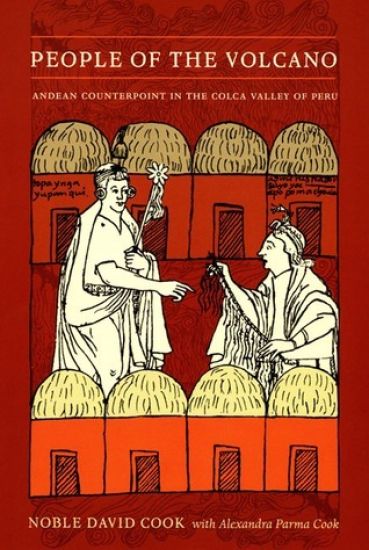
People of the Volcano

People of the Volcano

Noble David Cook; Alexandra Parma Cook

Duke University Press
2007
pokkari
While it now attracts many tourists, the Colca Valley of Peru’s southern Andes was largely isolated from the outside world until the 1970s, when a passable road was built linking the valley-and its colonial churches, terraced hillsides, and deep canyon-to the city of Arequipa and its airport, eight hours away. Noble David Cook and his co-researcher Alexandra Parma Cook have been studying the Colca Valley since 1974, and this detailed ethnohistory reflects their decades-long engagement with the valley, its history, and its people. Drawing on unusually rich surviving documentary evidence, they explore the cultural transformations experienced by the first three generations of Indians and Europeans in the region following the Spanish conquest of the Incas.Social structures, the domestic export and economies, and spiritual spheres within native Andean communities are key elements of analysis. Also highlighted is the persistence of duality in the Andean world: perceived dichotomies such as those between the coast and the highlands, Europeans and Indo-Peruvians. Even before the conquest, the Cabana and Collagua communities sharing the Colca Valley were divided according to kinship and location. The Incas, and then the Spanish, capitalized on these divisions, incorporating them into their state structure in order to administer the area more effectively, but Colca Valley peoples resisted total assimilation into either. Colca Valley communities have shown a remarkable tenacity in retaining their social, economic, and cultural practices while accommodating various assimilationist efforts over the centuries. Today’s population maintains similarities with their ancestors of more than five hundred years ago-in language, agricultural practices, daily rituals, familial relationships, and practices of reciprocity. They also retain links to ecological phenomena, including the volcanoes from which they believe they emerged and continue to venerate.
People of the Volcano

People of the Volcano

Noble David Cook; Alexandra Parma Cook

Duke University Press
2007
sidottu
While it now attracts many tourists, the Colca Valley of Peru’s southern Andes was largely isolated from the outside world until the 1970s, when a passable road was built linking the valley-and its colonial churches, terraced hillsides, and deep canyon-to the city of Arequipa and its airport, eight hours away. Noble David Cook and his co-researcher Alexandra Parma Cook have been studying the Colca Valley since 1974, and this detailed ethnohistory reflects their decades-long engagement with the valley, its history, and its people. Drawing on unusually rich surviving documentary evidence, they explore the cultural transformations experienced by the first three generations of Indians and Europeans in the region following the Spanish conquest of the Incas.Social structures, the domestic export and economies, and spiritual spheres within native Andean communities are key elements of analysis. Also highlighted is the persistence of duality in the Andean world: perceived dichotomies such as those between the coast and the highlands, Europeans and Indo-Peruvians. Even before the conquest, the Cabana and Collagua communities sharing the Colca Valley were divided according to kinship and location. The Incas, and then the Spanish, capitalized on these divisions, incorporating them into their state structure in order to administer the area more effectively, but Colca Valley peoples resisted total assimilation into either. Colca Valley communities have shown a remarkable tenacity in retaining their social, economic, and cultural practices while accommodating various assimilationist efforts over the centuries. Today’s population maintains similarities with their ancestors of more than five hundred years ago-in language, agricultural practices, daily rituals, familial relationships, and practices of reciprocity. They also retain links to ecological phenomena, including the volcanoes from which they believe they emerged and continue to venerate.
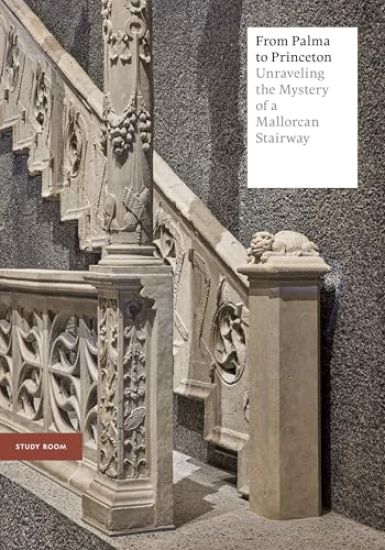
From Palma to Princeton

From Palma to Princeton

Alexandra Letvin; Elena Torok

PRINCETON UNIVERSITY PRESS
2025
pokkari
A beautifully illustrated look at the complex past of Princeton’s Mallorcan stairway and patioFrom Palma to Princeton weaves together a rich history that crisscrosses the Atlantic, offering a picture of trends and tastes in twentieth-century art collecting in Europe and the United States and debates regarding cultural property. How and why did stone architectural elements from Mallorca, Spain, make the journey from the Balearic Islands to New Jersey? Art historian Alexandra Letvin traces the fascinating story of how a fifteenth- to sixteenth-century stairway, together with balustrades and columns from a sixteenth-century residential patio, were dismantled in the late nineteenth and early twentieth centuries in Mallorca and reconfigured by American and Spanish art dealers living in Spain. The resulting assemblage made its way first into the collection of William Randolph Hearst, then to the home of the Baron and Baroness Cassel van Doorn in Englewood, New Jersey, and finally, in 1955, to Princeton University.Conservator Elena Torok details how cross-disciplinary research leading to the grouping’s 2025 reinstallation in the Princeton University Art Museum’s new building yielded discoveries about the stones’ past, including the fact that by the time it left the island of Mallorca in 1929, elements had been modified and recombined in ways that left them permanently altered. As the stairway, balustrades, and columns changed hands during the twentieth century and their connections to their source locations became blurred, they became challenging to recognize; for many years these pieces had been considered lost, despite having been installed in the galleries of the Princeton University Art Museum in 1965 and viewed by generations of visitors.
Claves Para La Felicidad: Formas Sencillas Para Ser Feliz Y Disfrutar de Su Vida Sin Importar Las Circunstancias
Una de las barreras m s grandes para la verdadera felicidad es que vivimos en una sociedad que tiende a alentarnos a redimirnos con bienes materiales. Agendas demasiado ocupadas, el estr s del d a a d a y la lucha constante de querer m s puede hacer que realmente nos estemos perdiendo la verdadera felicidad por aquello que ya poseemos.Darse un respiro y aprender a valorar y a valorarnos cada d a es uno de los muchos aspectos que pueden hacer que nuestras vidas sean realmente m s felices.
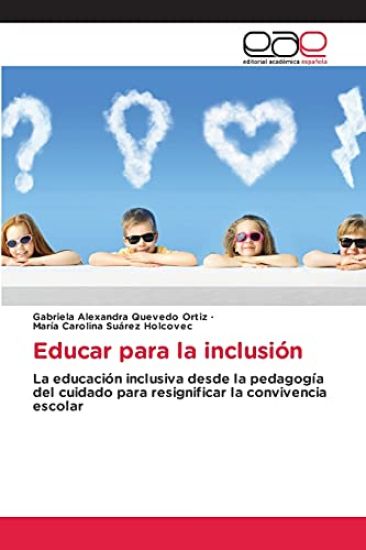
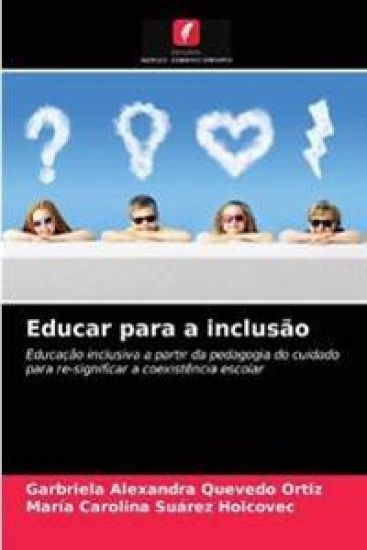
Educar para la inclusión

Educar para la inclusión

Gabriela Alexandra Quevedo Ortiz; María Carolina Suárez Holcovec

Editorial Academica Espanola
2020
pokkari
El proyecto nace de la idea de que debemos comenzar a desarrollar ambientes educativos y sociales en los que se propicie el amor por los dem s, la tolerancia, la empat a y sobre todo la equidad social, apremiante para el desarrollo de un pa s en el que reine la paz. Se requiere de una pedagog a ciudadana, en este caso la pedagog a del cuidado, que garantice la formaci n para todos y para todas en la democracia y la justicia social, la disposici n para el di logo y la construcci n colectiva de propuestas, eje fundamental para la construcci n sostenible de la paz. De esta manera, se crear un modelo educativo respetuoso de la inclusi n y la diversidad fundamentado en un enfoque que privilegie la formaci n de sujetos creadores y cr ticos, as como el reconocimiento del otro en su diferencia.
Educar para a inclusão

Educar para a inclusão

Garbriela Alexandra Quevedo Ortiz; María Carolina Suárez Holcovec

Edicoes Nosso Conhecimento
2021
pokkari
O projeto nasce da id ia de que devemos come ar a desenvolver ambientes educativos e sociais que fomentem o amor ao pr ximo, a toler ncia, a empatia e, sobretudo, a equidade social, essencial para o desenvolvimento de um pa s em que reine a paz. necess ria uma pedagogia cidad , neste caso a pedagogia do cuidado, que garanta a forma o de todos em democracia e justi a social, a vontade de di logo e a constru o coletiva de propostas, eixo fundamental para a constru o sustent vel da paz. Desta forma, ser criado um modelo educativo respeitador da inclus o e da diversidade, baseado numa abordagem que favore a a forma o de sujeitos criativos e cr ticos, assim como o reconhecimento dos outros nas suas diferen as.
Projeto de viabilidade para a criação de uma microempresa.

Projeto de viabilidade para a criação de uma microempresa.

Alexandra Vega

Edicoes Nosso Conhecimento
2023
pokkari
Trata-se de um projeto de investiga o com o objetivo de conhecer a realidade do meio e criar uma microempresa para gerar emprego na zona rural em que n o existem empresas que prestem servi os sociedade civil. uma necessidade desde que exista mat ria-prima e para elaborar o produto final para exporta o nacional; o presente projeto vai encontrar o or amento, o investimento, a rentabilidade e o resultado final.
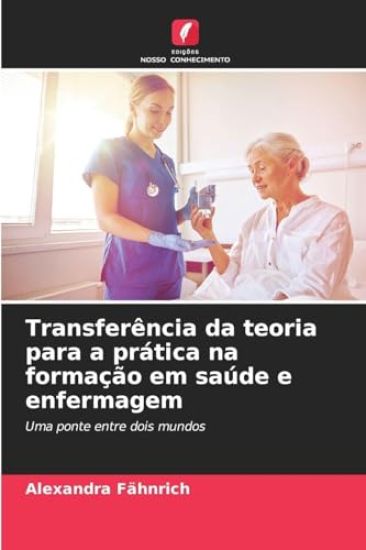
Transferência da teoria para a prática na formação em saúde e enfermagem
Os cuidados de sa de enfrentam grandes desafios no futuro, tendo em conta o processo de evolu o demogr fica e epidemiol gica e a crescente profissionaliza o da profiss o de enfermagem. Al m disso, tamb m na pedagogia est a ocorrer uma mudan a de paradigma, afastando-se da aprendizagem puramente informativa e aproximando-se da aquisi o transformativa de conhecimentos, com a aplica o de recursos globais para a resolu o de problemas e a motiva o para a aprendizagem ao longo da vida. Isto coloca elevadas exig ncias forma o te rica e pr tica. O presente trabalho aborda esta tem tica e tem como objetivo apresentar m todos te ricos e pr ticos que interliguem de forma eficiente os conhecimentos te ricos com os conhecimentos pr ticos, promovendo assim o desenvolvimento de compet ncias pr ticas.
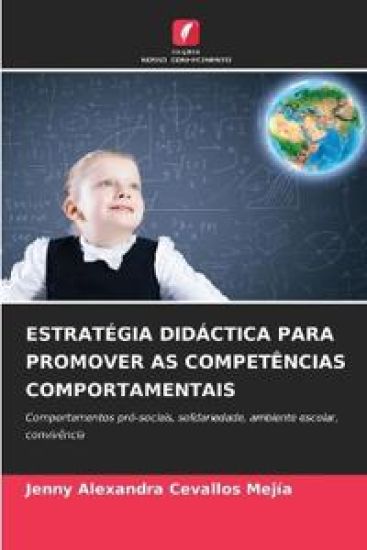
Estratégia Didáctica Para Promover as Competências Comportamentais

Estratégia Didáctica Para Promover as Competências Comportamentais

Jenny Alexandra Cevallos Mejía

Edicoes Nosso Conhecimento
2023
pokkari
O presente trabalho teve como objetivo melhorar as compet ncias pr -sociais dos alunos do 8 EGB da Escola B sica "2 de mar o", com base na an lise do comportamento dos alunos durante o processo de ensino-aprendizagem. O estudo foi orientado para uma investiga o mista com uma liga o descritiva e documental com o objetivo de descrever as caracter sticas e dimens es dos comportamentos pr -sociais. A popula o do estudo foi constitu da por 70 alunos a quem foi aplicado um question rio de 15 perguntas do tipo Likert com as dimens es de coopera o, solidariedade e empatia. O instrumento foi validado e constru do sob a metodologia de julgamento de especialistas, alcan ando uma estat stica alfa de Cronbach de 0,848. Os resultados contrastaram algumas necessidades de melhoria em cada dimens o. Com base nesta an lise, prop e-se um guia metodol gico que cont m estrat gias devidamente estruturadas com base na realidade atual dos processos de ensino e aprendizagem para serem devidamente aplicadas em cada sala de aula.
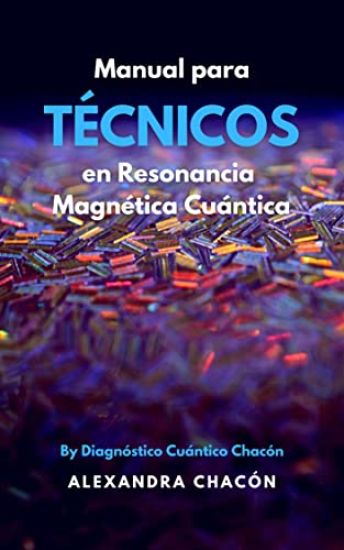
Manual para Técnico en Resonancia Magnética Cuántica

Manual para Técnico en Resonancia Magnética Cuántica

Chacón Alfonzo Alexandra Gabriela

Agencia Panamena ISBN
2022
pokkari
Mis respetos a todos los t cnicos en resonancia magn tica cu ntica del mundo... Qu encontrar s en este manual?Este manual esta maravillosamente dise ado para que comiences a dar tus primeros pasos. Si eres principiante, aqu encontrar s todo lo que necesitas para hacer un diagn stico cu ntico desde la excelencia; est cuidosamente elaborado con cada detalle requerido para ser un referente mundial de este servicio, adem s te revelar tips y secretos que ning n otro t cnico ha compartido jam s.Despu s de este manual, sigue un entrenamiento, los cuales te llevar n al nivel que tu cliente quiere y necesita, porque lo que el mundo necesita son "buenos t cnicos en resonancia", capaces de interpretar adecuadamente y sin ser invasivo a la naturaleza humana, este incre ble instrumento creado por el hombre nos ayudar a impactar la vida de las personas que depositan su confianza en nosotros, sin querer ser sus m dicos de cabecera, todo lo contrario, somos un puente entre el m dico y tu interpretaci n.Disfruta de este manual nico y las clases virtuales donde nos conoceremos, compartiremos informaci n valiosa de c mo lo natural apoya al beneficio de la salud integral entre mente y cuerpo, estoy m s que segura que todo lo que entrego para ti en el curso te enriquecer enormemente.As como yo un d a dese tener un manual como este, estoy convencida que despu s de hoy comenzar s a ejercer con la plena confianza de que lo est s haciendo bien.Mil Gracias