Kirjojen hintavertailu. Mukana 12 083 983 kirjaa ja 12 kauppaa.

Kirjahaku

Etsi kirjoja tekijän nimen, kirjan nimen tai ISBN:n perusteella.

1000 tulosta hakusanalla Alexandre Bohas

The Political Economy of Disney

The Political Economy of Disney

Alexandre Bohas

Palgrave Macmillan
2016
sidottu
This book sheds new light on the socio-economic impact of multinational corporations. Combining Cultural Studies and International Political Economy, it provides a revealing analysis of the Walt Disney Company, and by extension the wider Hollywood studio system. It does so by examining the cultural and economic forces powering the industry's expansion, the 'civilisation' that Disney disseminates, and the various ways that societies beyond the USA have adopted facets of the Hollywood productions to which they are exposed. Identifying both the strengths and the weaknesses of these transnational firms, it demonstrates the significance of their contribution to American power and predominance.
Kongenitale Syphilis

Kongenitale Syphilis

G. Alexander; H. Boas; C. Hochsinger; J. Igersheimer; P. Kran?; R. Ledermann; F. Lesser; Erich Müller; H. Rietschel; L. v. ?umbusch

Springer-Verlag Berlin and Heidelberg GmbH Co. K
1927
nidottu
Dieser Buchtitel ist Teil des Digitalisierungsprojekts Springer Book Archives mit Publikationen, die seit den Anfängen des Verlags von 1842 erschienen sind. Der Verlag stellt mit diesem Archiv Quellen für die historische wie auch die disziplingeschichtliche Forschung zur Verfügung, die jeweils im historischen Kontext betrachtet werden müssen. Dieser Titel erschien in der Zeit vor 1945 und wird daher in seiner zeittypischen politisch-ideologischen Ausrichtung vom Verlag nicht beworben.
Alexandre

Alexandre

Guillaume Lebaillif

Editions Muse
2026
pokkari
Dans une fresque pique et flamboyante qui embrasse le monde antique, Alexandre nous entra ne sur les pas du plus grand conqu rant de tous les temps. De la Mac doine natale aux confins de l'Inde fabuleuse, des rivages de Pella aux sables de Siwah, c'est une extraordinaire odyss e que nous conte ce roman, celle d'Alexandre le Grand et de son r ve d mesur d'unir l'Orient et l'Occident... Mais son destin ne serait-il pas plut t de se vouer sa passion pour la jolie Dia ?
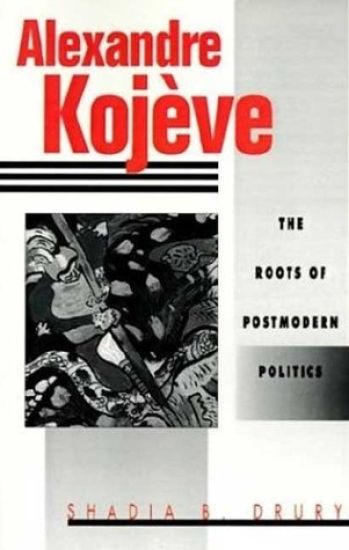
Alexandre Kojeve

Alexandre Kojeve

S. Drury

Palgrave Macmillan
1994
nidottu
Alexandre Kojve (1902-1968) was Hegel's most famous interpreter, reading Hegel through the eyes of Marx and Heidegger simultaneously. The result was a wild if not hypnotic mlange of ideas. In this book, Drury reveals the nature of Kojve's Hegelianism and the extraordinary influence it has had on French postmodernists on the left (Raymond Queneau, Georges Bataille, and Michel Foucault) and American postmodernists on the right (Leo Strauss, Allan Bloom, and Francis Fukuyama). According to Drury, Kojve followed Hegel in thinking that reason has triumphed in the course of history, but it is a cold, soulless, instrumental, and uninspired rationalism that has conquered and disenchanted the world. Drury maintains that Kojve's conception of modernity as the fateful triumph of this arid rationality is the cornerstone of postmodern thought. Kojve's picture of the world gives birth to a dark romanticism that manifests itself in a profound nostalgia for what reason has banished - myth, madness, disorder, spontaneity, instinct, passion, and virility. In Drury's view, these ideas romanticize the gratuitous violence and irrationalism that characterize the postmodern world.
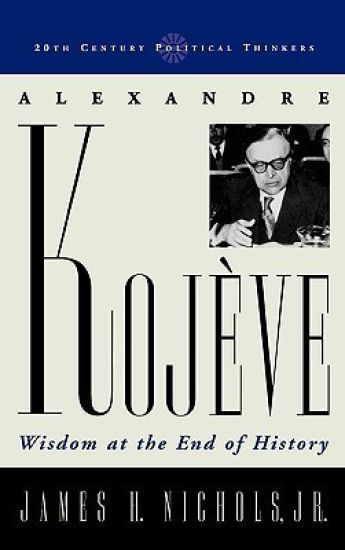
Alexandre Kojeve

Alexandre Kojeve

James H. Nichols

Rowman Littlefield Publishers
2007
sidottu
Nichols examines the major writings of Alexandre Kojève, and clarifies the character and brings to light the importance of his political philosophy. While emphasizing the political dimension of Kojève's thought, Nichols treats all his major published writings and shows how the remarkably varied parts of Kojève's intellectual endeavor go together. This is an essential assessment of Kojève which considers the works that preceded his turn to Hegel, seeks to articulate the character of his Hegelianism, and reflects in detail on the two different meanings that the end of history had in two different periods of his thought.