
Kirjahaku
Etsi kirjoja tekijän nimen, kirjan nimen tai ISBN:n perusteella.
1000 tulosta hakusanalla Alexandre Halot

L'Extrême-Orient. Etudes d'Hier-Événements d'Aujourd'hui
Alexandre Halot
Hachette Livre - BNF
2017
pokkari


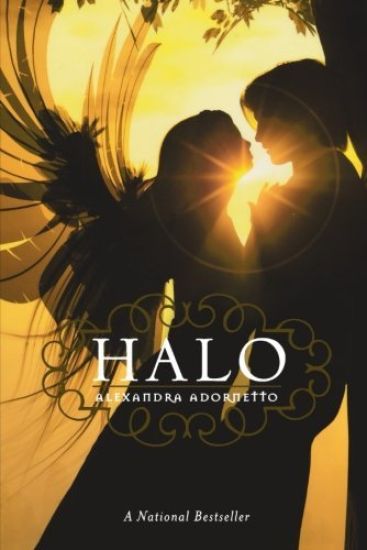
A small town is touched by angels; a powerful, forbidden romance forms, and intrigue and action ensue as the Dark Forces resist the angels influence, in the first book of Alexandra Adornetto's heartfelt YA Halo Trilogy. Three angels are sent down to bring good to the world: Gabriel, the warrior; Ivy, the healer; and Bethany, a teenage girl who is the least experienced of the trio. But she is the most human, and when she is romantically drawn to a mortal boy, the angels fear she will not be strong enough to save anyone--especially herself--from the Dark Forces. Is love a great enough power against evil?

She was sent to save him. . .but can she save herself?

Was geschieht, wenn man nur mit halben Angaben auf eine Reise geschickt wird? Mit einer halben Landkarte und halben Reiseinformationen? Was geschieht, wenn man nur f r die halbe Wegstrecke Verpflegung mitgenommen hat? Was geschieht, wenn man sich auf die Reise nur halbherzig vorbereitet hat, und mit den Strapazen k rperlich berfordert ist? Richtig: Man wird sich verirren und tragisch scheitern. Drei gro e Themen, wo vielen Christen seit Generationen in der Verk ndigung solch gef hrliche Halbwahrheiten gelehrt werden, werden in diesem Buch behandelt: 1) Das urspr nglich Verst ndnis des Kreuzes (Christus Victor gegen Satisfaktionsmodell) 2) Die W stenreise Israels als Vorbild und Warnung auf unserem Glaubensweg 3) Das Evangelium als Kraft Gottes, welche uns zu einem heiligen Leben bef higt und verpflichtet Das Ziel des Buches ist, die Verk ndigung des Evangeliums neu und besser am Wort Gottes auszurichten, damit der begonnene Weg des Glaubens auch bis zum Ende durchgehalten werden kann und das Ziel erreicht wird.



Alexandre Le Grand Dans La Littérature Française Du Moyen Âge
Paul Meyer
Wentworth Press
2018
sidottu
Alexandre 1er et Napoléon; d'après leur correspondance inedite, 1801-1812
Wentworth Press
2018
pokkari
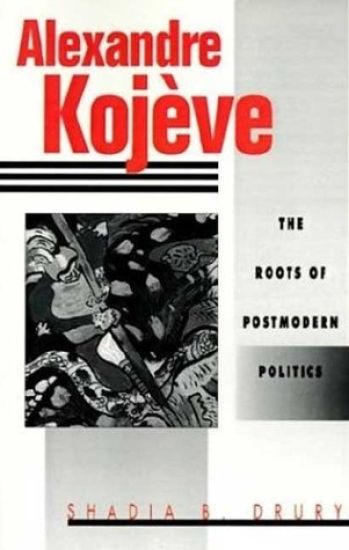
Alexandre Kojve (1902-1968) was Hegel's most famous interpreter, reading Hegel through the eyes of Marx and Heidegger simultaneously. The result was a wild if not hypnotic mlange of ideas. In this book, Drury reveals the nature of Kojve's Hegelianism and the extraordinary influence it has had on French postmodernists on the left (Raymond Queneau, Georges Bataille, and Michel Foucault) and American postmodernists on the right (Leo Strauss, Allan Bloom, and Francis Fukuyama). According to Drury, Kojve followed Hegel in thinking that reason has triumphed in the course of history, but it is a cold, soulless, instrumental, and uninspired rationalism that has conquered and disenchanted the world. Drury maintains that Kojve's conception of modernity as the fateful triumph of this arid rationality is the cornerstone of postmodern thought. Kojve's picture of the world gives birth to a dark romanticism that manifests itself in a profound nostalgia for what reason has banished - myth, madness, disorder, spontaneity, instinct, passion, and virility. In Drury's view, these ideas romanticize the gratuitous violence and irrationalism that characterize the postmodern world.
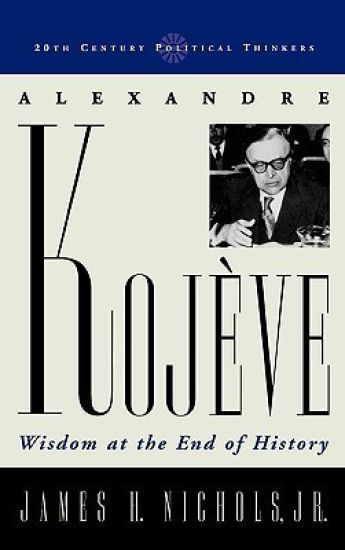
Nichols examines the major writings of Alexandre Kojève, and clarifies the character and brings to light the importance of his political philosophy. While emphasizing the political dimension of Kojève's thought, Nichols treats all his major published writings and shows how the remarkably varied parts of Kojève's intellectual endeavor go together. This is an essential assessment of Kojève which considers the works that preceded his turn to Hegel, seeks to articulate the character of his Hegelianism, and reflects in detail on the two different meanings that the end of history had in two different periods of his thought.
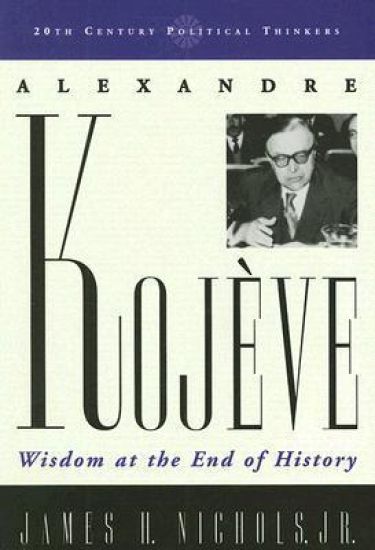
Nichols examines the major writings of Alexandre Koj_ve, and clarifies the character and brings to light the importance of his political philosophy. While emphasizing the political dimension of Koj_ve's thought, Nichols treats all his major published writings and shows how the remarkably varied parts of Koj_ve's intellectual endeavor go together. This is an essential assessment of Koj_ve which considers the works that preceded his turn to Hegel, seeks to articulate the character of his Hegelianism, and reflects in detail on the two different meanings that the end of history had in two different periods of his thought.
Alexandre Kojeve and the Outcome of Modern Thought
Roger F. Devlin
University Press of America
2004
nidottu
The brilliant Hegelian philosopher, Alexandre Kojève, remains among the most enigmatic figures of twentieth-century philosophy. Although a highly systematic thinker, he left no systematic presentation of his thought. His most important book deceptively appears to be a mere secondary work on Hegel's Phenomenology of the Spirit. Most of his nine books and many essays have not even appeared in English. This brief yet lucid study takes the reader to the heart of Kojève's philosophical project. Author F. Roger Devlin brings him into dialogue with Plato, Aristotle, Hobbes and Hegel, incidentally helping elucidate their thought by comparison with Kojève's own. Kojève was not a commentator on Hegel whose success might be measured by fidelity to the master, but rather a philosopher who, starting from Hegelian premises, arrived at a system of thought that is the logical outcome of modern philosophy. This system, which Devlin names rational historicism, is the preeminently modern response to the basic question of philosophy since the time of Socrates: What is man?