Kirjojen hintavertailu. Mukana 11 627 220 kirjaa ja 12 kauppaa.

Kirjahaku

Etsi kirjoja tekijän nimen, kirjan nimen tai ISBN:n perusteella.

1000 tulosta hakusanalla Alexandre Olleris

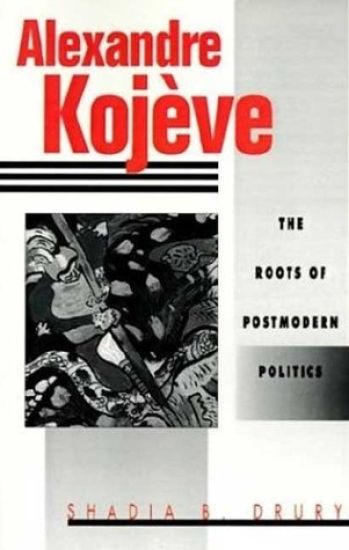
Alexandre Kojeve

Alexandre Kojeve

S. Drury

Palgrave Macmillan
1994
nidottu
Alexandre Kojve (1902-1968) was Hegel's most famous interpreter, reading Hegel through the eyes of Marx and Heidegger simultaneously. The result was a wild if not hypnotic mlange of ideas. In this book, Drury reveals the nature of Kojve's Hegelianism and the extraordinary influence it has had on French postmodernists on the left (Raymond Queneau, Georges Bataille, and Michel Foucault) and American postmodernists on the right (Leo Strauss, Allan Bloom, and Francis Fukuyama). According to Drury, Kojve followed Hegel in thinking that reason has triumphed in the course of history, but it is a cold, soulless, instrumental, and uninspired rationalism that has conquered and disenchanted the world. Drury maintains that Kojve's conception of modernity as the fateful triumph of this arid rationality is the cornerstone of postmodern thought. Kojve's picture of the world gives birth to a dark romanticism that manifests itself in a profound nostalgia for what reason has banished - myth, madness, disorder, spontaneity, instinct, passion, and virility. In Drury's view, these ideas romanticize the gratuitous violence and irrationalism that characterize the postmodern world.
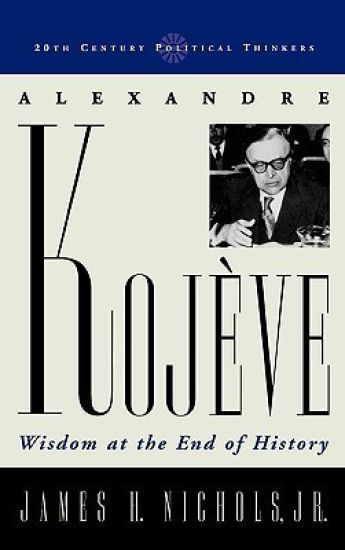
Alexandre Kojeve

Alexandre Kojeve

James H. Nichols

Rowman Littlefield Publishers
2007
sidottu
Nichols examines the major writings of Alexandre Kojève, and clarifies the character and brings to light the importance of his political philosophy. While emphasizing the political dimension of Kojève's thought, Nichols treats all his major published writings and shows how the remarkably varied parts of Kojève's intellectual endeavor go together. This is an essential assessment of Kojève which considers the works that preceded his turn to Hegel, seeks to articulate the character of his Hegelianism, and reflects in detail on the two different meanings that the end of history had in two different periods of his thought.
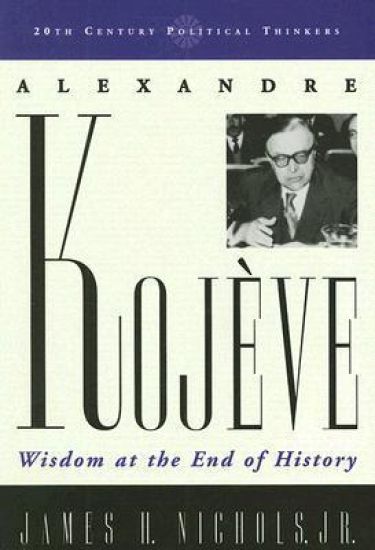
Alexandre Kojeve

Alexandre Kojeve

James H. Nichols

Rowman Littlefield Publishers
2007
nidottu
Nichols examines the major writings of Alexandre Koj_ve, and clarifies the character and brings to light the importance of his political philosophy. While emphasizing the political dimension of Koj_ve's thought, Nichols treats all his major published writings and shows how the remarkably varied parts of Koj_ve's intellectual endeavor go together. This is an essential assessment of Koj_ve which considers the works that preceded his turn to Hegel, seeks to articulate the character of his Hegelianism, and reflects in detail on the two different meanings that the end of history had in two different periods of his thought.
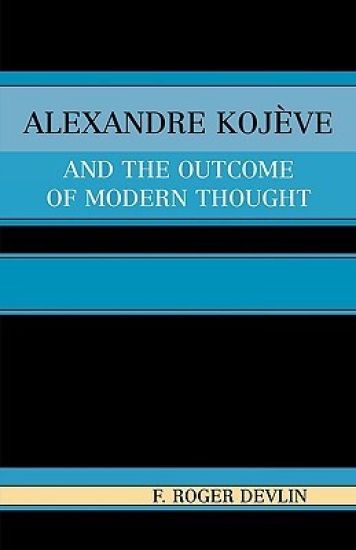
Alexandre Kojeve and the Outcome of Modern Thought

Alexandre Kojeve and the Outcome of Modern Thought

Roger F. Devlin

University Press of America
2004
nidottu
The brilliant Hegelian philosopher, Alexandre Kojève, remains among the most enigmatic figures of twentieth-century philosophy. Although a highly systematic thinker, he left no systematic presentation of his thought. His most important book deceptively appears to be a mere secondary work on Hegel's Phenomenology of the Spirit. Most of his nine books and many essays have not even appeared in English. This brief yet lucid study takes the reader to the heart of Kojève's philosophical project. Author F. Roger Devlin brings him into dialogue with Plato, Aristotle, Hobbes and Hegel, incidentally helping elucidate their thought by comparison with Kojève's own. Kojève was not a commentator on Hegel whose success might be measured by fidelity to the master, but rather a philosopher who, starting from Hegelian premises, arrived at a system of thought that is the logical outcome of modern philosophy. This system, which Devlin names rational historicism, is the preeminently modern response to the basic question of philosophy since the time of Socrates: What is man?
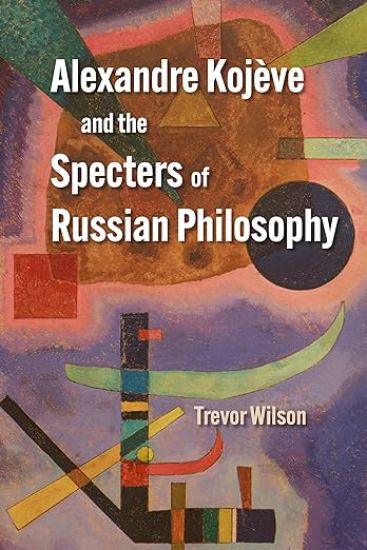
Alexandre Kojève and the Specters of Russian Philosophy

Alexandre Kojève and the Specters of Russian Philosophy

Trevor Wilson

NORTHWESTERN UNIVERSITY PRESS
2024
nidottu
Recounts KojÈve’s key role in the pivotal exchange of ideas between Eastern and Western European intellectuals in the early twentieth century This book shines critical new light on the story of Alexandre KojÈve’s intellectual origins and his role in the emigration of Russian philosophy into the West in the early twentieth century. Trevor Wilson illustrates how KojÈve, at once adversarial to the insular communities of ÉmigrÉ philosophy and yet dependent on their networks and ideas for professional success, navigated the specters of the Russian tradition in pursuit of an autonomous self-definition as a philosopher and intellectual. Alexandre KojÈve and the Specters of Russian Philosophy analyzes the philosopher’s complicated relationship to the interwar diaspora and the complex role played by the Russian tradition in his intellectual formation. Wilson examines KojÈve’s early writings in the ÉmigrÉ press on Russian religious philosophy, Soviet politics, and Eurasianism and argues for their enduring relevance for understanding KojÈve in his mature period. Crucially, he contextualizes KojÈve’s famed seminars on Hegel and examines how KojÈve’s thought became embedded in the politics of the Cold War. Based on newly transcribed and translated archival material, he highlights a previously unacknowledged, transnational exchange of ideas between Eastern and Western European intellectuals and shows how it played a pivotal role in twentieth-century intellectual history—and its legacy in the twenty-first.
Alexandre Kojève and the Specters of Russian Philosophy

Alexandre Kojève and the Specters of Russian Philosophy

Trevor Wilson

NORTHWESTERN UNIVERSITY PRESS
2024
sidottu
Recounts KojÈve’s key role in the pivotal exchange of ideas between Eastern and Western European intellectuals in the early twentieth century This book shines critical new light on the story of Alexandre KojÈve’s intellectual origins and his role in the emigration of Russian philosophy into the West in the early twentieth century. Trevor Wilson illustrates how KojÈve, at once adversarial to the insular communities of ÉmigrÉ philosophy and yet dependent on their networks and ideas for professional success, navigated the specters of the Russian tradition in pursuit of an autonomous self-definition as a philosopher and intellectual. Alexandre KojÈve and the Specters of Russian Philosophy analyzes the philosopher’s complicated relationship to the interwar diaspora and the complex role played by the Russian tradition in his intellectual formation. Wilson examines KojÈve’s early writings in the ÉmigrÉ press on Russian religious philosophy, Soviet politics, and Eurasianism and argues for their enduring relevance for understanding KojÈve in his mature period. Crucially, he contextualizes KojÈve’s famed seminars on Hegel and examines how KojÈve’s thought became embedded in the politics of the Cold War. Based on newly transcribed and translated archival material, he highlights a previously unacknowledged, transnational exchange of ideas between Eastern and Western European intellectuals and shows how it played a pivotal role in twentieth-century intellectual history—and its legacy in the twenty-first.