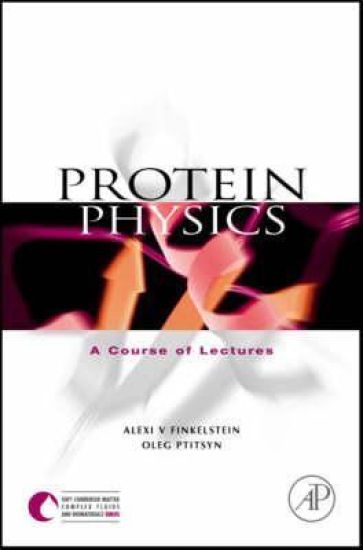
Protein Physics is a lively presentation of the most general problems of protein structure, folding and function from the physics and chemistry perspective, based on lectures given by the authors. It deals with fibrous, membrane and, most of all, with the best studied water-soluble globular proteins, in both their native and denatured states. The major aspects of protein physics are covered systematically, physico-chemical properties of polypeptide chains; their secondary structures; tertiary structures of proteins and their classification; conformational transitions in protein molecules and their folding; intermediates of protein folding; folding nuclei; physical backgrounds of coding the protein structures by their amino acid sequences and protein functions in relation to the protein structure. The book will be of interest to undergraduate and graduate level students and researchers of biophysics, biochemistry, biology and material science.
Protein Physics: A Course of Lectures covers the most general problems of protein structure, folding and function. It describes key experimental facts and introduces concepts and theories, dealing with fibrous, membrane, and water-soluble globular proteins, in both their native and denatured states. The book systematically summarizes and presents the results of several decades of worldwide fundamental research on protein physics, structure, and folding, describing many physical models that help readers make estimates and predictions of physical processes that occur in proteins. New to this revised edition is the inclusion of novel information on amyloid aggregation, natively disordered proteins, protein folding in vivo, protein motors, misfolding, chameleon proteins, advances in protein engineering & design, and advances in the modeling of protein folding. Further, the book provides problems with solutions, many new and updated references, and physical and mathematical appendices. In addition, new figures (including stereo drawings, with a special appendix showing how to use them) are added, making this an ideal resource for graduate and advanced undergraduate students and researchers in academia in the fields of biophysics, physics, biochemistry, biologists, biotechnology, and chemistry.
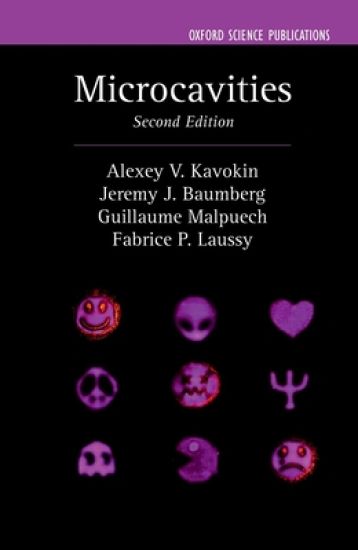
Microcavities are semiconductor, metal, or dielectric structures providing optical confinement in one, two or three dimensions. At the end of the 20th century, microcavities have attracted attention due to the discovery of a strong exciton-light coupling regime allowing for the formation of superposition light-matter quasiparticles: exciton-polaritons. In the following century several remarkable effects have been discovered in microcavities, including the Bose-Einstein condensation of exciton-polaritons, polariton lasing, superfluidity, optical spin Hall and spin Meissner effects, amongst other discoveries. Currently, polariton devices exploiting the bosonic stimulation effects at room temperature are being developed by laboratories across the world. This book addresses the physics of microcavities: from classical to quantum optics, from a Boltzmann gas to a superfluid. It provides the theoretical background needed for understanding the complex phenomena in coupled light-matter systems, and it presents a broad overview of experimental progress in the physics of microcavities.
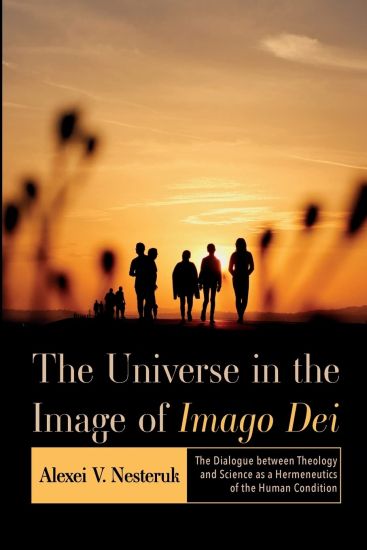
Cosmology, anthropology, and Christology are deeply interrelated. This implies that one cannot talk about the structure of the world without human presence in it, as well as it is impossible to produce any reasonable understanding of humanity without positioning it in the universe. In the same fashion, in order to comprehend where the human capacity of predicating the universe comes from, one needs to appeal to humanity's Divine Image, that is, to its archetype in the incarnate Christ. Whereas Christians traditionally believe that the human phenomenon is unique as created in the Divine Image, such scientific disciplines as evolutionary biology, palaeoanthropology, the sciences of artificial intelligence, psychology, and others, challenge the vision of humanity as a unique formation thus challenging the doctrine of Imago Dei. All these disciplines place humans in a mediocre position in the world accompanied by the feeling of anxiety, insecurity, and non-attunement to the universe. Theology needs to respond to these challenges by incorporating into its scope the data from the sciences in order to neutralize such anxieties. The resulting dialogue of theology with science provides a hermeneutics of the human condition with no objective to change the latter. Then the sense of the universe is disclosed from within the Divine Image reflecting the predicaments of the human created condition.
Cosmology, anthropology, and Christology are deeply interrelated. This implies that one cannot talk about the structure of the world without human presence in it, as well as it is impossible to produce any reasonable understanding of humanity without positioning it in the universe. In the same fashion, in order to comprehend where the human capacity of predicating the universe comes from, one needs to appeal to humanity's Divine Image, that is, to its archetype in the incarnate Christ. Whereas Christians traditionally believe that the human phenomenon is unique as created in the Divine Image, such scientific disciplines as evolutionary biology, palaeoanthropology, the sciences of artificial intelligence, psychology, and others, challenge the vision of humanity as a unique formation thus challenging the doctrine of Imago Dei. All these disciplines place humans in a mediocre position in the world accompanied by the feeling of anxiety, insecurity, and non-attunement to the universe. Theology needs to respond to these challenges by incorporating into its scope the data from the sciences in order to neutralize such anxieties. The resulting dialogue of theology with science provides a hermeneutics of the human condition with no objective to change the latter. Then the sense of the universe is disclosed from within the Divine Image reflecting the predicaments of the human created condition.