

Kirjahaku
Etsi kirjoja tekijän nimen, kirjan nimen tai ISBN:n perusteella.
1000 tulosta hakusanalla Alfred P. Brotherhead

Himself His Worst Enemy is an unchanged, high-quality reprint of the original edition of 1871. Hansebooks is editor of the literature on different topic areas such as research and science, travel and expeditions, cooking and nutrition, medicine, and other genres. As a publisher we focus on the preservation of historical literature. Many works of historical writers and scientists are available today as antiques only. Hansebooks newly publishes these books and contributes to the preservation of literature which has become rare and historical knowledge for the future.

Alfred P. Sloan
Routledge
2003
muu
Alfred P. Sloan is credited with the invention of the modern corporation. At the helm of General Motors from 1923 to 1946, he had a profound influence on management thinking in America and much of the Western world through his unique, ahead-of-its-time, management style.Sloan's leadership and the sheer success of General Motors led to an enormous amount of study and writings on his contribution to management theory and practice.This set is part of the Critical Evaluations in Business and Management series. Future titles in the series will include:George Elton MayoW.E. DemingJoseph M. JuranPeter F. DruckerHerbert SimonH. Igor AnsoffAlfred D. ChandlerFor further information on these titles please contact [email protected]

Alfred P. Murrah Federal Building
OmniScriptum
2026
pokkari

Alfred P. Sloan Foundation
OmniScriptum
2026
pokkari

Reply of the Alaska Commercial Company to the Charges of Governor Alfred P. Swineford, of Alaska, Against the Company in His Annual Report for the Yea
University of Michigan Library
2006
pokkari

Warrior, law-giver, and scholar, Alfred the Great was an extraordinarily gifted and highly successful king, pushing back the Vikings to preserve what is now thought of as the heart of England. In this, the first major study of King Alfred since Plummer's biography of 1902, the career of King Alfred is followed chronologically and examined in depth. The author provides a detailed examination of the much-disputed medieval biography of King Alfred, attributed to the king's tutor, Asser. Professor Smyth argues that Asser's Life is a medieval forgery; a revelation with profound implications for our understanding of the whole of Anglo-Saxon history. The book also contains major studies on the writings of this gifted king, on the controversial charters of his reign, and on the origins of the Anglo-Saxon chronicle. Professor Smyth shows the Chronicle to have been much more closely connected with the court of King Alfred than has hitherto been allowed, and suggests a new date for the completion of the earliest Alfredian section of the Chronicle. The author also provides a fundamental reassessment of Alfred's military and political achievement in his wars against the Vikings, and compares the experiences of the English king with those of his Frankish contemporaries in their struggle with the same enemy on the other side of the English Channel. Professor Smyth's portrait of Alfred rejects the image of a neurotic and invalid king who supposedly remained a pious illiterate till he was almost 40. Instead, we are shown a man of remarkable energy and intelligence who took necessary steps to defend his people from the Norsemen. We are shown too, a king who had been a scholar all his life and who used his great knowledge to bolster the powers of his own kingship, and to overcome his enemies. Jacket illustration: Initial depicting King Alfred taken from the British Library Manuscript Cotton Claudius D.ii, f.8. This sumptuous compilation contains a collection of Anglo-Saxon, Norman, and Angevin law- codes (Liber legum antiquorum regum) which can be precisely dated to 1321. The inclusion of a Latin translation of the Laws of King Alfred indicates the esteem in which Alfred was held as a law-giver in the high Middle Ages.

Shifting States in Global Markets
Alfred P. Montero
Pennsylvania State University Press
2002
pokkari
Shifting States in Global Markets contributes to the debates over the political economy of globalization by focusing attention on the increasingly important role of subnational governments in implementing economic policies. Challenging the view that the effects of decentralization are positive or negative uniformly and can be explained by reference to the influence of national political institutions, Alfred Montero uses his comparisons of industrial policy in Brazil and Spain, and between different regions in these countries, to argue that we need to pay attention to political conditions at the subnational level to account for the variation in economic success between regions. Two crucial conditions are emphasized in Montero’s analysis: how much competition there is among political elites within any region, and how much competition there is between regions for scarce fiscal resources. Lower competition among elites leads to subnational governments delegating more autonomy to public agencies to develop ties with private businesses favoring allocative efficiency and innovation; higher competition between regions provides incentives for political leaders to support involvement in economic development efforts by a greater variety of public agencies, whose cooperation and mutual trust over time create the conditions for long-term success in these efforts. This analysis gives us a much more nuanced understanding of how countries are experiencing the challenges of globalization today.


The specialized vocabularies of lawyers, ethicists, and political scientists obscure the roots of many real disagreements. In this book, the distinguished American international lawyer Alfred Rubin provides a penetrating account of where these roots lie, and argues powerfully that disagreements which have existed for 3,000 years are unlikely to be resolved soon. Attempts to make 'war crimes' or 'terrorism' criminal under international law seem doomed to fail for the same reasons that attempts failed in the early nineteenth century to make piracy, war crimes, and the international traffic in slaves criminal under the law of nations. And for the same reasons, Professor Rubin argues, it is unlikely that an international criminal court can be instituted today to enforce ethicists' versions of 'international law'.

The specialised vocabularies of lawyers, ethicists, and political scientists obscure the roots of many real disagreements. In this book, the distinguished American international lawyer Alfred Rubin provides a penetrating account of where these roots lie, and argues powerfully that disagreements which have existed for 3,000 years are unlikely to be resolved soon. Current attempts to make ‘war crimes’ or ‘terrorism’ criminal under international law seem doomed to fail for the same reasons that attempts failed in the early nineteenth century to make piracy, war crimes, and the international traffic in slaves criminal under the law of nations. And for the same reasons, Professor Rubin argues, it is unlikely that an international criminal court can be instituted today to enforce ethicists’ versions of ‘international law’.

Brazilian Politics offers the most comprehensive and up-to-date introduction to the contemporary politics of South Americas largest democracy. Accessibly written for students, the book traces the major trends in Brazils political development and analyses the main challenges facing the country today. Topics covered include the crisis of the state, economic and political causes of inequality and poverty, the failures of the electoral and party system, the widening array of social movements and non-governmental organizations, and the heightened role of Brazil in the areas of international trade, security and diplomacy. Focusing on five key themes the strength of the state, representation, social equity, citizenship and political participation, and the role of the state in a global community of states Alfred Montero shows that Brazilian democracy has advanced greatly in recent years. However, this process is a complex one and, as the author cautions, Brazilian democracy still has a long way to go. But the high public expectations which accompanied the election of Lula da Silva to the presidency in 2002 have given Brazilian politics a renewed optimism and momentum. By building on the achievements of President Fernando Henrique Cardoso (1994-2002), the book concludes that the Lula presidency holds out the hope of changing Brazilian politics for the long haul. Divided into 8 chapters, each containing a concise introduction outlining the core issues for discussion and an annotated guide to further reading, this book offers the most complete primer available for anyone interested in the politics of contemporary Brazil.

Brazilian Politics offers the most comprehensive and up-to-date introduction to the contemporary politics of South Americas largest democracy. Accessibly written for students, the book traces the major trends in Brazils political development and analyses the main challenges facing the country today. Topics covered include the crisis of the state, economic and political causes of inequality and poverty, the failures of the electoral and party system, the widening array of social movements and non-governmental organizations, and the heightened role of Brazil in the areas of international trade, security and diplomacy. Focusing on five key themes the strength of the state, representation, social equity, citizenship and political participation, and the role of the state in a global community of states Alfred Montero shows that Brazilian democracy has advanced greatly in recent years. However, this process is a complex one and, as the author cautions, Brazilian democracy still has a long way to go. But the high public expectations which accompanied the election of Lula da Silva to the presidency in 2002 have given Brazilian politics a renewed optimism and momentum. By building on the achievements of President Fernando Henrique Cardoso (1994-2002), the book concludes that the Lula presidency holds out the hope of changing Brazilian politics for the long haul. Divided into 8 chapters, each containing a concise introduction outlining the core issues for discussion and an annotated guide to further reading, this book offers the most complete primer available for anyone interested in the politics of contemporary Brazil.

Once deemed a “dysfunctional” democracy with a “feckless” set of political institutions and a “drunk” economy, today’s Brazil has undergone a complete reversal of fortune. Now in its third decade of democracy, the economy is blossoming and large-scale development projects are underway, including the exploitation of massive, off-shore oil reserves, a nationwide effort to modernize infrastructure, and preparations for the hosting of the 2014 World Cup and the 2016 Olympics. Inequality and poverty are reducing and even Brazil’s political institutions are more governable and are producing a higher-quality democracy than most observers once thought possible. Alfred P. Montero’s timely and wide-ranging book explores Brazil’s amazing “turnaround” - from improvements to the working of its political institutions and judiciary, to the renewal of economic growth, the advent of innovative social policy, and the emergence of a new foreign policy agenda. Unpacking both overly optimistic as well as pessimistic views of Brazilian politics and development, Montero offers illuminating insights into the country’s transformation and its increasing significance on the international stage.

Once deemed a “dysfunctional” democracy with a “feckless” set of political institutions and a “drunk” economy, today’s Brazil has undergone a complete reversal of fortune. Now in its third decade of democracy, the economy is blossoming and large-scale development projects are underway, including the exploitation of massive, off-shore oil reserves, a nationwide effort to modernize infrastructure, and preparations for the hosting of the 2014 World Cup and the 2016 Olympics. Inequality and poverty are reducing and even Brazil’s political institutions are more governable and are producing a higher-quality democracy than most observers once thought possible. Alfred P. Montero’s timely and wide-ranging book explores Brazil’s amazing “turnaround” - from improvements to the working of its political institutions and judiciary, to the renewal of economic growth, the advent of innovative social policy, and the emergence of a new foreign policy agenda. Unpacking both overly optimistic as well as pessimistic views of Brazilian politics and development, Montero offers illuminating insights into the country’s transformation and its increasing significance on the international stage.

Distance Learning in Higher Education
Alfred P. Rovai; Michael K. Ponton; Jason D. Baker
Teachers' College Press
2008
sidottu
This useful resource describes best practices for designing online programs and courses. Translating research on the learning characteristics of adult university students and their experiences with online learning into practical guidelines, the authors address topics such as: program and course planning, design and delivery; multicultural and gender issues; program evaluation; student evaluation of online teaching, and institutional and program accreditation.The text includes resources, such as online course materials and assessment tasks that are culturally responsive and implement the strategies presented in the book. Providing a roadmap for those wishing to design and implement a distance learning program, this up-to-date volume explains how to facilitate and moderate interactions using a constructivist approach, presents strategies that respond to race- and gender-related challenges, provides a model for evaluating distance education programs, identifies strategies that promote valid and reliable evaluations of online teaching, and addresses institution and distance education program accreditation issues.
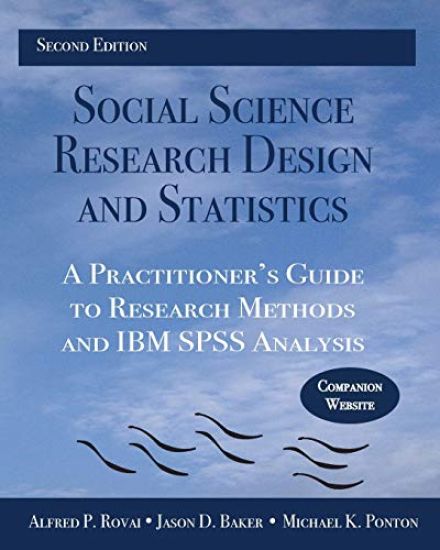
Social Science Research Design and Statistics
Alfred P. Rovai; Jason D. Baker; Michael K. Ponton
Watertree Press LLC
2013
pokkari

Appendix To Swineford's History Of The Lake Superior Iron District
Alfred P. Swineford
KESSINGER PUBLISHING CO
2009
pokkari

Appendix To Swineford's History Of The Lake Superior Iron District
Alfred P. Swineford
KESSINGER PUBLISHING, LLC
2010
sidottu

""Mysticism and the Modern Mind"" by Alfred P. Stiernotte is a philosophical exploration of the nature of mysticism and its relevance in contemporary society. The book delves into the historical roots of mysticism, tracing its origins in various religious traditions and examining the ways in which it has been interpreted and practiced throughout history.Stiernotte argues that mysticism is not simply a relic of the past, but a vital and necessary aspect of human spirituality that can help us navigate the complexities of modern life. He explores the ways in which mysticism can provide a sense of meaning and purpose in a world that often seems chaotic and meaningless.The book is divided into three sections. The first section provides an overview of the history of mysticism, tracing its development from ancient times to the present day. The second section explores the philosophical and psychological aspects of mysticism, examining the ways in which it can help us understand ourselves and the world around us. The final section focuses on the practical applications of mysticism, offering guidance on how to cultivate a mystical practice in our daily lives.Throughout the book, Stiernotte draws on a wide range of sources, including religious texts, philosophical treatises, and contemporary literature. He also incorporates personal anecdotes and reflections, making the book accessible and engaging for readers of all backgrounds.Overall, ""Mysticism and the Modern Mind"" is a thought-provoking and insightful exploration of the nature of mysticism and its relevance in contemporary society. It is a must-read for anyone interested in spirituality, philosophy, or psychology.This scarce antiquarian book is a facsimile reprint of the old original and may contain some imperfections such as library marks and notations. Because we believe this work is culturally important, we have made it available as part of our commitment for protecting, preserving, and promoting the world's literature in affordable, high quality, modern editions, that are true to their original work.