Kirjojen hintavertailu. Mukana 11 699 587 kirjaa ja 12 kauppaa.

Kirjahaku

Etsi kirjoja tekijän nimen, kirjan nimen tai ISBN:n perusteella.

1000 tulosta hakusanalla Alice Munro

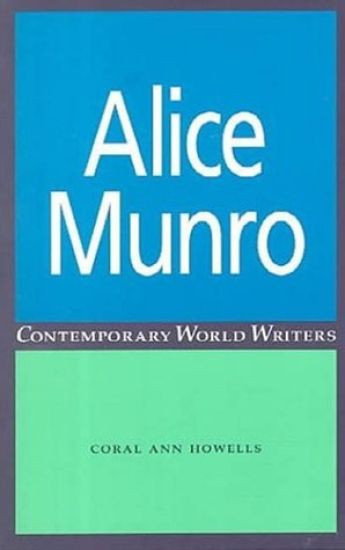
Alice Munro

Alice Munro

Coral Howells

Manchester University Press
1998
nidottu
This is the first full-length study of Alice Munro's work to be published in Britain. Highlights Munro's distinctive storytelling methods where everything becomes both 'touchable and mysterious'.
Alice Munro

Alice Munro

Ailsa Cox

Northcote House Publishers Ltd
2003
nidottu
Alice Munro's standing as a major contemporary author has long been acknowledged in her native Canada, especially among her fellow writers. Her reputation developed slowly, from small magazines and radio in the fifties, to three Governor General's Awards and regular appearances in The New Yorker. As a short story writer she is working within a critically neglected genre. Yet short fiction displays an intensity of language and experience that is rarely sustainable across longer forms. Drawing on Bakhtinian theory, Ailsa Cox looks at ways in which Munro develops the short story's affinity with the present moment to suggest a fluid and ever-changing reality.
Alice Munro

Alice Munro

Ailsa Cox

Northcote House Publishers Ltd
2003
sidottu
Alice Munro's standing as a major contemporary author has long been acknowledged in her native Canada, especially among her fellow writers. Her reputation developed slowly, from small magazines and radio in the fifties, to three Governor General's Awards and regular appearances in The New Yorker. As a short story writer she is working within a critically neglected genre. Yet short fiction displays an intensity of language and experience that is rarely sustainable across longer forms. Drawing on Bakhtinian theory, Ailsa Cox looks at ways in which Munro develops the short story's affinity with the present moment to suggest a fluid and ever-changing reality.
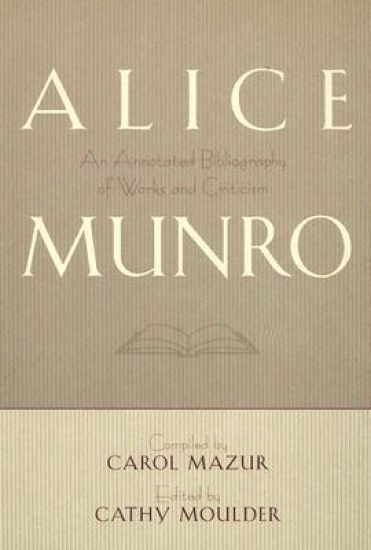
Alice Munro

Alice Munro

Carol Mazur

Scarecrow Press
2007
sidottu
Widely recognized as one of the greatest short story writers of the last half century, Alice Munro's works have been collected in such volumes as Dance of the Happy Shades, The Beggar Maid, Open Secrets, Something I've Been Meaning to Tell You, and The View from Castle Rock. This bibliography—compiled to fill a gap in literary research relating to Munro's work—covers all of her fictional writing up to 2005 and includes annotations to interviews, Munro's non-fiction writings, and hundreds of critical books, theses, and articles. These descriptive annotations, coupled with a detailed subject index, display the broad range of subject approaches, assessments, and angles by which her complex, deep, and multi-layered work has been scrutinized by academics, journalists, writers, and critics. Also included are listings of book reviews, awards and reference works. The bibliography is arranged in two main sections: Primary Works (works by Munro) and Secondary Works (works about Munro). The subdivisions within the Primary section are: Books, Stories, Poems, Memoirs, Non-Fiction, Television and Radio, Films and Videocassettes, Sound Recordings, and Interviews. The subdivisions within the Secondary section are: Theses and Dissertations, Book Reviews, Books, Audiovisual, Articles and Chapters in Books, Bibliographies, Reference Works, and Awards. Complete with subject and title indexes, Alice Munro: An Annotated Bibliography of Works and Criticism is a comprehensive reference work on this important writer.
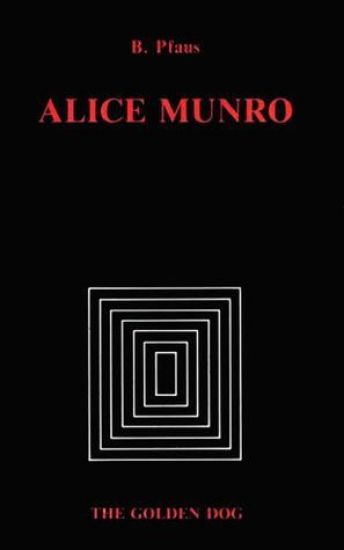
Alice Munro

Alice Munro

Pfaus Brenda

Golden Dog Press
1984
pokkari
Alice Munro, recipient of the 2013 Nobel Prize in Literature, is undoubtedly among Canada’s greatest living writers. In this unique, intriguing collection, Brenda Pfaus gives fresh insights into some of Munro’s most enduring works: Lives of Girls and Women (1971), Who Do You Think You Are? (1978), Dance of the Happy Shades (1968), Something I’ve Been Meaning to Tell You (1974), and The Moons of Jupiter (1982). This collection of essays reaches from the early years of Munro’s career through her prime as a writer, when she penned her most influential works.
Alice Munro

Alice Munro

Robert Thacker

Bloomsbury Academic
2016
nidottu
The awarding of the Nobel Prize in Literature to the Canadian writer Alice Munro in 2013 confirmed her position as a master of the short story form. This book explores Munro’s work from a full range of critical perspectives, focussing on three of her most popular and important published collections: Hateship, Friendship, Courtship, Loveship, Marriage (2001), Runaway (2004), and her final collection Dear Life (2012). With chapters written by the world’s leading critics of Munro’s work, the short story form and contemporary Canadian writing, this book explores such themes as love and marriage, sex, fate, gender and humor in her writings as well as her approaches to narrative form and autobiography. In these three late collections Munro sharply articulates, again and again, the mysteries of being itself.
Alice Munro

Alice Munro

Robert Thacker

Bloomsbury Academic
2016
sidottu
The awarding of the Nobel Prize in Literature to the Canadian writer Alice Munro in 2013 confirmed her position as a master of the short story form. This book explores Munro’s work from a full range of critical perspectives, focussing on three of her most popular and important published collections: Hateship, Friendship, Courtship, Loveship, Marriage (2001), Runaway (2004), and her final collection Dear Life (2012). With chapters written by the world’s leading critics of Munro’s work, the short story form and contemporary Canadian writing, this book explores such themes as love and marriage, sex, fate, gender and humor in her writings as well as her approaches to narrative form and autobiography. In these three late collections Munro sharply articulates, again and again, the mysteries of being itself.
Alice Munro

Alice Munro

Springer International Publishing AG
2016
sidottu
The book offers a new approach to the study of Alice Munro's fiction. Its innovative quality consists in juxtaposing a variety of literary analyses of selected stories with two other ways of looking at her fiction: the perspectives of film adaptation and of pedagogy. The book is divided into three parts which mirror the key words in the title: understanding, adapting and teaching. Part One consists of four articles on various aspects of Munro's short fiction from a literary perspective. Part Two - four essays - addresses editing and film adaptations of Munro's stories (both television and feature films). Part Three consists of an essay on didactic aspects of Munro's fiction and of several interviews with teachers of Canadian literature who have included stories by Munro in their syllabi.
Alice Munro's Narrative Art

Alice Munro's Narrative Art

I. Duncan

Palgrave Macmillan
2011
sidottu
Among the first critical works on Alice Munro's writing, this study of her short fiction is informed by the disciplines of narratology and literary linguistics. Through examining Munro's narrative art, Isla Duncan demonstrates a rich understanding of the complex, densely layered, often unsettling stories.
Alice Munro’s Miraculous Art

Alice Munro’s Miraculous Art

University of Ottawa Press
2017
pokkari
Alice Munro's Miraculous Art is a collection of sixteen original essays on Nobel laureate Alice Munro's writings. The volume covers the entirety of Munro's career, from the first stories she published in the early 1950s as an undergraduate at the University of Western Ontario to her final books. It offers an enlightening range of approaches and interpretive strategies, and provides many new perspectives, reconsidered positions and analyses that will enhance the reading, teaching, and appreciation of Munro's remarkable-indeed miraculous-work. Following the editors' introduction-which surveys Munro's recurrent themes, explains the design of the book, and summarizes each contribution-Munro biographer Robert Thacker contributes a substantial bio-critical introduction to her career. The book is then divided into three sections, focusing on Munro's characteristic forms, themes, and most notable literary effects.
Alice Munro's Narrative Art

Alice Munro's Narrative Art

I. Duncan

Palgrave Macmillan
2014
nidottu
Among the first critical works on Alice Munro's writing, this study of her short fiction is informed by the disciplines of narratology and literary linguistics. Through examining Munro's narrative art, Isla Duncan demonstrates a rich understanding of the complex, densely layered, often unsettling stories.
Alice Munro's Narrative Art

Alice Munro's Narrative Art

I. Duncan

Palgrave Macmillan
2011
nidottu
Among the first critical works on Alice Munro's writing, this study of her short fiction is informed by the disciplines of narratology and literary linguistics. Through examining Munro's narrative art, Isla Duncan demonstrates a rich understanding of the complex, densely layered, often unsettling stories.
Alice Munro's Late Style

Alice Munro's Late Style

Robert Thacker

BLOOMSBURY PUBLISHING PLC
2023
sidottu
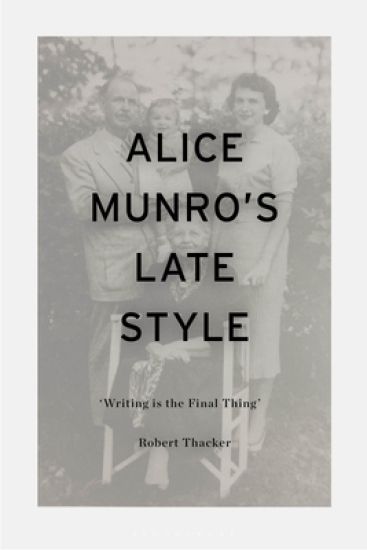
Focusing on Alice Munro’s last three collections, this book examines the differences between these volumes and the rest of her work to analyse the emergence and the difference of her 'late style'.Alice Munro has effectively reshaped the short story as a form. This book focuses on Munro’s art of recursion - an approach that has been evident throughout her career but came to the fore in her last three books, The View from Castle Rock (2006), Too Much Happiness (2009) and, especially, Dear Life (2012). This recursion and return manifest themselves not only in Munro's return to previously published pieces, but also to her discovery and meditations on her Scottish heritage, which can be read as entrance to her own understanding of herself and her life. Its provenance, displayed through archival evidence, is complex yet reveals a writer intent on a precise late style.Munro's final works serve as a coda to both her late style and to her entire career as arguably one of the finest short story writers ever to put pen to paper.
Alice Munro's Late Style

Alice Munro's Late Style

Robert Thacker

BLOOMSBURY PUBLISHING PLC
2025
nidottu
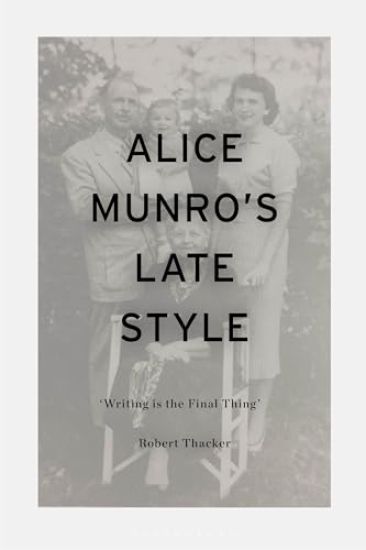
Focusing on Alice Munro’s last three collections, this book examines the differences between these volumes and the rest of her work to analyse the emergence and the difference of her 'late style'.Alice Munro has effectively reshaped the short story as a form. This book focuses on Munro’s art of recursion - an approach that has been evident throughout her career but came to the fore in her last three books, The View from Castle Rock (2006), Too Much Happiness (2009) and, especially, Dear Life (2012). This recursion and return manifest themselves not only in Munro's return to previously published pieces, but also to her discovery and meditations on her Scottish heritage, which can be read as entrance to her own understanding of herself and her life. Its provenance, displayed through archival evidence, is complex yet reveals a writer intent on a precise late style.Munro's final works serve as a coda to both her late style and to her entire career as arguably one of the finest short story writers ever to put pen to paper.
Alice Munro Country

Alice Munro Country

Guernica Editions,Canada
2020
pokkari
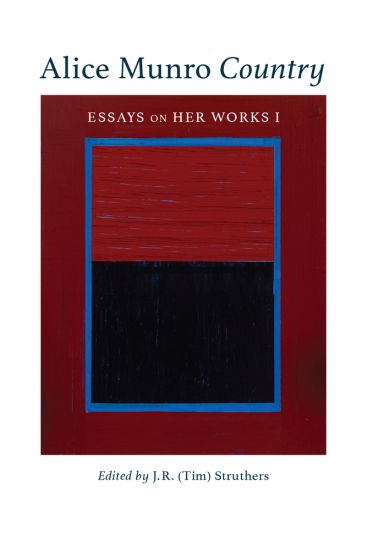
This rich volume begins with a very good-humoured memoir, "Alice Munro: Not Bad Short Story Writer"; by Munro's renowned Canadian publisher, Douglas Gibson, followed by powerful autobiographical pieces by fiction writer Jack Hodgins, playwright Judith Thompson, poet John B. Lee, poet-playwright-teacher James Reaney, and local historian Reg Thompson. Overall, the twenty contributions to Alice Munro Country, including a previously unpublished interview with Munro by J.R. (Tim) Struthers and a superb essay by George Elliott Clarke on Munro's Lives of Girls and Women, take a cultural or historical or personal approach, while also providing judicious readings of the subtle literary dimensions of key Munro works.
Alice Munro Everlasting

Alice Munro Everlasting

Guernica Editions,Canada
2020
pokkari
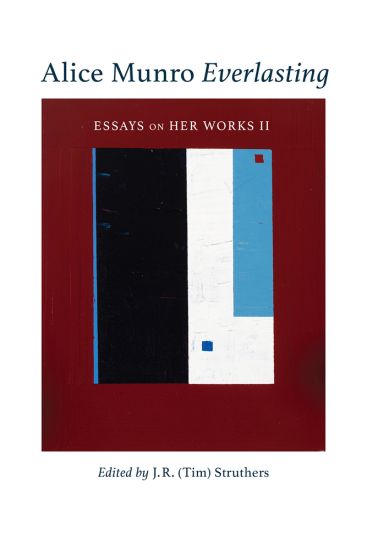
This rich volume begins with a major new essay by renowned short story critic and theorist Charles E. May, "Returning to the Source: Alice Munro, Flannery O'Connor, and Eudora Welty," followed by a major new essay by one of Munro's most long-standing and most perceptive readers, Catherine Sheldrick Ross, identifying and examining the major concerns which Munro has revisited so compellingly for the duration of her astonishing career. Overall, the twenty contributions to Alice Munro Everlasting take an ardently literary approach, with each essay focussing -- uniquely amongst studies of any short story writer -- on the last stories in Munro's fourteen volumes from Dance of the Happy Shades to Dear Life. Collectively, the many different contributions to Alice Munro Country and Alice Munro Everlasting offer a new model for the art of the critical essay -- combining imagination and analysis, personal testimony and scholarship. They are intended equally to honour the genius of Alice Munro and to give enjoyment to all interested readers. And as one excited advance reader remarked, "I imagine that these two books will form the core of Alice Munro studies in the future."
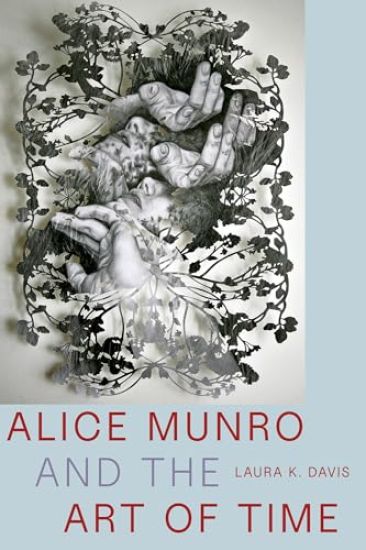
Alice Munro and the Art of Time

Alice Munro and the Art of Time

Laura K. Davis

University of Alberta Press
2025
pokkari
Alice Munro and the Art of Time reveals how one of the world’s greatest writers of short stories challenged and reconfigured traditional assumptions about time. In chapters that analyze selected stories and collections from across Munro’s career, Laura K. Davis examines the formal and conceptual function of temporality in Munro’s oeuvre, considering the relationship between the past and the present, material experiences of being, story structure, memory, and memoir. Clear and compelling interpretations of Munro’s stories offer insights into her writing process, her representations of character and setting, and the complexities of her narrative techniques—which often evade linearity and chronology, emphasizing, instead, revision, repetition, and the body. By highlighting the connections between time and various tropes in Munro’s stories, including identity, ephemerality, and environmental change, this study provides new, exciting avenues for engaging with Munro’s work.