Kirjahaku
Etsi kirjoja tekijän nimen, kirjan nimen tai ISBN:n perusteella.
1000 tulosta hakusanalla Alison Chapman
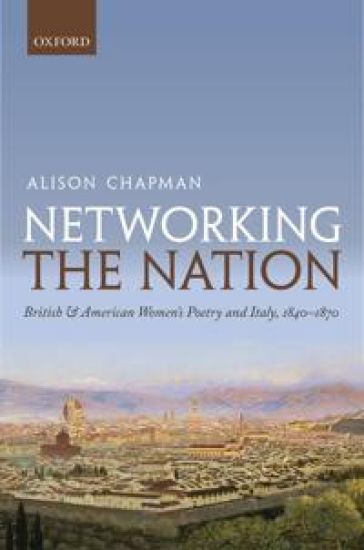
How did nineteenth-century women's poetry shift from the poetess poetry of lyric effusion and hyper-femininity to the muscular epic of Elizabeth Barrett Browning's Aurora Leigh? Networking the Nation re-writes women's poetic traditions by demonstrating the debt that Barrett Browning's revolutionary poetics owed to a circle of American and British women poets living in Florence and campaigning in their poetry and in their salons for Italian Unification. These women poets--Isa Blagden, Elizabeth Kinney, Eliza Ogilvy, and Theodosia Garrow Trollope--formed with Barrett Browning a network of poetry, sociability, and politics, which was devoted to the mission of campaigning for Italy as an independent nation state. In their poetic experiments with the active lyric voice, in their forging of a transnational persona through the periodical press, in their salons and spiritualist séances, the women poets formed a network that attempted to assert and perform an independent unified Italy in their work. Networking the Nation maps the careers of these expatriate women poets who were based in Florence in the key years of Risorgimento politics, racing their transnational social and print communities, and the problematic but schismatic shift in their poetry from the conventional sphere of the poetess. In the fraught and thrilling engagement with their adopted nation's revolutionary turmoil, and in their experiments with different types of writing agency, the women poets in this book offer revolutions of other kinds: revolutions of women's poetry and the very act of writing.
This book visits the fact that, in the pre-modern world, saints and lords served structurally similar roles, acting as patrons to those beneath them on the spiritual or social ladder with the word "patron" used to designate both types of elite sponsor. Chapman argues that this elision of patron saints and patron lords remained a distinctive feature of the early modern English imagination and that it is central to some of the key works of literature in the period. Writers like Jonson, Shakespeare, Spenser, Drayton, Donne and, Milton all use medieval patron saints in order to represent and to challenge early modern ideas of patronage -- not just patronage in the narrow sense of the immediate economic relations obtaining between client and sponsor, but also patronage as a society-wide system of obligation and reward that itself crystallized a whole culture’s assumptions about order and degree. The works studied in this book -- ranging from Shakespeare’s 2 Henry VI, written early in the 1590s, to Milton’s Masque Performed at Ludlow Castle, written in 1634 -- are patronage works, either aimed at a specific patron or showing a keen awareness of the larger patronage system. This volume challenges the idea that the early modern world had shrugged off its own medieval past, instead arguing that Protestant writers in the period were actively using the medieval Catholic ideal of the saint as a means to represent contemporary systems of hierarchy and dependence. Saints had been the ideal -- and idealized -- patrons of the medieval world and remained so for early modern English recusants. As a result, their legends and iconographies provided early modern Protestant authors with the perfect tool for thinking about the urgent and complex question of who owed allegiance to whom in a rapidly changing world.
In this Readers' Guide, Alison Chapman introduces and discusses the patterns of critical attention that Gaskell's work has attracted across the past hundred and fifty years. Beginning with contemporary press and critical reviews, and treatments by the Victorian and early twentieth-century literary establishment, the Guide sets out a background for the most recent and challenging reassessments of these novels, bringing the reader fully up to date on current critical approaches.
Basic Guide to Oral Health Education and Promotion
Alison Chapman; Simon H. Felton
Wiley-Blackwell
2021
nidottu
The thoroughly revised third edition of a Basic Guide to Oral Health Education and Promotion is an essential guide to help dental nurses prepare for a qualification in Oral Health Education and thereafter practice as an Oral Health Educator. It will help readers confidently educate patients about diseases and conditions that affect the oral cavity, and support their prevention, treatment, and management. Designed with an accessible layout to enhance learning, this course companion is divided into six sections covering: the structure and functions of the oral cavity; diseases and conditions; disease prevention; effective communication; treating specific patient groups, and oral health promotion and society. Invaluable to all members of the dental team and other health professionals involved in educating and promoting oral health, this key text: Offers a guide for dental nurses taking a post-registration Certificate in Oral Health EducationIs fully updated to reflect changes in the industry, science, and course syllabusIncorporates information on the new classification of periodontal and peri-implant diseasesContains new information on topics including dementia, denture advice, and burning mouth syndromeIncludes an expanded section on promotion
The seventeenth century saw some of the most important legal changes in England's history, yet the period has been largely overlooked in the rich field of literature and law. Helping to fill this gap, The Legal Epic is the first book to situate the great poet and polemicist John Milton at the center of late seventeenth-century legal history. Alison A. Chapman argues that Milton's Paradise Lost sits at the apex of the early modern period's long fascination with law and judicial processes. Milton's world saw law and religion as linked disciplines and thought therefore that in different ways, both law and religion should reflect the will of God. Throughout Paradise Lost, Milton invites his readers to judge actions using not only reason and conscience but also core principles of early modern jurisprudence. Law thus informs Milton's attempt to "justify the ways of God to men" and points readers toward the types of legal justice that should prevail on earth. Adding to the growing interest in the cultural history of law, The Legal Epic shows that England's preeminent epic poem is also a sustained reflection on the role that law plays in human society.
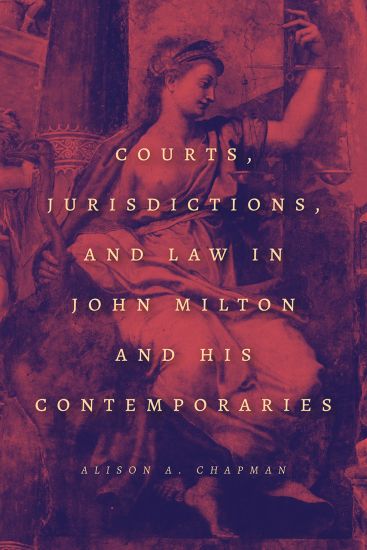
Courts, Jurisdictions, and Law in John Milton and His Contemporaries
Alison A. Chapman
University of Chicago Press
2020
sidottu
John Milton is widely known as the poet of liberty and freedom. But his commitment to justice has been often overlooked. As Alison A. Chapman shows, Milton’s many prose works are saturated in legal ways of thinking, and he also actively shifts between citing Roman, common, and ecclesiastical law to best suit his purpose in any given text. This book provides literary scholars with a working knowledge of the multiple, jostling, real-world legal systems in conflict in seventeenth-century England and brings to light Milton’s use of the various legal systems and vocabularies of the time—natural versus positive law, for example—and the differences between them. Surveying Milton’s early pamphlets, divorce tracts, late political tracts, and major prose works in comparison with the writings and cases of some of Milton’s contemporaries—including George Herbert, John Donne, Ben Jonson, and John Bunyan—Chapman reveals the variety and nuance in Milton’s juridical toolkit and his subtle use of competing legal traditions in pursuit of justice.
Courts, Jurisdictions, and Law in John Milton and His Contemporaries
Alison A. Chapman
University of Chicago Press
2020
nidottu
John Milton is widely known as the poet of liberty and freedom. But his commitment to justice has been often overlooked. As Alison A. Chapman shows, Milton’s many prose works are saturated in legal ways of thinking, and he also actively shifts between citing Roman, common, and ecclesiastical law to best suit his purpose in any given text. This book provides literary scholars with a working knowledge of the multiple, jostling, real-world legal systems in conflict in seventeenth-century England and brings to light Milton’s use of the various legal systems and vocabularies of the time—natural versus positive law, for example—and the differences between them. Surveying Milton’s early pamphlets, divorce tracts, late political tracts, and major prose works in comparison with the writings and cases of some of Milton’s contemporaries—including George Herbert, John Donne, Ben Jonson, and John Bunyan—Chapman reveals the variety and nuance in Milton’s juridical toolkit and his subtle use of competing legal traditions in pursuit of justice.
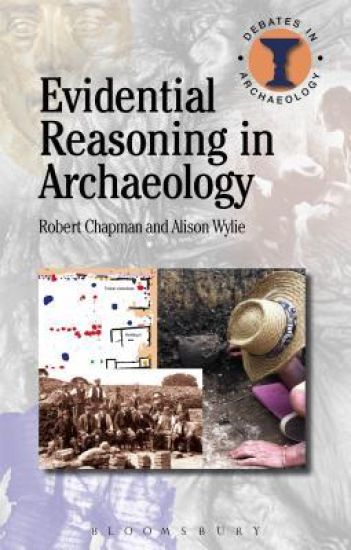
How do archaeologists work with the data they identify as a record of the cultural past? How are these data collected and construed as evidence? What is the impact on archaeological practice of new techniques of data recovery and analysis, especially those imported from the sciences? To answer these questions, the authors identify close-to-the-ground principles of best practice based on an analysis of examples of evidential reasoning in archaeology that are widely regarded as successful, contested, or instructive failures. They look at how archaeologists put old evidence to work in pursuit of new interpretations, how they construct provisional foundations for inquiry as they go, and how they navigate the multidisciplinary ties that make archaeology a productive intellectual trading zone. This case-based approach is predicated on a conviction that archaeological practice is a repository of considerable methodological wisdom, embodied in tacit norms and skilled expertise – wisdom that is rarely made explicit except when contested, and is often obscured when questions about the status and reach of archaeological evidence figure in high-profile crisis debates.
Rapid Series 1: Starter Pack
Haydn Middleton; Simon Cheshire; Helen Chapman; Dee Reid; Alison Hawes; Jeremy Taylor
Heinemann
2013
muu
Part of the Rapid Reading series, created to help children catch up. Rapid Reading is the UK's most comprehensive reading intervention programme. The books and unique speech-recognition software are guaranteed to motivate children with SEN and struggling readers at Key Stage 2 (1st/2nd Level).
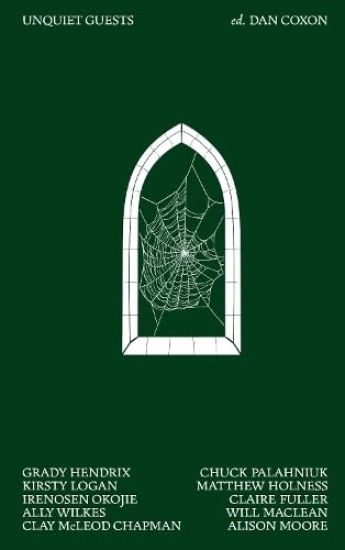
Unquiet Guests
Chuck Palahniuk; Grady Hendrix; Kirsty Logan; Will Maclean; Irenosen Okojie; Alison Moore; Matthew Holness; Claire Fuller; Clay McLeod Chapman
Dead Ink Books
2025
sidottu
A house is more than just a place to lay your head at night. Sometimes, the walls remember.Gathering ten modern masters of the strange and unsettling, Unquiet Guests sets fire to the blueprints and reimagines the haunted house from the foundations up. From dreamlike visions of an abandoned future mansion to a sentient building grown tired of its owners, these rooms echo with whispers of the disenfranchised and the lost.Featuring stories by: Chuck Palahniuk, Grady Hendrix, Kirsty Logan, Will Maclean, Irenosen Okojie, Alison Moore, Matthew Holness, Claire Fuller, Clay Macleod Chapman and Ally Wilkes.
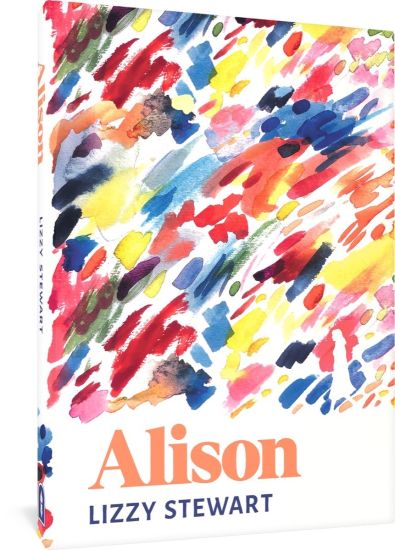
Alison tells the story of a young British woman who, in her twenties, seizes upon the opportunity to escape from her quiet life in Dorset to the thrumming art scene of late-1970s London. But the vehicle for her escape is a charismatic older man whose reputation as an artist and philanderer casts a shadow which will follow Alison for years as she pursues her painting career. Combining immaculate prose and stunning artwork, Alison is a complex love and coming-of-age story, as well as a meditation on female friendship and empowerment, class and patriarchy, the creative process and the thorny world of fine art. British illustrator and author Lizzy Stewart crafts a graphic novel that evokes the atmospheric milieu of bohemian London in the late 20th century, while at the same time exploring the more universal struggles of women who must navigate male-dominated spaces.Told through quietly powerful interpersonal moments rich with meaning and mood, this graphic novel will appeal to fans of Sally Rooney and Leanne Shapton, as well as the great empathic writers Alice Munro, Hilary Mantel, and Tessa Hadley.
A visually stunning and beautifully written debut graphic novel of love, life and art.
A visually stunning and beautifully written debut graphic novel of love, life and art