Kirjojen hintavertailu. Mukana 12 390 323 kirjaa ja 12 kauppaa.

Kirjahaku

Etsi kirjoja tekijän nimen, kirjan nimen tai ISBN:n perusteella.

927 tulosta hakusanalla Appian

Appian

Appian

Luke Pitcher

Oxford University Press
2025
sidottu
This volume presents the first comprehensive study in English of the Roman History by Appian of Alexandria. Appian was an Egyptian Greek and Roman citizen, who wrote his history of Rome in twenty-four books, covering the period from the foundation of the city to Trajan's wars, in the middle of the second century CE. Luke Pitcher explains and analyses what it is known about Appian's life, the structure of his work (which has not survived completely intact), and his use of sources. He then examines how Appian organizes and structures his material, and the considerations which inform his treatment of spaces, peoples, polities, and individuals within history. A full appreciation of Appian's achievement requires an awareness of the deeper structures of the Roman History as a whole: in particular, how the first half of the work (which, unusually, covers Roman conquests area by area, rather than in one long chronological sweep) lays the ground for the second, where towering personalities such as Julius Caesar bring an end to the Roman Republic in the five books of the Civil Wars. The closing chapters build on these arguments to create a picture of what Appian tries to achieve in his history, and what this says about him as a historian.
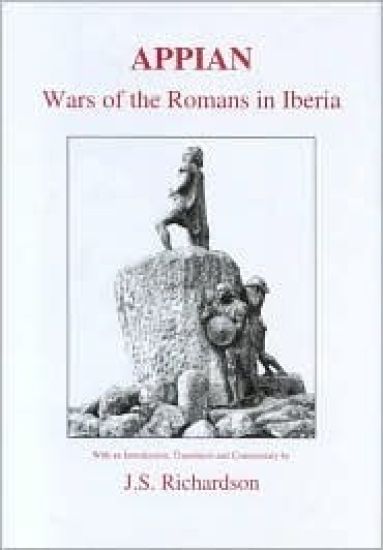
Appian: Wars of the Romans in Iberia
Appian wrote his Roman History in the second century AD as a series of books arranged geographically to chronicle the rise of the Roman Empire. His Iberike, of which this is the first translation with historical commentary in English, deals with the Romans' wars in the Iberian peninsula from the third to the first centuries BC. It is the only continuous source for much of the history of this crucial period in one of the earliest regions of Rome's imperial expansion, and so fills in the gap made by the loss of Livy's later books. He describes the major campaigns of the conquest from the defeat of the Carthaginians by Scipio Africanus, the wars against the Celtiberians, the war against the Lusitanians under Viriathus and the siege of Numantia. The value of the text is not merely as a chronicle of otherwise obscure events, Appian was an historian who deserves to be studied in his own right. This scholarly edition presents the Greek text with facing-page English translation, accompanied by an introduction, historical commentary and copious notes.
Appian: Wars of the Romans in Iberia
Appian's "Iberike", of which this is a translation with historical commentary in English, deals with the Romans' wars in the Iberian peninsula from the third to the first centuries BC. It is the only continuous source for much of the history of this period in Rome's imperial expansion.
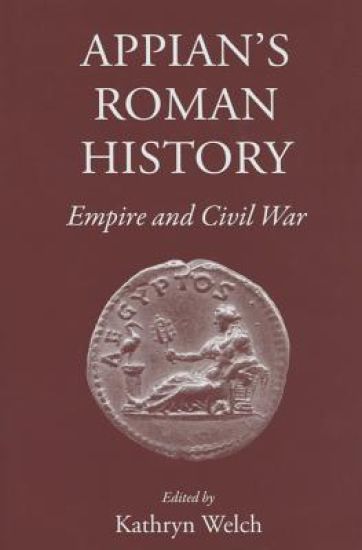
Appian's Roman History

Appian's Roman History

Classical Press of Wales
2015
sidottu
Appian of Alexandria lived in the early-to-mid second century AD, a time when the pax Romana flourished. His Roman History traced, through a series of ethnographic histories, the growth of Roman power throughout Italy and the Mediterranean World. But Appian also told the story of the civil wars which beset Rome from the time of Tiberius Gracchus to the death of Sextus Pompeius Magnus. The standing of his work in modern times is paradoxical. Consigned to the third rank by nineteenth-century historiographers, and poorly served by translators, Appian's Roman History profoundly shapes our knowledge of Republican Rome, its empire and its internal politics. We need to know him better. This book studies both what Appian had to say and how he said it; and engages in a dialogue about the value of Appian's text as a source of history, the relationship between that history and his own times, and the impact on his narrative of the author's own opinions - most notably that Rome enjoyed divinely-ordained good fortune. Some authors demonstrate that Appian's text (and even his mistakes) can yield significant new information; others re-open the question of Appian's use of source material in the light of recent studies showing him to be far more than a transmitter of other people's work.
Appian, Les Guerres Civiles a Rome - Livre V
Les triumvirs l'ont emporte sur les republicains a Philippes, mais les guerres civiles ont encore cinq belles annees devant elles. Desormais, Antoine et Octavien doivent tenir les promesses faites aux soldats: Antoine se charge de l'argent en pressurant les provinces d'Orient; pour les terres en Italie, Octavien exproprie leurs occupants, et tout le pays entre en ebullition. Lucius, consul, et aussi frere d'Antoine, tente alors de retablir la Republique, mais l'entreprise se termine vite par sa defaite a Perouse. Une autre menace vient de Sextus Pompee qui controle toujours la Sicile et le trafic maritime: Rome est affamee. Quand Antoine, soucieux, quitte les bras de Cleopatre pour retrouver l'Italie, ses officiers et ceux d'Octavien ont bien du mal a enrayer la guerre qui commence entre eux... Ainsi s'ouvre le cinquieme livre des Guerres civiles, livre des rebondissements, ou discordes, reconciliations, defections, accords vite transgresses, emeutes, tempetes et mutineries ponctuent la periode confuse ou la Republique acheve sa longue agonie. Appien arrete son recit a la mort de Sextus Pompee, considerant qu'avec lui la Republique, elle aussi, est bien morte; l'historien reserve pour son Livre egyptien (qui ne nous est pas parvenu) la lutte finale entre Antoine et Octavien, une histoire d'une autre nature, celle de l'affrontement entre deux pretendants a la monarchie.