
Kirjahaku
Etsi kirjoja tekijän nimen, kirjan nimen tai ISBN:n perusteella.
1000 tulosta hakusanalla Baba Hama




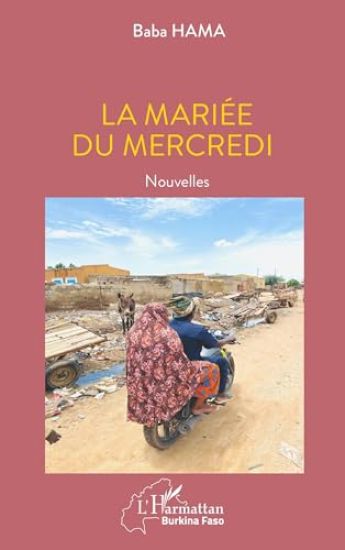
La mari e du mercredi est un recueil de nouvelles qui explore les traces laiss es par l'ins curit au sein de certaines communaut s, mais aussi les clats de courage qui leur permettent de survivre. Ce sont des r cits de la r silience d'hommes et de femmes qui, m me prouv s, continuent de se tenir debout.



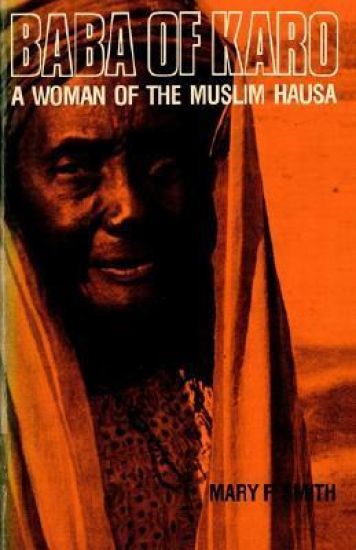
Daughter of a Hausa farmer and Koranic teacher, Baba became Mary Smith’s friend in 1949, when M. G. and Mary Smith were engaged in fieldwork in Nigeria. In daily sessions for several weeks Baba dictated her life story, which Mrs. Smith has translated from the Hausa. The old woman’s memories reached back to the days of slave raids and interstate warfare before the British occupation, and she has left a fascinating and valuable record of Hausa life in the late nineteenth century and the first half of the twentieth. Baba describes Hausa male-oriented society from a woman’s point of view, narrating not only her own life history but stories of other women who were close to her. She tells of Hausa domestic life, farming, and slavery, and explains the Hausa institutions of bond friendship, adoption, polygynous marriage, and kinship, showing how, in a society that permits easy and frequent divorce, children are not exclusively dependent on their biological parents for emotional support. First published in 1945 and now reissued with a new foreword by Hilda Kuper, this autobiography of a shrewd, humorous, and courageous personality remains a classic in the field of African studies and a uniquely valuable account of a Muslim society in West Africa.

This is a book-thing. I'll call it a book. The book wrote itself. I was a filter for whatever was inside me.All parts of the book thing deal in one way or another with notions of correctness and class. This is the theme. Rednecks have a hard time with such a theme. The more we are pushed, the less likely we are to follow. The book is divided into parts....Describing things to know in order to deal with the rest of the book and even more things. ...Describing movement of the Celts, and people who become Celts from the dark Danube forests to the Appalachian Mountains. ...About the Donald himself - the latest lord of the Loud and Proud. ...Telling the story of an imaginary invasion of Ballantine, the upscale retail and commercial center of South Charlotte. The magical pit bull, Dude the Dog, explains class and correctness....About weapons. It's who we are.
This book is a critical biography of Baba Padmanji (1831-1906), a firebrand native Christian missionary, ideologue, and litterateur from 19th-century Bombay Presidency. Though Padmanji was well-known, and a very influential figure among Christian converts, his contributions have received inadequate attention from the perspective of ‘social reform’ — an intellectual domain dominated by offshoots of the Brahmo Samaj movement, like the Prarthana Samaj in Bombay. This book constitutes an in-depth analysis of Padmanji’s relationships with questions of reform, education, modernity, feminism, and religion, that had wide-ranging repercussions on the intellectual horizon of 19th-century India. It presents Padmanji’s integrated writing persona and identity as a revolutionary pathfinder of his times who amalgamated and blended vernacular ideas of Christianity together with early feminism, modernity, and incipient nationalism. Drawing on a variety of primary and secondary sources, this unique book will be of great interest for area studies scholars (especially Maharashtra), and to researchers of modern India, engaged with the history of colonialism and missions, religion, global Christianity, South Asian intellectual history, and literature.

This book is a critical biography of Baba Padmanji (1831-1906), a firebrand native Christian missionary, ideologue, and litterateur from 19th-century Bombay Presidency. Though Padmanji was well-known, and a very influential figure among Christian converts, his contributions have received inadequate attention from the perspective of ‘social reform’ — an intellectual domain dominated by offshoots of the Brahmo Samaj movement, like the Prarthana Samaj in Bombay. This book constitutes an in-depth analysis of Padmanji’s relationships with questions of reform, education, modernity, feminism, and religion, that had wide-ranging repercussions on the intellectual horizon of 19th-century India. It presents Padmanji’s integrated writing persona and identity as a revolutionary pathfinder of his times who amalgamated and blended vernacular ideas of Christianity together with early feminism, modernity, and incipient nationalism. Drawing on a variety of primary and secondary sources, this unique book will be of great interest for area studies scholars (especially Maharashtra), and to researchers of modern India, engaged with the history of colonialism and missions, religion, global Christianity, South Asian intellectual history, and literature.

This title forms part of the Little Library programme, which consists of a Literacy Kit, Numeracy Kit and Life Skills Kit. These were developed to respond to a need for high-quality, indigenous books for the younger members of our communities, and have been successfully used in schools for the last ten years. This title is found in the updated, OBE version of the Little Library Maths Kit, now called the Little Library Numeracy Kit. The Numeracy Kit keeps seven of the best stories, and introduces five new ones - all of them trialled in classrooms around the country. Baby Monkey's bananas tells the story of a baby monkey who finds a huge bunch of bananas, and how he struggles to get it home to share it with his family. Mathematics concepts: sharing and dividing. The story can also be used to introduce the principle of fractions without using the word 'fraction'.

Being 130 pages of elaborate and detailed mandalas for intermediate to advanced colorators. Elements of Aztec, Islamic, and Mayan mandala art. Mandalas are generated from original pen and ink drawings.
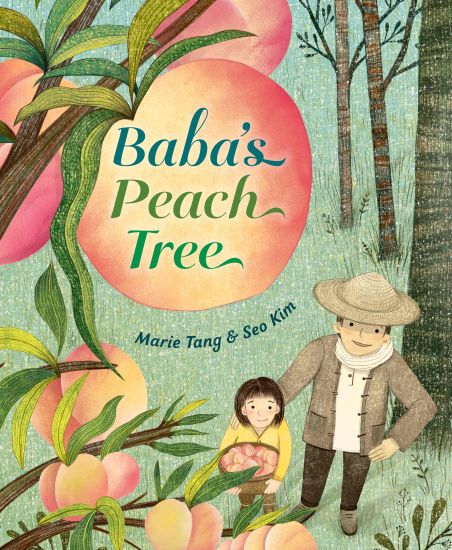
In this moving picture book, a migrant worker and his daughter, find good fortune in the form of a peach tree growing behind their house in rural China. Filled with stunning illustrations, this is a unique and poignant story about love, perseverance, and family. Behind their old stone house, Tao Hua and her father, Baba, discover good fortune: a peach tree. Baba prunes and tends to the tree. He calls it a blessing, like good shoes, hot rice, and books. And for a long time, the peach tree offers them fruit and hope for a better life. But time passes, and so do the seasons, and, one day, the tree does not blossom. But life blossoms in a different way when Baba comes home and announces that he got a job in the Big City, where there are good schools and opportunities. And so the seasons pass, and, one day, when Baba is very old, he and his daughter return to their old home and to new peach trees--to old memories and new beginnings. Baba's Peach Tree is a story of the dreams we dream and the sacrifices we make as seen through the lens of a migrant family.