
Kirjahaku
Etsi kirjoja tekijän nimen, kirjan nimen tai ISBN:n perusteella.
1000 tulosta hakusanalla Barbara Pym

‘Captures both Barbara and her writing so miraculously’ JILLY COOPER Picked as a Book to Look Forward to in 2021 by the Guardian, The Times and the Observer A Radio 4 Book of the Week, April 2021 Barbara Pym became beloved as one of the wittiest novelists of the late twentieth century, revealing the inner workings of domestic life so brilliantly that her friend Philip Larkin announced her the era’s own Jane Austen. But who was Barbara Pym and why was the life of this English writer – one of the greatest chroniclers of the human heart – so defined by rejection, both in her writing and in love? Pym lived through extraordinary times. She attended Oxford in the thirties when women were the minority. She spent time in Nazi Germany, falling for a man who was close to Hitler. She made a career on the Home Front as a single working girl in London’s bedsit land. Through all of this, she wrote. Diaries, notes, letters, stories and more than a dozen novels – which as Byrne shows more often than not reflected the themes of Pym’s own experience: worlds of spinster sisters and academics in unrequited love, of powerful intimacies that pulled together seemingly humble lives. Paula Byrne’s new biography is the first to make full use of Barbara Pym’s archive. Brimming with new extracts from Pym’s diaries, letters and novels, this book is a joyous introduction to a woman who was herself the very best of company. Byrne brings Barbara Pym back to centre stage as one of the great English novelists: a generous, shrewdly perceptive writer and a brave woman, who only in the last years of her life was suddenly, resoundingly recognised for her genius.

‘Captures both Barbara and her writing so miraculously’ JILLY COOPER Picked as a Book to Look Forward to in 2021 by the Guardian, The Times and the Observer A Radio 4 Book of the Week, April 2021 Barbara Pym became beloved as one of the wittiest novelists of the late twentieth century, revealing the inner workings of domestic life so brilliantly that her friend Philip Larkin announced her the era’s own Jane Austen. But who was Barbara Pym and why was the life of this English writer – one of the greatest chroniclers of the human heart – so defined by rejection, both in her writing and in love? Pym lived through extraordinary times. She attended Oxford in the thirties when women were the minority. She spent time in Nazi Germany, falling for a man who was close to Hitler. She made a career on the Home Front as a single working girl in London’s bedsit land. Through all of this, she wrote. Diaries, notes, letters, stories and more than a dozen novels – which as Byrne shows more often than not reflected the themes of Pym’s own experience: worlds of spinster sisters and academics in unrequited love, of powerful intimacies that pulled together seemingly humble lives. Paula Byrne’s new biography is the first to make full use of Barbara Pym’s archive. Brimming with new extracts from Pym’s diaries, letters and novels, this book is a joyous introduction to a woman who was herself the very best of company. Byrne brings Barbara Pym back to centre stage as one of the great English novelists: a generous, shrewdly perceptive writer and a brave woman, who only in the last years of her life was suddenly, resoundingly recognised for her genius.
The Making of Barbara Pym offers new insights into Pym’s formative years as a writer, during which she honed a complex view of the necessity of change on individual and cultural levels. Supported by newly published archival material, this comprehensive study of Pym’s early work explores her personal and fictional pre-war and wartime writing, including unpublished and posthumously published works, before looking closely at Some Tame Gazelle and Excellent Women, published during Britain’s post-war austerity period. Of central importance is a new recognition of Pym’s use of social roles, particularly those of women, as proper avenues for change. The book traces how Pym came to devise characters whose individual development can be seen as analogous to or representative of larger cultural movements. Pym uses the spinster figure to embody the forward-looking cultural perspectives that she endorsed and then, finally, in Jane and Prudence, to figure the end of Britain’s austerity period.

The Making of Barbara Pym offers new insights into Pym’s formative years as a writer, during which she honed a complex view of the necessity of change on individual and cultural levels. Supported by newly published archival material, this comprehensive study of Pym’s early work explores her personal and fictional pre-war and wartime writing, including unpublished and posthumously published works, before looking closely at Some Tame Gazelle and Excellent Women, published during Britain’s post-war austerity period. Of central importance is a new recognition of Pym’s use of social roles, particularly those of women, as proper avenues for change. The book traces how Pym came to devise characters whose individual development can be seen as analogous to or representative of larger cultural movements. Pym uses the spinster figure to embody the forward-looking cultural perspectives that she endorsed and then, finally, in Jane and Prudence, to figure the end of Britain’s austerity period.

The Testing of Barbara Pym, a companion volume to The Making of Barbara Pym (Palgrave Macmillan, 2021), completes a comprehensive analysis of Pym’s novels and her life, focusing on her complex view of the necessity of change at both the individual and cultural levels. Newly published archival material supports this treatment of Pym’s vision of a changing world – a vision premised upon the principle of continuity, a linking together of past, present, and future. In her novels published from 1955-1980, beginning with Britain’s emergence from post-war austerity, Pym portrays, in an optimistic fashion, several changing aspects of British culture: expansion of the suburbs, acceptance of homosexual men, erosion of the class system, inclusivity in the Anglican Church. But with these changes, new strains emerge as well; the principle of continuity undergoes radical testing and is then emphatically reasserted. Likewise, despite upheavals to established patterns in herlife, chiefly the inability to publish her work, Pym persisted in cultivating such elements of continuity as she could, an effort rewarded, while she was in rural retirement, by a return to the publishing world. Thus, in both Pym’s novels and her life, continuity survives the duress of testing circumstances.
The Testing of Barbara Pym, a companion volume to The Making of Barbara Pym (Palgrave Macmillan, 2021), completes a comprehensive analysis of Pym’s novels and her life, focusing on her complex view of the necessity of change at both the individual and cultural levels.
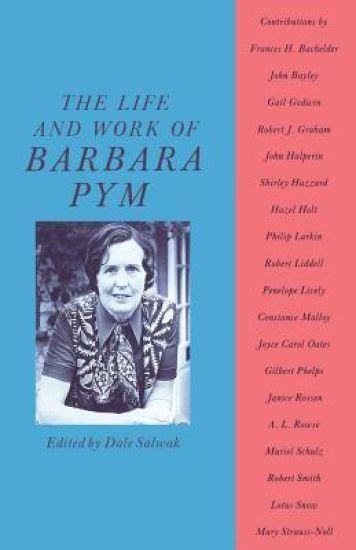

The Rhetoric of Women’s Humour in Barbara Pym’s Fiction
Naghmeh Varghaiyan
ibidem-Verlag, Jessica Haunschild u Christian Schon
2021
nidottu
In this study of three of Barbara Pyms novels, Naghmeh Varghaiyan, drawing on examinations of womens humour by Eileen Gillooly, Regina Barreca, and others, shows how the humorous female discourse in Some Tame Gazelle, Excellent Women, and Jane and Prudence undermines patriarchal culture and subverts both female and male stereotypes such as that of the spinster and of the Byronic hero. Varghaiyan reveals how the rhetoric of womens humour enables Pyms female characters to survive in the patriarchal culture and to unsettle it.
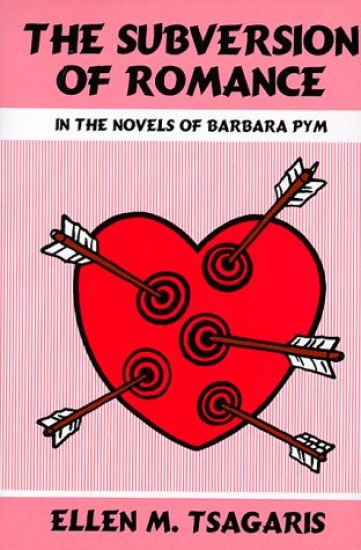
The Subversion of Romance in the Novels of Barbara Pym
Ellen M. Tsagaris
Popular Pr of Bowling Green State
1998
sidottu

The Subversion of Romance in the Novels of Barbara Pym
Tsagaris
Bowling Green University Popular Press,US
1998
nidottu
This book seeks to explore how Barbara Pym subverts the discourse of the romance novel through her use of food, clothes, heroine and hero characterizations, and marriage customs.
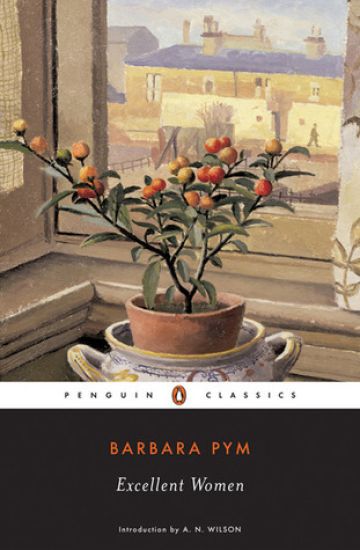
"The finest introduction to Barbara Pym" (The New York Times): a hilarious comedy of manners by the shrewdly observant British novelist often compared to Jane Austen One of Barbara Pym's richest and most amusing high comedies, Excellent Women has at its center Mildred Lathbury, a clergyman's daughter and a mild-mannered spinster in 1950s England. She is one of those "excellent women," the smart, supportive, repressed women who men take for granted. As Mildred gets embroiled in the lives of her new neighbors--anthropologist Helena Napier and her handsome, dashing husband, Rocky, and Julian Malory, the vicar next door--the novel presents a series of snapshots of human life as actually, and pluckily, lived in a vanishing world of manners and repressed desires.

Reissue.
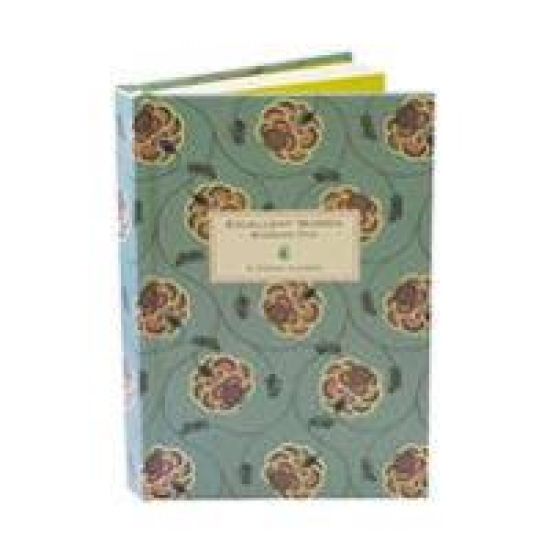
Using the cover artwork of our much-loved Virago Modern Classics hardback range, these elegant porcelain mugs celebrate three of our most popular titles: Rebecca by Daphne du Maurier; Excellent Women by Barbara Pym and Valley of the Dolls by Jacqueline Susann. They are a must-have for all Virago fans, and are surely the most stylish way to enjoy your morning coffee! Each mug is presented in a beautiful gift-box with corresponding artwork. The mugs are dishwasher and microwave safe. Rebecca and Excellent Women feature artwork by award-winning textile designer Neisha Crosland: www.neishacrosland.com Valley of the Dolls features artwork by textile designer and founder of Biba, Barbara Hulanicki: www.barbarahulanickidesign.com
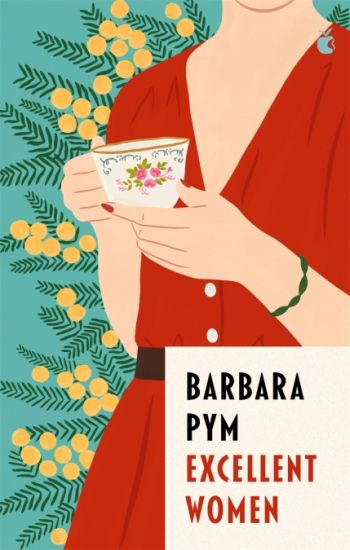
INTRODUCED BY ALEXANDER McCALL SMITH'I'm a huge fan of Barbara Pym' RICHARD OSMANMildred Lathbury is one of those excellent women who are often taken for granted. She is a godsend, 'capable of dealing with most of the stock situations or even the great moments of life - birth, marriage, death, the successful jumble sale, the garden fête spoilt by bad weather'. Her glamorous new neighbours, the Napiers, seem to be facing a marital crisis. One cannot take sides in these matters, though it is tricky, especially as Mildred has a soft spot for dashing young Rockingham Napier. This is Barbara Pym's world at its funniest and most touching.'One of the most endearingly amusing English novels of the twentieth century' ALEXANDER MCCALL SMITH'Barbara Pym is the rarest of treasures; she reminds us of the heartbreaking silliness of everyday life' ANNE TYLER'Not only was Pym a comic genius but she was ever so wise' THE TIMES
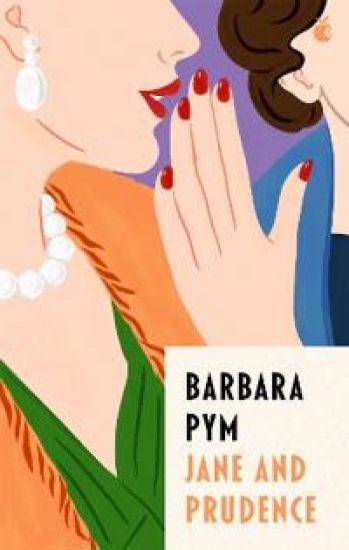
BY THE NEW YORK TIMES BESTSELLING AUTHOR INTRODUCED BY JILLY COOPER'I'm a huge fan of Barbara Pym' RICHARD OSMAN'I devoured all her books, but Jane and Prudence remains my favourite' JILLY COOPER 'Barbara Pym is the rarest of treasures; she reminds us of the heartbreaking silliness of everyday life' ANNE TYLERIf Jane Cleveland and Prudence Bates seem an unlikely pair to be walking together at an Oxford reunion, neither of them is aware of it. They couldn't be more different: Jane is a rather incompetent vicar's wife, who always looks as if she is about to feed the chickens, while Prudence, a pristine hothouse flower, has the most unsuitable affairs. With the move to a rural parish, Jane is determined to find her friend the perfect man. She learns, though, that matchmaking has as many pitfalls as housewifery.'This comedy of manners is a salutary reminder of just how good Barbara Pym was . . . This book is a gem' THE TIMES
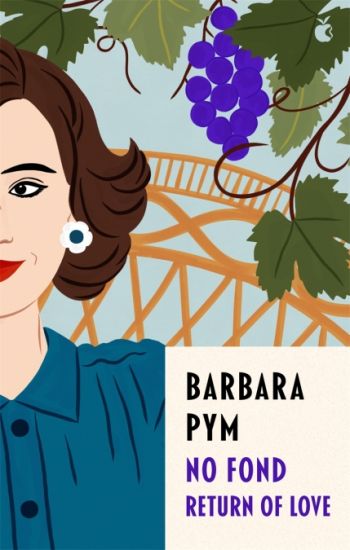
INTRODUCED BY PAUL BINDING'I'm a huge fan of Barbara Pym' RICHARD OSMAN 'I'd sooner read a new Barbara Pym than a new Jane Austen' PHILIP LARKIN 'No novelist brings more telling observation or more gentle pleasure' JILLY COOPER Dulcie Mainwaring is always helping others, but never looks out for herself - especially in the realm of love. Her friend Viola is besotted by the alluring Dr Aylwin Forbes, so surely it isn't prying if Dulcie helps things along? Aylwin, however, is smitten with Dulcie's pretty, young niece. And perhaps Dulcie herself, however ridiculous it might be, is falling, just a little, for Aylwin. Once life's little humiliations are played out, maybe love will be returned, and fondly, after all . . .

INTRODUCED BY MAVIS CHEEK'I'm a huge fan of Barbara Pym' Richard Osman'She is the rarest of treasures; she reminds us of the heartbreaking silliness of everyday life' Anne TylerTogether yet alone, the Misses Bede occupy the central crossroads of parish life. Harriet, plump, elegant and jolly, likes nothing better than to make a fuss of new curates, secure in the knowledge that Count Ricardo Bianco will propose to her yet again this year. Belinda, meanwhile, has harboured sober feelings of devotion towards Archdeacon Hoccleve for thirty years.Then into their quiet, comfortable lives comes a famous librarian, Nathaniel Mold, and a bishop from Africa, Theodore Grote - who each takes to calling on the sisters for rather more unsettling reasons.'Some Tame Gazelle is my personal favourite for its sparkling high comedy and its treasury of characters . . . [Pym] makes me smile, laugh out loud, consider my own foibles and fantasies, and, above all, suffer real regret when I reach the final page. Of how many authors can you honestly say that?' MAVIS CHEEK

INTRODUCED BY SALLEY VICKERS'I'm a huge fan of Barbara Pym' RICHARD OSMAN'She is the rarest of treasures; she reminds us of the heart-breaking silliness of everyday life' ANNE TYLERCatherine Oliphant is a writer and lives with handsome anthropologist Tom Mallow. Their relationship runs into trouble when he begins a romance with student Deirdre Swann, so Catherine turns her attention to the reclusive anthropologist Alaric Lydgate, who has a fondness for wearing African masks. Added to this love tangle are the activities of Deirdre's fellow students and their attempts to win the competition for a research grant.The course of true love or academia never did run smooth.'Her best [novels] are sheer delight, and all of them companionable. Quiet, paradoxical, funny and sad, they have the iron in them of permanence too' JOHN UPDIKE, NEW YORKER'She can be seriously, hilariously funny - no other novelist has celebrated our national silliness with such exuberance' KATE SAUNDERS