Read International Haulage was set up by Barry Read and based in Bridlington. Read about Barry's early life, his business life and what he now likes to do in his retirement.
This text attempts to examine how teachers can begin to talk back and break bread. Arguing for a more prophetic vision, the author suggests that educational institutions must take on social and cultural constraints with alternative spiritual visions.
Easter is the high point of the year for millions of Christians around the world. And for most of them, there can be no Easter without Lent, the season that leads up to it. A time for self-denial, soul-searching, and spiritual preparation, Lent makes time for daily reading and reflection. This time-tested collection of devotions will deepen and stretch your faith, and can be returned to year after year. Culled from the wealth of twenty centuries, the selections are ecumenical in scope, representing the best classic and contemporary Christian writers. This expanded second edition adds dozens of voices, new and old, and takes the reader all the way through Eastertide to Pentecost. Includes ninety-six Lenten and Easter readings, plus seven chapter-opening poems, by Eberhard Arnold, Saint Augustine, Wendell Berry, Christoph Friedrich Blumhardt, Dietrich Bonhoeffer, G. K. Chesterton, Dorothy Day, Meister Eckhart, Khalil Gibran, Clarence Jordan, Soren Kierkegaard, Madeleine L'Engle, C. S. Lewis, George MacDonald, Thomas Merton, Malcolm Muggeridge, Kathleen Norris, Henri Nouwen, Christina Rosetti, Fleming Rutledge, Dorothy Sayers, Edith Stein, Mother Teresa, Leo Tolstoy, N. T. Wright, Alfred Kazin, Amy Carmichael, Barbara Brown Taylor, Barbara Cawthorne Crafton, Blaise Pascal, Brennan Manning, Dag Hammarskjöld, Dorothee Soelle, Dylan Thomas, E. Stanley Jones, Emil Brunner, Frederick Buechner, Fyodor Dostoevsky, Geoffrey Hill, Henry Drummond, J. Heinrich Arnold, Jean-Pierre de Caussade, Johann Christoph Arnold, John Dear, John Donne, John Masefield, John Stott, John Updike, Jürgen Moltmann, Karl Barth, Madeleine L’Engle, Martin Luther, Oscar Wilde, Oswald Chambers, Paul Tillich, Peter Kreeft, Philip Berrigan, Philip Yancey, Romano Guardini, Sadhu Sundar Singh , Saint Augustine, Simone Weil, Thomas à Kempis, Toyohiko Kagawa, Walter J. Ciszek, Walter Wangerin, Watchman Nee, William Willimon and others.
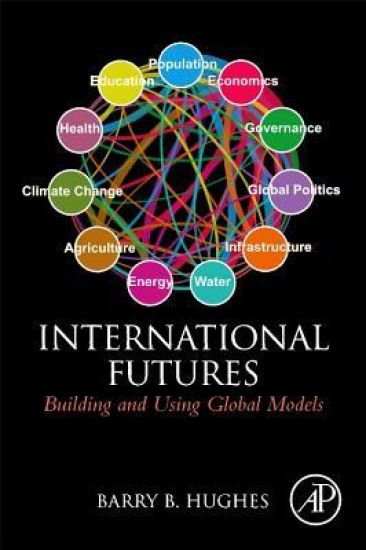
International Futures: Building and Using Global Models extensively covers one of the most advanced systems for integrated, long-term, global and large-scale forecasting analysis available today, the International Futures (IFs) system. Key elements of a strong, long-term global forecasting system are described, i.e. the formulations for the driving variables in separate major models and the manner in which these separate models are integrated. The heavy use of algorithmic and rule-based elements and the use of elements of control theory is also explained. Furthermore, the IFs system is compared and contrasted with all other major modeling efforts, also outlining the major benefits of the IFs system. Finally, the book provides suggestions on how the development of forecasting systems might most productively proceed in the coming years.
For decades, Classical Myth has been one of the most popular and best-selling texts for the study of classical myth. Oxford University Press is proud to publish this essential book in a vibrant new ninth edition, complemented by digital learning resources that further enhance the reader's engagement with the classical past. Visit www.oup.com/us/he/powell9e for a wealth of new digital teaching and learning resources. Package this text at a discount with one or more of the author's translations of the Iliad, the Odyssey, and the Aeneid--all pubished by Oxford University Press--or with any title in the Oxford World's Classics series. Please contact your OUP sales representative to set up a package.
The Odyssey is one of the world's greatest and best-loved poems. It has survived for twenty-eight centuries, through upheavals that have wiped out most of what was written in the ancient world. Now Barry B. Powell, one of the twenty-first century's leading Homeric scholars, has given us a powerful new translation. Powell's translation renders the Homeric Greek with a simplicity and dignity reminiscent of the original. The text immediately engrosses students with its tight and balanced rhythms, while the incantatory repetitions evoke a continuous "stream of sound" that offers as good an impression of Homer's Greek as one could hope to attain without learning the language. Accessible, poetic, and accurate, this translation is an excellent fit for today's students. Powell exposes them to all of the adventure, cunning, pathos, and humor that are Homer's Odyssey.
Across the nation, construction projects large and small - from hospitals to schools to simple home improvements - are spiraling out of control. Delays and cost overruns have come to seem normal, even as they drain our wallets and send our blood pressure sky-rocketing. In "Broken Buildings, Busted Budgets", prominent construction attorney Barry B. LePatner builds a powerful case for change in America's sole remaining 'mom and pop' industry - an industry that consumes $1.23 trillion and wastes at least $120 billion each year.With three decades of experience representing clients that include eminent architects and engineers, as well as corporations, institutions, and developers, LePatner has firsthand knowledge of the bad management, ineffective supervision, and insufficient investment in technology that plagues the risk-averse construction industry. In an engaging and direct style, he here pinpoints the issues that underlie the industry's woes while providing practical tips for anyone in the business of building, including advice on the precise language owners should use during contract negotiations.Armed with "Broken Buildings, Busted Budgets", everyone involved in the purchase or renovation of a building or any structure - from homeowners seeking to remodel to civic developers embarking on large-scale projects - has the information they need to change this antiquated industry, one project at a time.
Fully updated and including an expanded and extensive Windows computer simulation, this unique text/disk combination provides a survey of alternative futures in international relations. By manipulating a wide range of variables in major countries and geographical regions students can generate a limitless number of future scenarios in the areas of demographics, food, energy, the environment, economics, and sociopolitical systems. This edition has added capability for display of data and forecasts, has introduced extensive historical data and analysis capability, has extended the time horizon of forecasts, and has extensively expanded the Help system of the model. Complete with tables, flowcharts, feedback loops, computer notes, and research suggestions, the text and simulation allows students to transcend the usual level of speculation about the future by moving to an empirically grounded, values-based consideration of issues, strategies, and outcomes. This edition places a special emphasis on the environemnt, which has emerged as one of the most important areas in international relations.
The Caribbean area projects an image—not entirely accurate—of instability, and it is within that context that the United States and Cuba, the region's chief protagonists, struggle. This book explores in detail the history and nature of Cuba's influence in the Commonwealth Caribbean, Mexico, and Central and South America, as well as its relations wi
The Caribbean area projects an image—not entirely accurate—of instability, and it is within that context that the United States and Cuba, the region's chief protagonists, struggle. This book explores in detail the history and nature of Cuba's influence in the Commonwealth Caribbean, Mexico, and Central and South America, as well as its relations wi
Recognizing the urgent need for an up-to-date review of new and innovative research on growth hormone (GH) secretagogues, this exclusive work furnishes the state of the art on the mechanisms of action, design, synthesis, evaluation, and clinical applications of GH secretagogues, including orally active and xenobiotic GH-releasing compounds. Beginning with a thorough historical perspective on the discovery and evolution of GH-releasing peptides (GHRPs) as therapeutic agents, Growth Hormone Secretagogues in Clinical Practiceanalyzes structural requirements for GH secretagogue efficacy demonstrates the use of mathematical models to predict differential values of individual stimuli for GH secretion from the pituitary reports on the development of a simple screening system based on polyclonal antibodies discusses laboratory synthesis of agonistic analogs intended for human and veterinary use proposes applications in managing conditions such as Turner's syndrome, acromegaly, diabetic retinopathy, glomerulosclerosis, tumors, and cancer provides physiological evidence for the effects of GHRP on behavior with a series of trials involving voluntary and forced exercise describes a new diagnostic test for evaluating pituitary function in slowly growing children and aging adults explores the interactions of GH secretagogues with other hormones and endogenous substances from sex steroids to interferons and much more!
Myths are not just the stories from the ancient Greeks and Romans—they represent deep truths from the essential concerns people face in their lives. Readers may already have heard of the Trojan Horse or how Oedipus married his own mother, but why have these stories lingered? In Classical Myth: An Introduction, Barry B. Powell provides the historical and theoretical background necessary for us to understand not only the concept of what a myth is, but the cultural context of how it emerged, and the different approaches to interpreting myth that were put forward by ancient theorists and their more recent successors. Then he helps readers to understand classical myth as it is found in its primary sources: the works of Homer and Hesiod, and the Greek tragedians and historians, Ovid and Vergil. By examining a number of prominent themes in classical myth, this textbook explores the relationship between myth and art, politics, society, and history of the ancient world. This completely revised second edition features new illustrations and will help readers who want to understand myths or study their original sources.
The ancient Greek hymnic tradition translated beautifully and accessibly. The hymn—as poetry, as craft, as a tool for worship and philosophy—was a vital art form throughout antiquity. Although the Homeric Hymns have long been popular, other equally important collections have not been readily accessible to students eager to learn about ancient poetry. In reading hymns, we also gain valuable insight into life in the classical world. In this collection, early Homeric Hymns of uncertain authorship appear along with the carefully wrought hymns of the great Hellenistic poet and courtier Callimachus; the mystical writings attributed to the legendary poet Orpheus, written as Christianity was taking over the ancient world; and finally, the hymns of Proclus, the last great pagan philosopher of antiquity, from the fifth century AD, whose intellectual influence throughout western culture has been profound.Greek Poems to the Gods distills over a thousand years of the ancient Greek hymnic tradition into a single volume. Acclaimed translator Barry B. Powell brings these fabulous texts to life in English, hewing closely to the poetic beauty of the original Greek. His superb introductions and notes give readers essential context, making the hymns as accessible to a beginner approaching them for the first time as to an advanced student continuing to explore their secrets. Brilliant illustrations from ancient art enliven and enrichen the experience of reading these poems.
The ancient Greek hymnic tradition translated beautifully and accessibly. The hymn—as poetry, as craft, as a tool for worship and philosophy—was a vital art form throughout antiquity. Although the Homeric Hymns have long been popular, other equally important collections have not been readily accessible to students eager to learn about ancient poetry. In reading hymns, we also gain valuable insight into life in the classical world. In this collection, early Homeric Hymns of uncertain authorship appear along with the carefully wrought hymns of the great Hellenistic poet and courtier Callimachus; the mystical writings attributed to the legendary poet Orpheus, written as Christianity was taking over the ancient world; and finally, the hymns of Proclus, the last great pagan philosopher of antiquity, from the fifth century AD, whose intellectual influence throughout western culture has been profound.Greek Poems to the Gods distills over a thousand years of the ancient Greek hymnic tradition into a single volume. Acclaimed translator Barry B. Powell brings these fabulous texts to life in English, hewing closely to the poetic beauty of the original Greek. His superb introductions and notes give readers essential context, making the hymns as accessible to a beginner approaching them for the first time as to an advanced student continuing to explore their secrets. Brilliant illustrations from ancient art enliven and enrichen the experience of reading these poems.
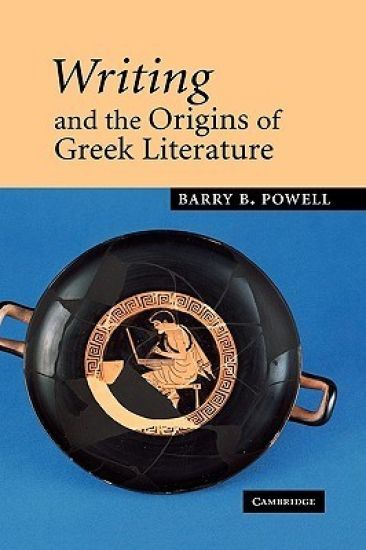
Professor Powell ties the origin and nature of archaic Greek literature to the special technology of Greek alphabetic writing. In building his model he presents chapters on specialized topics - text, orality, myth, literacy, tradition and memorization - and then shows how such special topics relate to larger issues of cultural transmission from East to West. Several chapters are devoted to the theory and history of writing, its definition and general nature as well as such individual developments as semasiography and logosyllabography, Chinese writing and the West Semitic family of syllabaries. He shows how the Greek alphabet put an end to the multiliteralism of Eastern traditions of writing, and how the recording of Homer and other early epic poetry cannot be separated from the alphabetic revolution. Finally, he explains how the creation of Greek alphabetic texts demoticized Greek myth and encouraged many free creations of new myths based on Eastern images.
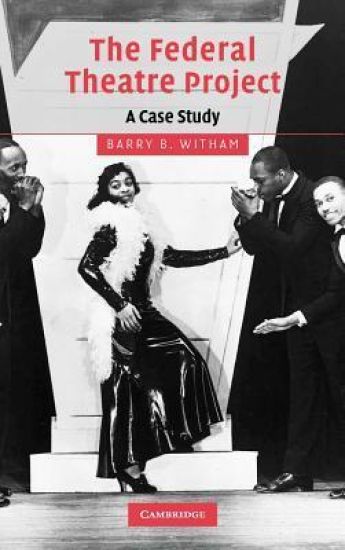
Drawing upon archival resources, official correspondence and personal interviews, this 2003 book provides a detailed examination of the operations of the US Federal Theatre Project in the decade of the 1930s. From the colourful bus tours through the Civilian Conservation Corps camps to the turbulent productions of the Living Newspapers, this book recreates the often chaotic but frequently exhilarating story of Uncle Sam as producer. Special attention is given to the controversial Negro unit, the prize-winning production of See How They Run and the mass spectacles that attempted to incorporate Hallie Flanagan's vision of a truly national project rooted in local culture. The Federal Theatre Project: A Case Study illuminates both the ambitions of the programme and the day-to-day details of making art from a new mode - a subsidised national theatre.
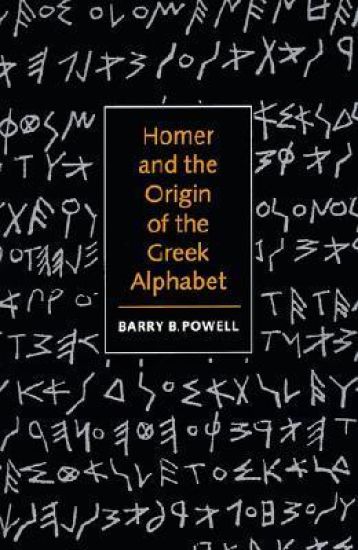
Who invented the Greek alphabet and why? The purpose of this challenging book is to inquire systematically into the historical causes that underlay the radical shift from earlier and less efficient writing systems to the use of alphabetic writing. The author reaches the conclusion that a single man, perhaps from the island of Euboea, invented the Greek alphabet specifically in order to record the Iliad and the Odyssey of Homer.
Professor Powell ties the origin and nature of archaic Greek literature to the special technology of Greek alphabetic writing. In building his model he presents chapters on specialized topics - text, orality, myth, literacy, tradition and memorization - and then shows how such special topics relate to larger issues of cultural transmission from East to West. Several chapters are devoted to the theory and history of writing, its definition and general nature as well as such individual developments as semasiography and logosyllabography, Chinese writing and the West Semitic family of syllabaries. He shows how the Greek alphabet put an end to the multiliteralism of Eastern traditions of writing, and how the recording of Homer and other early epic poetry cannot be separated from the alphabetic revolution. Finally, he explains how the creation of Greek alphabetic texts demoticized Greek myth and encouraged many free creations of new myths based on Eastern images.
Drawing upon archival resources, official correspondence and personal interviews, this book provides a detailed examination of the operations of the US Federal Theatre Project in the decade of the 1930s. From the colorful bus tours through the Civilian Conservation Corps camps to the turbulent productions of the Living Newspapers, this book recreates the often chaotic but frequently exhilarating story of Uncle Sam as producer. Special attention is given to the controversial Negro unit, the prize-winning production of See How They Run and the mass spectacles which attempted to incorporate Hallie Flanagan’s vision of a truly national project rooted in local culture. The Federal Theatre Project: A Case Study illuminates both the ambitions of the program and the day to day details of making art from a new mode - a subsidized national theatre.