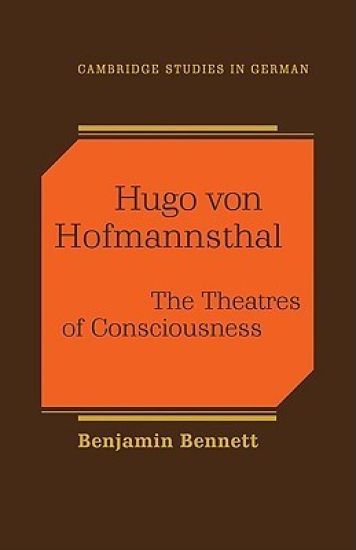
This book focuses on Hugo von Hofmannsthal's intense, lifelong concentration upon a single cohesive set of poetic, philosophical and ethical concerns, a quality of his work which has been neglected in the bulk of existing scholarship. Professor Bennett examines Hofmannsthal's work in the context of literary theory and the history of philosophy, referring especially to Nietzsche, German Idealism and the poetics of German Classicism. He identifies three principal areas of concern to Hofmannsthal: the theory of genre, the question of the role of literature in society and the search for a fruitful response to the problem of the historical development of culture. The argument proceeds by way of detailed interpretation of texts, including Der Tor und der Tod, the Chandos letter, Ariadne auf Naxos, Der Schwierige, Das Salzburger Grosse Welttheater and Der Turm.
This book focuses on Hugo von Hofmannsthal's intense, lifelong concentration upon a single cohesive set of poetic, philosophical and ethical concerns, a quality of his work which has been neglected in the bulk of existing scholarship. Professor Bennett examines Hofmannsthal's work in the context of literary theory and the history of philosophy, referring especially to Nietzsche, German Idealism and the poetics of German Classicism. He identifies three principal areas of concern to Hofmannsthal: the theory of genre, the question of the role of literature in society and the search for a fruitful response to the problem of the historical development of culture. The argument proceeds by way of detailed interpretation of texts, including Der Tor und der Tod, the Chandos letter, Ariadne auf Naxos, Der Schwierige, Das Salzburger Grosse Welttheater and Der Turm.
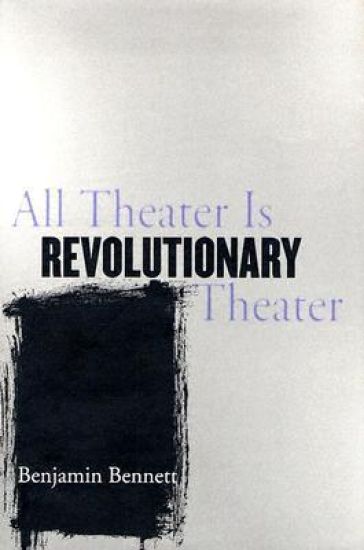
All Theater Is Revolutionary Theater is the first book to consider why, in the Western tradition (and only in the Western tradition), theatrical drama is regarded as its own literary or poetic type, when the criteria needed to differentiate drama from other forms of writing do not resemble the criteria by which types of prose or verse are ordinarily distinguished. Through close readings of such playwrights as Beckett, Brecht, Büchner, Eliot, Shaw, Wedekind, and Robert Wilson, Benjamin Bennett looks at the relationship between literature and drama, identifying typical problems in the development of dramatic literature and exploring how the uncomfortable association with theatrical performance affects the operation of drama in literary history.Bennett's historical investigations into theoretical works ranging from Aristotle to Artaud, Brecht, and Diderot suggest that the attempt to include drama in the system of Western literature causes certain specific incongruities that, in his view, have the salutary effect of preserving the otherwise endangered possibility of a truly liberal, progressive, or revolutionary literature.
Reading is good for us. The reading of literature, we are told, enlarges our horizons, extends our experience beyond our own lives. But the moral and political dangers that attend the association of reading with experience have long been understood. And is that association even valid? What if precisely our most important literary texts are constructed so as to challenge or disrupt it? This book is a radical criticism of the concept of "reading," especially of the concept of "the" reader, as commonly used in literary criticism. Bennett starts with the point that "reading" does not name a single, identifiable type of experience or class of experiences. Her then sketches in broad terms the historical provenance of "the" reader, in an argument that includes discussions of Dante, Boccaccio, Cervantes, Marlowe, and German idealist philosophy. In two concluding chapters on modern German novellas, he suggests that most major European literary works since the eighteenth century are written in direct opposition to the central concepts by which criticism has sought to lay hold of them.
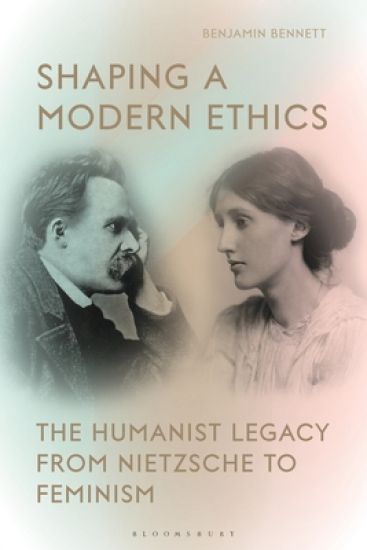
Is there any such thing as a single ethical system to which all human beings could conceivably subscribe? The short answer is no; and most people, being tolerant, would probably agree with this answer. Yet most people, precisely in being tolerant, also subscribe to an idea of “human rights” which presupposes just such a universal ethics. This basic question of ethics is similarly treacherous when approached on a higher technical level. Specialists have long recognized that Kant’s categorical imperative is neither theoretically nor practically tenable. But efforts to revive and repair the Kantian project—including especially the monumental work of Jürgen Habermas—have all themselves been theoretically questionable, while developing a complexity that makes them impractical.Must we then simply do without ethics in the sense of a universal ethical method? By way of a close study of literary and philosophical texts, from Freud to Machiavelli, Benjamin Bennett shows why the failure of a universal or propositional ethics is indeed unavoidable. He uncovers a modern non-propositional ethics that cannot be grasped in a single theoretical move but can only be approached as a collection of instances of a modern ethical “we”, three key examples of which Bennett explores in this book: - The “we” of irony, whose speakers share a strictly preter-verbal knowledge which is concealed in their actual utterances - The insistent exclusive “we” of a group that has neither its own physical locality nor even a clear intellectual identity, comparable to the “we” of Jews in the diaspora - The “we” of feminism, a separate “we” from that embracing people who happen to have been born women.
Is there any such thing as a single ethical system to which all human beings could conceivably subscribe? The short answer is no; and most people, being tolerant, would probably agree with this answer. Yet most people, precisely in being tolerant, also subscribe to an idea of “human rights” which presupposes just such a universal ethics. This basic question of ethics is similarly treacherous when approached on a higher technical level. Specialists have long recognized that Kant’s categorical imperative is neither theoretically nor practically tenable. But efforts to revive and repair the Kantian project—including especially the monumental work of Jürgen Habermas—have all themselves been theoretically questionable, while developing a complexity that makes them impractical.Must we then simply do without ethics in the sense of a universal ethical method? By way of a close study of literary and philosophical texts, from Freud to Machiavelli, Benjamin Bennett shows why the failure of a universal or propositional ethics is indeed unavoidable. He uncovers a modern non-propositional ethics that cannot be grasped in a single theoretical move but can only be approached as a collection of instances of a modern ethical “we”, three key examples of which Bennett explores in this book: - The “we” of irony, whose speakers share a strictly preter-verbal knowledge which is concealed in their actual utterances - The insistent exclusive “we” of a group that has neither its own physical locality nor even a clear intellectual identity, comparable to the “we” of Jews in the diaspora - The “we” of feminism, a separate “we” from that embracing people who happen to have been born women.
The concept of secular millennialism summarizes a crucial point made by Hannah Arendt in The Origins of Totalitarianism: that twentieth-century totalitarian movements, in Nazi Germany and in the Soviet Union under Stalin, are not nationalistic but essentially millennialist, focused on the achievement of a universal world order. The question of whether totalitarian thinking can be located in a secular millennialist tradition is brought to the forefront in Aesthetics as Secular Millennialism: Its Trail from Baumgarten and Kant to Walt Disney and Hitler by Benjamin Bennett. Bennett contends that the new philosophical science of aesthetics—beginning in the eighteenth century with Baumgarten, Kant, and Schiller—is the source of such a tradition. Bennett uses the term “aesthetics” to designate a tradition which begins under that name but, in the course of the nineteenth century, concerns itself less directly with questions of beauty or art while not losing its secular millennialist tendency. He argues that modern philosophical hermeneutics, in Dilthey, Heidegger, and Gadamer, belongs to the aesthetic tradition. Bennett explores the realistic novel as the main vehicle by which aesthetic tradition maintains itself in the nineteenth century and attracts a large popular following. The argument culminates in a discussion of relations among aesthetics, totalitarian propaganda, and the “totalitarian imagination” with its dream of “human omnipotence” (Arendt). Aesthetics as Secular Millennialism also maintains an attentiveness to instances of resistance against the aesthetic impetus in history—hence ultimately against totalitarianism.
The concept of secular millennialism summarizes a crucial point made by Hannah Arendt in The Origins of Totalitarianism: that twentieth-century totalitarian movements, in Nazi Germany and in the Soviet Union under Stalin, are not nationalistic but essentially millennialist, focused on the achievement of a universal world order. The question of whether totalitarian thinking can be located in a secular millennialist tradition is brought to the forefront in Aesthetics as Secular Millennialism: Its Trail from Baumgarten and Kant to Walt Disney and Hitler by Benjamin Bennett. Bennett contends that the new philosophical science of aesthetics—beginning in the eighteenth century with Baumgarten, Kant, and Schiller—is the source of such a tradition. Bennett uses the term “aesthetics” to designate a tradition which begins under that name but, in the course of the nineteenth century, concerns itself less directly with questions of beauty or art while not losing its secular millennialist tendency. He argues that modern philosophical hermeneutics, in Dilthey, Heidegger, and Gadamer, belongs to the aesthetic tradition. Bennett explores the realistic novel as the main vehicle by which aesthetic tradition maintains itself in the nineteenth century and attracts a large popular following. The argument culminates in a discussion of relations among aesthetics, totalitarian propaganda, and the “totalitarian imagination” with its dream of “human omnipotence” (Arendt). Aesthetics as Secular Millennialism also maintains an attentiveness to instances of resistance against the aesthetic impetus in history—hence ultimately against totalitarianism.
Does feminist theory—the theoretical grasp of exactly how a patriarchal oppression of women operates and has operated in Western societies—arise simply as women’s response to the experience of oppression? Bennett argues that no such substantial current of thought ever arises in this manner, and that feminist theory is not truly grasped until we uncover in intellectual history the not-yet-feminist body of thought from which it emerges. He approaches this matter by discussing an anti-aesthetic tendency in the work of major eighteenth-century German authors, both male and female, a tendency which develops (he claims) in the direction of proto-feminism. Especially notable is the kind of feminist theory in question here, a theory which focuses uncompromisingly on the hardest possible problems it encounters: on a gender-based logic by which women writers, precisely in asserting themselves as women, run up against an imperative of silence; on the recognition that in a strictly ethical feminist view, gender difference is inaccessible to the understanding; and on the problem of a future for feminism in a world where the aesthetic approach to art and literature has apparently prevailed once and for all.
Combining a rhetorical approach to the study of memes with profound philosophical concepts about information as a fundamental building block of existence, Information Rhetorics presents a framework for understanding the world through the lens of information transfer. Drawing from rhetorical theory, semiotics, philosophy of information, and communications studies, the author explores how information - defined not as static facts but as transmitted significance and value - flows through both animate and inanimate realms. He examines how specialised terminologies function across disciplines while connecting to vernacular understandings of information transfer. By positioning memes as a heuristic tool, the author creates an interdisciplinary framework that illuminates economics, spirituality, and social theory. This book will interest scholars, students, and researchers across disciplines, particularly those working in philosophy of information, rhetoric, semiotics, cultural studies and communication studies.
How exactly does one explain Jesus? That is the central question of this book. But the task of explaining Jesus is complicated. For many nonbelievers, skeptics, or practitioners of non- Jesus-based religions or spiritualities, it can be very strange to refer to a particular man who lived in the first century CE as someone who is still living. Even for some believers, this idea can be a difficult thing to understand—even given the teachings of their faith. Thus, whether believer or nonbeliever or somewhere in-between, for the intellectually curious, there is need for an explanation. Explaining Jesus explores the possibilities of a secular, interdisciplinary, science-based explanation for the phenomenon of Jesus.
Memento mori is a broad and understudied cultural phenomenon and experience. The term "memento mori" is a Latin injunction that means "remember mortality," or more directly, "remember that you must die." In art and cultural history, memento mori appears widely, especially in medieval folk culture and in the well-known Dutch still life vanitas paintings of the sixteenth and seventeenth centuries. Yet memento mori extends well beyond these points in art and cultural history. In Death in Documentaries: The Memento Mori Experience, Benjamin Bennett-Carpenter suggests that documentaries are an especially apt form of contemporary memento mori. Bennett-Carpenter shows that documentaries may offer composed transformative experiences in which a viewer may renew one's consciousness of mortality - and thus renew one's life.
""General Benjamin Franklin: The Military Career Of A Philosopher"" is a comprehensive biography written by James Bennett Nolan that explores the military career of one of America's founding fathers, Benjamin Franklin. The book delves into Franklin's early life, his political and philosophical beliefs, and his military service during the French and Indian War. It also examines his role as a diplomat and his contributions to the American Revolution. The author provides detailed accounts of Franklin's military campaigns, including his leadership at the Battle of Saratoga, and his efforts to secure French aid for the American cause. Overall, ""General Benjamin Franklin"" offers a fascinating look at one of America's most influential figures and his contributions to the country's military and political history.Additional Illustrators Are N. Garrison And Oerter.This scarce antiquarian book is a facsimile reprint of the old original and may contain some imperfections such as library marks and notations. Because we believe this work is culturally important, we have made it available as part of our commitment for protecting, preserving, and promoting the world's literature in affordable, high quality, modern editions, that are true to their original work.
This book is a volume in the Penn Press Anniversary Collection. To mark its 125th anniversary in 2015, the University of Pennsylvania Press rereleased more than 1,100 titles from Penn Press's distinguished backlist from 1899-1999 that had fallen out of print. Spanning an entire century, the Anniversary Collection offers peer-reviewed scholarship in a wide range of subject areas.
This book is a quick and focused review of musculoskeletal imaging essentials. The authors have spent many years teaching medical students, residents, and fellows, and have adapted a survival manual approach to optimize retention. They know that there are common and universal blind spots and gaps in recognition. With this book, the reader will learn where to look and what to look for. The authors highlight obvious and subtle findings that the reader will learn to recognize and understand, with a focus on the nuances that are essential to making accurate and pertinent interpretations.This book provides clear and concise instruction in identifying and communicating key and critical imaging findings. Chapters cover common conditions found in a busy emergency setting, as well as the more sedate settings of outpatient imaging, where potential pitfalls lurk. Abundant images reinforce the teaching points. Simple text cuts to the core of what is needed. Self-assessment modules and checklists reinforce learning and expose areas of weakness for further study.This is an ideal guide for radiology residents of all years and working radiologists who may need a refresher on one or more of the many facets of musculoskeletal imaging.
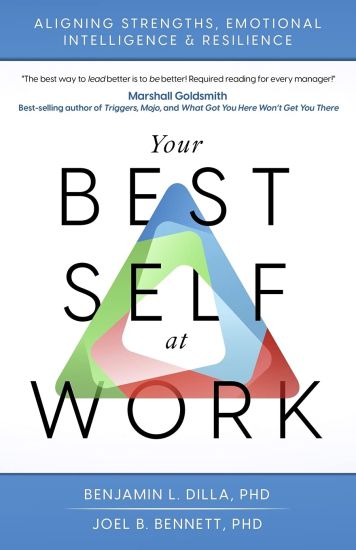
Do you want to lead and influence others more effectively?Whether you're a new or aspiring leader-looking for your first step in building a professional career, or a manager working to recover from corporate setbacks, sluggish direct reports, bad bosses, and economic downturns-you'll find hope, encouragement, and support to further your leadership career in this allegorical tale. The authors, both business experts, coaches and trainers, tell the story of Sam, who encounters unexpected challenges in her first job as a manager. She realizes that it takes more than past success and a positive attitude to be effective in leading others. As you learn about her path to strength through several best-practice programs, you'll be able to apply the same lessons right now to your own growth and development. Engage "Your Best Self at Work" and bring others along with you The book includes a Bonus Feature, 50 Tips for Uncertain Times - Applying principles of the book in the challenging circumstances we've all experienced.In Your Best Self at Work, you'll meet Sam, a young professional who discovers that her first role as a manager isn't at all what she expected. After dealing with team performance problems, difficult employees, a corporate restructuring, and a manager who wants results now but provides little support, Sam is ready to move on to other opportunities. But then a change in circumstances - a new manager, an invitation to participate in her company's leadership development program, and her own decision to pursue an MBA at a local university - gives Sam the ability to begin to become the leader she wants to be - to be her best self at work.You'll join Sam on a journey to explore her personality, natural talents, and strengths, and then to discover the power of aligning strengths with the skills of emotional intelligence (EI) and resilience. In Sam's leadership training sessions, classes at the university, and discussions with a leadership coach, she learns that personality, competencies, and strengths are essential for success, but those alone are not enough, particularly in challenging times. Understanding strengths provides 80% of what you need for effectiveness at work (and more broadly, in life). Sam soon sees that the remaining 20%, representing the difference between mediocrity (B-/C+) and excellence (A+), is found in the realm of emotional stability. The skills of emotional intelligence provide enhanced ability to understand and manage emotions within oneself and in interactions with others.Sam also learns that resilience is not a state of being but a set of practices in which one can become centered, confident, committed, compassionate, and in community with others. As you experience Sam's transformation, you'll be empowered for your own journey to align your unique strengths with the skills of emotional intelligence and the practices of resilience - to become your best self at work, in relationships, and in life.