

Kirjahaku
Etsi kirjoja tekijän nimen, kirjan nimen tai ISBN:n perusteella.
1000 tulosta hakusanalla Benjamin Franklin Allen

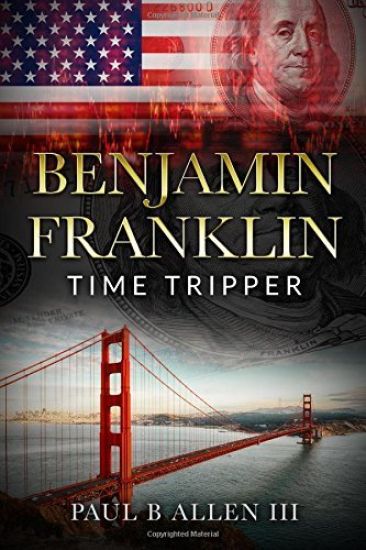
Benjamin Franklin eating at McDonald's, "expanding his mind" with help from Dr. Timothy Leary, and jamming with Stevie Wonder? Why would he ever want to go back to the 1700s?Before he became the Benjamin Franklin we know and love, there was one big lesson that Ben had to learn, and for that to happen, Divine Providence was forced to step in, suddenly transporting Franklin to San Francisco, during the 1960's Hippie / Flower Child era. There, befriended by a young Black man, Franklin is exposed to a completely different way of life, and a United States of America that he has never imagined in his wildest dreams. The adventures of Franklin and his new friend, Jeff, are comical, and Franklin is having the time of his life. But, every second that he is lost in the future, things in America are drastically changing for the worse, and Franklin realizes that if he doesn't return to the past, and soon, his entire family line, and the United States of America itself, will be completely wiped out of existence Will Franklin learn his lesson in time? And, if he does, how will he get back home?Benjamin Franklin: Time Tripper, blends history, fantasy, time travel, and comedy in this uniquely entertaining tale. Enjoy
The Burd Papers
William Allen; Lewis Burd (EDT) Walker; Benjamin Franklin
Kessinger Pub
2009
pokkari
American Biographical Notes, Being Short Notices of Deceased Persons, Chiefly Those Not included in Allen'S or in Drake'S Biographical Dictionaries, Gathered From Many Sources, and Arranged by Franklin B. Hough.
Franklin Benjamin Hough
University of Michigan Library
2006
pokkari
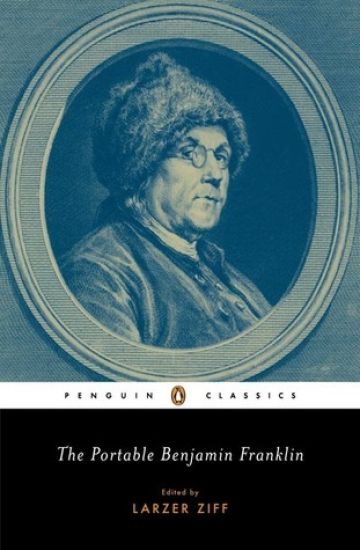
It takes a very inclusive anthology to encompass the protean personality and range of interests of Benjamin Franklin, but The Portable Benjamin Franklin succeeds as no collection has. In addition to the complete Autobiography, the volume contains about 100 of Franklin's major writings--essays, journalism, letters, political tracts, scientific observations, proposals for the improvement of civic and personal life, literary bagatelles, and private musings. The selections are reprinted in their entirety and organized chronologically within six sections that represent the full range of Franklin's temperament. The result is a zestful read for Franklin scholars and anyone wanting to know and enjoy this American icon. For more than seventy years, Penguin has been the leading publisher of classic literature in the English-speaking world. With more than 1,700 titles, Penguin Classics represents a global bookshelf of the best works throughout history and across genres and disciplines. Readers trust the series to provide authoritative texts enhanced by introductions and notes by distinguished scholars and contemporary authors, as well as up-to-date translations by award-winning translators.
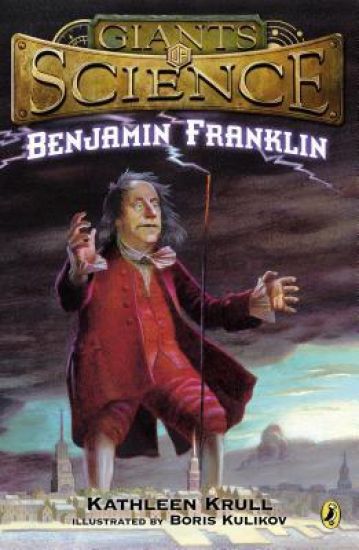
The electrifying biography of innovative scientist Benjamin Franklin is the perfect addition to this outstanding series Benjamin Franklin is a famous colonial inventor and multitasker who may be best remembered as one of America's Founding Fathers. But he was also a "natural philosopher" (the term for scientists back in the 1700s), whose experiments led to important discoveries about the nature of electricity--including his famous demonstration that electricity and lightning were one and the same. In a fantastic addition to the much-lauded Giants of Science series, this biography sheds new light on the man who considered science his true calling in life. Praise for the Giants of Science series: "With an inviting, conversational narrative, this series launches with an impressive start." --Publishers Weekly, starred review of Leonardo da Vinci "The second title in Krull's Giants of Science series meets, and perhaps even exceeds, expectations set by the debut, Leonardo da Vinci. Krull and Newton are a match made in heaven...." --Bulletin of the Center for Children's Books, starred review of Isaac Newton " Another standout in a uniformly stellar series." --Kirkus Reviews, starred review of Albert Einstein "An illuminating, humanizing portrait"--Booklist, starred review of Charles Darwin "Krull presents another top-notch scientific biography in the outstanding Giants of Science series." --Kirkus Reviews, starred review of Marie Curie "Krull lives up to the promise of the first two entries in her Giants of Science series with this lucid and thoughtful examination of Freud's life, work, and legacy." --Kirkus Reviews, starred review of Sigmund Freud

The tenth and youngest son of a poor Boston soapmaker, Benjamin Franklin would rise to become, in Thomas Jefferson's words, "the greatest man and ornament of his age." In this short, engaging biography, historian Edwin S. Gaustad offers a marvelous portrait of this towering colonial figure, illuminating Franklin's character and personality. Here is truly one of the most extraordinary lives imaginable, a man who, with only two years of formal education, became a printer, publisher, postmaster, philosopher, world-class scientist and inventor, statesman, musician, and abolitionist. Gaustad presents a chronological account of all these accomplishments, delightfully spiced with quotations from Franklin's own extensive writings. The book describes how the hardworking Franklin became at age 24 the most successful printer in Pennsylvania and how by 42, with the help of Poor Richard's Almanack, he had amassed enough wealth to retire from business. We then follow Franklin's next brilliant career, as an inventor and scientist, examining his pioneering work on electricity and his inventions of the Franklin Stove, the lightning rod, and bifocals, as well as his mapping of the Gulf Stream, a major contribution to navigation. Lastly, the book covers Franklin's role as America's leading statesman, ranging from his years in England before the Revolutionary War to his time in France thereafter, highlighting his many contributions to the cause of liberty. Along the way, Gaustad sheds light on Franklin's personal life, including his troubled relationship with his illegitimate son William, who remained a Loyalist during the Revolution, and Franklin's thoughts on such topics as religion and morality. Written by a leading authority on colonial America, this compact biography captures in a remarkably small space one of the most protean lives in our nation's history.

The tenth and youngest son of a poor Boston soapmaker, Benjamin Franklin would rise to become, in Thomas Jefferson's words, "the greatest man and ornament of his age." In this short, engaging biography, historian Edwin S. Gaustad offers a marvelous portrait of this towering colonial figure, illuminating Franklin's character and personality. Here is truly one of the most extraordinary lives imaginable, a man who, with only two years of formal education, became a printer, publisher, postmaster, philosopher, world-class scientist and inventor, statesman, musician, and abolitionist. Gaustad presents a chronological account of all these accomplishments, delightfully spiced with quotations from Franklin's own extensive writings. The book describes how the hardworking Franklin became at age 24 the most successful printer in Pennsylvania and how by 42, with the help of Poor Richard's Almanack, he had amassed enough wealth to retire from business. We then follow Franklin's next brilliant career, as an inventor and scientist, examining his pioneering work on electricity and his inventions of the Franklin Stove, the lightning rod, and bifocals, as well as his mapping of the Gulf Stream, a major contribution to navigation. Lastly, the book covers Franklin's role as America's leading statesman, ranging from his years in England before the Revolutionary War to his time in France thereafter, highlighting his many contributions to the cause of liberty. Along the way, Gaustad sheds light on Franklin's personal life, including his troubled relationship with his illegitimate son William, who remained a Loyalist during the Revolution, and Franklin's thoughts on such topics as religion and morality. Written by a leading authority on colonial America, this compact biography captures in a remarkably small space one of the most protean lives in American history. "Gaustad's admirable brief life of Benjamin Franklin is written with grace and informed by a lifetime of close and thoughtful study of the American past." --R. B. Bernstein, author of Thomas Jefferson
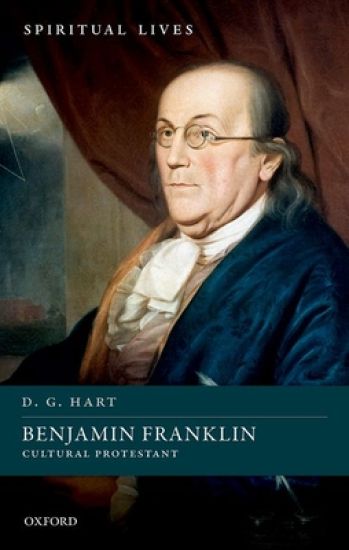
Benjamin Franklin grew up in a devout Protestant family with limited prospects for wealth and fame. By hard work, limitless curiosity, native intelligence, and luck (what he called "providence"), Franklin became one of Philadelphia's most prominent leaders, a world recognized scientist, and the United States' leading diplomat during the War for Independence. Along the way, Franklin embodied the Protestant ethics and cultural habits he learned and observed as a youth in Puritan Boston. Benjamin Franklin: Cultural Protestant follows Franklin's remarkable career through the lens of the trends and innovations that the Protestant Reformation started (both directly and indirectly) almost two centuries earlier. His work as a printer, civic reformer, institution builder, scientist, inventer, writer, self-help dispenser, politician, and statesmen was deeply rooted in the culture and outlook that Protestantism nurtured. Through its alternatives to medieval church and society, Protestants built societies and instilled habits of character and mind that allowed figures such as Franklin to build the life that he did. Through it all, Franklin could not assent to all of Protestantism's doctrines or observe its worship, but for most of his life he acknowledged his debt to his creator, revelled in the natural world guided by providence, and conducted himself in a way (imperfectly) to merit divine approval. In this biography, D. G. Hart recognizes Franklin as a cultural or non-observant Protestant, someone who thought of himself as a Presbyterian, ordered his life as other Protestants did, sometimes went to worship services, read his Bible, and prayed, but could not go all the way and join a church.

The authoritative edition of Franklin’s autobiography, with a foreword by the eminent Franklin scholar Edmund S. Morgan “The best and most beautiful edition [of the Autobiography].”—J. H. Plumb, New York Review of Books “Among the many editions available—read Yale’s. Its text is the most reliable (the Franklin papers are at Yale) and its supplementary material is uniformly useful.”—Jonathan Yardley, Washington Post A classic of eighteenth-century American history and literature, Benjamin Franklin’s Autobiography has had an influence perhaps unequaled by any other book by an American writer. Written ostensibly as a letter to his son William, Franklin’s Autobiography offers his reflections on philosophy and religion, politics, war, education, material success, and the status of women. Prepared by the editors of The Papers of Benjamin Franklin, this definitive edition is drawn with scrupulous care from the original manuscript in Franklin’s handwriting, now in the Henry E. Huntington Library and Art Gallery. The introduction by Leonard W. Labaree places the autobiography in literary and historical contexts. In a new foreword, eminent Franklin scholar Edmund S. Morgan writes about Franklin’s dual allegiance as an American and a subject of an English king—and his emergence as a leader of the American Revolution. This edition also includes biographical notes, a chronology of Franklin’s life, and an updated bibliography.
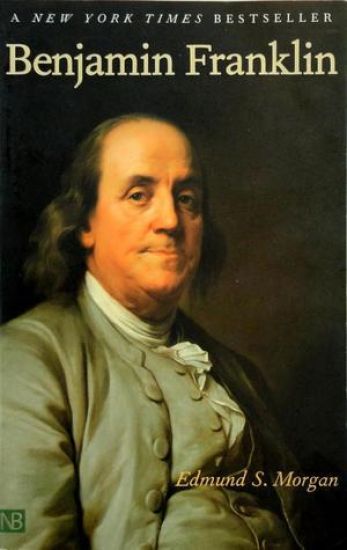
• A New York Times Bestseller • A Finalist for a National Book Critics Circle Award in Biography Benjamin Franklin is perhaps the most remarkable figure in American history; the greatest statesman of his age, he played a pivotal role in the formation of the American republic. He was also a pioneering scientist, a bestselling author, the country’s first postmaster general, a printer, a bon vivant, a diplomat, a ladies’ man, and a moralist--and the most prominent celebrity of the eighteenth century. Franklin was, however, a man of vast contradictions, as Edmund Morgan demonstrates in this brilliant biography. Written by one of our greatest historians, Benjamin Franklin offers a provocative portrait of America’s most extraordinary patriot.

The Papers of Benjamin Franklin is a collaborative undertaking by a team of scholars at Yale University to collect, edit, and publish all of the writings and papers of one of America's most remarkable founding fathers and indeed one of the most extraordinary people this nation has ever produced.To celebrate the 300th anniversary of Benjamin Franklin's birth, Yale University Press is offering all currently available volumes (1 through 37) of The Papers of Benjamin Franklin at the special price of $2,450 — a 30% savings from $3,515, the price of the set when volumes are purchased individually. This special offer will only be available until January 17, 2007.
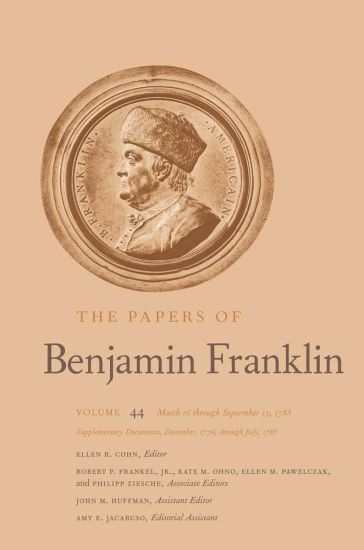
This volume in the venerable Papers of Benjamin Franklin covers March 16 through September 12, 1785, Franklin’s final days as minister to France and his voyage home This volume covers Franklin’s final months as minister to France and his voyage back to America. He received his long-awaited permission from Congress to return home; accepted the king’s parting gift of a miniature portrait surrounded by diamonds; settled his accounts; and arranged passage for himself and his two grandsons on a ship bound from England to Philadelphia. Franklin instructed the French government on the culinary uses of maize and wrote a lengthy “eye-witness” account of China that includes directions for making tofu. His last public act in France was signing the Prussian-American Treaty of Commerce, which contained three unprecedented articles: the two he wrote in 1782 guaranteeing protections during wartime for noncombatants, and a third guaranteeing humane treatment for prisoners of war. On the English coast, Franklin met with his Loyalist son William and witnessed William’s signing over his American property to his son William Temple Franklin. Aboard the London Packet, Franklin wrote three scientific papers, including the copiously illustrated “Maritime Observations.” His original line drawings are reproduced here for the first time. The volume ends with an appendix containing supplementary documents from the French mission.
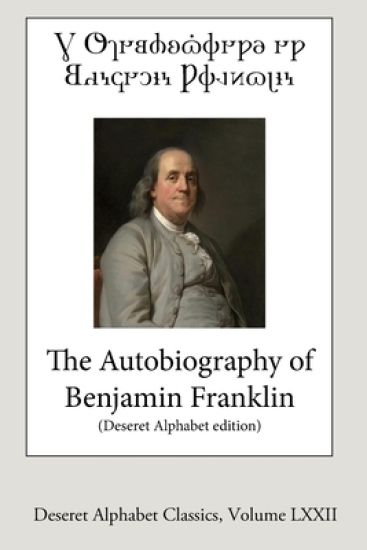
The Autobiography of Benjamin Franklin (Deseret Alphabet edition)
Benjamin Franklin
Lulu.com
2019
nidottu
Benjamin Franklin (1705/1706-1790) was an American polymath and politician. He is is among the most important of America's Founding Fathers. Franklin was the first American scientist to be treated seriously by Europeans and becamea a Fellow of the Royal Society in 1756. His inventions and civic contributions are innumerable. Franklin made his fortune as a printer and newspaper publisher, but then used it to benefit the people at large.Franklin's Autobiography is a compilation of four documents written between 1771 and his death. It covers his life through 1757. Famous for its easy-going style, it is among the most remarkable rags-to-riches stories in all literature. Humble and honest, it recounts the hard work, determination, and continual self-improvement that made his success possible.This book is in the Deseret Alphabet, a phonetic alphabet for writing English developed in the mid-19th century at the University of Deseret (now the University of Utah).
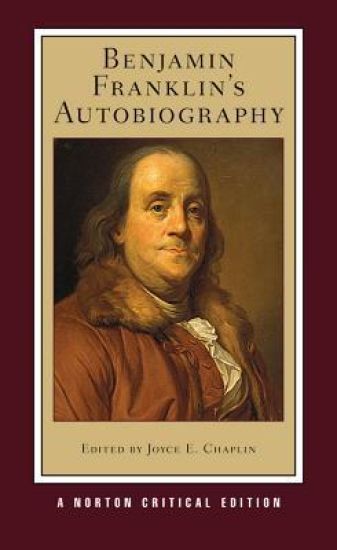
Written during the most eventful years of Benjamin Franklin's life (1771–90), the Autobiography is one of the most influential memoirs in history. This newly edited Norton Critical Edition includes an introduction that explains the history of the Autobiography within the larger history of the life-writing genre as well as within the history of celebrity. The text is accompanied by new and expanded explanatory annotations and by a map, an illustration, and six facsimiles. “Contexts” presents a broader view of Franklin’s life with a journal entry from a 1726 voyage, correspondence, a Poor Richard piece on ambition and fame, Franklin’s views on self-improvement, and his last will (and codicil). “Criticism” draws on a wealth of material that reflects both the wide range of Franklin’s achievements and the global impact of his life and memoirs. New international voices in “Contemporary Opinions” include Immanuel Kant, Honoré Gabriel Riqueti, Comte de Mirabeau, José Antonio de Alzate y Ramírez, and José Francisco Correia da Serra. “Nineteenth-Century Opinions” includes Humphry Davy on Franklin’s discovery of electricity as well as Empress Shoken of Japan’s Franklin-inspired poem. Finally, “Modern Opinions” reprints important pieces: I. B. Cohen on Franklin and the Autobiography's importance to science; Michael Warner’s theoretical interpretation of the practices of writing and printing and what they tell us about Franklin; and Peter Stallybrass’s insightful and engaging history-of-the-book perspective on Franklin’s writing generally and the Autobiography specifically. A Chronology of Franklin’s life, a Selected Bibliography, and an Index are also included.
Known for his influential role in the debates that established the founding documents of the United States, Benjamin Franklin was not only an astute politician, but also an Atlantic citizen whose commitment to the American cause was informed by years spent in England and France. The life of this iconic founder provides an ideal opportunity for students to take a closer look at eighteenth century colonial society and the contested formation of the early American nation.In this carefully contextualized account, Nathan R. Kozuskanich considers the many facets of Franklin’s private and public lives, and shows how Franklin grappled with issues that still concern us today: the right to bear arms, the legacy of slavery, and the nature of American democracy. In a concise narrative bolstered by supporting primary documents, Benjamin Franklin: American Founder, Atlantic Citizen introduces students to the world of the burgeoning United States and enables them to understand the journey from imperial colonies to an independent nation dedicated to the premise that all men are created equal.
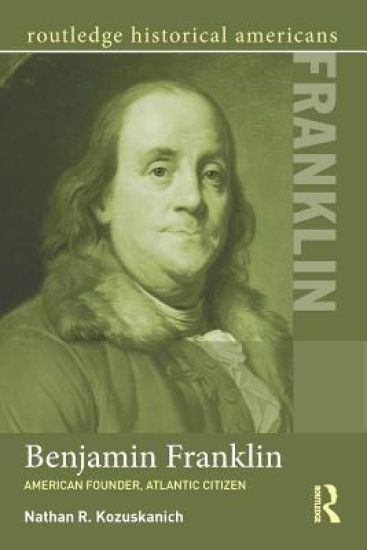
Known for his influential role in the debates that established the founding documents of the United States, Benjamin Franklin was not only an astute politician, but also an Atlantic citizen whose commitment to the American cause was informed by years spent in England and France. The life of this iconic founder provides an ideal opportunity for students to take a closer look at eighteenth century colonial society and the contested formation of the early American nation.In this carefully contextualized account, Nathan R. Kozuskanich considers the many facets of Franklin’s private and public lives, and shows how Franklin grappled with issues that still concern us today: the right to bear arms, the legacy of slavery, and the nature of American democracy. In a concise narrative bolstered by supporting primary documents, Benjamin Franklin: American Founder, Atlantic Citizen introduces students to the world of the burgeoning United States and enables them to understand the journey from imperial colonies to an independent nation dedicated to the premise that all men are created equal.
One of the most popular works of American literature, this charming self-portrait has been translated into nearly every language. It covers Franklin's life up to his prewar stay in London as representative of the Pennsylvania Assembly, including his boyhood years, work as a printer, experiments with electricity, political career, much more.