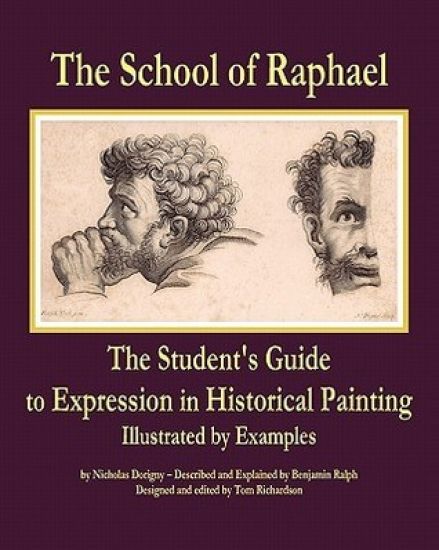
The 18th century was a wealth of knowledge, exploration and rapidly growing technology and expanding record-keeping made possible by advances in the printing press. In its determination to preserve the century of revolution, Gale initiated a revolution of its own: digitization of epic proportions to preserve these invaluable works in the largest archive of its kind. Now for the first time these high-quality digital copies of original 18th century manuscripts are available in print, making them highly accessible to libraries, undergraduate students, and independent scholars.The eighteenth-century fascination with Greek and Roman antiquity followed the systematic excavation of the ruins at Pompeii and Herculaneum in southern Italy; and after 1750 a neoclassical style dominated all artistic fields. The titles here trace developments in mostly English-language works on painting, sculpture, architecture, music, theater, and other disciplines. Instructional works on musical instruments, catalogs of art objects, comic operas, and more are also included. ]+++The below data was compiled from various identification fields in the bibliographic record of this title. This data is provided as an additional tool in helping to insure edition identification: ++++British LibraryT082625London: printed for J. Boydell, Engraver, 1764. 43, 1]p.; 8
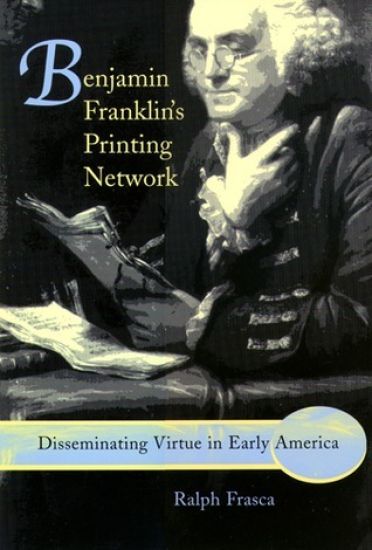
In ""Benjamin Franklin's Printing Network"", Ralph Frasca explores Franklin's partnerships and business relationships with printers and their impact on the early American press. Besides analyzing the structure of the network, Frasca addresses two equally important questions: How did Franklin establish this informal group? And what were his motivations for doing so? This network grew to be the most prominent and geographically extensive of the early American printing organizations, lasting from the 1720s until the 1790s. Stretching from New England to the West Indies, it comprised more than two dozen members, including such memorable characters as the Job-like James Parker, the cunning Francis Childs, the malcontent Benjamin Mecom, the vengeful Benjamin Franklin Bache, the steadfast David Hall, and the deranged Anthony Armbruster. Franklin's network altered practices in both the European and American colonial printing trades by providing capital and political influence to set up workers as partners and associates. As an economic entity and a source of mutual support, the network was integral to the success of many eighteenth-century printers, as well as to the development of American journalism. Frasca argues that Franklin's principal motivation in establishing the network was his altruistic desire to assist Americans in their efforts to be virtuous. Using a variety of sources, Frasca shows that Franklin viewed virtuousness as a path to personal happiness and social utility. Franklin intended for his network of printers to teach virtue and encourage its adoption. The network would disseminate his moral truths to a mass audience, and this would in turn further his own political, economic, and moral ambitions. By exploring Franklin's printing network and addressing these questions, this work fills a substantial void in the historical treatment of Franklin's life. Amateur historians and professional scholars alike will welcome Frasca's clear and capable treatment of this subject.
"Playing at Chess is the most ancient and the most universal game among men, for its original is beyond the memory of history." Benjamin Franklin penned these words as an introduction to his famous essay "The Morals of Chess." Franklin's approach to the game was in distinct contrast to his predecessors, who seriously advocated all the subtle treacheries of the art of poor sportsmanship with the sole end of attaining victory. To Franklin, however, the game of chess was not mere idle amusement but a sport reflective of life itself-"for life is a kind of chess, in which we have often points to gain and competitors or adversaries to contend with"-which requires the utilization of all the finest mental and moral qualities of which man is capable. This volume reproduces Franklin's celebrated essay and includes an analysis of everything Franklin ever had to say about chess. The second part of the book contains an extensive bibliography of chess in America to the year 1859. The two sections of the volume combine to form an essential sourcebook for the historian of American chess.
""Whale Ships and Whaling Scenes as Portrayed by Benjamin Russell"" is a book written by Allan Forbes that explores the life and work of Benjamin Russell, a prolific artist of the 19th century who specialized in depicting the whaling industry. The book is filled with stunning reproductions of Russell's artwork, including sketches, watercolors, and oil paintings that capture the drama and danger of life at sea during the golden age of whaling. The book also features historical context and background information on the whaling industry, as well as biographical information on Russell himself. This book is a must-read for anyone interested in maritime history, art, or the natural world.Presenting Reproductions In Color Of The Paintings Of The Foremost Artist In That Field.This scarce antiquarian book is a facsimile reprint of the old original and may contain some imperfections such as library marks and notations. Because we believe this work is culturally important, we have made it available as part of our commitment for protecting, preserving, and promoting the world's literature in affordable, high quality, modern editions, that are true to their original work.
""The Contribution of Judge Irving Lehman to the Development of the Law: The Benjamin N. Cardozo Lectures"" is a book written by Edmund H. Lewis. The book is a collection of lectures delivered by Lewis at the Benjamin N. Cardozo School of Law in New York. The lectures focus on the life and work of Judge Irving Lehman, who served as the Chief Judge of the New York Court of Appeals from 1939 to 1952. The book provides a comprehensive analysis of Lehman's contribution to the development of the law, particularly in the areas of civil rights, labor law, and criminal law. The author discusses Lehman's judicial philosophy, his approach to interpreting the law, and his impact on the legal profession. The book is divided into six chapters, each of which covers a different aspect of Lehman's life and work. The first chapter provides an overview of Lehman's early life and education. The second chapter focuses on his career as a lawyer and his appointment to the New York Court of Appeals. The third chapter discusses Lehman's role in the development of civil rights law in New York. The fourth chapter analyzes Lehman's contributions to labor law, including his support for collective bargaining and his efforts to protect workers' rights. The fifth chapter examines Lehman's role in criminal law, including his efforts to reform the criminal justice system and his support for the rights of defendants. The final chapter of the book provides a summary of Lehman's legacy and his impact on the legal profession. Overall, ""The Contribution of Judge Irving Lehman to the Development of the Law: The Benjamin N. Cardozo Lectures"" is a valuable resource for anyone interested in the history of the legal profession and the development of the law in the United States.This scarce antiquarian book is a facsimile reprint of the old original and may contain some imperfections such as library marks and notations. Because we believe this work is culturally important, we have made it available as part of our commitment for protecting, preserving, and promoting the world's literature in affordable, high quality, modern editions, that are true to their original work.
This authoritative classic tells the story of the Illinois village on the Sangamon River in which Abraham Lincoln lived from 1831 to 1837. Benjamin P. Thomas’s three-part examination of the town often referred to as Lincoln’s “alma mater” features the founding and early history of New Salem, Lincoln’s impact on the village and its effect on him, and the story of the Lincoln legend and the reconstruction of the town. Lincoln’s New Salem highlights the young Lincoln’s arrival, his important wrestling match with Jack Armstrong, his self-education, his brief military career in the Black Hawk War, his experience as a postmaster largely indifferent to postal regulations, his financial woes with the general store, and his election to the state legislature. Making the point that New Salem was where Lincoln acquired faith in himself and in other people, Thomas introduces us to those who created New Salem and who knew, influenced, and befriended Lincoln, delving into his relationships with his neighbors and the loyal friends who often came to his aid. This colorful history closes with a discussion of the Lincoln legend, which prompted the gradual realization that New Salem was not a dismal mire from which Abraham Lincoln had to extricate himself but was, in fact, an energizing force. This realization led to research and finally to the restoration of New Salem, which began in 1932. The preservation of the village remains vitally important. First published in 1934 and revised by the author in 1954, this reissue includes a previously unpublished piece about New Salem and Illinois governor Henry Horner by Benjamin Thomas, a new introduction by Kenneth J. Winkle, and new photos by Robert Shaw, in addition to original drawings by Romaine Proctor and a 1971 foreword by Ralph G. Newman.
Thomas tells the story of the village where Abraham Lincoln lived from 1831 to 1837. His three-part examination of the village often referred to as Lincoln’s "Alma Mater" features the founding and early history of New Salem, Lincoln’s impact on the village and its effect on him, and the story of the Lincoln legend and the reconstruction of the town.Thomas argues convincingly that New Salem was the town where Lincoln acquired faith in himself, faith in people. At 22 the future president drifted into town seeking to become a blacksmith. Thomas introduces us to the people who created New Salem and who knew, influenced, and befriended Lincoln.Thomas highlights Lincoln’s arrival, his relationships with his neighbors, his important wrestling match with Jack Armstrong, his self-education, his quiet career as an Indian fighter, his experience as a postmaster largely indifferent to postal regulations, his financial woes as a businessman, his loyal friends who often came to his aid, and his election to the legislature.This colorful history closes with a discussion of the Lincoln legend. The truth of the stories is unimportant. What matters is that the growing Lincoln legend prompted the gradual realization that New Salem was not a dismal mire from which President Lincoln had had to extricate himself but was, in fact, an energizing force. This realization led to research and finally to the restoration of New Salem, which began in 1932.
Mark Pauly; Flaura Winston; Mary Naylor; Kevin Volpp; Lawton Robert Burns; Ralph Muller; David Asch; Rachel Werner; Bimal Desai; Krisda Chaiyachati; Benjamin Chartock
Consumers, public officials, and even managers of health care and insurance are unhappy about care quality, access, and costs. This book shows that is because efforts to do something about these problems often rely on hope or conjecture, not rigorous evidence of effectiveness. In this book, experts in the field separate the speculative from the proven with regard to how care is rendered, how patients can be in control, how providers should be paid, and how disparities can be reduced – and they also identify the issues for which evidence is currently missing. It provides an antidote to frustration and a clear-eyed guide for forward progress, helping health care and insurance innovators make better decisions on deciding whether to go ahead now based on current evidence, to seek and wait for additional evidence, or to move on to different ideas. It will be useful to practitioners in hospital systems, medical groups, and insurance organizations and can also be used in executive and MBA teaching.
Mark Pauly; Flaura Winston; Mary Naylor; Kevin Volpp; Lawton Robert Burns; Ralph Muller; David Asch; Rachel Werner; Bimal Desai; Krisda Chaiyachati; Benjamin Chartock
Consumers, public officials, and even managers of health care and insurance are unhappy about care quality, access, and costs. This book shows that is because efforts to do something about these problems often rely on hope or conjecture, not rigorous evidence of effectiveness. In this book, experts in the field separate the speculative from the proven with regard to how care is rendered, how patients can be in control, how providers should be paid, and how disparities can be reduced – and they also identify the issues for which evidence is currently missing. It provides an antidote to frustration and a clear-eyed guide for forward progress, helping health care and insurance innovators make better decisions on deciding whether to go ahead now based on current evidence, to seek and wait for additional evidence, or to move on to different ideas. It will be useful to practitioners in hospital systems, medical groups, and insurance organizations and can also be used in executive and MBA teaching.

![A Description of the Cartons [Sic] of Raphael Urbin, in the Queen's Palace. by Benjamin Ralph. the Second Edition.](/covers/9781140983620.jpg)
![A Description of the Cartons [sic] of Raphael Urbin, in the Queen's Palace. By Benjamin Ralph. The Second Edition](/covers/9781379611776.jpg)