

Kirjahaku
Etsi kirjoja tekijän nimen, kirjan nimen tai ISBN:n perusteella.
1000 tulosta hakusanalla Benjamin Rush
Essays, Literary, Moral & Philosophical by Benjamin Rush, M.D. and Professor of the Institutes of Medicine and Clinical Practice in the University of Pennsylvania.
Benjamin Rush
Gale Ecco, Print Editions
2010
pokkari
The New Method of Inoculating for the Small Pox; Delivered in a Lecture in the University of Philadelphia, Feb. 20th, 1781. by Benjamin Rush, M.D.
Benjamin Rush
Gale Ecco, Print Editions
2010
pokkari
An Inquiry Into the Effects of Spirituous Liquors Upon the Human Body, and Their Influence Upon the Happiness of Society. by Benjamin Rush, ...
Benjamin Rush
Gale Ecco, Print Editions
2010
pokkari

An Enquiry Into the Effects of Public Punishments Upon Criminals, and Upon Society. Read in the Society for Promoting Political Enquiries, ... March 9th, 1787. by Benjamin Rush, M.D. ...
Benjamin Rush
Gale Ecco, Print Editions
2010
pokkari

An Account of the Sugar Maple-Tree, of the United States, and of the Methods of Obtaining Sugar from It, ... in a Letter to Thomas Jefferson, ... by Benjamin Rush, M.D. ...
Benjamin Rush
Gale Ecco, Print Editions
2010
pokkari

An Oration, Delivered Before the American Philosophical Society, Held in Philadelphia on the 27th of February, 1786; Containing an Enquiry Into the Influence of Physical Causes Upon the Moral Faculty. by Benjamin Rush, ... the Second Edition.
Benjamin Rush
Gale Ecco, Print Editions
2010
pokkari
Three Lectures Upon Animal Life, Delivered in the University of Pennsylvania, by Benjamin Rush, M.D. Professor of the Institutes of Medicine, and of C
Benjamin Rush
Gale Ecco, Print Editions
2010
nidottu
Essays, Literary, Moral & Philosophical by Benjamin Rush, M.D. and Professor of the Institutes of Medicine and Clinical Practice in the University of Pennsylvania
Benjamin Rush
Gale Ecco, Print Editions
2018
sidottu
The 18th century was a wealth of knowledge, exploration and rapidly growing technology and expanding record-keeping made possible by advances in the printing press. In its determination to preserve the century of revolution, Gale initiated a revolution of its own: digitization of epic proportions to preserve these invaluable works in the largest archive of its kind. Now for the first time these high-quality digital copies of original 18th century manuscripts are available in print, making them highly accessible to libraries, undergraduate students, and independent scholars.This collection reveals the history of English common law and Empire law in a vastly changing world of British expansion. Dominating the legal field is the Commentaries of the Law of England by Sir William Blackstone, which first appeared in 1765. Reference works such as almanacs and catalogues continue to educate us by revealing the day-to-day workings of society.++++The below data was compiled from various identification fields in the bibliographic record of this title. This data is provided as an additional tool in helping to insure edition identification: ++++British LibraryW032045Dedicated to Jacob Rush.Philadelphia: Printed by Thomas & Samuel F. Bradford, no. 8, South Front Street, 1798. 8], 378 p.; 8
The new Method of Inoculating for the Small pox; Delivered in a Lecture in the University of Philadelphia, Feb. 20th, 1781. By Benjamin Rush, M.D
Benjamin Rush
Gale Ecco, Print Editions
2018
sidottu
The 18th century was a wealth of knowledge, exploration and rapidly growing technology and expanding record-keeping made possible by advances in the printing press. In its determination to preserve the century of revolution, Gale initiated a revolution of its own: digitization of epic proportions to preserve these invaluable works in the largest archive of its kind. Now for the first time these high-quality digital copies of original 18th century manuscripts are available in print, making them highly accessible to libraries, undergraduate students, and independent scholars.Medical theory and practice of the 1700s developed rapidly, as is evidenced by the extensive collection, which includes descriptions of diseases, their conditions, and treatments. Books on science and technology, agriculture, military technology, natural philosophy, even cookbooks, are all contained here.++++The below data was compiled from various identification fields in the bibliographic record of this title. This data is provided as an additional tool in helping to insure edition identification: ++++British LibraryW017985Philadelphia: Printed by Charles Cist, in Market-Street, M.DCC.LXXXI. 1781]. 28p.; 8
An Oration, Delivered Before the American Philosophical Society, Held in Philadelphia on the 27th of February, 1786; Containing an Enquiry Into the Influence of Physical Causes Upon the Moral Faculty. By Benjamin Rush, ... The Second Edition
Benjamin Rush
Gale Ecco, Print Editions
2018
sidottu
The 18th century was a wealth of knowledge, exploration and rapidly growing technology and expanding record-keeping made possible by advances in the printing press. In its determination to preserve the century of revolution, Gale initiated a revolution of its own: digitization of epic proportions to preserve these invaluable works in the largest archive of its kind. Now for the first time these high-quality digital copies of original 18th century manuscripts are available in print, making them highly accessible to libraries, undergraduate students, and independent scholars.Medical theory and practice of the 1700s developed rapidly, as is evidenced by the extensive collection, which includes descriptions of diseases, their conditions, and treatments. Books on science and technology, agriculture, military technology, natural philosophy, even cookbooks, are all contained here.++++The below data was compiled from various identification fields in the bibliographic record of this title. This data is provided as an additional tool in helping to insure edition identification: ++++British LibraryT004095 London]: Philadelphia, printed: London, reprinted; for C. Dilly, 1786. 8],71, 1]p.; 8
An Account of the Sugar Maple-tree, of the United States, and of the Methods of Obtaining Sugar From it, ... in a Letter to Thomas Jefferson, ... By Benjamin Rush, M.D.
Benjamin Rush
Gale Ecco, Print Editions
2018
sidottu
The 18th century was a wealth of knowledge, exploration and rapidly growing technology and expanding record-keeping made possible by advances in the printing press. In its determination to preserve the century of revolution, Gale initiated a revolution of its own: digitization of epic proportions to preserve these invaluable works in the largest archive of its kind. Now for the first time these high-quality digital copies of original 18th century manuscripts are available in print, making them highly accessible to libraries, undergraduate students, and independent scholars.Medical theory and practice of the 1700s developed rapidly, as is evidenced by the extensive collection, which includes descriptions of diseases, their conditions, and treatments. Books on science and technology, agriculture, military technology, natural philosophy, even cookbooks, are all contained here.++++The below data was compiled from various identification fields in the bibliographic record of this title. This data is provided as an additional tool in helping to insure edition identification: ++++British LibraryW042788Philadelphia: printed by R. Aitken & Son, for a Society of gentlemen, 1792. 16p.; 8

An Enquiry Into the Effects of Public Punishments Upon Criminals, and Upon Society. Read in the Society for Promoting Political Enquiries, ... March 9th, 1787. By Benjamin Rush, M.D.
Benjamin Rush
Gale Ecco, Print Editions
2018
sidottu
The 18th century was a wealth of knowledge, exploration and rapidly growing technology and expanding record-keeping made possible by advances in the printing press. In its determination to preserve the century of revolution, Gale initiated a revolution of its own: digitization of epic proportions to preserve these invaluable works in the largest archive of its kind. Now for the first time these high-quality digital copies of original 18th century manuscripts are available in print, making them highly accessible to libraries, undergraduate students, and independent scholars.Delve into what it was like to live during the eighteenth century by reading the first-hand accounts of everyday people, including city dwellers and farmers, businessmen and bankers, artisans and merchants, artists and their patrons, politicians and their constituents. Original texts make the American, French, and Industrial revolutions vividly contemporary.++++The below data was compiled from various identification fields in the bibliographic record of this title. This data is provided as an additional tool in helping to insure edition identification: ++++Harvard University Houghton LibraryN006547With a half-title and a final advertisement leaf. P.vii is misnumbered vi. London]: Philadelphia, printed: London, reprinted for C. Dilly, 1787. vi(i.e.vii, 1]),37, 3]p.; 8
Medical Inquiries and Observations. To Which is Added an Appendix, Containing Observations on the Duties of a Physician, and the Methods of Improving Medicine. By Benjamin Rush, ... The Third Edition. of 1; Volume 1
Benjamin Rush
Gale Ecco, Print Editions
2018
sidottu
The 18th century was a wealth of knowledge, exploration and rapidly growing technology and expanding record-keeping made possible by advances in the printing press. In its determination to preserve the century of revolution, Gale initiated a revolution of its own: digitization of epic proportions to preserve these invaluable works in the largest archive of its kind. Now for the first time these high-quality digital copies of original 18th century manuscripts are available in print, making them highly accessible to libraries, undergraduate students, and independent scholars.Medical theory and practice of the 1700s developed rapidly, as is evidenced by the extensive collection, which includes descriptions of diseases, their conditions, and treatments. Books on science and technology, agriculture, military technology, natural philosophy, even cookbooks, are all contained here.++++The below data was compiled from various identification fields in the bibliographic record of this title. This data is provided as an additional tool in helping to insure edition identification: ++++National Library of MedicineN003717With a half-title. London]: Philadelphia, printed. London, reprinted for C. Dilly, 1794. 261, 1]p.; 8
Three Lectures Upon Animal Life, Delivered in the University of Pennsylvania, by Benjamin Rush, M.D. Professor of the Institutes of Medicine, and of Clinical Practice in the Said University. Published at the Request of his Pupils
Benjamin Rush
Gale Ecco, Print Editions
2018
sidottu
The 18th century was a wealth of knowledge, exploration and rapidly growing technology and expanding record-keeping made possible by advances in the printing press. In its determination to preserve the century of revolution, Gale initiated a revolution of its own: digitization of epic proportions to preserve these invaluable works in the largest archive of its kind. Now for the first time these high-quality digital copies of original 18th century manuscripts are available in print, making them highly accessible to libraries, undergraduate students, and independent scholars.Medical theory and practice of the 1700s developed rapidly, as is evidenced by the extensive collection, which includes descriptions of diseases, their conditions, and treatments. Books on science and technology, agriculture, military technology, natural philosophy, even cookbooks, are all contained here.++++The below data was compiled from various identification fields in the bibliographic record of this title. This data is provided as an additional tool in helping to insure edition identification: ++++Cambridge University LibraryW029542Half-title: Lectures upon animal life. Running title: Lectures on animal life.Philadelphia: Printed by Budd and Bartram, for Thomas Dobson, at the stone house, no 41, South Second Street, 1799. viii, 84 p.;; 8

A Memorial Containing Travels Through Life Or Sundry Incidents In The Life Of Dr. Benjamin Rush (1905)
Benjamin Rush
Kessinger Publishing
2008
pokkari
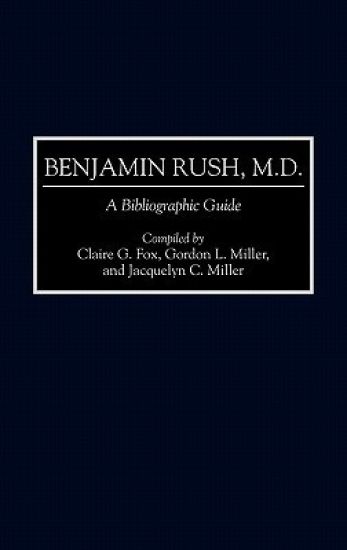
Benjamin Rush (1746-1813) exerted a remarkably wide-ranging influence on the medical, political, and social life of the emerging American nation. He fulfilled the multiple roles of first American professor of chemistry, signer of the Declaration of Independence, foremost American physician, father of American psychiatry, pioneer abolitionist, educator, advocate of temperance, and proponent of prison reform. The success of these endeavors rested largely on the strength and size of his literary output, which was unparalleled by any of the other founding fathers. This bibliographic guide is the only work to identify all of Rush's published writings as well as hundreds of writings about him.The Introduction surveys Rush's published writings on a variety of topics and places them in their late 18th and early 19th century context. Part one provides a comprehensive chronological listing of Rush's published works, including articles, pamphlets, and books in all their editions. Part one also includes comments from Rush scholars on the nature and significance of many of the works, along with references to contemporary reviews. Extensive cross-references show the relationship between documents. Aids to locating the documents in their original, reprinted, and microtext forms are also provided. Part two lists over 500 publications about Rush and his role in American history. The work includes a title and general index to part one and an author and general index to part two.

Benjamin Rush's Lectures on the Mind: Memoirs, American Philosophical Society (Vol. 144)
Eric T. Carlson; Jeffrey L. Wollock; Patricia S. Noel
American Philosophical Society Press
1981
sidottu
This volume contains the lectures of Dr. Benjamin Rush on physiology, which deal with the mind. Regarded as "the father of American psychiatry," for over 30 years Dr. Rush treated insane patients at the Pennsylvania Hospital in Philadelphia. He published the first American book on psychiatry, "Medical Inquiries and Observations Upon the Disease of the Mind," in 1812. Contents of this volume: General Introduction; The Syllabus; The Introductory Lecture; Introduction to the Lectures on Animal Life; Benjamin Rush Lectures on the Mind; Introduction to the Mind; Introduction to Sleep and Dreams; and Epilogue.