Kirjojen hintavertailu. Mukana 12 390 323 kirjaa ja 12 kauppaa.

Kirjahaku

Etsi kirjoja tekijän nimen, kirjan nimen tai ISBN:n perusteella.

1000 tulosta hakusanalla Benjamin Walters

What Millionaire CEOs Will Never Tell You About Productivity and Motivation: 15 Productivity and Motivation Hacks You Need to Know to be Successful
What if I told you that you can find your dream employee easily and increase your workers' productivity levels by 23%? As an employer, you know that finding great employees is a tough job. You are always working, and your work days are getting longer and longer. You need a worker to do the job, but no one seems to fit the profile you want. All potential employees have certain strengths and weaknesses, but you're unsure which employee will be the perfect fit. They all have different accomplishments, ranging from those who have finished their college degree, to those who haven't. Should you select people who have a science degree over those who have an arts degree? How well will they get along with their co-workers? There are so many questions to consider On top of that, how do you increase your workers' productivity ? Will a financial incentive actually boost productivity? Is it better to have extrinsic motivation or intrinsic motivation? What is the motivation psychology you need to know? What are experts saying about this issue? Finally, how do you prepare for the next transformation of work, which includes automation? Is it correct for you to replace your hard-working employee with a machine? How should you manage this transition? In times of new innovation and ever-evolving technology, these questions are more difficult to answer than ever before. But don't worry - once you read this book, you will be prepared. You will be ready. This book will prepare you for the hardest decisions you will have to make to grow your business, and tell you how to motivate your workers. Proof: we gathered statistics from employees whose employers have read this book and from employers who have not read it. Among the former employees, we saw an increase of 13% of job satisfaction and a 23% increase in productivity compared to the control group. So read this book - and become an employer who knows what's happening. So what are you waiting for? Purchase this book to take advantage of this lifetime opportunity and reach financial freedom.

The Future of Free Speech

The Future of Free Speech

Benjamin Walters

Springer International Publishing AG
2023
sidottu
?This book dives headfirst into the contemporary controversy over the limits of free speech. Changing conceptions of what constitutes legitimate harm coupled with the advent of the internet and social media have provided a challenging environment for defining the boundaries of acceptable speech in our contemporary society. This book argues that these problems emerge due to flaws in our free speech framework, leaving the argument for free speech vulnerable to becoming inverted into a justification for censorship. In response, this book argues for a version of free speech based on a framework of toleration. Drawing on the work of the philosopher Rainer Forst, a new justification for free speech is formulated – reflexive freedom of speech – which aims to overcome past issues and justify free speech in a way that is universal, consistent and just.
The Future of Free Speech

The Future of Free Speech

Benjamin Walters

Springer International Publishing AG
2024
nidottu
?This book dives headfirst into the contemporary controversy over the limits of free speech. Changing conceptions of what constitutes legitimate harm coupled with the advent of the internet and social media have provided a challenging environment for defining the boundaries of acceptable speech in our contemporary society. This book argues that these problems emerge due to flaws in our free speech framework, leaving the argument for free speech vulnerable to becoming inverted into a justification for censorship. In response, this book argues for a version of free speech based on a framework of toleration. Drawing on the work of the philosopher Rainer Forst, a new justification for free speech is formulated – reflexive freedom of speech – which aims to overcome past issues and justify free speech in a way that is universal, consistent and just.
Benjamin Franklin and His Gods

Benjamin Franklin and His Gods

Kerry S. Walters

University of Illinois Press
1998
nidottu
Against the religious backdrop of pre- and postcolonial America stands the towering figure--and mind--of Benjamin Franklin. A Renaissance man in a Revolutionary time, Franklin had interests and knowledge not only in religion but in literature, philosophy, politics, publishing, history, and scientific inquiry, among many other disciplines. Kerry S. Walters examines Franklin's search for the Divine using a similar, multifaceted approach--and in so doing has created the first extended treatment of Franklin's religious thought in thirty years. Walters brings the same intellectual range and depth to the understanding of Franklin's beliefs that Franklin brought to his own quest. What emerges from this pilgrimage into the soul of one of America's greatest figures is a very human Benjamin Franklin who grew with the accumulation of knowledge to arrive at a "theistic perspectivism," which provided him with a philosophical explanation for the diversity of religious faiths--and a justification for the liberty of conscience he advocated throughout his life. Benjamin Franklin and His Gods is an original and beautifully challenging spiritual and intellectual biography. Destined to be a classic.
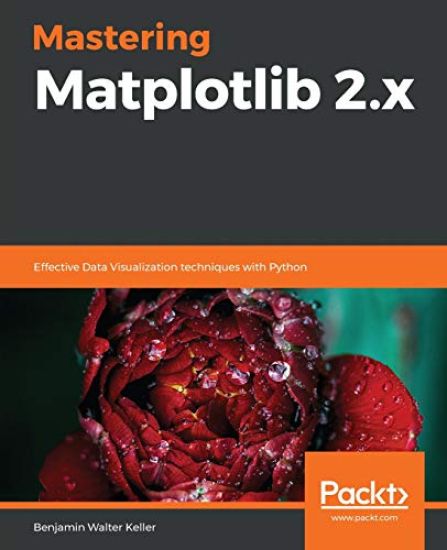
Mastering Matplotlib 2.x

Mastering Matplotlib 2.x

Benjamin Walter Keller

Packt Publishing Limited
2018
nidottu
Understand and build beautiful and advanced plots with Matplotlib and PythonKey FeaturesPractical guide with hands-on examples to design interactive plotsAdvanced techniques to constructing complex plotsExplore 3D plotting and visualization using Jupyter NotebookBook DescriptionIn this book, you’ll get hands-on with customizing your data plots with the help of Matplotlib. You’ll start with customizing plots, making a handful of special-purpose plots, and building 3D plots. You’ll explore non-trivial layouts, Pylab customization, and more about tile configuration. You’ll be able to add text, put lines in plots, and also handle polygons, shapes, and annotations. Non-Cartesian and vector plots are exciting to construct, and you’ll explore them further in this book. You’ll delve into niche plots and visualize ordinal and tabular data. In this book, you’ll be exploring 3D plotting, one of the best features when it comes to 3D data visualization, along with Jupyter Notebook, widgets, and creating movies for enhanced data representation. Geospatial plotting will also be explored. Finally, you’ll learn how to create interactive plots with the help of Jupyter.Learn expert techniques for effective data visualization using Matplotlib 3 and Python with our latest offering -- Matplotlib 3.0 CookbookWhat you will learnDeal with non-trivial and unusual plotsUnderstanding Basemap methodsCustomize and represent data in 3D Construct Non-Cartesian and vector plotsDesign interactive plots using Jupyter NotebookMake movies for enhanced data representationWho this book is forThis book is aimed at individuals who want to explore data visualization techniques. A basic knowledge of Matplotlib and Python is required.
Berlinskoe detstvo na rubezhe vekov
Valter Benjamin pogruzhaetsja v vospominanija o detstve. Trogatelnye zarisovki o vzroslenii na rubezhe vekov ot znamenitogo nemetskogo filosofa. V 1990 godu Valteru Benminu, malchiku iz evrejskoj semi, bylo vsego 8 let. S techeniem zhizni vospominanija o detstve istonchajutsja, stirajutsja. No Benjamin smog zagljanut v prorekhu vremeni i sobrat iz tsvetnykh oskolkov, zapakhov, polutonov i nastroenij chudesnye, nezhnye zarisovki o dorogikh serdtsu godakh. Vospominanija o katanii na konkakh, kollektsii otkrytok, zapakh rozhdestvenskoj elki i shelest knig, kotorye okruzhali ego s samogo detstva, - vse eti kroshechnye fragmenty detstva Valter Benjamin s ljubovju opisyvaet, okutyvaja chitatelja magiej svoikh prichudlivykh, poetichnykh metafor.
Sny i rasskazy

Sny i rasskazy

Benjamin Walter

Nosorog
2025
nidottu
V sbornik "Sny i rasskazy" voshli razroznennye prozaicheskie teksty iz raznykh periodov zhizni Valtera Benjamina. Benjamin izvesten glavnym obrazom kak filosof, no v korpuse ego sochinenij mozhno vydelit gruppu tekstov v osobom podzhanre - eto zapisi snovidenij, pererabotannye v povestvovanija ili filosofskie fragmenty. Vtoruju chast sbornika sostavljajut rasskazy, napisannye esche v studencheskie, a takzhe v bolee zrelye gody. Sny i rasskazy Benjamina priotkryvajut dver v samye glubokie sloi voobrazhenija i delajut ego fantazijnyj mir ponjatnee i blizhe. Erotika, vosprijatie gorodskoj zhizni i iskusstva, o kotorykh Benjamin chasto rassuzhdal s tochki zrenija kritika, v etoj knige pokazany v lichnoj perspektive. Bolshinstvo tekstov publikujutsja na russkom vpervye.Perevod: Anna Glazova
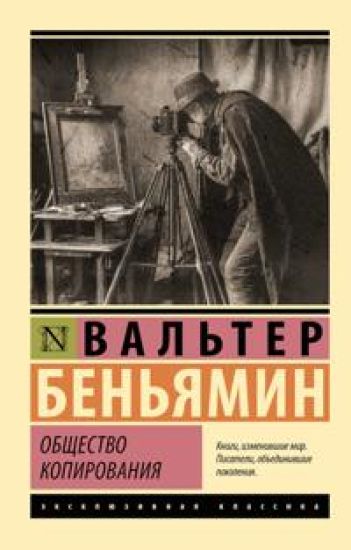
Obschestvo kopirovanija

Obschestvo kopirovanija

Benjamin Walter

Ast
2026
nidottu
V sbornik "Obschestvo kopirovanija" voshli esse i stati, posvjaschennye izucheniju obschestvennykh protsessov, a takzhe poiskam zakonomernostej razvitija kultury. V ocherkakh "Proizvedenie iskusstva v epokhu ego tekhnicheskoj vosproizvodimosti" i "Kratkaja istorija fotografii" rassmatrivaetsja istoricheskij moment, kogda iskusstvo perestaet byt unikalnym i stanovitsja massovym. Povodom k razmyshleniju u Benjamina sluzhit vsjo: ot starykh fotosnimkov do literaturnykh izyskov Frantsa Kafki...
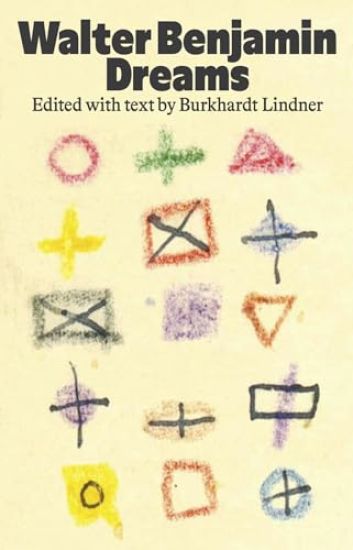
Dreams: Walter Benjamin

Dreams: Walter Benjamin

Walter Benjamin

Bierke Verlag
2025
nidottu
Though published during his lifetime, Walter Benjamin's dream notes and theoretical reflections on dreams are collected here for the first time in a single volume.Dreams highlights a dimension of Benjamin's thinking that was invaluable for his writing and thought but which has thus far received little attention.The first section, "Dream Notes," is a comprehensive and chronological collection of Benjamin's transcriptions of his own dreams and includes unpublished manuscript materials. The second section, "On Perception of Dreams. Awakening and Dream," features his theoretical reflections on dreams, ranging from short aphorisms and longer analyses of dream literature and the history of dreams to the political conception of a "dreaming collective" and its awakening.Editor Burkhardt Lindner describes Benjamin's literary approach to his own dreams in the epilogue and gives a sketch of Benjamin's own definition of the dream sphere, independent of and in contrast to Surrealism and Freud's interpretation of dreams.This pocket-size reader presents Benjamin as both a great dreamerand an important theorist of dreams.
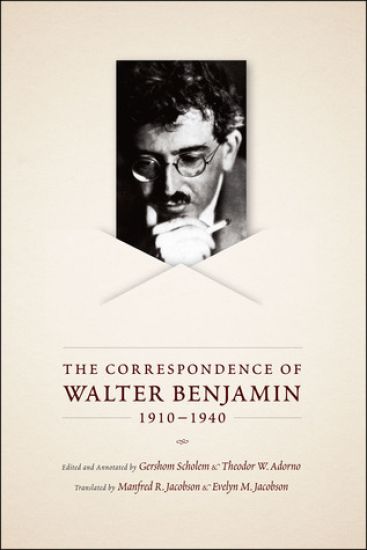
The Correspondence of Walter Benjamin, 1910-1940

The Correspondence of Walter Benjamin, 1910-1940

Walter Benjamin

University of Chicago Press
2012
nidottu
Called "the most important critic of his time" by Hannah Arendt, Walter Benjamin has only become more influential over the years, as his work has assumed a crucial place in current debates over the interactions of art, culture, and meaning. A "natural and extraordinary talent for letter writing was one of the most captivating facets of his nature," writes Gershom Scholem in his foreword to this volume; and Benjamin's correspondence reveals the evolution of some of his most powerful ideas, while also offering an intimate picture of Benjamin himself and the times in which he lived. Writing at length to Scholem and Theodor Adorno, and exchanging letters with Rainer Maria Rilke, Hannah Arendt, Max Brod, and Bertolt Brecht, Benjamin elaborates on his ideas about metaphor and language. He reflects on literary figures from Kafka to Karl Kraus, and expounds his personal attitudes toward such subjects as Marxism and French national character. Providing an indispensable tool for any scholar wrestling with Benjamin's work, "The Correspondence of Walter Benjamin" is a revelatory look at the man behind much of the twentieth century's most significant criticism.
Walter Benjamin

Walter Benjamin

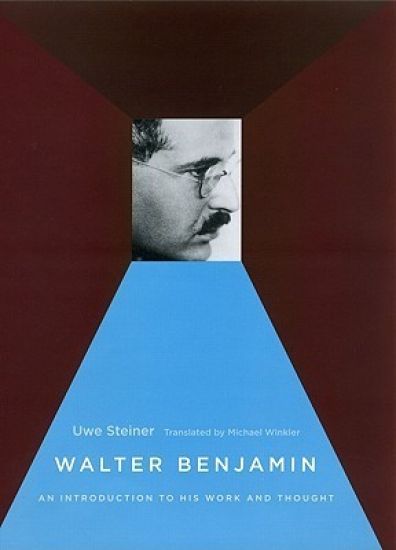
Uwe Steiner

University of Chicago Press
2010
sidottu
Seven decades after his death, German Jewish writer, philosopher, and literary critic Walter Benjamin (1892-1940) continues to fascinate and influence. Here Uwe Steiner offers a comprehensive and sophisticated introduction to the oeuvre of this intriguing theorist. Acknowledged only by a small circle of intellectuals during his lifetime, Benjamin is now a major figure whose work is essential to an understanding of modernity. Steiner traces the development of Benjamin's thought chronologically through his writings on philosophy, literature, history, politics, the media, art, photography, cinema, technology, and theology. "Walter Benjamin" reveals the essential coherence of its subject's thinking while also analyzing the controversial or puzzling facets of Benjamin's work. That coherence, Steiner contends, can best be appreciated by placing Benjamin in his proper context as a member of the German philosophical tradition and a participant in contemporary intellectual debates. As Benjamin's writing attracts more and more readers in the English-speaking world, "Walter Benjamin" will be a valuable guide to this fascinating body of work.
Walter Benjamin

Walter Benjamin

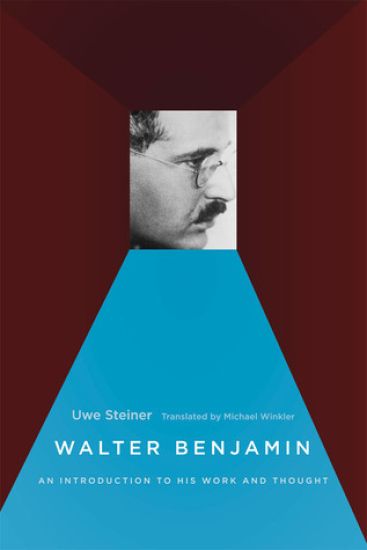
Uwe Steiner

University of Chicago Press
2012
nidottu
Seven decades after his death, German Jewish writer, philosopher, and literary critic Walter Benjamin (1892-1940) continues to fascinate readers and influence academic writing, both stylistically and conceptually. Here Uwe Steiner offers a comprehensive and sophisticated introduction to the oeuvre of this perpetually relevant theorist. Acknowledged only by a small circle of intellectuals during his lifetime, Benjamin is now a major figure whose work is essential to an understanding of modernity. Steiner traces the development of Benjamin's thought chronologically through his writings on philosophy, literature, history, politics, the media, art, photography, cinema, technology, and theology. "Walter Benjamin" reveals the essential coherence of its subject's thinking while also analyzing the controversial or puzzling facets of Benjamin's work. That coherence, Steiner contends, can best be appreciated by placing Benjamin in his proper context as a member of the German philosophical tradition and a participant in contemporary intellectual debates. As Benjamin's writing attracts more and more readers in the English-speaking world, "Walter Benjamin" will be a valuable guide to this fascinating body of work.
Walter Benjamin's Grave

Walter Benjamin's Grave

Michael Taussig

University of Chicago Press
2006
sidottu
In September 1940, Walter Benjamin committed suicide in Port Bou on the Spanish-French border when it appeared that he and his travelling partners would be denied passage into Spain in their attempt to escape the Nazis. In 2002, one of anthropology's - and indeed today's - most distinctive writers, Michael Taussig, visited Benjamin's grave in Port Bou. The result is "Walter Benjamin's Grave," a moving essay about the cemetery, eyewitness accounts of Benjamin's border travails, and the circumstances of his demise. It is the most recent of eight revelatory essays collected in this volume of the same name. "Looking over these essays written over the past decade," writes Taussig, "I think what they share is a love of muted and defective storytelling as a form of analysis. Strange love indeed; love of the wound, love of the last gasp." Although thematically these essays run the gamut - covering the monument and graveyard at Port Bou, discussions of peasant poetry in Colombia, a pact with the devil, the peculiarities of a shaman's body, transgression, the disappearance of the sea, New York City cops, and the relationship between flowers and violence - each shares Taussig's highly individual brand of storytelling, one that depends on a deep appreciation of objects and things as a way to retrieve even deeper philosophical and anthropological meanings. Whether he finds himself in Australia, Colombia, Manhattan, or Spain, in the midst of a book or a beach, whether talking to friends or staring at a monument, Taussig makes clear through these marvelous essays that materialist knowledge offers a crucial alternative to the increasingly abstract, globalized, homogenized, and digitized world we inhabit. Pursuing an adventure that is part ethnography, part autobiography, and part cultural criticism refracted through the object that is Walter Benjamin's grave, Taussig, with this collection, provides his own literary memorial to the twentieth century's greatest cultural critic.
Walter Benjamin's Grave

Walter Benjamin's Grave

Michael Taussig

University of Chicago Press
2006
nidottu
In September 1940, Walter Benjamin committed suicide in Port Bou on the Spanish-French border when it appeared that he and his travelling partners would be denied passage into Spain in their attempt to escape the Nazis. In 2002, one of anthropology's - and indeed today's - most distinctive writers, Michael Taussig, visited Benjamin's grave in Port Bou. The result is "Walter Benjamin's Grave," a moving essay about the cemetery, eyewitness accounts of Benjamin's border travails, and the circumstances of his demise. It is the most recent of eight revelatory essays collected in this volume of the same name. "Looking over these essays written over the past decade," writes Taussig, "I think what they share is a love of muted and defective storytelling as a form of analysis. Strange love indeed; love of the wound, love of the last gasp." Although thematically these essays run the gamut - covering the monument and graveyard at Port Bou, discussions of peasant poetry in Colombia, a pact with the devil, the peculiarities of a shaman's body, transgression, the disappearance of the sea, New York City cops, and the relationship between flowers and violence - each shares Taussig's highly individual brand of storytelling, one that depends on a deep appreciation of objects and things as a way to retrieve even deeper philosophical and anthropological meanings. Whether he finds himself in Australia, Colombia, Manhattan, or Spain, in the midst of a book or a beach, whether talking to friends or staring at a monument, Taussig makes clear through these marvelous essays that materialist knowledge offers a crucial alternative to the increasingly abstract, globalized, homogenized, and digitized world we inhabit. Pursuing an adventure that is part ethnography, part autobiography, and part cultural criticism refracted through the object that is Walter Benjamin's grave, Taussig, with this collection, provides his own literary memorial to the twentieth century's greatest cultural critic.