Kirjojen hintavertailu. Mukana 11 699 587 kirjaa ja 12 kauppaa.

Kirjahaku

Etsi kirjoja tekijän nimen, kirjan nimen tai ISBN:n perusteella.

1000 tulosta hakusanalla Bolle Roberto

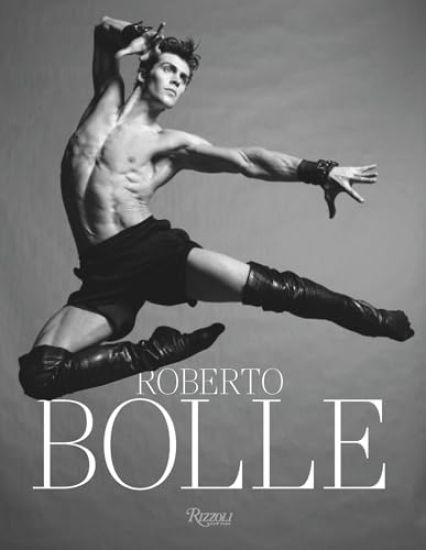
Roberto Bolle

Roberto Bolle

Bolle Roberto

Rizzoli International Publications
2015
sidottu
This lavish photographic volume presents the magnificent Roberto Bolle, principal dancer of the American Ballet Theatre and guest artist at La Scala and the Royal Ballet, in the most beautiful locations throughout Italy, from St. Mark's Square to Agrigento, from the Colosseum to Pompeii. Through the art of dance, Bolle has become one of Italy's cultural ambassadors to the world. This book presents the dancer in some of the country's most iconic locations. Bolle's magnetic charisma has helped him bring dance to a wider audience and draw large and enthusiastic crowds to the ballet. A much-courted media star, Bolle has also appeared in numerous fashion and style magazines, as well as advertising campaigns. This handsome volume is Bolle's photographic love letter to Italy, featuring the country as a gorgeous backdrop to the dancer, in stunning poses which show his artistic beauty and athletic strength.
Roberto Bolle

Roberto Bolle

Roberto Bolle

MONDADORI ELECTA
2025
sidottu
This lavish text presents the magnificent Roberto Bolle, as seen through the lens of major international photographers including Bruce Weber, Annie Leibovitz, Fabrizio Ferri, Douglas Kirkland, Gian Paolo Barbieri, Giovanni Gastel, and Mario Testino, among others. Bolle s own words, alongside those of friends and fans from the worlds of performance, culture, and fashion, tell the story of his long and storied career on the international stage. Bolle s magnetic charisma helped bring dance to a wider audience, drawing large and enthusiastic crowds to the ballet. A much-courted media star, Bolle appeared in numerous fashion and style magazines, as well as advertising campaigns that brought his perfectly trained body to the cause of couture. Through the art of dance, Bolle has truly become one of Italy s cultural ambassadors to the world.
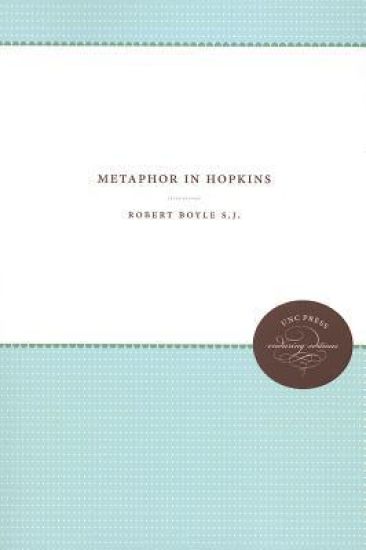
Metaphor in Hopkins

Metaphor in Hopkins

Boyle Robert

The University of North Carolina Press
2012
nidottu
What distinguishes Boyle's book from similar studies is his sensitive judgment as critic and his deep and refined spirituality as a man of God. His approach is uncomplicated. After discussing the nature of metaphor, he reaches a provisional definition that includes rhythm. This rhythm, he believes, has unique metaphorical significance in Hopkins's poetry.Originally published in 1961.A UNC Press Enduring Edition -- UNC Press Enduring Editions use the latest in digital technology to make available again books from our distinguished backlist that were previously out of print. These editions are published unaltered from the original, and are presented in affordable paperback formats, bringing readers both historical and cultural value.
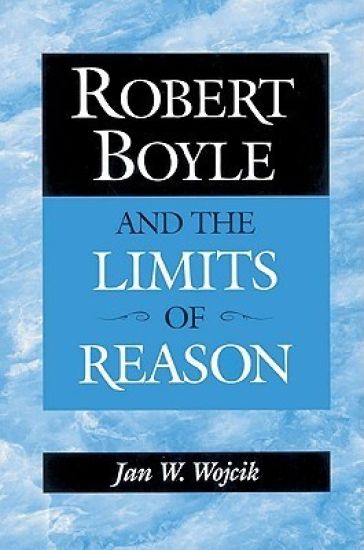
Robert Boyle and the Limits of Reason

Robert Boyle and the Limits of Reason

Jan W. Wojcik

Cambridge University Press
2002
pokkari
In this study of Robert Boyle's epistemology, Jan W. Wojcik reveals the theological context within which Boyle developed his views on reason's limits. After arguing that a correct interpretation of his views on 'things above reason' depends upon reading his works in the context of theological controversies in seventeenth-century England, Professor Wojcik details exactly how Boyle's three specific categories of things which transcend reason - the incomprehensible, the inexplicable, and the unsociable - affected his conception of what a natural philosopher could hope to know. Also covered in detail is Boyle's belief that God had deliberately limited the human intellect in order to reserve a full knowledge of both theology and natural philosophy for the afterlife.
Robert Boyle and the Limits of Reason

Robert Boyle and the Limits of Reason

Jan W. Wojcik

Cambridge University Press
1997
sidottu
In this study of Robert Boyle's epistemology, Jan W. Wojcik reveals the theological context within which Boyle developed his views on reason's limits. After arguing that a correct interpretation of his views on 'things above reason' depends upon reading his works in the context of theological controversies in seventeenth-century England, Professor Wojcik details exactly how Boyle's three specific categories of things which transcend reason - the incomprehensible, the inexplicable, and the unsociable - affected his conception of what a natural philosopher could hope to know. Also covered in detail is Boyle's belief that God had deliberately limited the human intellect in order to reserve a full knowledge of both theology and natural philosophy for the afterlife.
Robert Boyle: A Free Enquiry into the Vulgarly Received Notion of Nature
In this book, published in 1686, the scientist Robert Boyle (1627–91) attacked prevailing notions of the natural world which depicted 'Nature' as a wise, benevolent and purposeful being. Boyle, one of the leading mechanical philosophers of his day, believed that the world was best understood as a vast, impersonal machine, fashioned by an infinite, personal God. In this cogent treatise, he drew on his scientific findings, his knowledge of contemporary medicine and his deep reflection on theological and philosophical issues, arguing that it was inappropriate both theologically and scientifically to speak of Nature as if it had a mind of its own: instead, the only true efficient causes of things were the properties and powers given to matter by God. As such, A Free Enquiry into the Vulgarly Received Notion of Nature represents one of the subtlest statements concerning the philosophical issues raised by the mechanical philosophy to emerge from the period of the scientific revolution.
Robert Boyle: A Free Enquiry into the Vulgarly Received Notion of Nature
In this book, published in 1686, the scientist Robert Boyle (1627–91) attacked prevailing notions of the natural world which depicted ‘Nature’ as a wise, benevolent and purposeful being. Boyle, one of the leading mechanical philosophers of his day, believed that the world was best understood as a vast, impersonal machine, fashioned by an infinite, personal God. In this cogent treatise, he drew on his scientific findings, his knowledge of contemporary medicine and his deep reflection on theological and philosophical issues, arguing that it was inappropriate both theologically and scientifically to speak of Nature as if it had a mind of its own: instead, the only true efficient causes of things were the properties and powers given to matter by God. As such, A Free Enquiry into the Vulgarly Received Notion of Nature represents one of the subtlest statements concerning the philosophical issues raised by the mechanical philosophy to emerge from the period of the scientific revolution.
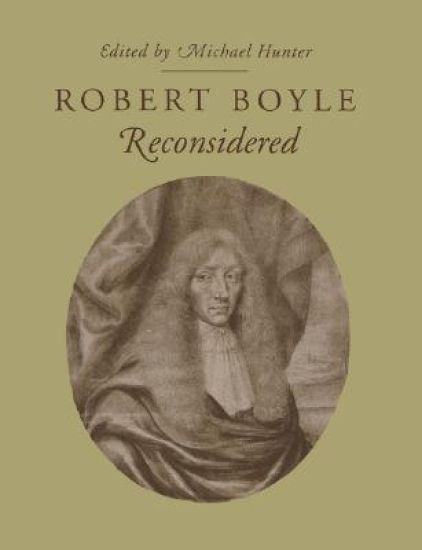
Robert Boyle Reconsidered

Robert Boyle Reconsidered

Cambridge University Press
2003
pokkari
This book presents a new view of Robert Boyle (1627–91), the leading British scientist in the generation before Newton. It comprises a series of essays by scholars from Europe and North America which scrutinise Boyle’s writings on science, philosophy and theology in detail, bringing out the subtlety of his ideas and the complexity of his relationship with his context. Particular attention is given to Boyle’s interest in alchemy and to other facets of his ideas which might initially seen surprising in a leading advocate of the mechanical philosophy. Many of the essays use material from among Boyle’s extensive manuscripts, which have recently been catalogued for the first time. The introduction surveys the state of Boyle studies and deploys the findings of the essays to offer a revaluation of Boyle. The book also includes a bibliography of writings on Boyle since 1940.
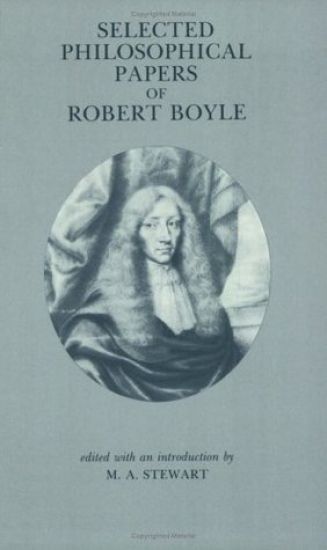
Selected Philosophical Papers of Robert Boyle

Selected Philosophical Papers of Robert Boyle

Robert Boyle

Hackett Publishing Co, Inc
1991
nidottu
"The availability of a paperback version of Boyle's philosophical writings selected by M. A. Stewart will be a real service to teachers, students, and scholars with seventeenth-century interests. The editor has shown excellent judgment in bringing together many of the most important works and printing them, for the most part, in unabridged form. The texts have been edited responsibly with emphasis on readability. . . . Of special interest in connection with Locke and with the reception of Descarte's Corpuscularianism, to students of the Scientific Revolution and of the history of mechanical philosophy, and to those interested in the relations among science, philosophy, and religion. In fact, given the imperfections in and unavailability of the eighteenth-century editions of Boyle’s works, this collection will benefit a wide variety of seventeenth-century scholars." --Gary Hatfield, University of Pennsylvania
Robert Boyle and Seventeenth-century Chemistry

Robert Boyle and Seventeenth-century Chemistry

Marie Boas 1919-2009 Hall

Hassell Street Press
2021
sidottu
This work has been selected by scholars as being culturally important and is part of the knowledge base of civilization as we know it.This work is in the public domain in the United States of America, and possibly other nations. Within the United States, you may freely copy and distribute this work, as no entity (individual or corporate) has a copyright on the body of the work.Scholars believe, and we concur, that this work is important enough to be preserved, reproduced, and made generally available to the public. To ensure a quality reading experience, this work has been proofread and republished using a format that seamlessly blends the original graphical elements with text in an easy-to-read typeface.We appreciate your support of the preservation process, and thank you for being an important part of keeping this knowledge alive and relevant.
Robert Boyle, Founder of Modern Chemistry

Robert Boyle, Founder of Modern Chemistry

Harry Sootin

Hassell Street Press
2021
sidottu
This work has been selected by scholars as being culturally important and is part of the knowledge base of civilization as we know it.This work is in the public domain in the United States of America, and possibly other nations. Within the United States, you may freely copy and distribute this work, as no entity (individual or corporate) has a copyright on the body of the work.Scholars believe, and we concur, that this work is important enough to be preserved, reproduced, and made generally available to the public. To ensure a quality reading experience, this work has been proofread and republished using a format that seamlessly blends the original graphical elements with text in an easy-to-read typeface.We appreciate your support of the preservation process, and thank you for being an important part of keeping this knowledge alive and relevant.