Kirjojen hintavertailu. Mukana 11 627 616 kirjaa ja 12 kauppaa.

Kirjahaku

Etsi kirjoja tekijän nimen, kirjan nimen tai ISBN:n perusteella.

320 tulosta hakusanalla Bonnell Andrew G.

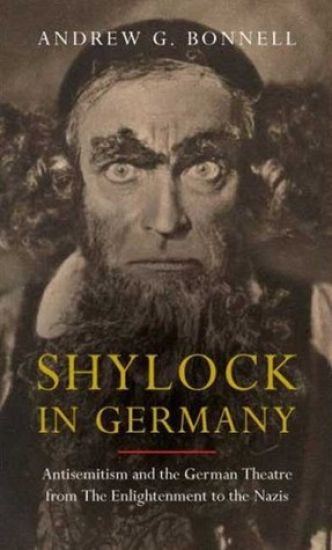
Shylock in Germany

Shylock in Germany

Bonnell Andrew G.

I.B. Tauris
2007
sidottu
How did the catastrophic development of antisemitism in Germany interact with the portrayal of Shylock on the German stage? Here Andrew Bonnell gives us the first cultural history of this tragic character from Shakespeare's "The Merchant of Venice" as performed on the German stage from the late eighteenth century to the end of World War II. In addition to analysing the performances of the most famous German actors in the role from 1777 to 1944, "Shylock in Germany" looks at the rising and falling popularity of "The Merchant of Venice" across Germany in this period, and the extent to which the role's history reflects changes in the situation of Jews in Germany and Austria.It follows the evolution of Shylock in nineteenth century and Imperial Germany, from the formative years of the modern German theatre as a cultural (and civic) institution; through the Weimar Republic, an epoch remembered for innovation and experiment, but also a period marked by an estrangement between an aggressively modernist metropolitan culture and a provincial cultural life which clung more to continuity; and, finally, considers the impact of the Nazi period with its murderous state-ordained antisemitism. Shylock's career in Germany after 1933 was neither as conspicuous nor as unambiguous as one might expect. Using archival research and drawing on much primary source material, Bonnell does not confine the book to theatre history only - but instead uses the changing portrayal of Shylock to analyse German cultural attitudes towards Jews over time.
Robert Michels, Socialism, and Modernity

Robert Michels, Socialism, and Modernity

Andrew G. Bonnell

Oxford University Press
2022
sidottu
Robert Michels (1876-1936) is best known for his 1911 book Political Parties, which is still a standard reference in political science debates. Michels' work sought to prove an "iron law of oligarchy" that governs the organisational evolution of democratic political parties. The work was closely informed by Michels' engagement with the German Social Democratic Party in the early 1900s, his involvement in radical politics in France and Italy in this period, and by his interest in a range of intellectual and social movements - including feminism, nationalism, racial theory, and the emerging disciplines of sociology and political science. Using archival and printed sources hitherto overlooked in work on Michels, this new study contests previous arguments which have sought to explain Michels as a disillusioned adherent of ideas of direct democracy or as an extremist moving from revolutionary syndicalism to fascism. The biographical and intellectual influences on Michels are shown to be more complex, and more transnational, than such schematic explanations have allowed. Andrew Bonnell sheds new light on Michels' relationship with the German Social Democratic Party and on his understanding of his own role as an intellectual in a workers' party. Bonnell also analyses Michels' problematical relationship with revolutionary syndicalism in France and Italy. Michels was connected to a possibly uniquely diverse network of intellectual and political contacts in pre-1914 Europe. This transnational intellectual history illuminates the intellectual worlds in which Michels moved and presents a new interpretation of his shift from the radical left of the spectrum to Italian fascism, an intellectual itinerary which has intrigued many historians.
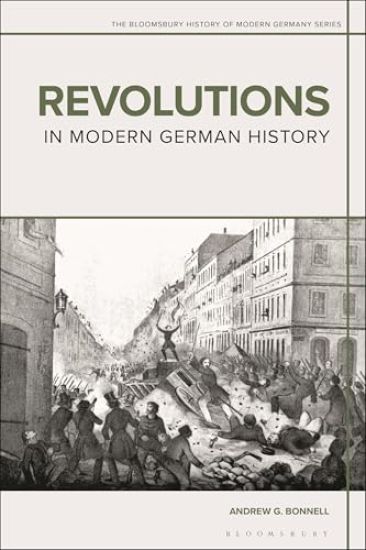
Revolutions in Modern German History

Revolutions in Modern German History

Andrew G. Bonnell

BLOOMSBURY PUBLISHING PLC
2025
sidottu
Andrew G. Bonnell’s innovative survey examines the history of revolution in modern Germany by focusing on key revolutionary developments in the German states. There is coverage of Germany and the French Revolution, the 1848 revolutions, the Industrial Revolution, the 1918-19 revolution, the Nazi ‘revolution’ of 1933, the revolution from above in Eastern Germany 1945-49, and the revolution in East Germany in 1989-90.Revolutions in Modern German History sheds new light on the subject by stressing the continuity of conflicts between revolution and counter-revolution in German history, thereby restoring a sense of the dramatic social conflicts that punctuated the history of the country. It also reveals the significance of wider European and transnational developments of revolutionary and counter-revolutionary movements and events. Bonnell even reconstructs a sense of the participants’ changing ‘horizon of expectations’ during these events by looking in-depth at the lives of men and women who lived and experienced these tumultuous times.
Shylock in Germany

Shylock in Germany

Andrew G. Bonnell

Bloomsbury Academic
2020
nidottu
How did the catastrophic development of antisemitism in Germany interact with the portrayal of Shylock on the German stage? Andrew Bonnell provides the first cultural history of this tragic character from Shakespeare's The Merchant of Venice, as performed on the German stage from the late eighteenth century to the end of the Second World War. In addition to analysing the performances of the most famous German actors in the role from 1777 to 1944, Shylock in Germany looks at the rising and falling popularity of The Merchant of Venice across Germany in this period, and the extent to which the role's history reflects changes in the situation of Jews in Germany and Austria. It follows the evolution of Shylock in nineteenth century and Imperial Germany, from the formative years of the modern German theatre as a cultural (and civic) institution; through the Weimar Republic, an epoch remembered for innovation and experiment, but also a period marked by an estrangement between an aggressively modernist metropolitan culture and a provincial cultural life which clung more to continuity; and, finally, considers the impact of the Nazi period with its murderous state-ordained antisemitism.Shylock's career in Germany after 1933 was neither as conspicuous nor as unambiguous as one might expect. Using archival research and drawing on much primary source material, Bonnell does not confine the book to theatre history only, but instead uses the changing portrayal of Shylock to analyse German cultural attitudes towards Jews over time.
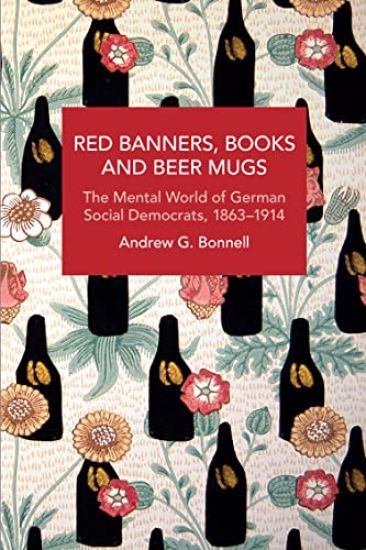
Red Banners, Books and Beer Mugs

Red Banners, Books and Beer Mugs

Andrew G. Bonnell

Haymarket Books
2021
pokkari
The German Social Democratic Party was the world’s first million-strong political party and was the main force pushing for the democratisation of Imperial Germany before the First World War. This book examines the themes around which the party organized its mainly working-class membership, and analyses the experiences and outlook of rank-and-file party members as well as the party’s press and publications. Key topics of inquiry include: the Lassalle cult and leadership, nationalism and internationalism, attitudes to work, the politics of subsistence, the effects of military service, reading and the diffusion of Marx’s ideas, cultural organisations, and socialism and republicanism under the Imperial German state. Through these various avenues, Bonnell explores the remarkable degree to which the party successfully addressed workers’ everyday concerns while also offering the prospect of a better future.
The People's Stage in Imperial Germany

The People's Stage in Imperial Germany

Andrew Bonnell

Bloomsbury Academic
2020
nidottu
This book examines the history of the Freie Volksbuhne (Free People's Theatre) in Berlin, from 1890-1914, in the light of the cultural theory and practice of German Social Democracy in Imperial Germany. The clash between German Social Democracy - the Party, intellectuals and workers - and the German Imperial State was played out in the Freie Volksbahne (Free People's Theatre) founded by intellectuals to energise working-class political awareness of drama with a political and social cutting edge. It fell foul of state censorship, lost its bite, yet prospered. This book explores the various programmes guiding the Volksbuhne's work and examines the reception of the plays by the largely working-class audience. This book offers a detailed study of the interactions between cultural and political history in Imperial Germany.
The People's Stage in Imperial Germany

The People's Stage in Imperial Germany

Andrew Bonnell

I.B. Tauris
2005
sidottu
This book examines the history of the Freie Volksbuhne (Free People's Theatre), Berlin, from 1890-1914, in the light of the cultural theory and practice of German Social Democracy in Imperial Germany. The clash between German Social Democracy - the party, intellectuals and workers - and the German Imperial State was played out in the Freie Volksbahne (Free People's Theatre) founded by intellectuals to energize working class political awareness of drama with a political and social cutting edge. It fell foul of state censorship, lost its bite, yet prospered. The book looks in detail at the various programmes guiding the Volksbuhne's work and at the reception of the plays by the largely working-class audience, to offer a detailed study of the interactions between cultural and political history in Imperial Germany.
Black Swan Summer

Black Swan Summer

Max Bonnell; Andrew Sproul

PITCH PUBLISHING LTD
2022
sidottu
Black Swan Summer tells the extraordinary story of Western Australia's first season of Sheffield Shield cricket, when an unheralded group of unknown, unfashionable and inexperienced players won Australian cricket's biggest prize at their first attempt. But it's more than just a story of an upset result in a cricket competition. It's a chronicle of the summer in which Don Bradman scored his 100th century, India toured Australia for the first time and the country plunged into political turmoil - which not everyone noticed, because they were at the cricket. The book explains the connections between men who returned from war to play cricket, the fear of communism, Mahatma Gandhi, rationing, Keith Miller, Laurence Olivier and Vivien Leigh, Ray Lindwall's back foot and a boxer called the Alabama Kid. Drawing on the personal reminiscences of the last three surviving cricketers from the 1947/48 season, it brings that hot, wet summer vividly to life.
The Battle of the Wigs. An Additional Canto to Dr. Garth's Poem of the Dispensary. Occasioned by the Disputes Between the Fellows and Licentiates of the College of Physicians, in London. By Bonnell Thornton, M.B
The 18th century was a wealth of knowledge, exploration and rapidly growing technology and expanding record-keeping made possible by advances in the printing press. In its determination to preserve the century of revolution, Gale initiated a revolution of its own: digitization of epic proportions to preserve these invaluable works in the largest archive of its kind. Now for the first time these high-quality digital copies of original 18th century manuscripts are available in print, making them highly accessible to libraries, undergraduate students, and independent scholars.Western literary study flows out of eighteenth-century works by Alexander Pope, Daniel Defoe, Henry Fielding, Frances Burney, Denis Diderot, Johann Gottfried Herder, Johann Wolfgang von Goethe, and others. Experience the birth of the modern novel, or compare the development of language using dictionaries and grammar discourses. ++++The below data was compiled from various identification fields in the bibliographic record of this title. This data is provided as an additional tool in helping to insure edition identification: ++++British LibraryT021427With a half-title.London: printed by J. Lister; and sold by T. Davies; T. Becket, and P. A. De Hondt; R. Davis; R. Baldwin; and F. Newbery, 1768. 2], iv,25, 1]p.; 4