Kirjahaku
Etsi kirjoja tekijän nimen, kirjan nimen tai ISBN:n perusteella.
1000 tulosta hakusanalla Brian Boyd
From one of the 20th century's great writers comes one of the finest autobiographies of our time. Speak, Memory was first published by Vladimir Nabokov in 1951 as Conclusive Evidence and then assiduously revised and republished in 1966. The Everyman's Library edition includes, for the first time, the previously unpublished "Chapter 16"-the most significant unpublished piece of writing by the master, newly released by the Nabokov estate-which provided an extraordinary insight into Speak, Memory. Nabokov's memoir is a moving account of a loving, civilized family, of adolescent awakenings, flight from Bolshevik terror, education in England, and migr life in Paris and Berlin. The Nabokovs were eccentric, liberal aristocrats, who lived a life immersed in politics and literature on splendid country estates until their world was swept away by the Russian revolution when the author was eighteen years old. Speak, Memory vividly evokes a vanished past in the inimitable prose of Nabokov at his best.

At the age of twenty-one, Brian Boyd wrote a thesis on Vladimir Nabokov that the famous author called "brilliant." After gaining exclusive access to the writer's archives, he wrote a two-part, award-winning biography, Vladimir Nabokov: The Russian Years (1990) and Vladimir Nabokov: The American Years (1991). This collection features essays written by Boyd since completing the biography, incorporating material he gleaned from his research as well as new discoveries and formulations. Boyd confronts Nabokov's life, career, and legacy; his art, science, and thought; his subtle humor and puzzle-like storytelling; his complex psychological portraits; and his inheritance from, reworking of, and affinities with Shakespeare, Pushkin, Tolstoy, and Machado de Assis. Boyd offers new ways of reading Nabokov's best English-language works: Lolita, Pale Fire, Ada, and the unparalleled autobiography, Speak, Memory, and he discloses otherwise unknown information about the author's world. Sharing his personal reflections, Boyd recounts the adventures, hardships, and revelations of researching Nabokov's biography and his unusual finds in the archives, including materials still awaiting publication. The first to focus on Nabokov's metaphysics, Boyd cautions against their being used as the key to unlock all of the author's secrets, showing instead the many other rooms in Nabokov's castle of fiction that need exploring, such as his humor, narrative invention, and psychological insight into characters and readers alike. Appreciating Nabokov as novelist, memoirist, poet, translator, scientist, and individual, Boyd helps us understand more than ever the author's multifaceted genius.

At the age of twenty-one, Brian Boyd wrote a thesis on Vladimir Nabokov that the famous author called "brilliant." After gaining exclusive access to the writer's archives, he wrote a two-part, award-winning biography, Vladimir Nabokov: The Russian Years (1990) and Vladimir Nabokov: The American Years (1991). This collection features essays written by Boyd since completing the biography, incorporating material he gleaned from his research as well as new discoveries and formulations. Boyd confronts Nabokov's life, career, and legacy; his art, science, and thought; his subtle humor and puzzle-like storytelling; his complex psychological portraits; and his inheritance from, reworking of, and affinities with Shakespeare, Pushkin, Tolstoy, and Machado de Assis. Boyd offers new ways of reading Nabokov's best English-language works: Lolita, Pale Fire, Ada, and the unparalleled autobiography, Speak, Memory, and he discloses otherwise unknown information about the author's world. Sharing his personal reflections, Boyd recounts the adventures, hardships, and revelations of researching Nabokov's biography and his unusual finds in the archives, including materials still awaiting publication. The first to focus on Nabokov's metaphysics, Boyd cautions against their being used as the key to unlock all of the author's secrets, showing instead the many other rooms in Nabokov's castle of fiction that need exploring, such as his humor, narrative invention, and psychological insight into characters and readers alike. Appreciating Nabokov as novelist, memoirist, poet, translator, scientist, and individual, Boyd helps us understand more than ever the author's multifaceted genius.

A century and a half after the publication of Origin of Species, evolutionary thinking has expanded beyond the field of biology to include virtually all human-related subjects—anthropology, archeology, psychology, economics, religion, morality, politics, culture, and art. Now a distinguished scholar offers the first comprehensive account of the evolutionary origins of art and storytelling. Brian Boyd explains why we tell stories, how our minds are shaped to understand them, and what difference an evolutionary understanding of human nature makes to stories we love. Art is a specifically human adaptation, Boyd argues. It offers tangible advantages for human survival, and it derives from play, itself an adaptation widespread among more intelligent animals. More particularly, our fondness for storytelling has sharpened social cognition, encouraged cooperation, and fostered creativity.After considering art as adaptation, Boyd examines Homer’s Odyssey and Dr. Seuss’s Horton Hears a Who! demonstrating how an evolutionary lens can offer new understanding and appreciation of specific works. What triggers our emotional engagement with these works? What patterns facilitate our responses? The need to hold an audience’s attention, Boyd underscores, is the fundamental problem facing all storytellers. Enduring artists arrive at solutions that appeal to cognitive universals: an insight out of step with contemporary criticism, which obscures both the individual and universal. Published for the bicentenary of Darwin’s birth and the 150th anniversary of the publication of Origin of Species, Boyd’s study embraces a Darwinian view of human nature and art, and offers a credo for a new humanism.

In Why Lyrics Last, the internationally acclaimed critic Brian Boyd turns an evolutionary lens on the subject of lyric verse. He finds that lyric making, though it presents no advantages for the species in terms of survival and reproduction, is “universal across cultures because it fits constraints of the human mind.” An evolutionary perspective— especially when coupled with insights from aesthetics and literary history—has much to tell us about both verse and the lyrical impulse. Boyd places the writing of lyrical verse within the human disposition “to play with pattern,” and in an extended example he uncovers the many patterns to be found within Shakespeare’s Sonnets. Shakespeare’s bid for readership is unlike that of any sonneteer before him: he deliberately avoids all narrative, choosing to maximize the openness of the lyric and demonstrating the power that verse can have when liberated of story. In eschewing narrative, Shakespeare plays freely with patterns of other kinds: words, images, sounds, structures; emotions and moods; argument and analogy; and natural rhythms, in daily, seasonal, and life cycles. In the originality of his stratagems, and in their sheer number and variety, both within and between sonnets, Shakespeare outdoes all competitors. A reading of the Sonnets informed by evolution is primed to attend to these complexities and better able to appreciate Shakespeare’s remarkable gambit for immortal fame.
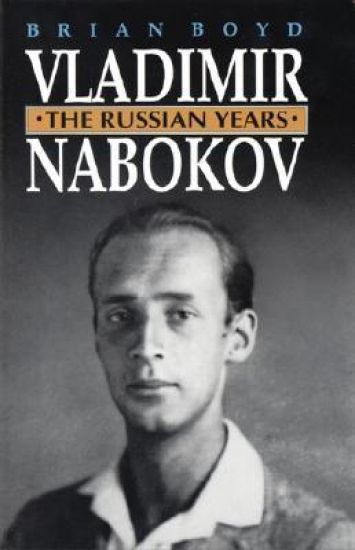
This first major critical biography of Vladimir Nabokov, one of the greatest of twentieth-century writers, finally allows us full access to the dramatic details of his life and the depths of his art. An intensely private man, Nabokov was uprooted first by the Russian Revolution and then by World War II. Transformed into a permanent wanderer, he did not achieve fame until late in life, with the success of Lolita. In this first of two volumes, Brian Boyd vividly describes the liberal milieu of the aristocratic Nabokovs, their escape from Russia, Nabokov's education at Cambridge, and the murder of his father in Berlin. Boyd then turns to the years that Nabokov spent, impoverished, in Germany and France, until the coming of Hitler forced him to flee, with wife and son, to the United States. This volume stands on its own as a fascinating exploration of Nabokov's Russian years and Russian worlds, prerevolutionary and emigre. In the course of his ten years' work on the biography, Boyd traveled along Nabokov's trail everywhere from Yalta to Palo Alto. The only scholar to have had free access to the Nabokov archives in Montreux and the Library of Congress, he also interviewed at length Nabokov's family and scores of his friends and associates. For the general reader, Boyd offers an introduction to Nabokov the man, his works, and his world. For the specialist, he provides a basis for all future research on Nabokov's life and art, as he dates and describes the composition of all Nabokov's works, published and unpublished. Boyd investigates Nabokov's relation to and his independence from his time, examines the special structures of his mind and thought, and explains the relations between his philosophy and his innovations of literary strategy and style. At the same time he provides succinct introductions to all the fiction, dramas, memoirs, and major verse; presents detailed analyses of the major books that break new ground for the scholar, while providing easy paths into the works for other readers; and shows the relationship between Nabokov's life and the themes and subjects of his art.
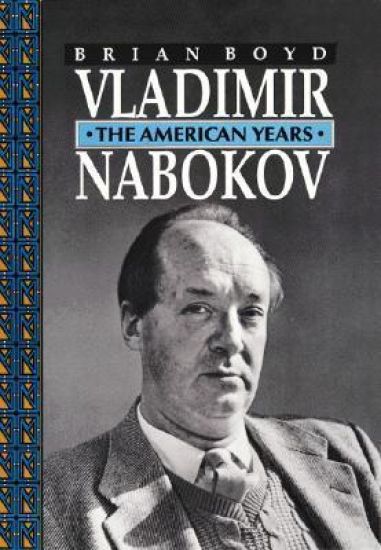
The story of Nabokov's life continues with his arrival in the United States in 1940. He found that supporting himself and his family was not easy--until the astonishing success of Lolita catapulted him to world fame and financial security.
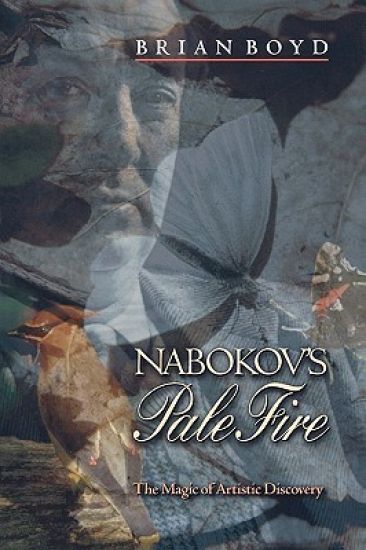
Pale Fire is regarded by many as Vladimir Nabokov's masterpiece. The novel has been hailed as one of the most striking early examples of postmodernism and has become a famous test case for theories about reading because of the apparent impossibility of deciding between several radically different interpretations. Does the book have two narrators, as it first appears, or one? How much is fantasy and how much is reality? Whose fantasy and whose reality are they? Brian Boyd, Nabokov's biographer and hitherto the foremost proponent of the idea that Pale Fire has one narrator, John Shade, now rejects this position and presents a new and startlingly different solution that will permanently shift the nature of critical debate on the novel. Boyd argues that the book does indeed have two narrators, Shade and Charles Kinbote, but reveals that Kinbote had some strange and highly surprising help in writing his sections. In light of this interpretation, Pale Fire now looks distinctly less postmodern--and more interesting than ever. In presenting his arguments, Boyd shows how Nabokov designed Pale Fire for readers to make surprising discoveries on a first reading and even more surprising discoveries on subsequent readings by following carefully prepared clues within the novel. Boyd leads the reader step-by-step through the book, gradually revealing the profound relationship between Nabokov's ethics, aesthetics, epistemology, and metaphysics. If Nabokov has generously planned the novel to be accessible on a first reading and yet to incorporate successive vistas of surprise, Boyd argues, it is because he thinks a deep generosity lies behind the inexhaustibility, complexity, and mystery of the world. Boyd also shows how Nabokov's interest in discovery springs in part from his work as a scientist and scholar, and draws comparisons between the processes of readerly and scientific discovery. This is a profound, provocative, and compelling reinterpretation of one of the greatest novels of the twentieth century.
Brian Boyd, einer der besten Kenner von Nabokovs (1899?1977) Leben und Werk, beschreibt das liberale aristokratische Milieu, in dem er aufwuchs, die Flucht der Familie aus Rußland, seine Studienzeit in Cambridge, die Ermordung des Vaters in Berlin. Es folgen die Jahre, in denen Vladimir Nabokov und seine Frau V?ra in Deutschland und Frankreich in Armut lebten und die Flucht in die Vereinigten Staaten.Boyd untersucht Nabokovs Verhältnis zu den Zeitläufen, spürt den besonderen Strukturen seines Denkens und Schreibens nach. Zudem gibt er gedrängte Einführungen in die Romane, Memoiren, Dramen und Gedichte des Autors, analysiert seine wichtigen Bücher. Er ist so dem Leser ein kenntnisreicher Führer durch das Werk. ?Die russischen Jahre? sind eine packende Darstellung von Nabokovs Leben, Nabokovs Welt im vorrevolutionären Rußland und in der Emigration.

Der zweite und abschließende Band von Boyds beeindruckender Biographie setzt ein mit der Ankunft Nabokovs in Amerika 1940 - das heißt mit dem Verzicht auf die russische Sprache und dem Verlust der Reputation des russischen Autors Sirin (so Nabokovs bisheriges Pseudonym). In den USA den Lebensunterhalt zu verdienen war nicht einfach; schließlich gelang es Nabokov, auf eine Professur in Cornell berufen zu werden.Dann brachte der erstaunliche Erfolg des Romans "Lolita", der 1955 erschien, Weltruhm und finanzielle Sicherheit. "Lolita" - beinahe hätte der Autor das noch unvollendete Manuskript verbrannt; es fand sich zunächst kein Verlag, Nabokov dachte sogar an eine Veröffentlichung unter einem Pseudonym; und als das Buch schließlich bei der Olympia Press in Paris erschien, waren die Probleme keineswegs vorüber. Boyd ist ein kenntnisreicher Führer durch Leben und Werk Nabokovs.Zu den besonderen Stärken seiner Biographie gehört es, dass zum ersten Mal Nabokov auch als Lehrer, Kritiker, Übersetzer und Wissenschaftler ausführlich gewürdigt wird. Und der Biograph schildert eindrucksvoll die Persönlichkeit Nabokovs - einen warmherzigen, verletzlichen Menschen, der sich in seinen letzten zwanzig Lebensjahren, als er zu einer öffentlichen Figur geworden war, gern hinter einer abweisenden Maske verbarg. Ein Lesevergnügen, nicht nur für Nabokov-Kenner.
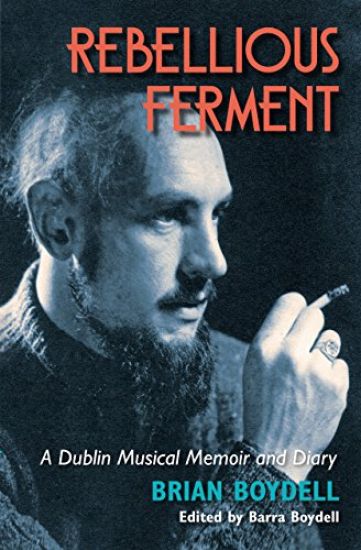
Brian Boydell (1917 - 2000) was a leading figure in Irish musical life. Composer, performer, broadcaster, agitator for music, and Professor of Music at Trinity College Dublin, he profoundly influenced the development of music and music education in Ireland. In his later years he wrote his memoirs focusing in particular on the 1940s and early 1950s (but extending to the early 1970s) when he was closely involved in what he describes as `that remarkable period in the history of artistic development in Ireland during the Second World War and shortly afterwards', a period he also refers to as one of `rebellious ferment' in Irish cultural life. Brian Boydell's memoir, together with extracts from the diary he kept for part of 1950, have been edited by his son Barra Boydell, who established his own career as a prominent musicologist and a professor of music at Maynooth University. Informative, entertaining and written with an engaging combination of passion and elegance, this is a highly readable book. It presents a vivid portrait not only of artistic life (including painting, poetry and theatre as well as music) but also of politics, religion, infrastructure, education and society in mid-twentieth-century Ireland. Brian Boydell presents a captivating account of his engagement with a wide range of often colourful people, including those associated with the White Stag Group in the early 1940s, and the European musicians who settled in Ireland and contributed so much to Irish musical life from the late 1940s. This book presents a fascinating account not only for its autobiographical interest, but also for its value as a first-hand witness of a significant period in Irish musical and cultural history.
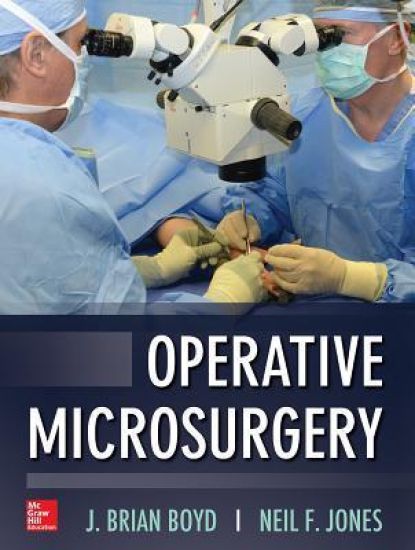
Publisher's Note: Products purchased from Third Party sellers are not guaranteed by the publisher for quality, authenticity, or access to any online entitlements included with the product.MASTER COMMON AND DIFFICULT MICROSURGERY PROCEDURES WITH STEP-BY-STEP, ILLUSTRATED GUIDANCEA Doody's Core Title for 2017!More than 2,000 full-color photographs and illustrations!Operative Microsurgery is a practical, full-color procedural guide that focuses on microsurgery of the upper and lower limbs, nerves and brachial plexus, head and neck, and breast and trunk. This groundbreaking textfeatures chapters written by plastic surgeons, hand surgeons, and orthopedic surgeons from 17 countries, in addition to the United States and Canada. Enriched by an extensive collection of full-color atlas-style photographs and illustrations demonstrating dozens of procedures, Operative Microsurgery is divided into 86 chapters, most of which describe a specific operative technique and include all the expert guidance necessary to successfully perform the procedure.CLEAR, COMPREHENSIVE, AND AUTHORITATIVE, OPERATIVE MICROSURGERY ENABLES YOU TO:Tap into the collective wisdom of some of the brightest, most respected minds in microsurgeryAcquire a hands-on working knowledge of key microsurgery procedures that span the entire human bodyLearn with the help of an outstanding collection of full-color photographs and illustrationsConfidently perform difficult or unusual proceduresRefer to convenient procedure-specific chapters written by pioneers in the field
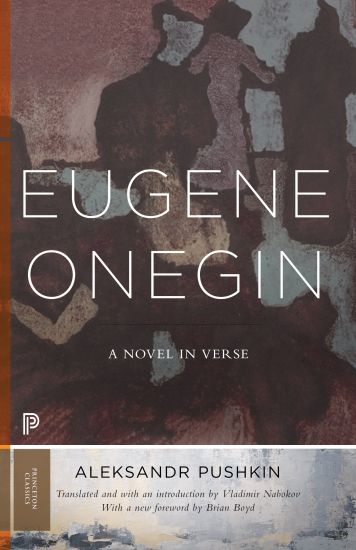
When Vladimir Nabokov's translation of Pushkin’s masterpiece Eugene Onegin was first published in 1964, it ignited a storm of controversy that famously resulted in the demise of Nabokov’s friendship with critic Edmund Wilson. While Wilson derided it as a disappointment in the New York Review of Books, other critics hailed the translation and accompanying commentary as Nabokov’s highest achievement. Nabokov himself strove to render a literal translation that captured "the exact contextual meaning of the original," arguing that, "only this is true translation." Nabokov’s Eugene Onegin remains the most famous and frequently cited English-language version of the most celebrated poem in Russian literature, a translation that reflects a lifelong admiration of Pushkin on the part of one of the twentieth century’s most brilliant writers. Now with a new foreword by Nabokov biographer Brian Boyd, this edition brings a classic work of enduring literary interest to a new generation of readers.

Think, Write, Speak: Uncollected Essays, Reviews, Interviews, and Letters to the Editor
Vladimir Nabokov Literary Trust; Brian Boyd
VINTAGE
2021
nidottu
A rich compilation of the previously uncollected Russian and English prose and interviews of one of the twentieth century's greatest writers, edited by Nabokov experts Brian Boyd and Anastasia Tolstoy. "I think like a genius, I write like a distinguished author, and I speak like a child" so Vladimir Nabokov famously wrote in the introduction to his volume of selected prose, Strong Opinions. Think, Write, Speak follows up where that volume left off, with a rich compilation of his uncollected prose and interviews, from a 1921 essay about Cambridge to two final interviews in 1977. The chronological order allows us to watch the Cambridge student and the fledgling Berlin reviewer and poet turn into the acclaimed Paris migr novelist whose stature brought him to teach in America, where his international success exploded with Lolita and propelled him back to Europe. Whether his subject is Proust or Pushkin, the sport of boxing or the privileges of democracy, Nabokov's supreme individuality, his keen wit, and his alertness to the details of life illuminate the page.

STEM Leadership
Traci Buckner; Brian Boyd
Association for Supervision Curriculum Development
2015
nidottu
This practical, hands-on guide shows K-12 school leaders how to support STEM programs that excite students and teachers—even if the leader is not an expert in science, technology, engineering, or math. Buckner and Boyd explore ideas for fostering equitable access to rich and rigorous learning experiences, acting as instructional leaders, and building community engagement and partnerships. You'll get advice on creating a structure to help teachers examine, discuss, and improve students' learning experiences. And you'll learn how to support teachers in designing challenging lessons that foster students' curiosity and ingenuity in working on real-world problems. Finally, you'll learn ways you can effectively tap into the wealth of resources in your community to help achieve your STEM vision.

Jackson's Local Flaps in Head and Neck Reconstruction
Peter Neligan; J. Brian Boyd; David Mathes
THIEME MEDICAL PUBLISHERS INC
2022
muu
This book is truly a classic, beloved by plastic surgeons throughout the world. Its strength lies in its simple, elegant approach to solving common reconstructive problems encountered by plastic surgeons at all levels of training. Its appeal transcends specialty interests, with aesthetic and reconstructive surgeons alike finding this book to be an invaluable resource for daily practice. Its comprehensive coverage makes it an essential addition to any surgeon's library. Totally revised and updated with color throughout, this new edition has been totally revised and updated with over 150 additional pages, two new chapters, and numerous new cases, flaps, and problems. Additionally, there are color illustrations, summary tables highlighting the best flaps for various clinical situations, annotated bibliographies, and much, much more. Throughout these pages, the reader benefits from Dr. Jackson's enormous experience and wisdom as he makes note of special tips, critical maneuvers, and important principles that warrant emphasis. Each flap is accompanied by a description of potential problems, and each anatomic area for reconstruction ends with a technique of choice so that the reader can understand the decision-making process that is involved in flap selection. The book begins with a chapter on basic principles, which reviews the important oncologic concerns that must precede any reconstructive-surgery procedure. Principles of tissue movement and flap design are accompanied by drawings that aid the reader in planning. The next seven chapters address each anatomic region. Alternate methods for closing defects in each region are presented. Both simple and complex solutions are detailed. Each reconstructive option is presented in great detail with operative photos as well as beautiful illustrations to depict flap design, elevation, and closure, and to more clearly explicate complex flap reconstructions for difficult problems. Common mistakes and the limitations of each flap are clearly delineated. Chapters on each anatomic region conclude with new summary tables that help the reader quickly identify the best reconstructive options for specific problems. Two Totally New Chapters The final two chapters are new to this edition-Tissue Expansion and Problems and Complication. The chapter on tissue expansion fully details the advantages to be gained from tissue expansion and the applications in each area of the head and neck when local flaps are planned. The Problems and Complications chapter covers common problems encountered in head and neck reconstruction as well as avoidance and treatment of complications should they occur. It concludes with a section on tricks and innovations, which discusses diverse topics such as the use of scarlet red for wound healing, the aesthetic repair of torn earlobes, and the repair of cocaine-induced palatal fistula. There is clearly a wealth of information and much to be learned and applied by surgeons at all levels of expertise.
Under omprövning : en antologi om konst, kanon och kvalitet
Thomas Steinfeld; Peter Luthersson; Theodore Dalrymple; Axel Odelberg; Karin Stensdotter; Roger Kimball; Johan Lundberg; Roger Scruton; James Macmillan; Camilla Lundberg; Pär Sandin; Gunnar Larsson; Hans Henrik Brummer; Therese Bohman; Henry Larsson; Ann-Sofi Ljung-Svensson; Martin Lagerholm; David Andersson; Einar Askestad; Rob Riemen; John Armstrong; Per Bauhn; Torbjörn Elensky; Alain de Botton; Peter Elmlund; Lars Anders Johansson; David Mason; Anna Brodow Inzaina; Christopher Rådlund; Denis Dutton; Brian Boyd; Marcus Nordlund
Bokförlaget Atlantis
2011
sidottu
Under omprövning rymmer ett stort antal bidrag som förenas av att de utifrån ett kritiskt perspektiv diskuterar vår tids mest karakteristiska estetiska hållningar och konstnärliga tendenser. Antologin försöker se framåt, förbi de modernistiska och postmodernistiska strategier som kännetecknat 1900-talets utveckling inom konstarter som litteratur, musik, bildkonst och arkitektur. Detta innebär också en omvärdering av kulturhistorien, där en rad förbisedda författarskap och konstnärskap lyfts fram. Och där kulturhistorien utvärderas med avseende på vad som kan te sig fruktbart och ofruktbart för framtiden.