Kirjojen hintavertailu. Mukana 11 342 296 kirjaa ja 12 kauppaa.

Kirjahaku

Etsi kirjoja tekijän nimen, kirjan nimen tai ISBN:n perusteella.

1000 tulosta hakusanalla Brian P. Simpson

Markets Don't Fail!

Markets Don't Fail!

Brian P. Simpson

Lexington Books
2005
sidottu
In all of the contemporary economics textbooks that have been written there is typically at least one chapter that addresses "market failure." Markets Don't Fail! is a response to what author Brian Simpson sees as a fundamental error in the thinking of some economists. The chapter titles of this book are crafted against the premises of "market failure" arguments, and a significant portion of this book focuses on exposing the invalid premises upon which the claims of market failure are based and providing a proper basis upon which to judge the free market. The material in this book provides a strong antidote to the arguments typically presented in contemporary economics textbooks. Through example and argument, Brian Simpson shows that the claims against the free market are not true. In fact, he demonstrates how free markets succeed, how they raise the standard of living of all individuals who live within them, and how free markets allow human life to flourish. However, the book goes much deeper than economics by providing a moral and epistemological defense of the free market. Markets Don't Fail! gets to the fundamental, philosophical reasons why the claims of market failure are false and why markets actually succeed. Through an integration of economics and philosophy Simpson is able to provide a comprehensive, rigorous, and logically consistent defense of the free market. The specific topics covered in the book include monopoly, antitrust laws and predatory pricing, "externalities," the regulation of safety and quality, environmentalism, economic inequality, "public goods," and asymmetric information. This book is an invaluable tool for anyone who wants to gain a sound understanding of the free market.
Markets Don't Fail!

Markets Don't Fail!

Brian P. Simpson

Lexington Books
2005
nidottu
In all of the contemporary economics textbooks that have been written there is typically at least one chapter that addresses 'market failure.' Markets Don't Fail! is a response to what author Brian Simpson sees as a fundamental error in the thinking of some economists. The chapter titles of this book are crafted against the premises of 'market failure' arguments, and a significant portion of this book focuses on exposing the invalid premises upon which the claims of market failure are based and providing a proper basis upon which to judge the free market. The material in this book provides a strong antidote to the arguments typically presented in contemporary economics textbooks. Through example and argument, Brian Simpson shows that the claims against the free market are not true. In fact, he demonstrates how free markets succeed, how they raise the standard of living of all individuals who live within them, and how free markets allow human life to flourish. However, the book goes much deeper than economics by providing a moral and epistemological defense of the free market. Markets Don't Fail! gets to the fundamental, philosophical reasons why the claims of market failure are false and why markets actually succeed. Through an integration of economics and philosophy Simpson is able to provide a comprehensive, rigorous, and logically consistent defense of the free market. The specific topics covered in the book include monopoly, antitrust laws and predatory pricing, 'externalities,' the regulation of safety and quality, environmentalism, economic inequality, 'public goods,' and asymmetric information. This book is an invaluable tool for anyone who wants to gain a sound understanding of the free market.
Money, Banking, and the Business Cycle

Money, Banking, and the Business Cycle

Brian P. Simpson

Palgrave Macmillan
2014
sidottu
Money, Banking, and the Business Cycle provides a comprehensive framework for analyzing these mechanisms, and offers a robust prescription for reducing financial instability over the long-term. Volume I bridges tough economic theory with empirical evidence.
Money, Banking, and the Business Cycle

Money, Banking, and the Business Cycle

Brian P. Simpson

Palgrave Macmillan
2014
nidottu
Money, Banking, and the Business Cycle provides a comprehensive framework for analyzing these mechanisms, and offers a robust prescription for reducing financial instability over the long-term. Volume I bridges tough economic theory with empirical evidence.
A Declaration and Constitution for a Free Society
What are individual rights? What is freedom? How are they related to each other? Why are they so crucial to human life? How do you protect them? These are some of the questions that A Declaration and Constitution for a Free Society answers. The book uses Objectivist philosophy—the philosophy of Ayn Rand—to analyze subjective, intrinsic, and objective theories of rights and show why rights and freedom are objective necessities of human life. This knowledge is then used to make changes to the Declaration of Independence and U.S. Constitution. Through these changes, the book shows the fundamental legal requirements of a free society and why we should create such a society. It demonstrates why a free society is morally, politically, and economically beneficial to human beings.
Notes to Self

Notes to Self

Brian P

Destination Elevation Publishing
2023
pokkari
Are you ready to embark on a transformative journey of self-discovery to get unstuck and confidently pursue your goals?Note to Self by author Brian P. is the answer for self-driven individuals seeking a shift in their thinking. This book emphasizes the importance of never giving up on personal goals and encourages readers to strive for improvement constantly.One of the key insights presented in Note to Self is the significant impact of our environment on our performance. Drawing from historical examples, the author highlights how changing our environment can lead to behavioral changes, influencing our predictions, planning, and responses. By consciously shifting our surroundings, we open ourselves up to new possibilities and opportunities for growth.Note to Self also delves into reframing the brain, offering practical techniques such as mind mapping to enhance our lives. By adopting and applying these principles to our daily lives, we can experience a profound transformation and elevate ourselves to new heights.Author Brian P created Notes to Self, a 30-day mental exercise to help readers reach a higher level of self-awareness and improve their lives by achieving their personal and professional goals. Notes to Self-Utilizing the Subconscious Mind invites readers to explore their inner thoughts and feelings to understand the importance of growing and developing continuously.
Music Assessment for Better Ensembles

Music Assessment for Better Ensembles

Brian P. Shaw

Oxford University Press Inc
2018
sidottu
Assessment is central to ensemble music. Yet, teachers do not always have the expertise to harness its potential to improve rehearsals and performances, and promote and document student learning. Written specifically for band, choir, and orchestra teachers at all levels, this book contains all of the information necessary to design and use assessment in a thriving music classroom. The first section addresses foundations such as learning targets, metacognition, and growth mindset. Assessment jargon such as formative assessment, summative assessment, Assessment for Learning, self and peer assessment, and authentic assessment is clarified and illustrated with music examples. Readers will learn practical strategies for choosing which concepts to assess, which methods to use, and how to use results to provide accurate and effective feedback to students. The second section brings assessment fundamentals into the music room. Filled with practical advice, each chapter examines a different facet of musicianship. Sample assessments in all performance areas are provided, including music literacy, fundamentals and technique, terminology, interpretation, evaluation and critique, composition and improvisation, beliefs and attitudes, and more. There is an entire chapter devoted to tips for applying assessment and feedback strategies in rehearsals, which can result in a fresh and effective approach to performance preparation. The final section is an examination of grading practices in music classes. Readers will gain information about ensemble grades that communicate what students know and are able to do, rather than whether they remembered their black socks. A variety of approaches, including Standards-Based Grading, are evaluated in light of music teachers' unique situations. The book concludes with ways for music educators to take their first steps toward implementing these strategies in their own teaching, including the use of instructional technology. Assessing like an expert is possible, and this book is just what teachers need to get started.
Music Assessment for Better Ensembles

Music Assessment for Better Ensembles

Brian P. Shaw

Oxford University Press Inc
2018
nidottu
Assessment is central to ensemble music. Yet, teachers do not always have the expertise to harness its potential to improve rehearsals and performances, and promote and document student learning. Written specifically for band, choir, and orchestra teachers at all levels, this book contains all of the information necessary to design and use assessment in a thriving music classroom. The first section addresses foundations such as learning targets, metacognition, and growth mindset. Assessment jargon such as formative assessment, summative assessment, Assessment for Learning, self and peer assessment, and authentic assessment is clarified and illustrated with music examples. Readers will learn practical strategies for choosing which concepts to assess, which methods to use, and how to use results to provide accurate and effective feedback to students. The second section brings assessment fundamentals into the music room. Filled with practical advice, each chapter examines a different facet of musicianship. Sample assessments in all performance areas are provided, including music literacy, fundamentals and technique, terminology, interpretation, evaluation and critique, composition and improvisation, beliefs and attitudes, and more. There is an entire chapter devoted to tips for applying assessment and feedback strategies in rehearsals, which can result in a fresh and effective approach to performance preparation. The final section is an examination of grading practices in music classes. Readers will gain information about ensemble grades that communicate what students know and are able to do, rather than whether they remembered their black socks. A variety of approaches, including Standards-Based Grading, are evaluated in light of music teachers' unique situations. The book concludes with ways for music educators to take their first steps toward implementing these strategies in their own teaching, including the use of instructional technology. Assessing like an expert is possible, and this book is just what teachers need to get started.
Pico della Mirandola on Trial

Pico della Mirandola on Trial

Brian P. Copenhaver

Oxford University Press
2022
sidottu
Giovanni Pico della Mirandola has been a beacon of progress in modern times, and the Oration on the Dignity of Man has been the engine of his fame. But he never wrote a speech about the dignity of man. The prince's speech announced quite different projects: persuading Christians to become Kabbalists in order to annihilate themselves in God; and convincing philosophers that their path to saving wisdom was concord rather than disputation. Pico della Mirandola On Trial: Heresy, Freedom, and Philosophy shows that Pico's work was in no way progressive - or 'humanist' - and that his main authorities were medieval clerics and theologians, not secular Renaissance intellectuals. The evidence is Pico's Apology, his self-defence against heresy charges: this public polemic reveals more about him than the famous speech that he never gave and that deliberately kept its message secret. The orator's method in the Oration was esoteric, but the defendant in the Apology made his case openly in a voice that was academic and belligerent, not prophetic or poetic. Since the middle of the last century, textbooks written for college students have promoted only one Pico, a hero of progressive humanism. But his Conclusions and Apology, products of late medieval culture, were in no way progressive. The grim scene of the Apology, his report on a battle for life and honor, was the proximate medieval past where human history was despised as the annals of sin. To understand Pico's universe of dismal expectations, our best guide is his Apology, based on lessons learned from medieval teachers.
Renaissance Philosophy

Renaissance Philosophy

Brian P. Copenhaver; Charles B. Schmitt

Oxford University Press
1992
nidottu
The Renaissance has long been recognized as a brilliant moment in the development of Western civilization. However, little attention has been devoted to the distinct contributions of philosophy to Renaissance culture. This volume introduces the reader to the philosophy written, read, taught, and debated during the period traditionally credited with the `revival of learning'. The authors examine the relation of Renaissance philosophy to humanism and the universities, the impact of rediscovered ancient sources, the recovery of Plato and the Neoplatonists, and the evolving ascendancy of Aristotle. Renaissance Philosophy also explores the original contributions of major figures including Bruni, Valla, Ficino, Pico della Mirandola, Pomponazzi, Machiavelli, More, Vitoria, Montaigne, Bruno, and Campanella. Renaissance Philosophy demonstrates the uses of ancient and medieval philosophy by Renaissance thinkers, and throws light on the early modern origins of modern philosophy.
Distrust of Institutions in Early Modern Britain and America
Distrust of public institutions, which reached critical proportions in Britain and the United States in the first two decades of the twenty-first century, was an important theme of public discourse in Britain and colonial America during the early modern period. Demonstrating broad chronological and thematic range, the historian Brian P. Levack explains that trust in public institutions is more tenuous and difficult to restore once it has been betrayed than trust in one's family, friends, and neighbours, because the vast majority of the populace do not personally know the officials who run large national institutions. Institutional distrust shaped the political, legal, economic, and religious history of England, Scotland, and the British colonies in America. It provided a theoretical and rhetorical foundation for the two English revolutions of the seventeenth century and the American Revolution in the late eighteenth century. It also inspired reforms of criminal procedure, changes in the system of public credit and finance, and challenges to the clergy who dominated the Church of England, the Church of Scotland, and the churches in the American colonies. This study reveals striking parallels between the loss of trust in British and American institutions in the early modern period and the present day.
Peter of Spain: Summaries of Logic

Peter of Spain: Summaries of Logic

Brian P. Copenhaver; Calvin G. Normore; Terence Parsons

Oxford University Press
2014
sidottu
For nearly four centuries, when logic was the heart of what we now call the 'undergraduate curriculum', Peter of Spain's Summaries of Logic (c. 1230) was the basis for teaching that subject. Because Peter's students were teenagers, he wrote simply and organized his book carefully. Since no book about logic was read by more people until the twentieth century, the Summaries has extensively and profoundly influenced the distinctly Western way of speaking formally and writing formal prose by constructing well-formed sentences, making valid arguments, and refuting and defending arguments in debate. Some books, like the Authorized Version of the English Bible and the collected plays of Shakespeare, have been more influential in the Anglophone world than Peter's Summaries--but not many. This new English translation, based on an update of the Latin text of Lambertus De Rijk, comes with an extensive introduction that deals with authorship, dating, and the place of the Summaries in the development of logic, before providing a chapter-by-chapter analysis of Peter's book, followed by an analysis of his system from the point of view of modern logic. The Latin text is presented on facing pages with the English translation, accompanied by notes, and the book includes a full bibliography.
Mathematical Modeling in Systems Biology

Mathematical Modeling in Systems Biology

Brian P. Ingalls

MIT PRESS LTD
2022
pokkari
An introduction to the mathematical concepts and techniques needed for the construction and analysis of models in molecular systems biology. Systems techniques are integral to current research in molecular cell biology, and system-level investigations are often accompanied by mathematical models. These models serve as working hypotheses: they help us to understand and predict the behavior of complex systems. This book offers an introduction to mathematical concepts and techniques needed for the construction and interpretation of models in molecular systems biology. It is accessible to upper-level undergraduate or graduate students in life science or engineering who have some familiarity with calculus, and will be a useful reference for researchers at all levels.The first four chapters cover the basics of mathematical modeling in molecular systems biology. The last four chapters address specific biological domains, treating modeling of metabolic networks, of signal transduction pathways, of gene regulatory networks, and of electrophysiology and neuronal action potentials. Chapters 3-8 end with optional sections that address more specialized modeling topics. Exercises, solvable with pen-and-paper calculations, appear throughout the text to encourage interaction with the mathematical techniques. More involved end-of-chapter problem sets require computational software. Appendixes provide a review of basic concepts of molecular biology, additional mathematical background material, and tutorials for two computational software packages (XPPAUT and MATLAB) that can be used for model simulation and analysis.
Learning Simulations in Education

Learning Simulations in Education

Brian P. Zoellner

Routledge
2019
sidottu
Technology-enabled simulations are increasingly used for students in K-12 education and have the potential to improve teaching and learning across domains. Across five chapters, this book explores the psychological foundation of simulation use in instruction, guiding readers through individual differences among learners and contexts while addressing theory, pedagogy, cognitive processes, and more. This concise volume is designed for any education course that includes simulations in the curriculum and will be indispensable for student researchers and both pre- and in-service teachers alike.
Learning Simulations in Education

Learning Simulations in Education

Brian P. Zoellner

Routledge
2019
nidottu
Technology-enabled simulations are increasingly used for students in K-12 education and have the potential to improve teaching and learning across domains. Across five chapters, this book explores the psychological foundation of simulation use in instruction, guiding readers through individual differences among learners and contexts while addressing theory, pedagogy, cognitive processes, and more. This concise volume is designed for any education course that includes simulations in the curriculum and will be indispensable for student researchers and both pre- and in-service teachers alike.
Professionalism and Accounting Rules
This book investigates the issues raised by the vast array of accounting standards and technical rules which have marked the recent history of accounting. It is argued that the accounting profession is beset by an inferior and incomplete notion of quality in its work which emphasises compliance with processing rules, rather than the correspondence with commercial phenomena necessary to make financial statements reliable guides for human activity.
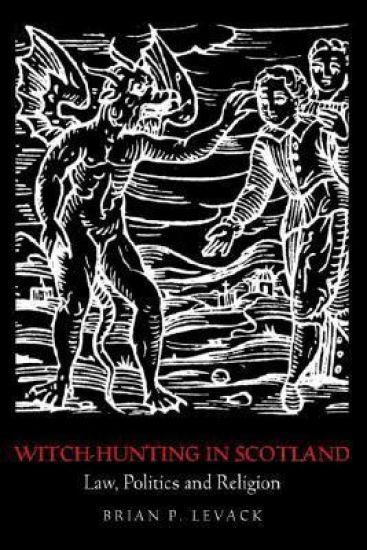
Witch-Hunting in Scotland

Witch-Hunting in Scotland

Brian P. Levack

Routledge
2007
sidottu
Shortlisted for the 2008 Katharine Briggs AwardWitch-Hunting in Scotland presents a fresh perspective on the trial and execution of the hundreds of women and men prosecuted for the crime of witchcraft, an offence that involved the alleged practice of maleficent magic and the worship of the devil, for inflicting harm on their neighbours and making pacts with the devil.Brian P. Levack draws on law, politics and religion to explain the intensity of Scottish witch-hunting. Topics discussed include:the distinctive features of the Scottish criminal justice systemthe use of torture to extract confessionsthe intersection of witch-hunting with local and national politicsthe relationship between state-building and witch-hunting and the role of James VIScottish Calvinism and the determination of zealous Scottish clergy and magistrates to achieve a godly society.This original survey combines broad interpretations of the rise and fall of Scottish witchcraft prosecutions with detailed case studies of specific witch-hunts. Witch-Hunting in Scotland makes fascinating reading for anyone with an interest in witchcraft or in the political, legal and religious history of the early modern period.
Witch-Hunting in Scotland

Witch-Hunting in Scotland

Brian P. Levack

Routledge
2007
nidottu
Shortlisted for the 2008 Katharine Briggs AwardWitch-Hunting in Scotland presents a fresh perspective on the trial and execution of the hundreds of women and men prosecuted for the crime of witchcraft, an offence that involved the alleged practice of maleficent magic and the worship of the devil, for inflicting harm on their neighbours and making pacts with the devil.Brian P. Levack draws on law, politics and religion to explain the intensity of Scottish witch-hunting. Topics discussed include:the distinctive features of the Scottish criminal justice systemthe use of torture to extract confessionsthe intersection of witch-hunting with local and national politicsthe relationship between state-building and witch-hunting and the role of James VIScottish Calvinism and the determination of zealous Scottish clergy and magistrates to achieve a godly society.This original survey combines broad interpretations of the rise and fall of Scottish witchcraft prosecutions with detailed case studies of specific witch-hunts. Witch-Hunting in Scotland makes fascinating reading for anyone with an interest in witchcraft or in the political, legal and religious history of the early modern period.
Religion and Language in Post-Soviet Russia
Church Slavonic, one of the world's historic sacred languages, has experienced a revival in post-Soviet Russia. Blending religious studies and sociolinguistics, this is the first book devoted to Church Slavonic in the contemporary period. It is not a narrow study in linguistics, but uses Slavonic as a passkey into various wider topics, including the renewal and factionalism of the Orthodox Church; the transformation of the Russian language; and the debates about protecting the nation from Western cults and culture. It considers both official and popular forms of Orthodox Christianity, as well as Russia's esoteric and neo-pagan traditions. Ranging over such diverse areas as liturgy, pedagogy, typography, mythology, and conspiracy theory, the book illuminates the complex interrelationship between language and faith in post-communist society, and shows how Slavonic has performed important symbolic work during a momentous chapter in Russian history. It is of great interest to scholars of sociolinguistics and of religion, as well as to Russian studies specialists.
Structured Products and Related Credit Derivatives

Structured Products and Related Credit Derivatives

Brian P. Lancaster; Glenn M. Schultz; Frank J. Fabozzi

John Wiley Sons Inc
2008
sidottu
Filled with the insights of numerous experienced contributors, Structured Products and Related Credit Derivatives takes a detailed look at the various aspects of structured assets and credit derivatives. Written over a period spanning the greatest bull market in structured products history to arguably its most challenging period, this reliable resource will help you identify the opportunities and mitigate the risks in this complex financial market.