

Kirjahaku
Etsi kirjoja tekijän nimen, kirjan nimen tai ISBN:n perusteella.
1000 tulosta hakusanalla Brian P. W. Mercer

A Noble Bet in Early Care and Education
Brian P. Gill; Jacob W. Dembosky; Jonathan P. Caulkins
RAND
2002
pokkari
Lessons learned from Pittsburgh's bold but troubled Early Childhood Initiative The Early Childhood Initiative (ECI), an ambitious effort launched in Pittsburgh in 1996 to provide high-quality early care and education services to at-risk children, failed to achieve its goals, although participating children may have derived substantial benefits from it. This report summarizes ECI's organizational history, analyzes and explains its critical weaknesses, and articulates lessons to inform the design and implementation of future large-scale reform initiatives. The Early Childhood Initiative (ECI) was an ambitious effort launched in Pittsburgh in 1996 to provide high-quality early care and education services to at-risk children, on a countywide scale and under the direction of local neighborhood agencies. Its goal was to improve the preparation of these children for kindergarten, promote their long-term educational attainment, and give them the early tools to help them become productive, successful members of society.Initially funded by foundations and private donors, ECI planned to become financially sustainable over the long term by persuading the state of Pennsylvania to commit to funding the program at the end of a startup period. Four years after its launch, ECI was far short of its enrollment targets, the cost per child was significantly higher than expected, and the effort to secure a commitment of state funding had failed. ECI was therefore converted to a small-scale demonstration program, leaving a residue of disappointment in many communities around the county. Although findings from a parallel study suggest that participating children may have derived substantial benefits from ECI, it failed to achieve its goals in terms of scale and sustainability. In the aftermath of ECI's scale-down, RAND was commissioned by the Heinz Endowments (ECI's largest funder) to study why ECI fell short of its objectives and to learn from its mistakes.The findings of the study are presented in this report, which summarizes ECI's organizational history, analyzes and explains critical weaknesses that hindered ECI's ability to succeed, and articulates lessons to inform the design and implementation of future large-scale reform initiatives, whether in early care and education or in other areas of social services. (JDL)
A Noble Bet in Early Care and Education
Brian P. Gill; Jacob W. Dembosky; Jonathan P. Caulkins
RAND
2002
pokkari
Lessons learned from Pittsburgh's bold but troubled Early Childhood Initiative; The Early Childhood Initiative (ECI), an ambitious effort to provide high-quality early care and education services to at-risk children, failed to achieve its goals, although participating children may have derived substantial benefits from it. This report summarizes ECI's organizational history, analyzes and explains its critical weaknesses, and articulates lessons to inform the design and implementation of future large-scale reform initiatives.
Inspiration, Perspiration, and Time
Brian P. Gill; Laura S. Hamilton; J.R. Lockwood; Julie A. Marsh; Ron W. Zimmer; Deanna Hill; Shana Pribesh
RAND
2005
pokkari
Reports an evaluation of Edison Schools, the nation's largest for-profit manager of public schools. RAND analyzed Edison's school improvement strategies, the implementation of those strategies, and effects on student achievement. In 2000, Edison Schools, the nation's largest education management organization, asked RAND to analyze its achievement outcomes and design implementation. RAND evaluated Edison's strategies for promoting student achievement in its schools, how it implemented those strategies, how its management affected student achievement, and what factors explained differences in achievement trends among its schools.
Personnel Recovery in the AFRICOM Area of Responsibility
Christopher A Mouton; Edward W Chan; Adam R Grissom; John P Godges; Badreddine Ahtchi; Brian Dougherty
RAND
2019
nidottu
Handbook of Machining with Grinding Wheels
Ioan D. Marinescu; Mike P. Hitchiner; Eckart Uhlmann; W. Brian Rowe; Ichiro Inasaki
CRC Press
2019
nidottu
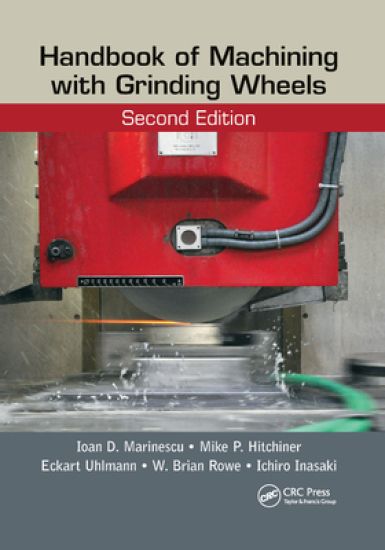
Grinding is a crucial technology that employs specific abrasive processes for the fabrication of advanced products and surfaces. Handbook of Machining with Grinding Wheels, Second Edition highlights important industry developments that can lead to improved part quality, higher productivity, and lower costs. Divided into two parts, the book begins with an explanation of grinding behavior and ends with a focus on new and emerging industrial applications. While the first edition focused on the basics of abrasive machining technology and presented a unified approach to machining with grinding wheels, the second edition ties in the continued need for traditional processes in conjunction with the latest applications. This book highlights new research topics that include: nanotechnology, alternative energy, and additive manufacturing, compares related approaches, and provides numerous references throughout the book.New in the Second Edition: Contains the latest information on abrasives, bonds, and dressingUpdates classic stability lobes for grindingIntroduces a new method for tracking dynamic instability in centerless grindingProvides a section in the chapter on ultrasonic-assisted grinding, which contains recent work on modelling of the processAdds material on fluid cooling Presents experimental results for in-process feedback to the grinding process Includes new examples on grinding machine technology (particularly for dressing) A single source reference covering every aspect of the grinding process, Handbook of Machining with Grinding Wheels functions as a definitive guide to grinding technology for both practicing engineers and students studying graduate-level courses (such as abrasive machining; grinding R&D; metal removal processes; machining of brittle materials; and principles of

Handbook of Machining with Grinding Wheels
Ioan D. Marinescu; Mike P. Hitchiner; Eckart Uhlmann; W. Brian Rowe; Ichiro Inasaki
Apple Academic Press Inc.
2016
sidottu
Grinding is a crucial technology that employs specific abrasive processes for the fabrication of advanced products and surfaces. Handbook of Machining with Grinding Wheels, Second Edition highlights important industry developments that can lead to improved part quality, higher productivity, and lower costs. Divided into two parts, the book begins with an explanation of grinding behavior and ends with a focus on new and emerging industrial applications. While the first edition focused on the basics of abrasive machining technology and presented a unified approach to machining with grinding wheels, the second edition ties in the continued need for traditional processes in conjunction with the latest applications. This book highlights new research topics that include: nanotechnology, alternative energy, and additive manufacturing, compares related approaches, and provides numerous references throughout the book.New in the Second Edition: Contains the latest information on abrasives, bonds, and dressingUpdates classic stability lobes for grindingIntroduces a new method for tracking dynamic instability in centerless grindingProvides a section in the chapter on ultrasonic-assisted grinding, which contains recent work on modelling of the processAdds material on fluid cooling Presents experimental results for in-process feedback to the grinding process Includes new examples on grinding machine technology (particularly for dressing)A single source reference covering every aspect of the grinding process, Handbook of Machining with Grinding Wheels functions as a definitive guide to grinding technology for both practicing engineers and students studying graduate-level courses (such as abrasive machining; grinding R&D; metal removal processes; machining of brittle materials; and principles of cutting).

Potencjal private equity dla szwajcarskich MŚP w branży turystycznej
Roman Gamper
Wydawnictwo Nasza Wiedza
2025
nidottu
Wyzwania finansowe stojące przed malymi i średnimi przedsiębiorstwami z branży hotelarskiej i gastronomicznej w calym regionie alpejskim, a zwlaszcza w Szwajcarii, nie są tematem dyskusji dopiero od momentu wprowadzenia kryteri w nadzoru bankowego Bazylea III. Celem niniejszej pracy jest przedstawienie i por wnanie kilku nowszych modeli finansowania. W tym kontekście należy dalej rozwijac model hybrydowych inwestycji private equity, kt ry jest najbardziej efektywny dla malych i średnich przedsiębiorstw turystycznych, a przede wszystkim praktyczny dla tej branży. Jako podstawę badań jakościowych dotyczących efektywności i pożądanej wartości dodanej dla MŚP przedstawiono sytuację wyjściową wspomnianej branży. Na tej podstawie potencjal, szanse i luki inwestycji private equity pokazują powiązania między odpowiednimi modelami. Kroki prowadzące do efektywnego modelu finansowania dla MŚP w branży hotelarskiej i gastronomicznej znajdują odzwierciedlenie w katalogu dzialań wraz z podsumowaniem i perspektywami na przyszlośc.
P Word Scrambles - Large Print Word Scrambles Puzzles for the Letter P Alphabets Word Scrambles: Improving Brain With These Challenging Random Order W
Priscilla Duncan Nyamie
Independently Published
2019
nidottu
For travelling test your brain when you are bored whiles on board by having something to relaxes you which does not take too much effort. Enjoy days and hours engaging your brain with these P word scrambles to simulate your thoughts. It is not necessary if you are word scrambles scholar or a beginner. These amazing puzzle is for people that have spare time. Days and hours of improvement and enjoyment are your go to when putting your thoughts together by solving these puzzles. Word scrambles puzzles are great to produce an imaginative capability and contribute to the advancement and if you have spare time. Each mystery word puzzle is to entertain as well as being good for the brain for fun reasoning.

The Speeches Of W. E. Gladstone, M. P., And William O'Brien, M. P., On Home Rule
William Ewart Gladstone; William O'Brien
Kessinger Pub
2007
pokkari

The Speeches (In Full) of the Rt. Hon. W. E. Gladstone, M.P., and William O'Brien, M.P., on Home Rule, Delivered in Parliament, Feb. 16 and 17, 1888.
W E (William Ewart) Gladstone; William O'Brien
Anson Street Press
2025
pokkari

The Speeches of Rt. Hon. W.E. Gladstone, M.P., and William O'Brien, M.P.: On Home Rule, Delivered In Parliament Feb. 16 and 17 1888
W. E. Gladstone William O'Brien
Createspace Independent Publishing Platform
2014
nidottu

The Speeches (in Full) of Rt. Hon. W. E. Gladstone, M. P., and William O'Brien, M. P., on Home Rule
W. E. 1809-1898 Gladstone
Hutson Street Press
2025
sidottu
This volume presents the complete speeches delivered in Parliament by William E. Gladstone and William O'Brien on February 16 and 17, 1888, concerning Home Rule. "The Speeches (in Full) of Rt. Hon. W. E. Gladstone, M. P., and William O'Brien, M. P., on Home Rule" offers a detailed look into the arguments and perspectives surrounding this pivotal moment in British and Irish political history. Gladstone, a towering figure in British politics, and O'Brien, a prominent Irish nationalist, articulate their positions on the contentious issue of Irish self-governance. Their words provide invaluable insight into the complexities and nuances of the Home Rule debate, reflecting the social, economic, and political factors at play during this era. This collection is essential reading for historians, political scientists, and anyone interested in understanding the dynamics of British-Irish relations and the evolution of parliamentary discourse. This work has been selected by scholars as being culturally important, and is part of the knowledge base of civilization as we know it. This work was reproduced from the original artifact, and remains as true to the original work as possible. Therefore, you will see the original copyright references, library stamps (as most of these works have been housed in our most important libraries around the world), and other notations in the work. This work is in the public domain in the United States of America, and possibly other nations. Within the United States, you may freely copy and distribute this work, as no entity (individual or corporate) has a copyright on the body of the work. As a reproduction of a historical artifact, this work may contain missing or blurred pages, poor pictures, errant marks, etc. Scholars believe, and we concur, that this work is important enough to be preserved, reproduced, and made generally available to the public. We appreciate your support of the preservation process, and thank you for being an important part of keeping this knowledge alive and relevant.

The Speeches (in Full) of Rt. Hon. W. E. Gladstone, M. P., and William O'Brien, M. P., on Home Rule
W E 1809-1898 Gladstone
Hutson Street Press
2025
pokkari

P.O.W.E.R. Struggle Book 1: Fragile Warriors
Shaun Bryan
Createspace Independent Publishing Platform
2017
nidottu

European Perceptions of Islam and America from Saladin to George W. Bush
P. O'Brien
Palgrave Macmillan
2009
sidottu
This book considers European perceptions of their rivals throughout history from the Islamic civilization between the first Crusade in 1095 and the final Ottoman siege of Vienna in 1683 to the United States of America from independence in 1776 until the present and investigates Europe's capacity to lead the world.

European Perceptions of Islam and America from Saladin to George W. Bush
P. O'Brien
Palgrave Macmillan
2009
nidottu
This book considers European perceptions of their rivals throughout history from the Islamic civilization between the first Crusade in 1095 and the final Ottoman siege of Vienna in 1683 to the United States of America from independence in 1776 until the present and investigates Europe's capacity to lead the world.

Negation of the paint 1820: By P. M. GAULT OF SAINT-GERMAIN, above Boarder of the King of Poland, ex-Professor of The above College of Clermont
Bryan W. Strong
Createspace Independent Publishing Platform
2014
nidottu

Amobarbital Effects and Lateralized Brain Function
David W. Loring; Kimford J. Meador; Gregory P. Lee; Don W. King
Springer-Verlag New York Inc.
2013
nidottu
The intracarotid amobarbital (or Amytal) procedure is commonly referred to as the Wada test in tribute to Juhn Wada, the physician who devised the technique and performed the fIrst basic animal research and clinical studies with this method. Wada testing has become an integral part of the pre operative evaluation for epilepsy surgery. Interestingly, however, Wada initially developed this method as a technique to assess language dominance in psychiatric patients in order that electroconvulsant therapy could be applied unilaterally to the non-dominant hemisphere. Epilepsy surgery has matured as a viable treatment for intractable seizures and is no longer confmed to a few major universities and medical institutes. Yet, as is increasingly clear by examining the surveys of approaches used by epilepsy surgery centers (e.g., Rausch, 1987; Snyder, Novelly, & Harris, 1990), there is not only great heterogeneity in the methods used during Wada testing to assess language and memory functions, but there also seems to be a lack of consensus regarding the theoretical assumptions, and perhaps, even the goals of this procedure.
Competition in British Industry
Dennis Swan; Denis P. O'Brien; W. Peter J. Maunder; Stewart Howe
Routledge
2018
sidottu
This book, first published in 1974, presents the findings of a research project and considers their implications for public policy. The project was designed to find out what effect the 1956 Restrictive Trade Practices Act (and the subsequent legislation of 1968) had on British industry. The Act was a decision in favour of competition against a background of well-entrenched and widespread restrictive agreements, and this book examines in depth its impact in eighteen selected industries.