Kirjahaku
Etsi kirjoja tekijän nimen, kirjan nimen tai ISBN:n perusteella.
1000 tulosta hakusanalla Brian Patrick Mitchell
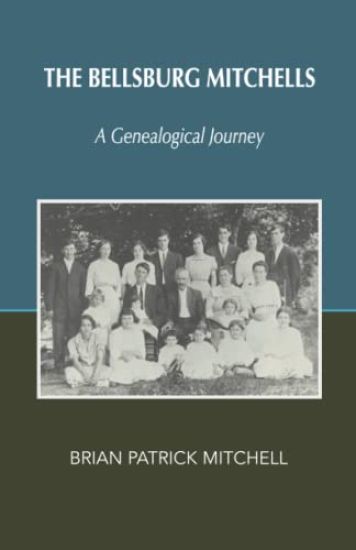
The Bellsburg Mitchells tells the story of a search for ancestors among the settlers of Tennessee's Dickson, Robertson, and Cheatham Counties and also among their predecessors in the American colonies and Western Europe. The search was begun by the author's father in 1986 and has been furthered by the author in this century with the aid of the Internet and the latest DNA technology, with surprising results. While focusing on the author's Mitchell forebears, the story includes names, dates, details, and trees for nearly ninety of the author's father's ancestors, both paternal and maternal. These ancestors connect the author to the Pilgrims who sailed with the Mayflower in 1620; to five of the original thirteen colonies-Massachusetts, Pennsylvania, Virginia, North Carolina, and South Carolina; to England, Scotland, Wales, Ireland, France, Germany, and Switzerland; and to one U.S. President, Richard Nixon. Thoroughly researched and expertly written, The Bellsburg Mitchells makes a complicated investigation comprehensible and enjoyable, entertaining readers on every page with interesting details of life long ago. Readers will learn a lot about American and European history and culture as well as about the methods and pitfalls of genealogical research. Family names: Absten, Baxter, Bell, Binckele, Binggeli, Binkley, Bonney, Burri, Compton, Dauge, Deane, Doane, Dozier, Durrant, Etheridge, Frey, Fry, Gibbs, Gregory, Haile, Harris, Hogan, Hon, Keuhlin, Meyer, Mitchell, Morris, Munden, Oberdorfer, Page, Penquite, Petree, Ralston, Rawlston, Ring, Rolestone, Rollestone, Rolston, Rolstone, Roulston, Schall, Schaub, Schmidt, Sharpe, Simmons, Simpkins, Smith, Speight, Spring, Stewart, Twenynge, Twining, Weissenbach, Zbindon, Zimmerman.
Political partisans want you to choose only between Left and Right, Red and Blue, Us and Them. But the reality is that Americans are deeply divided in more ways than one, and the savvy voter, no less than the savvy politician, must make more sense of things. Eight Ways to Run the Country explains what conventional political theory cannot, offering a profoundly illuminating look at our political past and our present differences. Eight Ways doesn't do away with Left and Right, but it defines them in better terms and adds a whole new dimension to explain what Left and Right can't. It correctly pegs the ideological poles and thus brings easy-to-understand order to the dizzying diversity of political perspectives. It places neoconservatives into historical context, illuminating both what they share with other conservatives and how their differences have wrought a change in the character of the Right. It explains the recurring attempts to define an independent, non-ideological center. It provides the best definition of populism to be found. Finally, it relates the political heritage of the American Founders to the politics of today.
A Crown of Life is an epic romance spanning ten pivotal years in the history of the world, beginning in 303, when churches were closed, books were burned, and Christians were forbidden to assemble and later forced to prove their loyalty to the empire by offering a sacrifice to the government's gods. Thousands chose death instead, in what has been known since as the Great Persecution. Vividly written, with surprising twists, heart-pounding drama, a colorful cast of endearing characters good and bad, and profound insight into life's deepest mysteries, A Crown of Life is an inspiring tale of Christian faith in the face of death. You will cheer. You will weep. You will fall in love. You will learn why they believed and why they died.
For all the recent research on deaconesses in the early Church, we still know very little about them, for two reasons: First, their duties were very limited, so there isn't much said about them in ancient texts. Second, their presence was also very limited: There weren't many of them anywhere outside Constantinople. In many places, there weren't any at all, and for a long time, there weren't any anywhere in the Orthodox Church. Why? The Disappearing Deaconess examines not just the evidence of their existence but also patristic teaching on male and female and the evolution of various ministries in the early Church to conclude that the office of deaconess was inherently problematic for early Christians because it appeared to elevate women over men in the hierarchy of the Church, contrary to Christian beliefs about both the natural order and the divine economy. The book first summarizes what is known about deaconesses in the early Church, weighing various explanations for their decline and disappearance, then it surveys early Christian teaching on gender to provide a broader context for understanding the female diaconate before tracing the hierarchical evolution of Church organization-from the many more or less informal offices mentioned in the New Testament to the emergence of the clerical orders we know today, with increasing emphasis on the distinction of clergy and laity leading to the concept of "hierarchy" as understood by the sixth-century writer known as Pseudo-Dionysius. The Disappearing Deaconess also includes two important appendices addressing proposals to reinstitute the order of deaconess and the larger issue of male and female as understood by the Orthodox Church. The first appendix is "A Public Statement on Orthodox Deaconesses by Concerned Clergy and Laity," signed by fifty-seven Orthodox clergymen and lay leaders and released January 15, 2018. The second appendix is the author's remarks at a conference on "Renewing the Male and Female Diaconate" organized by the St. Phoebe Center for the Deaconess, held in Irvine, California, on October 7, 2017. These remarks set forth a theological basis for the distinction of male and female as the key to understanding many gender issues, including the exclusion of women from clerical orders.
Is the difference of male and female to be ""completely shaken off"" so that men and women are no longer men and women but merely human beings? The great seventh-century saint Maximus the Confessor said yes, but such thinking is difficult if not impossible to reconcile with much else in Christian tradition that obliges men and women to live as either men or women. Origen's Revenge contrasts the two main sources of early Christian thinking on male and female: the generally negative view of Greek philosophy, limiting sexual distinction to the body and holding the body in low regard, and the much more positive view of Hebrew Scripture, in which sexual distinction and reproduction are both deemed naturally good and necessary for human existence. These two views account for much of the controversy in early Christianity concerning marriage and monasticism. They also still contribute to current controversies over sex roles, gender identity, and sexual ethics. Origen's Revenge also develops the more Hebrew line of early Christian thought to propose a new understanding of male and female with a firmer grounding in scripture, tradition, theology, and philosophy and with profound implications for all human relationships, whether social, political, or spiritual.
Climate Crisis, The
Mateo Martínez Abarca; Alberto Acosta; Ashley Brian; Bassey Nnimmo; Andrew Bennie; Bond Patrick; Cock Jacklyn; Fig David; Dorothy Grace Guerrero; Marais Hein; Desné Masie; Athish Satgoor; Pablo Sólon; Christelle Terreblanche; Williams Michelle; Satgar Vishwas; Pillay Devan
Wits University Press
2018
nidottu
Capitalism’s addiction to fossil fuels is heating our planet at a pace and scale never before experienced. Extreme weather patterns, rising sea levels and accelerating feedback loops are a commonplace feature of our lives. The number of environmental refugees is increasing and several island states and low-lying countries are becoming vulnerable. Corporate-induced climate change has set us on an ecocidal path of species extinction. Governments and their international platforms such as the Paris Climate Agreement deliver too little, too late. Most states, including South Africa, continue on their carbon-intensive energy paths, with devastating results. Political leaders across the world are failing to provide systemic solutions to the climate crisis. This is the context in which we must ask ourselves: how can people and class agency change this destructive course of history? Volume three in the Democratic Marxism series, The Climate Crisis investigates ecosocialist alternatives that are emerging. It presents the thinking of leading climate justice activists, campaigners and social movements advancing systemic alternatives and developing bottom-up, just transitions to sustain life. Through a combination of theoretical and empirical work, the authors collectively examine the challenges and opportunities inherent in the current moment. This volume builds on the class-struggle focus of Volume 2 by placing ecological issues at the center of democratic Marxism. Most importantly, it explores ways to renew historical socialism with democratic, ecosocialist alternatives to meet current challenges in South Africa and the world.
Are You In Christ Revised (Part 2) by Reverend Dr. Brian Richards: Baptism of Fire
Reverend Brian Patrick Richards
Independently Published
2019
nidottu
Selling on Amazon: How You Can Make A Full-Time Income Selling On Amazon
Brian Patrick
Createspace Independent Publishing Platform
2013
nidottu
Find Retail Products In Your Local Retail Stores & Resell Them On Amazon For PROFITS Of 300% And Higher Whether your are looking for extra income, or seeking a full-time business opportunity, this book will explain the exact online selling process anyone can replicate, but very few do. Learn how I make close to $3,000 a month with Amazon by reselling items found in local retail stores. I only work part time hours, and am able to do this while maintaining a full time job. In this book you will be exposed to the very business model I follow - one that eliminates most of the risk that other online sellers face, and creates a system where Amazon does most of the work for you. I refer to this business model as "Retail Flipping" - which is ultimately the process of buying extremely discounted products from your local brick and mortar stores and reselling for high profits on Amazon. Why Selling On Amazon Is the Best Home Based Business For Almost Anybody By 2014, online retail sales are projected to hit $250 billion. Start today by leveraging Amazon's online marketplace and become one of the early entrants to the fastest growing and most profitable industry. In this book you will learn: The reselling business model I follow, which allows me to make a full time salary in less than 18 hours of work a month How to find highly profitable items anywhere to sell on Amazon for up to a 10x markup How to leverage Amazon's e-commerce platform so you work less, focus on the highly profitable tasks, and earn more than other sellers Bonus Case Study Walk with me as I fully document one of my recent months selling on Amazon. I break down the numbers, inventory, sales, and strategy that helped me earn $2,800 in PROFIT. You will see first hand how my system works, and how you can replicate or surpass my efforts in a matter of weeks.
How To Create A Website Using Wordpress: The Beginner's Blueprint for Building a Professional Website in Less Than 60 Minutes
Brian Patrick
Createspace Independent Publishing Platform
2013
nidottu
Selling On eBay: The Beginner's Guide For How To Sell On eBay
Brian Patrick
Createspace Independent Publishing Platform
2013
nidottu
Selling on Amazon: How You Can Make A Full-Time Income Selling On Amazon
Brian Patrick
Createspace Independent Publishing Platform
2014
nidottu
Selling On eBay: The Beginner's Guide For How To Sell On eBay
Brian Patrick
Createspace Independent Publishing Platform
2014
nidottu
Selling on Shopify: How to Create an Online Store & Profitable eCommerce Busines
Brian Patrick
Createspace Independent Publishing Platform
2014
nidottu
The South Pacific is a vast expanse of ocean—over 50 million km²—with tiny scattered islands and island groups. From Kiribati, Tuvalu, and Fiji in the west, to the far-flung Marquesas and Austral Islands in French Polynesia in the east, this book surveys and discovers the butterfly inhabitants of these tropical islands. For completeness, Hawai’i to the north—where there are many fewer islands in an otherwise empty ocean—is included. To the south and with a much larger land area, lies temperate New Zealand, with a further string of islands reaching into subantarctic waters.
Jean Gerson and the Last Medieval Reformation
Brian Patrick McGuire
Pennsylvania State University Press
2005
sidottu
In this biography of the noted French philosopher and theologian Jean Gerson, the first since 1929, Brian Patrick McGuire presents a compelling portrait of Gerson as a voice of reason and Christian humanism during a time of great intellectual and social tumult in the late Middle Ages. Born to a peasant father and mother in the county of Champagne, Gerson (1363–1429) was the first of twelve children. He overcame his modest beginnings to become a scholastic and vernacular theologian, a university intellectual, and a church reformer. McGuire shows us the turning points in Gerson’s life, including his crisis of faith after becoming chancellor of the University of Paris in 1395. Through these key moments, we see the deeper undercurrents of his mystical writings. With their rich display of spiritual and emotional life, these writings were to earn Gerson the appellation “doctor christianissimus.” In turn, they would influence many later thinkers, including Nicholas of Cusa, Ignatius of Loyola, Francis de Sales, and even Martin Luther. Gerson is a man perhaps easier to admire than to love: conscientious to a fault, at once a pragmatist and an idealist in church politics, a university intellectual who both fostered and distrusted the religious aspirations of the laity, a powerful prelate who moved among the great yet never forgot his peasant origins, a self-revealing yet intensely private man who yearned for intimacy almost as much as he feared it. McGuire ably situates Gerson in the context of his age, an age replete with doctrinal controversies and the politics of papal schism on the eve of the Protestant Reformation. Gerson emerges as a proponent of dialogue and discussion, committed to reforming the church from within. His courageous effort to renew the unity of a unique civilization bears examination in our own time.
Jean Gerson and the Last Medieval Reformation
Brian Patrick McGuire
Pennsylvania State University Press
2005
pokkari
In this biography of the noted French philosopher and theologian Jean Gerson, the first since 1929, Brian Patrick McGuire presents a compelling portrait of Gerson as a voice of reason and Christian humanism during a time of great intellectual and social tumult in the late Middle Ages. Born to a peasant father and mother in the county of Champagne, Gerson (1363–1429) was the first of twelve children. He overcame his modest beginnings to become a scholastic and vernacular theologian, a university intellectual, and a church reformer. McGuire shows us the turning points in Gerson’s life, including his crisis of faith after becoming chancellor of the University of Paris in 1395. Through these key moments, we see the deeper undercurrents of his mystical writings. With their rich display of spiritual and emotional life, these writings were to earn Gerson the appellation “doctor christianissimus.” In turn, they would influence many later thinkers, including Nicholas of Cusa, Ignatius of Loyola, Francis de Sales, and even Martin Luther. Gerson is a man perhaps easier to admire than to love: conscientious to a fault, at once a pragmatist and an idealist in church politics, a university intellectual who both fostered and distrusted the religious aspirations of the laity, a powerful prelate who moved among the great yet never forgot his peasant origins, a self-revealing yet intensely private man who yearned for intimacy almost as much as he feared it. McGuire ably situates Gerson in the context of his age, an age replete with doctrinal controversies and the politics of papal schism on the eve of the Protestant Reformation. Gerson emerges as a proponent of dialogue and discussion, committed to reforming the church from within. His courageous effort to renew the unity of a unique civilization bears examination in our own time.
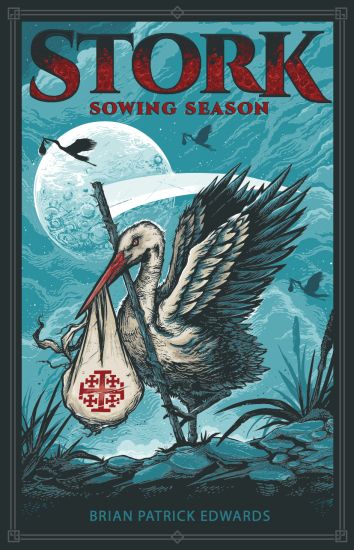
Famine, Pestilence, Conquest, and Death have stormed the earth leaving it infertile for new human life. The people have surrendered their freedoms to the reign of a tyrannical technocracy. This is the story of a family, of extremists, and their duties to God or His enemy. What things are neglected boys capable of when sheltered by the wicked? To what lengths would dying traditions go to survive? Families are broken and blood of the innocent is spilled by force. The Stork has become a harbinger of life and death.
Simon, a father of three and husband to the love of his life, can't stand it any longer. Where is Justice to be found in a world of cover-ups and payoffs? Are monsters to go unpunished? He will see Justice returned, by his own hands if it must. The sins of yesterday will spill forth with all revealed. What is a family man to do, knowing that predators continue to breathe? Will Justice be done?