Kirjojen hintavertailu. Mukana 11 244 527 kirjaa ja 12 kauppaa.

Kirjahaku

Etsi kirjoja tekijän nimen, kirjan nimen tai ISBN:n perusteella.

1000 tulosta hakusanalla Bryan D. Lowe

Ritualized Writing

Ritualized Writing

Bryan D. Lowe

University of Hawai'i Press
2017
sidottu
Ritualized Writing takes readers into the fascinating world of Japanese Buddhist manuscript cultures. Using archival sources that have received scant attention in English, primarily documents from an eighth-century Japanese scriptorium and colophons from sutra manuscripts, Bryan D. Lowe uncovers the ways in which the transcription of Buddhist scripture was a highly ritualized endeavor. He takes a ground-level approach by emphasizing the activities and beliefs of a wide range of individuals, including scribes, provincial patrons, and royals, to reassess the meaning of scripture and reevaluate scholarly narratives of Japanese Buddhist history.Copying scripture is a central Buddhist practice and one that thrived in East Asia. Despite this, there are no other books dedicated to the topic. This work demonstrates that patrons and scribes treated sutras differently from other modes of writing. Scribes purified their bodies prior to transcription. Patrons held dedicatory ceremonies on days of abstinence, when prayers were pronounced and sutras were recited. Transcribing sutras helped scribes and patrons alike realize this- and other-worldly ambitions and cultivate themselves in accord with Buddhist norms. Sutra copying thus functioned as a form of ritualized writing, a strategic practice that set apart scripture as uniquely efficacious and venerable. Lowe employs this notion of ritualized writing to challenge historical narratives about ancient Japan (late seventh through early ninth centuries), a period when sutra copying flourished. He contends that Buddhist practice fulfilled a variety of social, political, and spiritual roles beyond ideological justification. Moreover, he demonstrates the inadequacy of state-folk dichotomies for understanding the social groups, institutions, and individual beliefs and practices of ancient Japanese Buddhism, highlighting instead common organizations across social class and using models that reveal shared concerns among believers from diverse social backgrounds.Ritualized Writing makes broader contributions to the study of ritual and scripture by introducing the notion of scriptural cultures, an analytic tool that denotes a series of dynamic relationships and practices involving texts that have been strategically set apart or ritualized. Scripture, Lowe concludes, is at once a category created by humans and a body of texts that transforms individuals and social organizations who come into contact with it.
Ritualized Writing

Ritualized Writing

Bryan D. Lowe

UNIVERSITY OF HAWAI'I PRESS
2022
nidottu
Ritualized Writing takes readers into the fascinating world of Japanese Buddhist manuscript cultures. Using archival sources that have received scant attention in English, primarily documents from an eighth-century Japanese scriptorium and colophons from sutra manuscripts, Bryan D. Lowe uncovers the ways in which the transcription of Buddhist scripture was a highly ritualized endeavor. He takes a ground-level approach by emphasizing the activities and beliefs of a wide range of individuals, including scribes, provincial patrons, and royals, to reassess the meaning of scripture and reevaluate scholarly narratives of Japanese Buddhist history.Copying scripture is a central Buddhist practice and one that thrived in East Asia. Despite this, there are no other books dedicated to the topic. This work demonstrates that patrons and scribes treated sutras differently from other modes of writing. Scribes purified their bodies prior to transcription. Patrons held dedicatory ceremonies on days of abstinence, when prayers were pronounced and sutras were recited. Transcribing sutras helped scribes and patrons alike realize this- and other-worldly ambitions and cultivate themselves in accord with Buddhist norms. Sutra copying thus functioned as a form of ritualized writing, a strategic practice that set apart scripture as uniquely efficacious and venerable. Lowe employs this notion of ritualized writing to challenge historical narratives about ancient Japan (late seventh through early ninth centuries), a period when sutra copying flourished. He contends that Buddhist practice fulfilled a variety of social, political, and spiritual roles beyond ideological justification. Moreover, he demonstrates the inadequacy of state-folk dichotomies for understanding the social groups, institutions, and individual beliefs and practices of ancient Japanese Buddhism, highlighting instead common organizations across social class and using models that reveal shared concerns among believers from diverse social backgrounds.Ritualized Writing makes broader contributions to the study of ritual and scripture by introducing the notion of scriptural cultures, an analytic tool that denotes a series of dynamic relationships and practices involving texts that have been strategically set apart or ritualized. Scripture, Lowe concludes, is at once a category created by humans and a body of texts that transforms individuals and social organizations who come into contact with it.

O Segredo Bryan d'Colle.

O Segredo Bryan d'Colle.

Jogonoli Draw

Independently Published
2018
nidottu
Em uma noite de ventos fortes e uivantes, mulheres s o assassinadas a sangue frio. A pol cia precisa resolver este caso antes que amanhe a ou mais vidas ser o perdidas. O Delegado Marcos chama seu velho amigo, spero e preciso, o investigador Bryan. Um homem perfeccionista, um investigador que v as pistas onde ningu m seria capaz de prever. Ele ser capaz de desvendar todos os segredos mais ocultos, antes da meia noite. Tente descobrir o maior de todos os segredos antes da pr xima v tima...
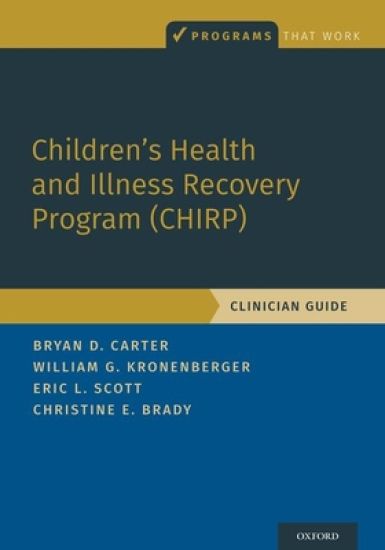
Children's Health and Illness Recovery Program (CHIRP)

Children's Health and Illness Recovery Program (CHIRP)

Bryan D. Carter; William G. Kronenberger; Eric L. Scott; Christine E. Brady

Oxford University Press Inc
2020
nidottu
Youth with chronic illness, particularly when accompanied by debilitating, painful and/or fatiguing symptoms, face challenges that may prove disruptive to their normal physical, psychological and social developmental trajectories. Derived from six decades of combined experience from authors, Bryan D. Carter, William G. Kronenberger, Eric L. Scott, and Christine E. Brady, The Children's Health and Illness Recovery Program (CHIRP) is an interdisciplinary cognitive behavioral and family systems-based treatment program designed to maximize the independent functioning of teens with chronic illness. The CHIRP Clinician Guide is a detailed outline for implementing this manualized treatment protocol over the course of twelve sessions and provides clear guidance as to the philosophy, pragmatics and art of working with this challenging pediatric population. Designed to accompany the CHIRP Teen and Family Workbook, The Clinician Guide equips practitioners with specific assessment measures and the tools needed to establish a collaborative treatment team approach that incorporates the skills of the CHIRP clinician, primary care and specialty physicians, and the various other healthcare (e.g., physical therapists, occupational therapists, etc.) and educational professionals critical to the successful management and treatment of these youth.
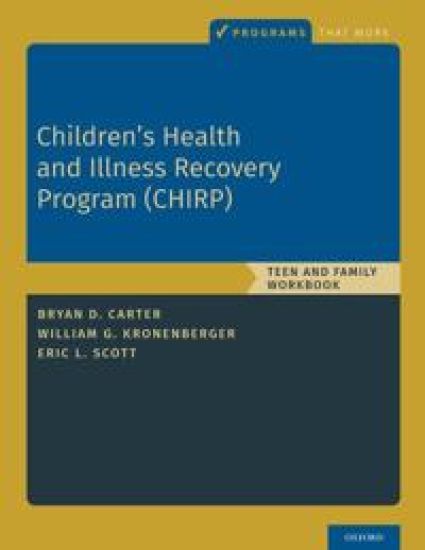
Children's Health and Illness Recovery Program (CHIRP)

Children's Health and Illness Recovery Program (CHIRP)

Bryan D. Carter; William G. Kronenberger; Eric L. Scott

Oxford University Press Inc
2020
nidottu
Children and adolescents with chronic illnesses, particularly those accompanied by debilitating, painful and/or fatiguing symptoms, face challenges that may prove disruptive to physical, psychological and social development. Based on extensive research and clinical expertise, Children's Health and Illness Recovery Program (CHIRP) is an effective treatment program designed to build and maintain independence in young people with chronic illness. This Teen and Family Workbook provides proven treatment activities designed to combat the additional stress faced by youth coping with long-term health problems. These tasks target key areas for improvement in physical functioning, school functioning, and personal functioning and support the creation of new tools for managing the impact of illness, such as stress management, coping and relaxation techniques, and communication skills. In-session and take-home activities outlined in this workbook are meant to accompany the companion CHIRP Clinician Guide. With the use of this workbook and supported by a network of clinicians, healthcare specialists, and school professionals, adolescents and their families can return to a better quality of life.
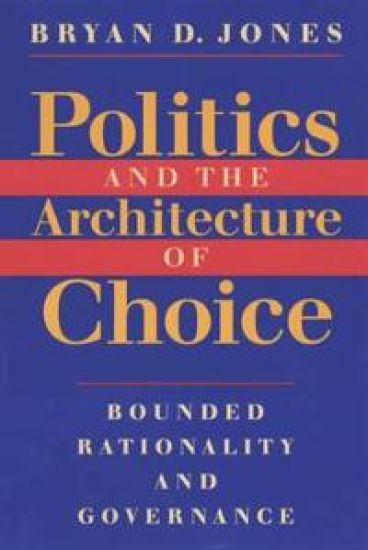
Politics and the Architecture of Choice

Politics and the Architecture of Choice

Bryan D. Jones

University of Chicago Press
2001
sidottu
This text draws on work in political science, economics, cognitive science and psychology to offer an innovative theory of how people and organizations adapt to change and why these adaptations do not always work. The author argues that our decision-making capabilities are rational and adaptive, but because our rationality is bounded and our adaptability limited, our actions are not based simply on objective information from our environments. Instead, we overemphasize some factors and neglect others, and our inherited limitations - such as short-term memory capacity - all act to affect our judgement.
Politics and the Architecture of Choice

Politics and the Architecture of Choice

Bryan D. Jones

University of Chicago Press
2001
nidottu
This text draws on work in political science, economics, cognitive science and psychology to offer an innovative theory of how people and organizations adapt to change and why these adaptations do not always work. The author argues that our decision-making capabilities are rational and adaptive, but because our rationality is bounded and our adaptability limited, our actions are not based simply on objective information from our environments. Instead, we overemphasize some factors and neglect others, and our inherited limitations - such as short-term memory capacity - all act to affect our judgement.
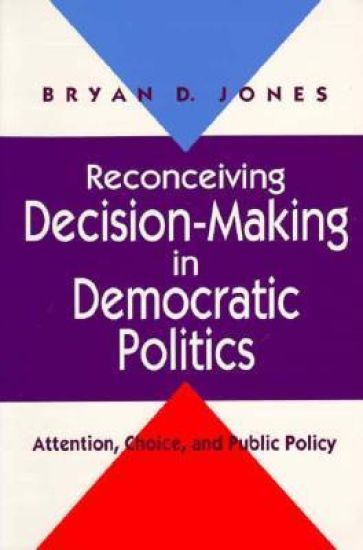
Reconceiving Decision-Making in Democratic Politics

Reconceiving Decision-Making in Democratic Politics

Bryan D. Jones

University of Chicago Press
1995
sidottu
Most models of political decision-making maintain that individual preferences remain relatively constant. Why, then, are there often sudden abrupt changes in public opinion on political issues? Or total reversals in congressional support for specific legislation, as happened with the voting on the Superconducting Supercollider? Bryan D. Jones answers these questions by connecting insights from cognitive science and rational choice theory to political life. Individuals and political systems alike, Jones argues, tend to be attentive to only one issue at a time. Using numerous examples from elections, public-opinion polls, congressional deliberations and bureaucratic decision-making, he shows how shifting attentiveness can and does alter choices and political outcomes - even when underlying preferences remain relatively fixed. An individual, for example, may initially decide to vote for a candidate because of her stand on spending, but change his vote when he learns of her position on abortion, never really balancing the two options.
Reconceiving Decision-Making in Democratic Politics

Reconceiving Decision-Making in Democratic Politics

Bryan D. Jones

University of Chicago Press
1995
nidottu
Most models of political decision-making maintain that individual preferences remain relatively constant. Why, then, are there often sudden abrupt changes in public opinion on political issues? Or total reversals in congressional support for specific legislation, as happened with the voting on the Superconducting Supercollider? Bryan D. Jones answers these questions by connecting insights from cognitive science and rational choice theory to political life. Individuals and political systems alike, Jones argues, tend to be attentive to only one issue at a time. Using numerous examples from elections, public-opinion polls, congressional deliberations and bureaucratic decision-making, he shows how shifting attentiveness can and does alter choices and political outcomes - even when underlying preferences remain relatively fixed. An individual, for example, may initially decide to vote for a candidate because of her stand on spending, but change his vote when he learns of her position on abortion, never really balancing the two options.
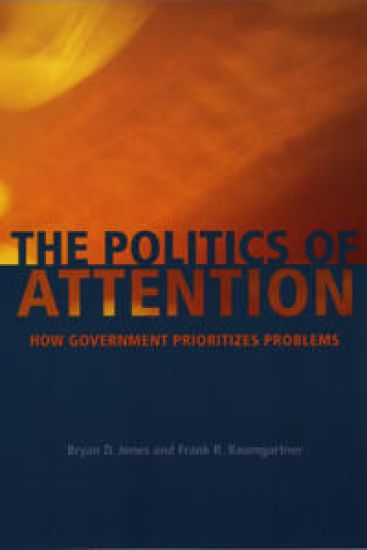
The Politics of Attention

The Politics of Attention

Bryan D. Jones; Frank R. Baumgartner

University of Chicago Press
2005
nidottu
On any given day, policymakers are required to address a multitude of problems and make decisions about a variety of issues, from the economy and education to health care and defense. This has been true for years, but until now no studies have been conducted on how politicians manage the flood of information from a wide range of sources. How do they interpret and respond to such inundation? Which issues do they pay attention to and why? Bryan D. Jones and Frank R. Baumgartner answer these questions on decision-making processes and prioritization in "The Politics of Attention". Analyzing fifty years of data, Jones and Baumgartner's book is the first study of American politics based on a new information-processing perspective. The authors bring together the allocation of attention and the operation of governing institutions into a single model that traces public policies, public and media attention to them, and governmental decisions across multiple institutions. "The Politics of Attention offers a groundbreaking approach to American politics based on the responses of policymakers to the flow of information. It asks how the system solves, or fails to solve, problems rather than looking to how individual preferences are realized through political action.
The Great Broadening

The Great Broadening

Bryan D Jones; Sean M Theriault; Michelle Whyman

University of Chicago Press
2019
sidottu
Beginning in the late 1950s and continuing through the 1970s, the United States experienced a vast expansion in national policy making. During this period, the federal government extended its scope into policy arenas previously left to civil society or state and local governments. With The Great Broadening, Bryan D. Jones, Sean M. Theriault, and Michelle Whyman examine in detail the causes, internal dynamics, and consequences of this extended burst of activity. They argue that the broadening of government responsibilities into new policy areas such as health care, civil rights, and gender issues and the increasing depth of existing government programs explain many of the changes in America politics since the 1970s. Increasing government attention to particular issues was motivated by activist groups. In turn, the beneficiaries of the government policies that resulted became supporters of the government’s activity, leading to the broad acceptance of its role. This broadening and deepening of government, however, produced a reaction as groups critical of its activities organized to resist and roll back its growth.
The Great Broadening

The Great Broadening

Bryan D Jones; Sean M Theriault; Michelle Whyman

University of Chicago Press
2019
pokkari
Beginning in the late 1950s and continuing through the 1970s, the United States experienced a vast expansion in national policy making. During this period, the federal government extended its scope into policy arenas previously left to civil society or state and local governments. With The Great Broadening, Bryan D. Jones, Sean M. Theriault, and Michelle Whyman examine in detail the causes, internal dynamics, and consequences of this extended burst of activity. They argue that the broadening of government responsibilities into new policy areas such as health care, civil rights, and gender issues and the increasing depth of existing government programs explain many of the changes in America politics since the 1970s. Increasing government attention to particular issues was motivated by activist groups. In turn, the beneficiaries of the government policies that resulted became supporters of the government's activity, leading to the broad acceptance of its role. This broadening and deepening of government, however, produced a reaction as groups critical of its activities organized to resist and roll back its growth.
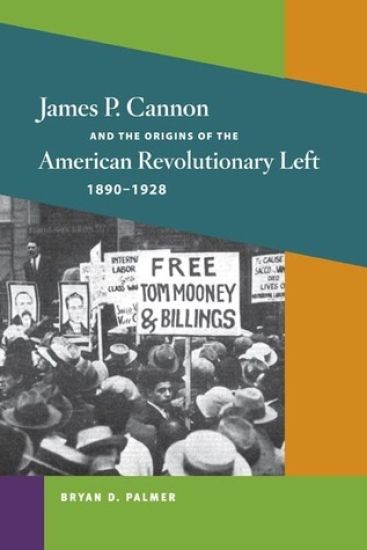
James P. Cannon and the Origins of the American Revolutionary Left, 1890-1928
Bryan D. Palmer's award-winning study of James P. Cannon's early years (1890-1928) details how the life of a Wobbly hobo agitator gave way to leadership in the emerging communist underground of the 1919 era. This historical drama unfolds alongside the life experiences of a native son of United States radicalism, the narrative moving from Rosedale, Kansas to Chicago, New York, and Moscow. Written with panache, Palmer's richly detailed book situates American communism's formative decade of the 1920s in the dynamics of a specific political and economic context. Our understanding of the indigenous currents of the American revolutionary left is widened, just as appreciation of the complex nature of its interaction with international forces is deepened.
James P. Cannon and the Origins of the American Revolutionary Left, 1890-1928
Bryan D. Palmer's award-winning study of James P. Cannon's early years (1890-1928) details how the life of a Wobbly hobo agitator gave way to leadership in the emerging communist underground of the 1919 era. This historical drama unfolds alongside the life experiences of a native son of United States radicalism, the narrative moving from Rosedale, Kansas to Chicago, New York, and Moscow. Written with panache, Palmer's richly detailed book situates American communism's formative decade of the 1920s in the dynamics of a specific political and economic context. Our understanding of the indigenous currents of the American revolutionary left is widened, just as appreciation of the complex nature of its interaction with international forces is deepened.
The Rise and Fall of the Incomparable Liturgy

The Rise and Fall of the Incomparable Liturgy

Bryan D. Spinks

SPCK Publishing
2017
pokkari
'The Peace of God, which passeth all understanding, keep your hearts and minds in the knowledge and the love of God, and of his Son Jesus Christ our Lord.' The Book of Common Prayer, with local variations, is still used in churches inside and outside the Anglican Communion in over 50 countries and in over 150 languages. The Rise and Fall of the Incomparable Liturgy is the first study to trace the evolution and reception of the BCP, from the Elizabethan settlement of 1559 to the Royal Commission report of 1906, when work on a new prayer book was begun. Written by a world authority, here is an illuminating and highly readable account of the ascent and decline of a world classic, which still informs our common language as well as much of the great literature of the past four centuries. It will appeal not only to students of liturgy but also to general readers interested in history, literature, theology and cultural studies.
Do this in Remembrance of Me

Do this in Remembrance of Me

Bryan D. Spinks

SCM Press
2013
nidottu
Bryan Spinks is one of the world’s leading scholars in the field of liturgy and to have a comprehensive work by him on the Eucharist is a major catch for SCM. Like the author’s previous work on Baptism, this will become a standard work about the Eucharist and Eucharistic theology worldwide. The book, a study of the history and theology of the Eucharist, is the fifth volume in the SCM Studies in Worship and Liturgy series and will help to establish the series as a place for landmark books of liturgical scholarship. This book will be aimed at undergraduate and graduate theology students, clergy and theologically literate laity. It will assume some technical knowledge (i. e. it is not an introduction to liturgy or introduction to sacraments), but will attempt to outline what the evidence is, and what current scholars think. On occasions it will advance or argue for why one interpretation is preferable to another.
Do this in Remembrance of Me

Do this in Remembrance of Me

Bryan D. Spinks

SCM Press
2013
sidottu
Bryan Spinks is one of the world’s leading scholars in the field of liturgy and to have a comprehensive work by him on the Eucharist is a major catch for SCM. Like the author’s previous work on Baptism, this will become a standard work about the Eucharist and Eucharistic theology worldwide. The book, a study of the history and theology of the Eucharist, is the fifth volume in the SCM Studies in Worship and Liturgy series and will help to establish the series as a place for landmark books of liturgical scholarship. This book will be aimed at undergraduate and graduate theology students, clergy and theologically literate laity. It will assume some technical knowledge (i. e. it is not an introduction to liturgy or introduction to sacraments), but will attempt to outline what the evidence is, and what current scholars think. On occasions it will advance or argue for why one interpretation is preferable to another.
The New American Politics

The New American Politics

Bryan D Jones

Routledge
2019
sidottu
Was 1992 a realigning election? Did the midterm elections of 1994 realign the realignment? Will 1996 carry the United States forward on yet another changed trajectory? In this volume of original essays, leading political scientists examine key components of the American agenda and assess the current administration's position in light of historical
The Sanctus in the Eucharistic Prayer

The Sanctus in the Eucharistic Prayer

Bryan D. Spinks

Cambridge University Press
2002
pokkari
The sanctus (the ‘thrice holy’of Isaiah 6.3) is found in nearly all ancient and modern eucharistic prayer. Its origin as a constituent element in this prayer is one of the unsolved mysteries of Christian liturgy, and the author of this study puts forward a comprehensive investigation into its background and sources. In making his enquiry, Dr Spinks shows that earliest attestations of its use derive from Syria and Palestine. This evidence is then matched against current theories of the origin of the eucharistic prayer, which leads the author to state his theories about the likely origin of the sanctus, and the implications this has for theories of anaphoral evolution. The use of the sanctus from the seventh century through to the present is described, a survey which takes note of the innovatory uses of Cranmer and Luther, and which places the study of the sanctus in a wide theological context.