
Kirjahaku
Etsi kirjoja tekijän nimen, kirjan nimen tai ISBN:n perusteella.
1000 tulosta hakusanalla Bryan Healey



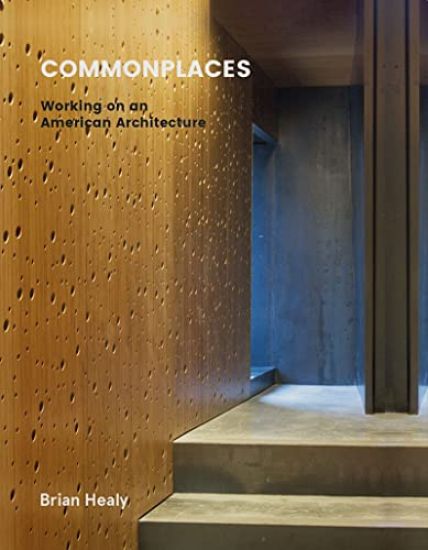
COMMONPLACES is the second volume of drawings, models, and photography to explore the work of this nationally recognized Boston based firm. As architects with decades of experience, we bring a commitment to creating shared communal places and we understand that a city - or a campus - is an ever- changing phenomenon. Our passion as architects has to do with how those places evolve and our goal is to contribute to a forward-looking vision of what they can become – of how they can be an appropriate addition to what is already there. The opportunities are always based on research, outreach, experimentation, and collaboration between often seemingly divergent interests. But we believe in that collaborative process and we recognize that there will be many fingerprints on what is developed. We also make an honest acknowledgement to ourselves that things could be done differently – that a different proposition could always be made. Brian Healy is an architect who works within the modern American tradition. That is to say, he endeavors to engage the tradition of practice as exemplified by architects such as Louis Sullivan, Frank Lloyd Wright and Louis I. Kahn. It takes considerable courage to engage the American tradition of practice today, in a time dominated by an obsessive emphasis on universal “globalization,” and the parallel loss of local place, culture and identity. Yet, as Paul Ricoeur stated over forty years ago, while universal civilization is available around the world, and is desired by everyone, anywhere, there is no culture that is not local, that does not belong to a particular place. In his work, Healy endeavors to seek the essence of his discipline, architecture, as defined by its place and time—an American architecture, born of the commonplace and the vernacular, yet at the same time engaging the great works of our modern predecessors. – Robert McCarter
Healing the Healer: Positive Affirmations for the Healing Professions
Hendrik Bryan Lai
Veridian Health Solutions
2017
nidottu
Clerical Ideology in a Revolutionary Age
Brian F. Connaughton; Mark A. Healey
University of Calgary Press
2003
sidottu
Clerical Ideology in a Revolutionary Age clearly delineates the role of the Catholic Church in the making of Mexico as a nation. It provides a nuanced sense of clerical thought during the turbulent years leading to and following Mexico's national independence. Connaughton delves deeply into various primary sources from Guadalajara between 1788 and 1853, including printed sermons of high clergymen, contemporaneous newspapers, pamphletry, and pastoral letters.Analyzing this literature in the broader context of the Enlightenment, Connaughton looks at the Enlightenment's potentially corrosive ideas, the rise of liberalism, the complex relationship between Church and State, and the spread of secular mentality.With a balanced approach to clerical discourse, this study of the substance, contradictions, and evolution of Church thinking and political posturing in the face of Bourbon Reforms and the rise of liberalism should be required reading for any student or scholar of Mexican history.

Clerical Ideology in a Revolutionary Age
Brian F. Connaughton; Mark A. Healey
University of Calgary Press
2003
nidottu
Clerical Ideology in a Revolutionary Age clearly delineates the role of the Catholic Church in the making of Mexico as a nation. It provides a nuanced sense of clerical thought during the turbulent years leading to and following Mexico's national independence. Connaughton delves deeply into various primary sources from Guadalajara between 1788 and 1853, including printed sermons of high clergymen, contemporaneous newspapers, pamphletry, and pastoral letters.Analyzing this literature in the broader context of the Enlightenment, Connaughton looks at the Enlightenment's potentially corrosive ideas, the rise of liberalism, the complex relationship between Church and State, and the spread of secular mentality. With a balanced approach to clerical discourse, this study of the substance, contradictions, and evolution of Church thinking and political posturing in the face of Bourbon Reforms and the rise of liberalism should be required reading for any student or scholar of Mexican history.
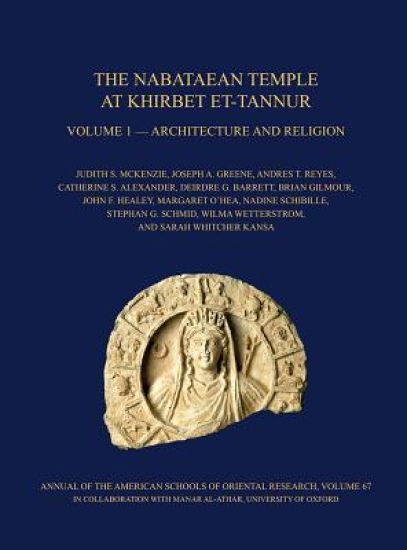
The Nabataean Temple at Khirbet et-Tannur, Jordan, Volume 1
Judith S. McKenzie; Joseph A. Greene; Andres T. Reyes; Catherine S. Alexander; Deirdre G. Barrett; Brian Gilmour; John F. Healey; Margaret O’Hea; Nadine Schibille; Stephan G. Schmid; Wilma Wetterstrom; Sara Whitcher Kansa
American Schools of Oriental Research
2014
sidottu
Khirbet et-Tannur is a Nabataean site dating from the second century B.C. to the fourth to sixth centuries A.D. located on a hilltop above the Wadi el-Hasa near Khirbet edh-Dharih, 70 km north of Petra along the King’s Highway. In 1937, Nelson Glueck excavated Khirbet et-Tannur on behalf of the American Schools of Oriental Research and the Department of Antiquities of Transjordan, but died before completing a final report. Now, in two extensively illustrated volumes, the results of Glueck’s excavations are finally published, based on previously unstudied excavation records and archaeological materials in the ASOR Nelson Glueck Archive at the Semitic Museum, Harvard University. Volume 1 is devoted to the architecture of the temple, the dating of its successive phases, its sculptural decoration and iconography,and to a discussion of Nabataean religion, including the evidence for its connections with the religion of Iron Age Edom and its continuation at the temple of Khirbet et-Tannur well into the Christian era, before the A.D. 363 earthquake brought an end to the site. The volume closes with observations about iconoclasm at Khirbet et-Tannur, Khirbet edh-Dharih and Petra. Annual of ASOR 67

The Nabataean Temple at Khirbet et-Tannur, Jordan, Volume 2
Judith S. McKenzie; Joseph A. Greene; Andres T. Reyes; Catherine S. Alexander; Deirdre G. Barrett; Brian Gilmour; John F. Healey; Margaret O’Hea; Nadine Schibille; Stephan G. Schmid; Wilma Wetterstrom; Sara Whitcher Kansa
American Schools of Oriental Research
2014
sidottu
Khirbet et-Tannur is a Nabataean site dating from the second century B.C. to the fourth to sixth centuries A.D. located on a hilltop above the Wadi el-Hasa near Khirbet edh-Dharih, 70 km north of Petra along the King’s Highway. In 1937, Nelson Glueck excavated Khirbet et-Tannur on behalf of the American Schools of Oriental Research and the Department of Antiquities of Transjordan, but died before completing a final report. Now, in two extensively illustrated volumes, the results of Glueck’s excavations are finally published, based on previously unstudied excavation records and archaeological materials in the ASOR Nelson Glueck Archive at the Semitic Museum, Harvard University. Volume 2 offers a systematic reorganization of Glueck’s original excavation records and presents detailed specialist analyses of the Khirbet et-Tannur faunal and botanical remains, metal, glass, lamps and pottery collected by Glueck in 1937 and now preserved in Semitic Museum’s ASOR Nelson Glueck Archive, along with fresh examinations of the Nabataean inscriptions and altars from the site. Annual of ASOR 68
Be still. For some, these two simple words a welcome invitation to slow down. For others, they feel impossible, out of reach in our increasingly noisy world, or simply just too hard to maintain. There is another way. In fact, there are many. In this practical, easy-to-read guide, Brian Heasley explores the multitude of rhythms of Christian prayer and devotion available to every believer. From memorising scripture and prayer running to noticing beauty everywhere, he demonstrates how we don’t need to be static for our hearts to be still, and how even in the midst of a full, busy life, we can spend quiet time with God. Be Still is a prayer book for anyone looking for ways to revitalise the way they pray or who is struggling to make space for devotional time with God. Packed full of ideas for different ways to pray and tips and advice for how to build prayer practices into everyday life, Brian's book will change the way you think about prayer and devotion and equip you with all the tools you need to deepen your relationship with God. You can use the book individually or in small groups, or read it alongside 24-7 Prayer’s new Be Still prayer course. It also makes a great resource for youth leaders looking to help teenagers cultivate daily rhythms of prayer and spend more quiet time with God, or as a gift for people starting out on their faith journey or those returning to faith after a while. Join Brian Heasley, and discover the different ways in which we can all Be Still.
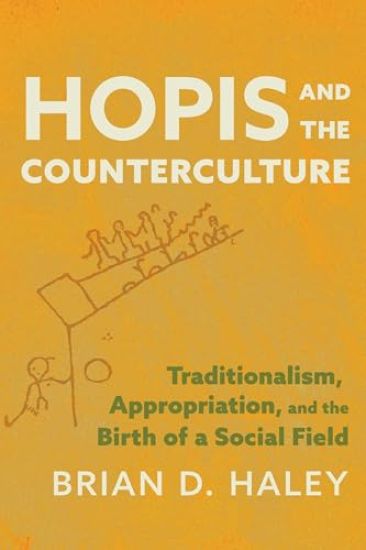
This book addresses how the Hopi became icons of the followers of alternative spiritualities and reveals one of the major pathways for the explosive appropriation of Indigenous identities in the 1960s. It reveals a largely unknown network of Native, non-Indian, and neo-Indian actors who spread misrepresentations of the Hopi that they created through interactions with the Hopi Traditionalist faction of the 1940s through 1980s. Significantly, many non-Hopis involved adopted Indian identities during this time, becoming “neo-Indians.” Exploring the new social field that developed to spread these ideas, Hopis and the Counterculture meticulously traces the trajectories of figures such as Ammon Hennacy, Craig Carpenter, Frank Waters, and the Firesign Theatre, among others. Drawing on insights into the interplay between primitivism, radicalism, stereotyping, and identity, Haley expands on concepts from scholars such as Roy Harvey Pearce’s notion of “isolated radicals” and Jonathan Friedman’s observations regarding the ascendancy of primitivism amid global crises. Haley scrutinizes the roles played by non-Hopi actors and the timing behind the widespread popularization of Hopi religious practices.
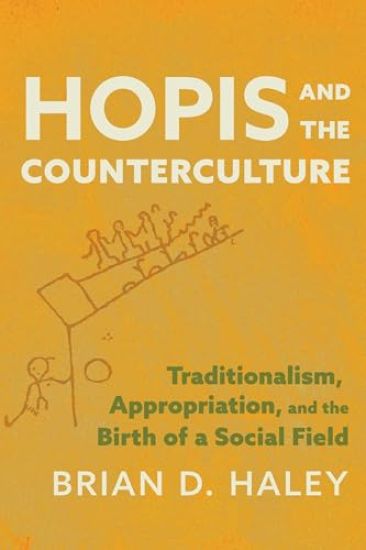
This book addresses how the Hopi became icons of the followers of alternative spiritualities and reveals one of the major pathways for the explosive appropriation of Indigenous identities in the 1960s. It reveals a largely unknown network of Native, non-Indian, and neo-Indian actors who spread misrepresentations of the Hopi that they created through interactions with the Hopi Traditionalist faction of the 1940s through 1980s. Significantly, many non-Hopis involved adopted Indian identities during this time, becoming “neo-Indians.” Exploring the new social field that developed to spread these ideas, Hopis and the Counterculture meticulously traces the trajectories of figures such as Ammon Hennacy, Craig Carpenter, Frank Waters, and the Firesign Theatre, among others. Drawing on insights into the interplay between primitivism, radicalism, stereotyping, and identity, Haley expands on concepts from scholars such as Roy Harvey Pearce’s notion of “isolated radicals” and Jonathan Friedman’s observations regarding the ascendancy of primitivism amid global crises. Haley scrutinizes the roles played by non-Hopi actors and the timing behind the widespread popularization of Hopi religious practices.
Are you looking for fresh ways to walk with, talk with, and listen to God?"Be still and know that I am God" is an invitation that has echoed throughout history. But how do we apply it to our daily lives? The reality is this: We don't need to be static for our hearts to be still. In the midst of a full, busy life, we can spend quiet time with God. Be Still is a prayer book for anyone looking to set aside intentional time with God and revitalize the way they pray. Brian Heasley shares what he has learned from his thirty-year prayer habit so that you can explore various ways to pray, including Scripture memorization, prayer running, or simply being more alert to God's work and his beauty everywhere.Consider how to develop a regular quiet time.Make space to let God's heart touch your heart.Learn to reflect with awe, reverence, and wonder.Unpack key topics with the option of group discussion.Grow and deepen your daily relationship with God.Cultivate a deeper desire to meet with God and to share his love with others.Packed full of ideas for different ways to pray and tips and advice for how to build prayer practices into everyday life, Be Still will change the way you think about prayer and devotion and equip you with all the tools you need to deepen your relationship with God. An excellent small group or mentoring tool as well as a resource for youth leaders and new believers. Companion guide to 24-7 Prayer's Be Still prayer course.

Lonely Planet New York City
Brian Healy; Rachel Chang; John Garry; Dana Givens; Michael Grosberg; Teddy Minford; Maya Stanton; Meena Thiruvengadam; Caroline Trefler
Lonely Planet Global Limited
2024
nidottu
Lonely Planet's local travel experts reveal all you need to know to plan the trip of a lifetime to New York City.Discover New York City's most popular experiences and best kept secrets - neighbourhood by neighbourhood - from exploring Central Park's 843 acres to taking a kayaking or stand-up paddleboarding class on the Hudson, and devouring world cuisine in the East Village.Build a trip to remember with Lonely Planet's New York City travel guide:Our classic guidebook format provides you with the most comprehensive level of information for planning trips of 1-2 weeks or moreUpdated with an all new structure and design so you can navigate New York City and connect experiences together with easeCreate your ideal trip with exciting Perfect Day itineraries with suggestions of unmissable attractions and activities to match your passions, plus day trips from New York City so you can explore the surrounding areasGet fresh takes on must-visit sights including the Statue of Liberty, a trip to Chinatown's Doyers Street, and Washington Square ParkSpecial features on exploring the five boroughs, Broadway shows guide, East Village food tourExpert local recommendations on when to go, eating, drinking, nightlife, shopping, accommodation, adventure activities, festivals, and moreEssential information toolkit containing tips on arriving; transport; making the most of your time and money; LGBTIQ+ travel advice; accessibility; and responsible travel Connect with New York City culture through stories that delve deep into local life, history, and traditions Inspiring full-colour travel photography and maps including a pull out map of New York CityCovers Lower Manhattan, SoHo, Chinatown, Nolita & Little Italy, East Village & Lower East Side, West Village, Chelsea & Meatpacking District, Union Square, Flatiron & Gramercy, Midtown, Upper East Side, Upper West Side & Central Park, Harlem & Upper Manhattan, Brooklyn, Queens plus day trips to Hudson Valley, Upstate New York, Long Island, New Jersey, Westchester, Hoboken, New Haven Create a trip that's uniquely yours and get to the heart of this extraordinary city with Lonely Planet's New York City.

LONELY PLANET Reiseführer New York
Brian Healy; John Garry; Meena Thiruvengadam
MairDumont
2024
pokkari

More pubs, clubs and bars per square mile than almost anywhere else in Europe. Hundreds of thousands of young people, intent on having the best holiday possible. The beautiful island of Ibiza is often derided for the shocking scenes of excess, violence and incapacity that inevitably result. 24-7 Prayer took up the invitation, God's call to go to the party island and pray. So Brian and Tracy Heasley went. For seven years, they walked and prayed around the walls of the San Antonio. And most nights, joined by young volunteers, they walked through the town, chatting to clubbers and offering prayer. Thousands said yes. Some knelt, some put their hands together, some shared deep worries and concerns. They helped people home, looked after those in danger of being robbed, and befriended all kinds of people, from bar owners to prostitutes. The familiar T-shirts of 24-7 Ibiza came to be regarded as a fourth emergency service. Brian and Tracy's story will inspire you to pray and show God's love for your own community as you seek to express the gospel in whatever situation he has placed you.
Arnold Hansen Director Marine Technology Centre Trondheim Norway Norwegian fisheries are presently facing serious problems, but also some promising challenges. Most important is the fact that nearly all the major fish stocks have been over-exploited, either by an overall too large fishing effort or a too large effort on wrong year-classes, resulting in stock-sizes reduced well below an economically optimum level or even nearly depleted. The atlanto-scandic herrings, for instance, has been below an exploitable level for several years. The recommended total allowable catch of Norwegian-Arctic cod for 1980 is 390,000 tons compared to more than 800,000 tons a few years ago. The Norwegian industrial fisheries are today mainly based on capelin. The Soviet Union has successfully claimed an increased share of this resource, resulting in an accordingly reduced catch quota for the Norwegian purse seining fleet. As a result of this resource situation the excess catching and processing capacity is great. Maintaining this excess capacity means high production costs. Both short term and long term planning for a better capacity adoption to the resources are necessary, as are means of policy to obtain this goal. (In other words fishery management is a neces sity. ) Generally speaking the fishing industry is energy intensive. Fuel prices have increased dramatically the last year. Further increases may be expected as we gradually change from the present politically based situation of a non-realized excess crude oil production capacity into a real shortage of oil fuels.