

Kirjahaku
Etsi kirjoja tekijän nimen, kirjan nimen tai ISBN:n perusteella.
1000 tulosta hakusanalla C Kevin Thompson


An Insane Retribution.An Insidious Radical.An Intense Reunion. When he got married, Supervisory Special Agent Blake Meyer worried that shielding his family from his past would prove to be formidable. Now, as precious time ticks away, Blake finds himself flying over the ocean at twenty thousand feet, searching for his family, and watching helplessly as his greatest fear wraps its tentacles around his past, present, and future, inextricably weaving them into a deadly game of vengeance. With the help of his longtime friend, Harrison Kelly, and a small band of soldiers, Blake sets out to rescue the only people he has ever, truly loved...before it's too late. However, unbeknownst to Blake, retooled plans have been set in motion to keep the contagion in play. To keep the threat alive. To bring a country to its knees. And forge the dawning of a new era. One free of American interference. One dominated and controlled by those who survive the carnage. One without Blake Meyer.


The Near Distant
Brett Armstrong; Erin R Howard; C Kevin Thompson
Scrivenings Press LLC
2022
pokkari
On a day trip into the wilderness around Lake Tahoe, college students Ned, Tyler, and Everly stumble upon a monolith. No one knows its origin or purpose, but structures like this one have popped up all over the world, making national headlines. While not the local legend the group hoped to find, they decide to investigate, only to be engulfed by a blinding, powerful pulse of light. Instantly, the three friends find themselves in separate and drastically different worlds. They must quickly adapt to their new surroundings or perish.If they can survive, the mystery of how to return to Earth becomes entangled in another question fundamental to our humanity: Where do I belong?

The Better Beginnings, Better Futures Project
Ray DeV. Peters; Alison J. Bradshaw; Kelly Petrunka; Geoffrey Nelson; Yves Herry; Wendy M. Craig; Robert Arnold; Kevin C. H. Paker; Shahriar R. Khan; Jeffrey S. Hoch; S. Mark Pancer; Colleen Loomis; Jean-Marc Bélanger; Susan Evers; Claire Maltais; Katherine Thompson; Melissa D. Rossiter
Wiley-Blackwell (an imprint of John Wiley Sons Ltd)
2011
nidottu
Although comprehensive and ecological approaches to early childhood prevention are commonly advocated, there are few examples of long-term follow-up of such programs. In this monograph, we investigate the medium- and longterm effects of an ecological, community-based prevention project for primary school children and families living in three economically disadvantaged neighborhoods in Ontario, Canada. The Better Beginnings, Better Futures (BBBF) project is one of the most ambitious Canadian research projects on the long-term impacts of early childhood prevention programming to date.

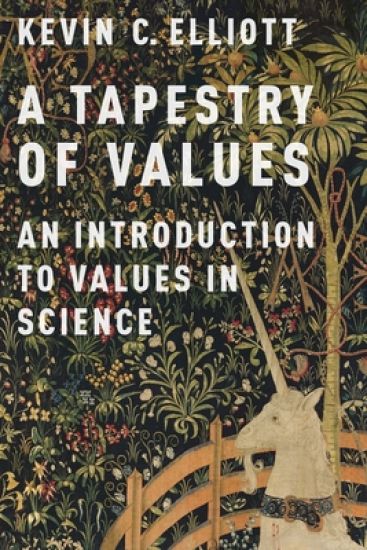
The role of values in scientific research has become an important topic of discussion in both scholarly and popular debates. Pundits across the political spectrum worry that research on topics like climate change, evolutionary theory, vaccine safety, and genetically modified foods has become overly politicized. At the same time, it is clear that values play an important role in science by limiting unethical forms of research and by deciding what areas of research have the greatest relevance for society. Deciding how to distinguish legitimate and illegitimate influences of values in scientific research is a matter of vital importance. Recently, philosophers of science have written a great deal on this topic, but most of their work has been directed toward a scholarly audience. This book makes the contemporary philosophical literature on science and values accessible to a wide readership. It examines case studies from a variety of research areas, including climate science, anthropology, chemical risk assessment, ecology, neurobiology, biomedical research, and agriculture. These cases show that values have necessary roles to play in identifying research topics, choosing research questions, determining the aims of inquiry, responding to uncertainty, and deciding how to communicate information. Kevin Elliott focuses not just on describing roles for values but also on determining when their influences are actually appropriate. He emphasizes several conditions for incorporating values in a legitimate fashion, and highlights multiple strategies for fostering engagement between stakeholders so that value influences can be subjected to careful and critical scrutiny.
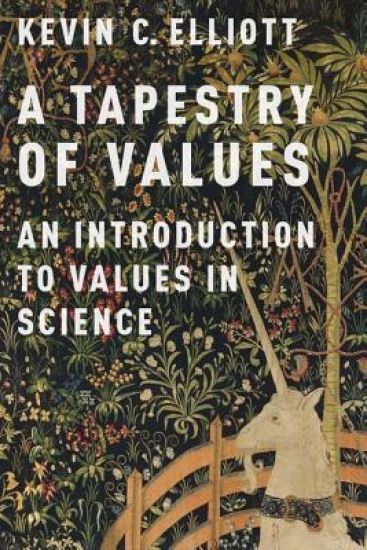
The role of values in scientific research has become an important topic of discussion in both scholarly and popular debates. Pundits across the political spectrum worry that research on topics like climate change, evolutionary theory, vaccine safety, and genetically modified foods has become overly politicized. At the same time, it is clear that values play an important role in science by limiting unethical forms of research and by deciding what areas of research have the greatest relevance for society. Deciding how to distinguish legitimate and illegitimate influences of values in scientific research is a matter of vital importance. Recently, philosophers of science have written a great deal on this topic, but most of their work has been directed toward a scholarly audience. This book makes the contemporary philosophical literature on science and values accessible to a wide readership. It examines case studies from a variety of research areas, including climate science, anthropology, chemical risk assessment, ecology, neurobiology, biomedical research, and agriculture. These cases show that values have necessary roles to play in identifying research topics, choosing research questions, determining the aims of inquiry, responding to uncertainty, and deciding how to communicate information. Kevin Elliott focuses not just on describing roles for values but also on determining when their influences are actually appropriate. He emphasizes several conditions for incorporating values in a legitimate fashion, and highlights multiple strategies for fostering engagement between stakeholders so that value influences can be subjected to careful and critical scrutiny.

One of today's most widely acclaimed composers, Arvo Pärt broke into the soundscape of the Cold War West with Tabula Rasa in 1977, a work that introduced his signature tintinnabuli style to listeners throughout the world. In the first book dedicated to this pathbreaking composition, author Kevin C. Karnes tells the story of Tabula Rasa as one of Pärt and of Europe itself, traced over the course of a quarter-century that saw momentous transitions in European culture and politics, history and memory. Beginning at the site of the work's creation in the Estonian SSR, and drawing extensively upon a range of previously unexamined archival materials, Karnes recounts Pärt's discovery of tintinnabuli amidst his experiments with the music of the Western and Soviet avant-gardes. He examines Tabula Rasa in relation to modernist conceptions of musical structure, the ascetic practice of Orthodox Christianity, postwar experiences of electronic music, and the polystylistic approaches to composition that have become emblematic of the Soviet 1970s. Tracing the export of Tabula Rasa to the West and Pärt's emigration in 1980, the book reveals intersections of critical commentary with visions of the "end of history" that attended the collapse of European communism to suggest that it was in this confluence of listening, discovery, and geopolitical reordering that enduring lines of conversation about Pärt and his music took shape.

One of today's most widely acclaimed composers, Arvo Pärt broke into the soundscape of the Cold War West with Tabula Rasa in 1977, a work that introduced his signature tintinnabuli style to listeners throughout the world. In the first book dedicated to this pathbreaking composition, author Kevin C. Karnes tells the story of Tabula Rasa as one of Pärt and of Europe itself, traced over the course of a quarter-century that saw momentous transitions in European culture and politics, history and memory. Beginning at the site of the work's creation in the Estonian SSR, and drawing extensively upon a range of previously unexamined archival materials, Karnes recounts Pärt's discovery of tintinnabuli amidst his experiments with the music of the Western and Soviet avant-gardes. He examines Tabula Rasa in relation to modernist conceptions of musical structure, the ascetic practice of Orthodox Christianity, postwar experiences of electronic music, and the polystylistic approaches to composition that have become emblematic of the Soviet 1970s. Tracing the export of Tabula Rasa to the West and Pärt's emigration in 1980, the book reveals intersections of critical commentary with visions of the "end of history" that attended the collapse of European communism to suggest that it was in this confluence of listening, discovery, and geopolitical reordering that enduring lines of conversation about Pärt and his music took shape.

Could low-level exposure to polluting chemicals be analogous to exercise -- a beneficial source of stress that strengthens the body? Some scientists studying the phenomenon of hormesis (beneficial or stimulatory effects caused by low-dose exposure to toxic substances) claim that that this may be the case. Is A Little Pollution Good For You? critically examines the current evidence for hormesis. In the process, it highlights the range of methodological and interpretive judgments involved in environmental research: choices about what questions to ask and how to study them, decisions about how to categorize and describe new information, judgments about how to interpret and evaluate ambiguous evidence, and questions about how to formulate public policy in response to debated scientific findings. The book also uncovers the ways that interest groups with deep pockets attempt to influence these scientific judgments for their benefit. Several chapters suggest ways to counter these influences and incorporate a broader array of societal values in environmental research: (1) moving beyond conflict-of-interest policies to develop new ways of safeguarding academic research from potential biases; (2) creating deliberative forums in which multiple stakeholders can discuss the judgments involved in policy-relevant research; and (3) developing ethical guidelines that can assist scientific experts in disseminating debated and controversial phenomena to the public. Kevin C. Elliott illustrates these strategies in the hormesis case, as well as in two additional case studies involving contemporary environmental research: endocrine disruption and multiple chemical sensitivity. This book should be of interest to a wide variety of readers, including scientists, philosophers, policy makers, environmental ethicists and activists, research ethicists, industry leaders, and concerned citizens.

Could low-level exposure to polluting chemicals be analogous to exercise-a beneficial source of stress that strengthens the body? Some scientists studying the phenomenon of hormesis (beneficial or stimulatory effects caused by low-dose exposure to toxic substances) claim that that this may be the case. Is A Little Pollution Good For You? critically examines the current evidence for hormesis. In the process, it highlights the range of methodological and interpretive judgments involved in environmental research: choices about what questions to ask and how to study them, decisions about how to categorize and describe new information, judgments about how to interpret and evaluate ambiguous evidence, and questions about how to formulate public policy in response to debated scientific findings. The book also uncovers the ways that interest groups with deep pockets attempt to influence these scientific judgments for their benefit. Several chapters suggest ways to counter these influences and incorporate a broader array of societal values in environmental research: (1) moving beyond conflict-of-interest policies to develop new ways of safeguarding academic research from potential biases; (2) creating deliberative forums in which multiple stakeholders can discuss the judgments involved in policy-relevant research; and (3) developing ethical guidelines that can assist scientific experts in disseminating debated and controversial phenomena to the public. Kevin C. Elliott illustrates these strategies in the hormesis case, as well as in two additional case studies involving contemporary environmental research: endocrine disruption and multiple chemical sensitivity. This book should be of interest to a wide variety of readers, including scientists, philosophers, policy makers, environmental ethicists and activists, research ethicists, industry leaders, and concerned citizens. "This is a timely, well-researched and compelling book .Elliott admirably combines insights and strategies from philosophy of science with those of applied ethics to carefully analyze contemporary science and science policy around pollutants and human health. There is a growing interest in the philosophy of science community in bringing the work of philosophers to bear on contemporary social issues. This book stands out as a model for how to do just that." - Sandra D. Mitchell, Philosophy, University of Pittsburgh Is A Little Pollution Good For You? is a wonderfully clear and insightful book dealing with the interplay between social values and economic and political interests in scientific research. He articulates an account of how societal values should and should not enter into science and illustrates his views with an extended discussion of research on hormesis-the hypothesis that chemicals that are toxic at high doses may be benign or even beneficial at low doses. The chemical industry has a strong financial interest in promoting scientific acceptance of hormesis, as this could convince regulatory agencies to loosen up restrictions on allowable exposures to pesticides and other chemicals. Elliott argues that because scientists have an obligation to minimize the harmful effects of their research, they must be mindful of the social context of their work and how it may be interpreted and applied by private companies or interest groups, to the potential detriment of public and environmental health. Elliott's book is a must read for researchers, scholars, and students who are interested in the relationship between science, industry, and society." - David B. Resnik, National Institute of Environmental Health Sciences, National Institutes of Health, author of Playing Politics With Science: Balancing Scientific Independence And Government

Typically regarded as reflecting on a culture in social, political, or psychological crisis, the arts in fin-de-siècle Vienna had another side: they were means by which creative individuals imagined better futures and perfected worlds dawning with the turn of the twentieth century. As author Kevin C. Karnes reveals, much of this utopian discourse drew inspiration from the work of Richard Wagner, whose writings and music stood for both a deluded past and an ideal future yet to come. Illuminating this neglected dimension of Vienna's creative culture, this book ranges widely across music, philosophy, and the visual arts. Uncovering artworks long forgotten and providing new perspectives on some of the most celebrated achievements in the Western canon, Karnes considers music by Mahler, Schoenberg, and Alexander Zemlinsky, paintings, sculptures, and graphic art by Klimt, Max Klinger, and members of the Vienna Secession, and philosophical writings by Nietzsche, Schopenhauer, and Maurice Maeterlinck. Through analyses of artworks and the cultural dynamics that surrounded their creation and reception, this study reveals a powerful current of millennial optimism running counter and parallel to the cultural pessimism widely associated with the period. It discloses a utopian discourse that is at once beautiful, moving, and deeply disturbing, as visions of perfection gave rise to ecstatic artworks and dystopian social and political realities.
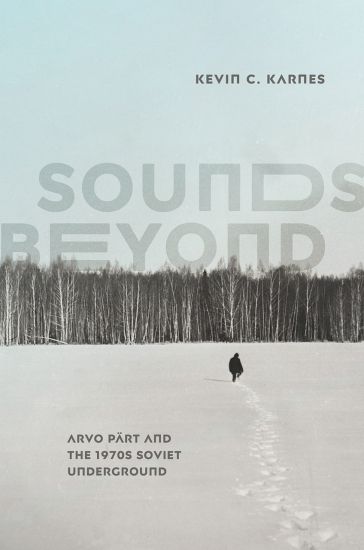
Sounds Beyond charts the origins of Arvo Pärt’s most famous music, which was created in dialogue with underground creative circles in the USSR. In Sounds Beyond, Kevin C. Karnes studies the interconnected alternative music and art scenes in the USSR during the second half of the 1970s, revealing the audacious origins of some of Estonian composer Arvo Pärt’s most famous music. Karnes shows how Pärt’s work was created within a vital yet forgotten culture of collective experimentation, the Soviet underground. Mining archives and oral history from across the former USSR, Sounds Beyond carefully situates modes of creative experimentation within their late socialist contexts. In documenting Pärt’s work, Karnes reveals the rich creative culture that thrived covertly in the USSR and the network of figures that made underground performances possible: students, audio engineers, sympathetic administrators, star performers, and aspiring DJs. Sounds Beyond advances a new understanding of Pärt’s music as an expression of the aesthetic and religious commitments shared, nurtured, and celebrated by many in Soviet underground circles. At the same time, this story attests to the lasting power of Pärt’s music. Dislodging the mythology of the solitary creative genius, Karnes shows that Pärt’s work would be impossible without community.

The Baltic States of Estonia, Latvia, and Lithuania are thriving after hundreds of years of German colonization, numerous wars of conquest, and demographic Russification. Their cultures have survived, perhaps through a conscious effort to sustain many of their most ancient customs and traditions. Though the Baltic States are responding to modern and postmodern international trends, contemporary developments in the region's cultural life are part of an ongoing conversation about the way in which the Balts understand their histories, destinies, and national identities. This timely overview of the reemerging states portrays the Estonians, Latvians, and Lithuanians as they see themselves—through a historical lens.The Baltic States of Estonia, Latvia, and Lithuania are thriving after hundreds of years of German colonization, numerous wars of conquest, and demographic Russification. Their cultures have survived, perhaps through a conscious effort to sustain many of their most ancient customs and traditions. Though the Baltic States are responding to modern and postmodern international trends, contemporary developments in the region's cultural life are part of an ongoing conversation about the way in which the Balts understand their own histories, destines, and national identities. This timely overview of the reemerging states portrays the Estonians, Latvians, and Lithuanians as they see themselves—through a historical lens.The approach in each of the topical chapters is to generalize what is common among the three states and then to focus on each country in turn. Chapters on the land, people, and history; religion; marriage, family, gender, and education; holidays, cuisine, and leisure activities; language, folklore, and literature; media and cinema; performing arts; and art are a superb introduction to the Baltics and to the unique aspects of the countries. Lithuania's culture has been heavily influenced by Poland, and the capital, Vilnius, was a thriving center of Jewish learning until the Nazi years. Latvia is the most ethnically diverse and Russian-influenced. Estonia sees itself as a European country, indeed, Scandinavian.

Flap Reconstruction of the Traumatized Upper Extremity, An Issue of Hand Clinics
Kevin C. Chung
Elsevier - Health Sciences Division
2014
sidottu
This issue of Hand Clinics will focus on flap reconstruction. Flap reconstruction is a very large part of upper extremity surgery following a traumatic injury. This issue will cover the entire process including anatomy, decision-making strategies on where to source/harvest flaps, and a large number of papers tailored to specific surgical procedures: different parts of the hand and upper extremity, pediatric reconstruction, and aesthetics.

Preventing and Avoiding Complications in Hand Surgery, An Issue of Hand Clinics
Kevin C. Chung
Elsevier - Health Sciences Division
2015
sidottu
Complications of hand injuries are very common, and the primary goal of the treatment of hand trauma is simply that of avoiding complications. They can be considered to be complications of missed diagnoses, complications of treatment, or complications of injuries.

Optimizing the Treatment of Upper Extremity Injuries in Athletes, An Issue of Hand Clinics
Kevin C. Chung
Elsevier - Health Sciences Division
2017
sidottu
This volume on athletic injury is timely because it addresses many types of sports injuries and focuses not only on the treatments of these injuries, but also their prevention. The first paper was written after an extensive interview with the coaches of one of the most recognized football programs in the country. Dr. Kevin Chung's interviews with the Head and Assistant Coaches at the University of Michigan, Jim Harbaugh and Jedd Fisch, provided thoughtful insight on preventing sports injuries in the professional and college athletics.

Current Concepts in the Management of Proximal Interphalangeal Joint Disorders, An Issue of Hand Clinics
Kevin C. Chung
Elsevier - Health Sciences Division
2018
sidottu
This issue of Hand Clinics, guest edited by series consulting editor Dr. Kevin Chung, will cover Current Concepts in the Management of Proximal Interphalangeal Joint Disorders. Topics discussed in the volume include: Anatomy and biomechanics of the finger proximal interphalangeal joint; Surgical exposure of the proximal interphalangeal joint; Treating proximal interphalangeal joint dislocations; Management of proximal interphalangeal joint fracture dislocations; Proximal interphalangeal joint fusion: indications and techniques; Implant arthroplasty: selection of exposure and implant; Salvaging a failed proximal interphalangeal joint implant; Treatment of proximal interphalangeal joint contracture; Treating congenital proximal interphalangeal joint contracture; Complications of proximal interphalangeal joint injuries: prevention and treatment; and Therapy concepts for the proximal interphalangeal joint, among others.