Kirjojen hintavertailu. Mukana 12 439 556 kirjaa ja 12 kauppaa.

Kirjahaku

Etsi kirjoja tekijän nimen, kirjan nimen tai ISBN:n perusteella.

1000 tulosta hakusanalla C. G. Haberman

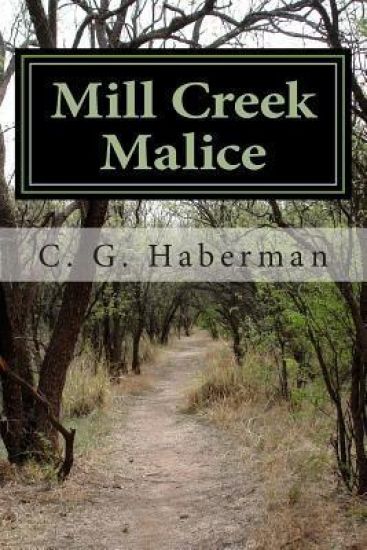
Mill Creek Malice: C. G. Haberman

Mill Creek Malice: C. G. Haberman

C. G. Haberman

Createspace Independent Publishing Platform
2012
nidottu
The animal stench triggers Dawn's gag reflex. The constant grinding of stone on stone irritably attacks her frayed nerves, and then it abruptly stops. Odd scratching sounds echo in her half-conscious state. She pulls herself into a sitting position and stares at a cage door. She gasps at the thing peering into her eyes. A year before CJ Hand arrives as the new instructor at Loess Hills Community College, the former instructor disappears. Local law enforcement seeks help from the Department of Justice, but the Federal investigators run into problems and ask CJ to lend his expertise with the strange case involving native plants. On finding the miraculous plant in question, he launches into the geocaching world at meteoric speed. The geocache note, written in riddles, places him in the grip of matching wits with a killer. Complicating the case is his summer class beginning in two weeks. The new dean adds to his mental and physical stress by suggesting CJ is in violation of his teaching contract. Time is against him and his cohorts working the missing person case, Tom Thies, and Dr. Trisha Baker.How does a small reptilian creature and an oddly named plant figure into the tormentor's game? CJ is thrust into a world of pharmaceutical collusion with death defying odds.
Deadly Circles: A CJ Hand Novel

Deadly Circles: A CJ Hand Novel

C. G. Haberman

Createspace Independent Publishing Platform
2012
nidottu
The pall of death hangs over two distinctly different valleys separated by eighteen-hundred miles. One a modest, unknown channel drained by a small cool-water stream and the other a magnificent gorge carved by a roaring river that separates two states. Unknown to a man, tormented by loss and intensifying anger, both valleys hold his fate. A bloody mist suddenly fills a truck cab. It is not the shot but the seconds after that begins change for criminal investigator CJ Hand. Beset with his recent loss and pent-up anger he takes leave from a tangled bureaucratic mess. Trying to find self-worth he agrees to help friends by probing the accidental drowning of a friend's son. The image of an uncomplicated investigation is quickly shattered. CJ encounters a maze of deadly circles surrounding the death. He begins unwinding hidden tentacles of political power and personal greed gripping Elm Creek valley. Affecting his personal life are two intellectual and intuitive women who help him come to grips with what he has been running from, or toward, for a decade.DEADLY CIRCLES is a fast-paced novel exposing the ugly underbelly of insidious criminal activity.
Lake of Lies: A CJ Hand Novel

Lake of Lies: A CJ Hand Novel

C. G. Haberman

Createspace Independent Publishing Platform
2014
nidottu
Since leaving his criminal investigators position, CJ Hand has become a thriving community college instructor in northwest Iowa. Finally, he can settle down with his fianc e Dee and have a peaceful future. But all this tranquility rapidly fades.The sudden failure of an outstanding student, his fianc e's new job opportunities, and a personnel action weigh heavily on CJ Hand. To add to his troubles, his daughter calls with news about his former wife, and a painful past leads him back to Lincoln, Nebraska, to confront these new demons. At the semester's end, on an icy and snowy day, his life would change once again.
The 100th Meridian Murders: A CJ Hand Novel

The 100th Meridian Murders: A CJ Hand Novel

C. G. Haberman

Createspace Independent Publishing Platform
2017
nidottu
After proving his reputation as the top sharpshooter in the world, Ivan Talcott settles in China. Here, he plans to achieve his goal of becoming a multimillionaire by the age of forty. Suddenly, and without warning, he's told to leave China, and never return. Undaunted, he will aim for his goal in the USA. While on a hunting trip in Nebraska, the sharpshooter agrees to a proposal that will fulfill his goal. The hunt becomes his final challenge before he begins a new life. The result of his grisly kills uncovers dark secrets long hidden in the halls of the U.S. Congress. CJ Hand returns to Lincoln, Nebraska after surviving a brutal attack that left him a battered man. His wife, Dee, encourages him to complete a doctoral degree and form the Great Plains Consulting firm. This new challenge, they hope, will lead him away from a destructive path to a stable life. His company gets the boost it needs when he signs a contract for work along the 100th meridian. The study leads him to the dangerous path he left years before. The discoveries, while using drones, leads his field and office crew into a threatening, dark world. The people he admires, and to whom he owes his success, return to help. They again face the evil they once thought erased. The peaceful, rural prairie holds secrets that turn violent. The deadly hunt begins, spilling blood across the western United States.
Deadly Circles

Deadly Circles

C G Haberman

C. G. Haberman
2018
pokkari
CJ Hand, haunted by an image he does not understand, flees the prairie to work in picturesque western Washington. Here he encounters job troubles that destroy his family life. The divorce and his child moving away from the hate-filled marriage results in seething anger and alcohol abuse.During an investigation, he kills a suspect. Under continual job pressure, his sharp instincts begin to cloud. When all seems hopeless, a friend calls for CJ's help with the real cause of his son's death.CJ grabs the opportunity to return to Nebraska, where he once thrived, and build a new life. He envisions a calm and unobtrusive investigation while enjoying the solitude of rural life. And helping his close friend can bring peace to that small family, now lacking a son who died in a quiet river valley.But what he finds are deceit and political greed. The deadly circles begin to unravel under his probing. The sinister plot of influential people for their own personal gain unfolds and reveals more deaths and serious, far-reaching plans.He finally brings focus to why he long ago fled Nebraska for the West Coast.
C. G. Jung and the Alchemical Imagination
Winner of the 2021 American Board & Academy of Psychoanalysis Annual Book Prize for Best Theoretical Book in Psychoanalysis!Stanton Marlan brings together writings which span the course of his career, examining Jungian psychology and the alchemical imagination as an opening to the mysteries of psyche and soul. Several chapters describe a telos that aims at the mysterious goal of the Philosophers’ Stone, a move replete with classical and postmodern ideas catalysed by prompts from the unconscious: dreams, images, fantasies, and paradoxical conundrums. Psyche and matter are seen with regards to soul, light and darkness in terms of illumination, and order and chaos as linked in the image of chaosmos. Marlan explores the richness of the alchemical ideas of Carl Jung, James Hillman, and others and their value for a revisioning of psychology. In doing so, this volume challenges any tendency to literalism and essentialism, and contributes to an integration between Jung’s classical vision of a psychology of alchemy and Hillman’s Alchemical Psychology.C.G. Jung and the Alchemical Imagination will be a valuable resource for academics, scholars, and students of Jungian and post-Jungian studies, Jungian analysis, and psychotherapy. It will also be of great interest to Jungian psychologists and Jungian analysts in practice and in training.
C. G. Jung and the Alchemical Imagination
Winner of the 2021 American Board & Academy of Psychoanalysis Annual Book Prize for Best Theoretical Book in Psychoanalysis!Stanton Marlan brings together writings which span the course of his career, examining Jungian psychology and the alchemical imagination as an opening to the mysteries of psyche and soul. Several chapters describe a telos that aims at the mysterious goal of the Philosophers’ Stone, a move replete with classical and postmodern ideas catalysed by prompts from the unconscious: dreams, images, fantasies, and paradoxical conundrums. Psyche and matter are seen with regards to soul, light and darkness in terms of illumination, and order and chaos as linked in the image of chaosmos. Marlan explores the richness of the alchemical ideas of Carl Jung, James Hillman, and others and their value for a revisioning of psychology. In doing so, this volume challenges any tendency to literalism and essentialism, and contributes to an integration between Jung’s classical vision of a psychology of alchemy and Hillman’s Alchemical Psychology.C.G. Jung and the Alchemical Imagination will be a valuable resource for academics, scholars, and students of Jungian and post-Jungian studies, Jungian analysis, and psychotherapy. It will also be of great interest to Jungian psychologists and Jungian analysts in practice and in training.
C. G. Jung in the Humanities

C. G. Jung in the Humanities

Susan Rowland

Routledge
2019
sidottu
This book demonstrates for the first time the significance of Jung’s work to the humanities, and to those areas where the humanities and sciences share borders. More radically, it shows that Jung was a writer of myth, alchemy, narrative, and poetics, as well as on them.Jung’s core concepts are introduced, their ongoing relevance is championed. The book also addresses Jung’s sometimes questionable judgment on politics and gender, and previews contemporary extensions of Jungian theory. By privileging the creative psyche and exploring the connections between individual, natural environment, and social/psychological collective, Jung anticipates the new holism, offering the promise of reconciling the sciences with the arts, humanity with nature.
C. G. Jung in the Humanities

C. G. Jung in the Humanities

Susan Rowland

Routledge
2019
nidottu
This book demonstrates for the first time the significance of Jung’s work to the humanities, and to those areas where the humanities and sciences share borders. More radically, it shows that Jung was a writer of myth, alchemy, narrative, and poetics, as well as on them.Jung’s core concepts are introduced, their ongoing relevance is championed. The book also addresses Jung’s sometimes questionable judgment on politics and gender, and previews contemporary extensions of Jungian theory. By privileging the creative psyche and exploring the connections between individual, natural environment, and social/psychological collective, Jung anticipates the new holism, offering the promise of reconciling the sciences with the arts, humanity with nature.
C. G. Jung’s Archetype Concept

C. G. Jung’s Archetype Concept

Christian Roesler

Routledge
2021
nidottu
The concept of archetypes is at the core of C. G. Jung’s analytical psychology. In this interesting and accessible volume, Roesler summarises the classical theory of archetypes and the archetypal stages of the individuation process as it was developed by Jung and his students. Various applications of archetypes, in cultural studies as well as in clinical practice, are demonstrated with detailed case studies, dream series, myths, fairy tales, and so on.The book also explores how the concept has further developed as a result of research and, for the first time, integrates findings from anthropology, human genetics, and the neurosciences. Based on these contemporary insights, Roesler also makes a compelling argument for why some of Jung’s views on the concept should be comprehensively revised.Offering new insights on foundational Jungian topics like the collective unconscious, persona, and shadow, C. G. Jung’s Archetype Concept is of great interest to Jungian students, analysts, psychotherapists, and scholars.
C. G. Jung’s Archetype Concept

C. G. Jung’s Archetype Concept

Christian Roesler

Routledge
2021
sidottu
The concept of archetypes is at the core of C. G. Jung’s analytical psychology. In this interesting and accessible volume, Roesler summarises the classical theory of archetypes and the archetypal stages of the individuation process as it was developed by Jung and his students. Various applications of archetypes, in cultural studies as well as in clinical practice, are demonstrated with detailed case studies, dream series, myths, fairy tales, and so on.The book also explores how the concept has further developed as a result of research and, for the first time, integrates findings from anthropology, human genetics, and the neurosciences. Based on these contemporary insights, Roesler also makes a compelling argument for why some of Jung’s views on the concept should be comprehensively revised.Offering new insights on foundational Jungian topics like the collective unconscious, persona, and shadow, C. G. Jung’s Archetype Concept is of great interest to Jungian students, analysts, psychotherapists, and scholars.
C. G. Jung: A Biography in Books

C. G. Jung: A Biography in Books

Sonu Shamdasani

WW Norton Co
2011
sidottu
In 1912, C. G. Jung wrote, “Should it happen that all traditions in the world were cut off with a single blow, the whole mythology and history of religion would start over again with the succeeding generation.”With this, Jung gave new understanding to the concept of world literature: that the history of human thought lay in the soul, passed from generation to generation, always ready to reemerge. This book shows how Jung’s theory evolved through classics of Western literature, annotated books from his library, manuscripts of his Black Books and The Red Book,other major works in which he attempted to translate insights from The Red Book for a scientific public, the Gnostic and alchemical texts he studied and presented as parallels to his psychology of the unconscious, and Eastern texts he presented in collaboration with leading scholars, establishing a cross-cultural psychology of the process of higher development.
Letters of C. G. Jung

Letters of C. G. Jung

C. G. Jung

Routledge
1973
sidottu
In May 1956, in his eighty-second year, Jung first discussed with Gerhard Adler the question of the publication of his letters. Over many years, Jung had often used the medium of letters to communicate his ideas to others and to clarify the interpretation of his work, quite apart from answering people who approached him with genuine problems of their own and simply corresponding with friends and colleagues. Many of his letters thus contain new creative ideas and provide a running commentary on his work.From some 1,600 letters written by Jung between the years 1906-1961, the editors have selected over 1,000. Volume 1, published in 1973, contains those letters written between 1906 and 1950.
C. G. Jung and Hans Urs von Balthasar
This book brings together the work of Carl Gustav Jung and Hans Urs von Balthasar, two of the most creative thinkers in psychology and theology in the twentieth century, to critically compare their ideas on the perennial question of God’s involvement with evil.In later life Jung embarked on a project relating to Christianity, with psychotherapeutic and theological intentions, forming his collection of essays, Symbolik des Geistes, in which God and evil was a major theme. Balthasar gave significant attention to Jung’s psychology in his own theological trilogy, but opposed the approach to God and evil that Jung presented. In this book Les Oglesby provides a thorough examination of convergences and divergences in Jung and Balthasar’s thinking, their different approaches to the origins and reality of evil, as well as their alternative theological orientations. The book culminates with a study of each man’s understanding of the central event of Christianity, Christ’s death on the Cross and his descent to the dead and discusses how Balthasar’s ‘vertical’ and Jung’s ‘horizontal’ approach to this major happening can be held together fruitfully with one another.Illustrating how analytical psychology and Christian theology can mutually enrich one another when they are held in creative tension, this book invites reflection on the meaning of the central symbol of Christianity, and God’s involvement with evil as an aid to integrated psychological living and theological maturity. It will prove fascinating for students of psychology and religion as well as for Jungian analysts and practical theologians.
C. G. Jung and Hans Urs von Balthasar
This book brings together the work of Carl Gustav Jung and Hans Urs von Balthasar, two of the most creative thinkers in psychology and theology in the twentieth century, to critically compare their ideas on the perennial question of God’s involvement with evil.In later life Jung embarked on a project relating to Christianity, with psychotherapeutic and theological intentions, forming his collection of essays, Symbolik des Geistes, in which God and evil was a major theme. Balthasar gave significant attention to Jung’s psychology in his own theological trilogy, but opposed the approach to God and evil that Jung presented. In this book Les Oglesby provides a thorough examination of convergences and divergences in Jung and Balthasar’s thinking, their different approaches to the origins and reality of evil, as well as their alternative theological orientations. The book culminates with a study of each man’s understanding of the central event of Christianity, Christ’s death on the Cross and his descent to the dead and discusses how Balthasar’s ‘vertical’ and Jung’s ‘horizontal’ approach to this major happening can be held together fruitfully with one another.Illustrating how analytical psychology and Christian theology can mutually enrich one another when they are held in creative tension, this book invites reflection on the meaning of the central symbol of Christianity, and God’s involvement with evil as an aid to integrated psychological living and theological maturity. It will prove fascinating for students of psychology and religion as well as for Jungian analysts and practical theologians.
The Psychology of Kundalini Yoga: Notes of the Seminar Given in 1932 by C. G. Jung
"Kundalini yoga presented Jung with a model of something that was almost completely lacking in Western psychology--an account of the development phases of higher consciousness.... Jung's insistence on the psychogenic and symbolic significance of such states is even more timely now than then. As R. D. Laing stated... 'It was Jung who broke the ground here, but few followed him.'"--From the introduction by Sonu Shamdasani Jung's seminar on Kundalini yoga, presented to the Psychological Club in Zurich in 1932, has been widely regarded as a milestone in the psychological understanding of Eastern thought and of the symbolic transformations of inner experience. Kundalini yoga presented Jung with a model for the developmental phases of higher consciousness, and he interpreted its symbols in terms of the process of individuation. With sensitivity toward a new generation's interest in alternative religions and psychological exploration, Sonu Shamdasani has brought together the lectures and discussions from this seminar. In this volume, he re-creates for today's reader the fascination with which many intellectuals of prewar Europe regarded Eastern spirituality as they discovered more and more of its resources, from yoga to tantric texts. Reconstructing this seminar through new documentation, Shamdasani explains, in his introduction, why Jung thought that the comprehension of Eastern thought was essential if Western psychology was to develop. He goes on to orient today's audience toward an appreciation of some of the questions that stirred the minds of Jung and his seminar group: What is the relation between Eastern schools of liberation and Western psychotherapy? What connection is there between esoteric religious traditions and spontaneous individual experience? What light do the symbols of Kundalini yoga shed on conditions diagnosed as psychotic? Not only were these questions important to analysts in the 1930s but, as Shamdasani stresses, they continue to have psychological relevance for readers on the threshold of the twenty-first century. This volume also offers newly translated material from Jung's German language seminars, a seminar by the indologist Wilhelm Hauer presented in conjunction with that of Jung, illustrations of the cakras, and Sir John Woodroffe's classic translation of the tantric text, the Sat-cakra Nirupana. ?