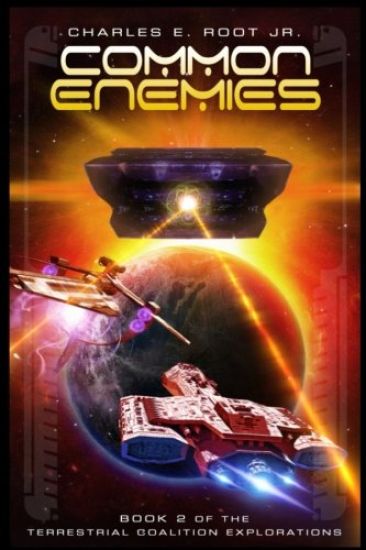
In the year 2266 after a series of long protracted battles with the first alien life forms ever contacted, called the Trandute, Earth has unified in to a single government for better protection of the planet.This new political and military organization called the Terrestrial Coalition, has at its disposal 15
After learning a year ago that humans most hated enemy the Trandute had made massive technological gains the Terrestrial Coalition is now playing catch up and needs all the help they can find.When a mysterious race of beings, humanity until now only speculated exist, called
This is the first volume (text and plates) of the analytically legible seals (ca. 1,162) retrieved through many thousands of full or partial impressions preserved on the 2,087 Elamite administrative tablets recovered during the 1930s excavations at Persepolis, Iran, and published by Richard T Hallock (OIP 92) in 1969. The tablets are dated by date formulae in the texts to the years 509-494 BC in the reign of Darius the Great. Volume I introduces the archive and documents the 312 seals of heroic encounter (retrieved via 1,970 impressions) with high quality composite drawings and a separate volume of 291 halftone and line plate illustrations presented at a scale of 2:1. Entries provide commentary on administrative, social, stylistic, and iconographical features of the seals as well as systematic analysis of seal application patterns. The thirty-four seal inscriptions are presented by Charles E Jones. Twelve appendices synthesize formal and iconographical data and integrate the seals with their associated texts. Volume I is in two parts: Part 1: text 562pp; Part 2: plates 1-291 318pp
Here are most of the previously unpublished writings of Charles E. Ives: a primary source book on this unique American composer. These "Memos," as Ives called them, were on separate leaves and dealt with his music, composition, criticism, autobiography, biography, and many other topics. During his lifetime Ives rearranged them, lent them out, mislaid and tucked them away in books so that, in the late 1940s, only about three-fifths of them were available to his biographer. After his death in 1954, Ives's papers were gradually put in order, and in time most of the remaining leaves came to light. These two "batches" are here dovetailed into a three-part form by John Kirkpatrick, who has devotedly arranged, edited, and annotated them. Part One, "Pretext," sets forth Ives's aims, his views on music, critics and criticism. In part Two, "Scrapbook," Ives discusses his music. Part Three, "Memories," is devoted to biographical and autobiographical remembrances.
This work has been selected by scholars as being culturally important and is part of the knowledge base of civilization as we know it.This work is in the public domain in the United States of America, and possibly other nations. Within the United States, you may freely copy and distribute this work, as no entity (individual or corporate) has a copyright on the body of the work.Scholars believe, and we concur, that this work is important enough to be preserved, reproduced, and made generally available to the public. To ensure a quality reading experience, this work has been proofread and republished using a format that seamlessly blends the original graphical elements with text in an easy-to-read typeface.We appreciate your support of the preservation process, and thank you for being an important part of keeping this knowledge alive and relevant.
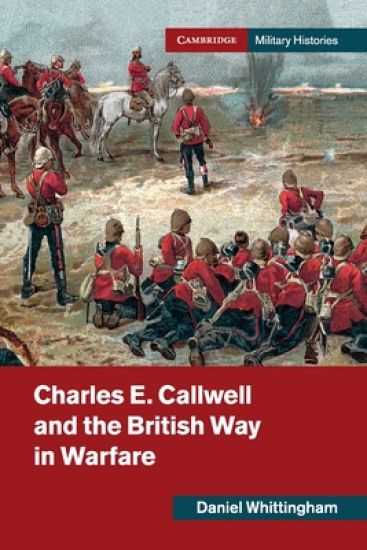
Daniel Whittingham presents the first full-length study of one of Britain's most important military thinkers, Major-General Sir Charles E. Callwell (1859–1928). It tells the story of his life, which included service in military intelligence, the South African War, and on the General Staff before and during the First World War. It also presents the first comprehensive analysis of his writing: from his well-known books Small Wars (1896) and Military Operations and Maritime Preponderance (1905), to a host of other books and articles that are presented here for the first time. Through a study of Callwell's life and works, this book offers a new perspective on the nature and study of military history, the character of British strategy, and on the army to which he belonged.
Daniel Whittingham presents the first full-length study of one of Britain's most important military thinkers, Major-General Sir Charles E. Callwell (1859–1928). It tells the story of his life, which included service in military intelligence, the South African War, and on the General Staff before and during the First World War. It also presents the first comprehensive analysis of his writing: from his well-known books Small Wars (1896) and Military Operations and Maritime Preponderance (1905), to a host of other books and articles that are presented here for the first time. Through a study of Callwell's life and works, this book offers a new perspective on the nature and study of military history, the character of British strategy, and on the army to which he belonged.
This work has been selected by scholars as being culturally important, and is part of the knowledge base of civilization as we know it. This work was reproduced from the original artifact, and remains as true to the original work as possible. Therefore, you will see the original copyright references, library stamps (as most of these works have been housed in our most important libraries around the world), and other notations in the work.This work is in the public domain in the United States of America, and possibly other nations. Within the United States, you may freely copy and distribute this work, as no entity (individual or corporate) has a copyright on the body of the work.As a reproduction of a historical artifact, this work may contain missing or blurred pages, poor pictures, errant marks, etc. Scholars believe, and we concur, that this work is important enough to be preserved, reproduced, and made generally available to the public. We appreciate your support of the preservation process, and thank you for being an important part of keeping this knowledge alive and relevant.
This work has been selected by scholars as being culturally important, and is part of the knowledge base of civilization as we know it. This work was reproduced from the original artifact, and remains as true to the original work as possible. Therefore, you will see the original copyright references, library stamps (as most of these works have been housed in our most important libraries around the world), and other notations in the work.This work is in the public domain in the United States of America, and possibly other nations. Within the United States, you may freely copy and distribute this work, as no entity (individual or corporate) has a copyright on the body of the work.As a reproduction of a historical artifact, this work may contain missing or blurred pages, poor pictures, errant marks, etc. Scholars believe, and we concur, that this work is important enough to be preserved, reproduced, and made generally available to the public. We appreciate your support of the preservation process, and thank you for being an important part of keeping this knowledge alive and relevant.