Kirjojen hintavertailu. Mukana 11 244 527 kirjaa ja 12 kauppaa.

Kirjahaku

Etsi kirjoja tekijän nimen, kirjan nimen tai ISBN:n perusteella.

1000 tulosta hakusanalla Charles Knowles

The Conduct of Admiral Knowles on the Late Expedition set in a True Light. The Second Edition
The 18th century was a wealth of knowledge, exploration and rapidly growing technology and expanding record-keeping made possible by advances in the printing press. In its determination to preserve the century of revolution, Gale initiated a revolution of its own: digitization of epic proportions to preserve these invaluable works in the largest archive of its kind. Now for the first time these high-quality digital copies of original 18th century manuscripts are available in print, making them highly accessible to libraries, undergraduate students, and independent scholars.Medical theory and practice of the 1700s developed rapidly, as is evidenced by the extensive collection, which includes descriptions of diseases, their conditions, and treatments. Books on science and technology, agriculture, military technology, natural philosophy, even cookbooks, are all contained here.++++The below data was compiled from various identification fields in the bibliographic record of this title. This data is provided as an additional tool in helping to insure edition identification: ++++British LibraryT092427Signed at end: Charles Knowles.London: printed for J. Clarke; A. Millar; and R. and J. Dodsley, 1758. 30p., plate; 8
The Conduct of Admiral Knowles on the Late Expedition set in a True Light
The 18th century was a wealth of knowledge, exploration and rapidly growing technology and expanding record-keeping made possible by advances in the printing press. In its determination to preserve the century of revolution, Gale initiated a revolution of its own: digitization of epic proportions to preserve these invaluable works in the largest archive of its kind. Now for the first time these high-quality digital copies of original 18th century manuscripts are available in print, making them highly accessible to libraries, undergraduate students, and independent scholars.Medical theory and practice of the 1700s developed rapidly, as is evidenced by the extensive collection, which includes descriptions of diseases, their conditions, and treatments. Books on science and technology, agriculture, military technology, natural philosophy, even cookbooks, are all contained here.++++The below data was compiled from various identification fields in the bibliographic record of this title. This data is provided as an additional tool in helping to insure edition identification: ++++British LibraryT092816Signed at end: Charles Knowles. With an errata slip.London: printed for J. Clarke; A. Millar; and R. and J. Dodsley, 1758. 30p., plate; 8
Nathaniel Bolton, a Forgotton New England Poet, by Charles K. Bolton.

Nathaniel Bolton, a Forgotton New England Poet, by Charles K. Bolton.

Charles Knowles 1867-1950 Bolton

Hassell Street Press
2021
nidottu
This work has been selected by scholars as being culturally important and is part of the knowledge base of civilization as we know it.This work is in the public domain in the United States of America, and possibly other nations. Within the United States, you may freely copy and distribute this work, as no entity (individual or corporate) has a copyright on the body of the work.Scholars believe, and we concur, that this work is important enough to be preserved, reproduced, and made generally available to the public. To ensure a quality reading experience, this work has been proofread and republished using a format that seamlessly blends the original graphical elements with text in an easy-to-read typeface.We appreciate your support of the preservation process, and thank you for being an important part of keeping this knowledge alive and relevant.
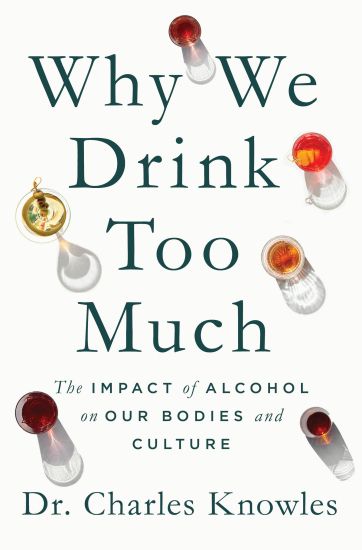
Why We Drink Too Much

Why We Drink Too Much

Charles Knowles

PAN MACMILLAN
2026
sidottu
‘Compelling and fascinating . . . A must-read’ Andrew Jenkinson, Sunday Times bestselling author of Why We Eat Too MuchWe drink it, celebrate with it and barely question it – but what is alcohol really doing to us?Drinking alcohol can be fun; its chemical effects on our brain are fundamentally pleasurable, and it can have social benefits. Alcohol may also help us forget the worries in our lives and temporarily overcome psychological barriers to human interaction.But there are downsides. We now know that alcohol, even in quite modest amounts, is not good for our long-term health. So why do we, as humans, consume alcohol at all, and why does our tendency to drink ‘too much’ vary from person to person?Pairing scientific expertise with his personal experiences, Dr Charles Knowles offers us an accessible window into what really happens in our brains and bodies when we drink, and why we do it. People vary greatly in the amount of reward they derive from alcohol, both physically and mentally. It’s in the genes that we were born with and the environment in which we grew up. For some of us, alcohol is greatly enhancing; for others, it is not much fun at all.For the sober curious, those who may need help, and also readers just interested in a popular science book on what happens when we sip a glass of wine, Why We Drink Too Much teaches readers the science behind drinking and invites us to examine our relationship with alcohol.
The Trial of Captain G------------, for Crim. Con. with Ad----L K-----s's Lady; Which Was Tried in the Court of King's Bench at Guildhall, by a Special Jury, on Saturday the Eleventh Day of June, 1757. ... the Fifth Edition.
The 18th century was a wealth of knowledge, exploration and rapidly growing technology and expanding record-keeping made possible by advances in the printing press. In its determination to preserve the century of revolution, Gale initiated a revolution of its own: digitization of epic proportions to preserve these invaluable works in the largest archive of its kind. Now for the first time these high-quality digital copies of original 18th century manuscripts are available in print, making them highly accessible to libraries, undergraduate students, and independent scholars.This collection reveals the history of English common law and Empire law in a vastly changing world of British expansion. Dominating the legal field is the Commentaries of the Law of England by Sir William Blackstone, which first appeared in 1765. Reference works such as almanacs and catalogues continue to educate us by revealing the day-to-day workings of society.++++The below data was compiled from various identification fields in the bibliographic record of this title. This data is provided as an additional tool in helping to insure edition identification: ++++British LibraryT088227With a half-title. Horizontal chain lines.London: printed for H. Owen, 1759. 4],52p.; 8
Why We Drink Too Much: The Impact of Alcohol on Our Bodies and Culture
We drink it, celebrate with it, and barely question it--but what is alcohol really doing to us? Drinking alcohol can be fun; its chemical effects on our brain are fundamentally pleasurable, and it can have social benefits. Alcohol may also help us forget the worries in our lives and temporarily overcome psychological barriers to human interaction. But there are downsides. We now know that alcohol, even in quite modest amounts, is not good for our long-term health. So why do we, as humans, consume alcohol at all, and why does our tendency to drink "too much" vary from person to person? Pairing scientific expertise with his personal experiences, Dr. Charles Knowles offers us an accessible window into what really happens in our brains and bodies when we drink, and why we do it. People vary greatly in the amount of reward they derive from alcohol, both physically and mentally. It's in the genes that we were born with and the environment in which we grew up. For some of us, alcohol is greatly enhancing; for others, it is not much fun at all. For the sober curious, those who may need help, and also readers just interested in a popular science book on what happens when we sip a glass of wine, Why We Drink Too Much teaches readers the science behind drinking and invites us to examine our relationship with alcohol.
An Account of the Expedition to Carthagena, With Explanatory Notes and Observations. The Third Edition
The 18th century was a wealth of knowledge, exploration and rapidly growing technology and expanding record-keeping made possible by advances in the printing press. In its determination to preserve the century of revolution, Gale initiated a revolution of its own: digitization of epic proportions to preserve these invaluable works in the largest archive of its kind. Now for the first time these high-quality digital copies of original 18th century manuscripts are available in print, making them highly accessible to libraries, undergraduate students, and independent scholars.Rich in titles on English life and social history, this collection spans the world as it was known to eighteenth-century historians and explorers. Titles include a wealth of travel accounts and diaries, histories of nations from throughout the world, and maps and charts of a world that was still being discovered. Students of the War of American Independence will find fascinating accounts from the British side of conflict. ++++The below data was compiled from various identification fields in the bibliographic record of this title. This data is provided as an additional tool in helping to insure edition identification: ++++British LibraryT133731Attributed to Sir Charles Knowles. With a half-title.London: printed for M. Cooper, 1743. 4],58p.; 8
The Trial of Captain G------------, for Crim. con. With Ad----l K-----s's Lady; Which was Tried in the Court of King's Bench at Guildhall, by a Special Jury, on Saturday the Eleventh day of June, 1757. ... The Fifth Edition
The 18th century was a wealth of knowledge, exploration and rapidly growing technology and expanding record-keeping made possible by advances in the printing press. In its determination to preserve the century of revolution, Gale initiated a revolution of its own: digitization of epic proportions to preserve these invaluable works in the largest archive of its kind. Now for the first time these high-quality digital copies of original 18th century manuscripts are available in print, making them highly accessible to libraries, undergraduate students, and independent scholars.This collection reveals the history of English common law and Empire law in a vastly changing world of British expansion. Dominating the legal field is the Commentaries of the Law of England by Sir William Blackstone, which first appeared in 1765. Reference works such as almanacs and catalogues continue to educate us by revealing the day-to-day workings of society.++++The below data was compiled from various identification fields in the bibliographic record of this title. This data is provided as an additional tool in helping to insure edition identification: ++++British LibraryT088227With a half-title. Horizontal chain lines.London: printed for H. Owen, 1759. 4],52p.; 8
An Essay on the Duty and Qualifications of a Sea-officer. Written Originally for the use of two Young Officers
The 18th century was a wealth of knowledge, exploration and rapidly growing technology and expanding record-keeping made possible by advances in the printing press. In its determination to preserve the century of revolution, Gale initiated a revolution of its own: digitization of epic proportions to preserve these invaluable works in the largest archive of its kind. Now for the first time these high-quality digital copies of original 18th century manuscripts are available in print, making them highly accessible to libraries, undergraduate students, and independent scholars.This collection reveals the history of English common law and Empire law in a vastly changing world of British expansion. Dominating the legal field is the Commentaries of the Law of England by Sir William Blackstone, which first appeared in 1765. Reference works such as almanacs and catalogues continue to educate us by revealing the day-to-day workings of society.++++The below data was compiled from various identification fields in the bibliographic record of this title. This data is provided as an additional tool in helping to insure edition identification: ++++Bodleian Library (Oxford)T191430Attributed to Sir Charles Knowles.London: printed for W. Johnston, 1765. viii,88p.; 8