

Kirjahaku
Etsi kirjoja tekijän nimen, kirjan nimen tai ISBN:n perusteella.
273 tulosta hakusanalla Chastity Goodman


The word ‘chastity’, at first sight, may seem intimidating, something to be dismissed out of hand. It is, however, something very different to celibacy.At a time when religion is in decline in the Western world and when it often seems that the senses have run riot, Erik Varden shows that chastity, the single minded direction of the senses, is a loveable quality and one that affects and beautifies humankind.The terms sexuality and wholeness indicate that to be sexual is to exist in a state of incompleteness longing to be restored. Wholeness points to a healing embrace that we desire so greatly. In Biblical language, chastity is a function of simplicity of sight. We are no longer torn apart by our passions and our desires, indeed they may reach their fulfilment. Body and spirit, male and female, order and disorder, passion and death can move from creative tension to a new kind of wholeness.Varden’s text is enriched by a wide range of references to scripture, literature, music, painting and sculpture.

CHASTITY - The Guide to Male Chastity is the latest book in Marisa Rudder's Female Led Relationship Series. This amazing Chastity book will change your life. Imagine your man treating you like a Queen and getting more pleasure out of pleasuring you than receiving pleasure himself. Imagine your man doing whatever you tell him without complaining. Imagine your man gladly doing the housework, laundry, grocery shopping, cooking, dishes and more? With the techniques and training guidelines in my book, you can have such a man. In fact, you may already be living with a man who has the potential to become this perfect man. A modern Love and Obey Female Led Relationship or marriage includes male chastity and orgasm control. The wife decides when her husband is allowed to orgasm. The wife is in charge and the husband submits to her loving female authority. Her man is completely obedient. Women will learn how to use their feminine power to control their man's sexuality. Women will learn how to tame and train a man. Men will learn the value of submitting to loving female authority. Men will become more loving, devoted and romantic. Women will take charge of the relationship or marriage and their men will become obedient. The woman's authority and sexuality are worshiped by their man. At Love and Obey, we believe that whoever controls the pussy makes the rules. Pussy denial is used to guide your husband's behavior and this makes your Female Led Relationship more permanent. Men will worship us as goddesses and serve us as queens and obey us as their mistresses. Your Love and Obey Female Led Lifestyle, including Male Chastity, is the future of relationships and marriages.

Working at the intersections of feminist literary criticism, new historicism, and narratology, Chastity and Transgression in Women's Writing revises current understandings of nineteenth-century representations of prostitution, female sexuality and the 'rights of woman' debate. Eberle's project explores the connections and disjunctures between women writing during the Romantic period and those working throughout the Victorian era. She considers a wide range of authors including Mary Wollstonecraft, Amelia Opie, Mary Hays, Elizabeth Gaskell, and Sarah Grand.

Stories of dominant women who put submissive boys into chastity, and make them serve "real men" breakfast in bed, and do...other things In this collection you'll discover what it would be like to wear a lock on your genitals and take a whipping and torture from a beautiful Goddess




This book looks at the representation and practice of chastity in selective ancient Indian texts. It studies how and when the concept originated and in what ways it was intertwined with the social, cultural, and economic notions of Indian society. Drawing on seminal Indian texts such as the MahaPura?as, Ramaya?a, Mahabharata, Sattasai and the Jatakas, the volume delves into the social and reproductive rights of women through an examination of the norms of chastity, virginity, and Pativratya, which were construed according to a patriarchal hierarchy of the society and implemented as a means of strengthening patriarchal authority. It also examines the interinfluence of various religious traditions that emerged on the very concept of chastity and the ideologies they later gave rise to.A comprehensive study of sexuality and gender in early India, the book will be indispensable to students, teachers, and researchers of gender studies, literature, women’s studies, women’s rights, feminism, South Asian studies, and social history of Ancient India.
Living in Los Angeles with my favorite aunt and filming my t.v. show is awesome, but I miss my parents, best friends, etc. back home. The last time that I was home was last Christmas. Even though Mom and Dad came to visit me for some of the time between then and now, I still missed coming home. With this said, it felt so great to be home for Christmas

Chastity, My Story: I Am Who God Says I Am
Chastity Head; Seletha Marie Head Tucker
Independently Published
2019
nidottu
The bravery of a young lady who has had to endure many trials at her young age and still succeeds with trust in God and a desire to press forward.

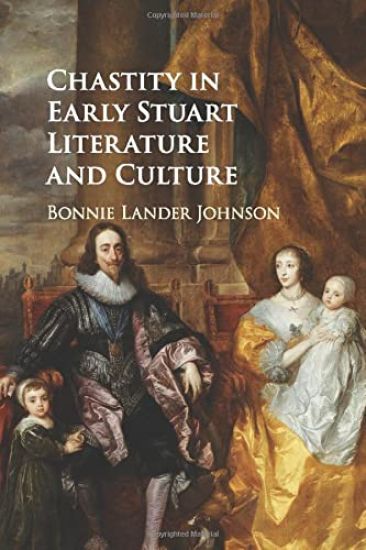
Chastity in Early Stuart Literature and Culture
Bonnie Lander Johnson
Cambridge University Press
2015
sidottu
In this book, Bonnie Lander Johnson explores early modern ideas of chastity, demonstrating how crucial early Stuart thinking on chastity was to political, medical, theological and moral debates, and that it was also a virtue that governed the construction of different literary genres. Drawing on a range of materials, from prose to theatre, theological controversy to legal trials, and court ceremonies - including royal birthing rituals - Lander Johnson unearths previously unrecognised opinions about chastity. She reveals that early Stuart theatrical and court ceremonies were part of the same political debate as prose pamphlets and religious sermons. The volume also offers new readings of Milton's Comus, Shakespeare's The Winter's Tale, Henrietta Maria's queenship and John Ford's plays. It will appeal to scholars of early modern literature, theatre, political, medical and cultural history, and gender studies.
Chastity in Early Stuart Literature and Culture
Bonnie Lander Johnson
Cambridge University Press
2017
pokkari
In this book, Bonnie Lander Johnson explores early modern ideas of chastity, demonstrating how crucial early Stuart thinking on chastity was to political, medical, theological and moral debates, and that it was also a virtue that governed the construction of different literary genres. Drawing on a range of materials, from prose to theatre, theological controversy to legal trials, and court ceremonies - including royal birthing rituals - Lander Johnson unearths previously unrecognised opinions about chastity. She reveals that early Stuart theatrical and court ceremonies were part of the same political debate as prose pamphlets and religious sermons. The volume also offers new readings of Milton's Comus, Shakespeare's The Winter's Tale, Henrietta Maria's queenship and John Ford's plays. It will appeal to scholars of early modern literature, theatre, political, medical and cultural history, and gender studies.

This book looks at the representation and practice of chastity in selective ancient Indian texts. It studies how and when the concept originated and in what ways it was intertwined with the social, cultural, and economic notions of Indian society. Drawing on seminal Indian texts such as the MahaPura?as, Ramaya?a, Mahabharata, Sattasai and the Jatakas, the volume delves into the social and reproductive rights of women through an examination of the norms of chastity, virginity, and Pativratya, which were construed according to a patriarchal hierarchy of the society and implemented as a means of strengthening patriarchal authority. It also examines the interinfluence of various religious traditions that emerged on the very concept of chastity and the ideologies they later gave rise to.A comprehensive study of sexuality and gender in early India, the book will be indispensable to students, teachers, and researchers of gender studies, literature, women’s studies, women’s rights, feminism, South Asian studies, and social history of Ancient India.
Chastity Belts: An Illustrated History of the Bridling of Women
Esar Levine
Literary Licensing, LLC
2011
sidottu
""Chastity Belts: An Illustrated History Of The Bridling Of Women"" by Levine and Esar is a comprehensive exploration of the history and cultural significance of chastity belts. The book delves into the origins of the practice, tracing its roots back to medieval times and exploring the various forms and designs of chastity belts throughout history. The authors also examine the social and political contexts in which chastity belts were used, including their role in reinforcing gender roles and controlling female sexuality. The book features numerous illustrations and photographs of historical chastity belts, as well as contemporary art inspired by the subject. Overall, ""Chastity Belts"" offers a fascinating and thought-provoking look at an often-misunderstood aspect of human history and sexuality.Containing Numerous Explanatory Excerpts From Curious Facetious And Erotic Books.This scarce antiquarian book is a facsimile reprint of the old original and may contain some imperfections such as library marks and notations. Because we believe this work is culturally important, we have made it available as part of our commitment for protecting, preserving, and promoting the world's literature in affordable, high quality, modern editions, that are true to their original work.

Chastity Belts: An Illustrated History of the Bridling of Women
Esar Levine
Literary Licensing, LLC
2011
nidottu

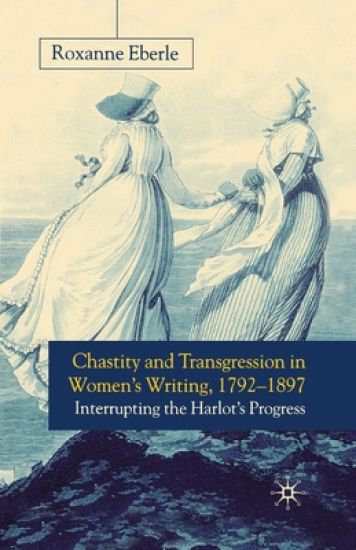
Working at the intersections of feminist literary criticism, new historicism, and narratology, Chastity and Transgression in Women's Writing revises current understandings of nineteenth-century representations of prostitution, female sexuality and the 'rights of woman' debate. Eberle's project explores the connections and disjunctures between women writing during the Romantic period and those working throughout the Victorian era. She considers a wide range of authors including Mary Wollstonecraft, Amelia Opie, Mary Hays, Elizabeth Gaskell, and Sarah Grand.