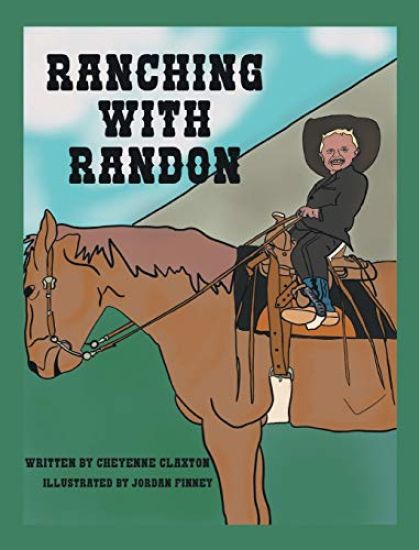
While most people think learning only happens inside four walls of a classroom, a young, blonde haired, blue eyed boy shares to prove otherwise. When you go "Ranching with Randon", you'll quickly realize all the hard work that takes place while living on a busy ranch. Despite the never-ending load of work, this young rancher shares a very important life lesson we can all learn through his daily ranching duties.
While most people think learning only happens inside four walls of a classroom, a young, blonde haired, blue eyed boy shares to prove otherwise. When you go "Ranching with Randon", you'll quickly realize all the hard work that takes place while living on a busy ranch. Despite the never-ending load of work, this young rancher shares a very important life lesson we can all learn through his daily ranching duties.
Cheyenne: An Analysis of Clause Linkage provides a detailed description of Cheyenne syntax, semantics, and pragmatics, notably on its nominal and verbal system and in both simple and complex sentences.Based on fieldwork conducted on the Northern Cheyenne reservation, this book, which seeks to address descriptive and theoretical issues involving complex sentences, has three major aims: i) to present a morpho-syntactic, semantic, and discourse-pragmatic description of complex sentences in Cheyenne; ii) to investigate the relationship between the semantic and syntactic dimensions of complex sentences; and iii) to contribute to the research, preservation, and revitalization of this ancestral language spoken in the United States of America.This book will be informative for scholars interested in language typology, comparative linguistics, theoretical linguistics, and language documentation, as well as those interested in Cheyenne learning and teaching.
Cheyenne: An Analysis of Clause Linkage provides a detailed description of Cheyenne syntax, semantics, and pragmatics, notably on its nominal and verbal system and in both simple and complex sentences.Based on fieldwork conducted on the Northern Cheyenne reservation, this book, which seeks to address descriptive and theoretical issues involving complex sentences, has three major aims: i) to present a morpho-syntactic, semantic, and discourse-pragmatic description of complex sentences in Cheyenne; ii) to investigate the relationship between the semantic and syntactic dimensions of complex sentences; and iii) to contribute to the research, preservation, and revitalization of this ancestral language spoken in the United States of America.This book will be informative for scholars interested in language typology, comparative linguistics, theoretical linguistics, and language documentation, as well as those interested in Cheyenne learning and teaching.
A history of the people and events that influenced the North American Indian tribe known as the Cheyenne, including warrior Black Kettle and conflicts such as the Sand Creek Massacre.
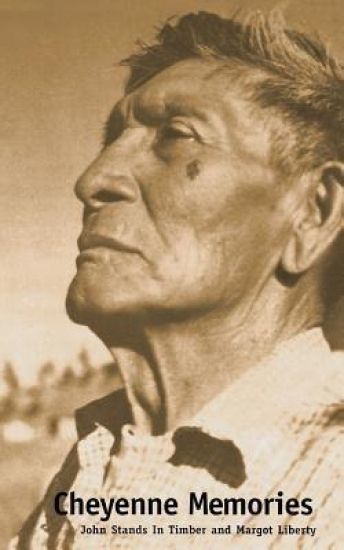
This classic work is an oral history of the Cheyenne Indians from legendary times to the early reservation years, a collaborative effort by the Cheyenne tribal historian, John Stands in Timber, and anthropologist Margot Liberty. Published in 1967, the book now has an updated bibliography and a new preface by Liberty, in which she shares her recollections of Stands in Timber and describes the circumstances of the Cheyenne over the past thirty years.Stands in Timber was born in 1882, a few years after his grandfather was killed in the Custer battle. In this book he recounts tribal myths and sacred rituals, conflict with traditional enemies and whites, and eventual “civilization” and settlement on a reservation. The retelling of Cheyenne traditions formed an important part of Stands in Timber’s life from early childhood, and on his return from school in 1905 he became the primary keeper of the oral literature of his people, seeking out every elder who could contribute personal memories to Cheyenne lore. In 1956 he met Margot Liberty, then an Indian Affairs Bureau teacher, who helped him tape-record more than thirty hours of recollections. From these she compiled this unique and lively folk history, one based on a longtime inside view that can never be duplicated.“This is an extraordinarily fascinating book, . . . a book that all Americans, Indians as well as non-Indians, will treasure.”—Alvin M. Josephy, Jr.
Outlines the natural history of one of the most important surviving wetlands in the United States, describes the variety of wildlife found there, and points to the danger man poses to its survival.
This is an introduction to Cheyenne Bottoms. Narrating the natural history of the Bottoms from its formation 100,000 years ago, it describes the variety of birds, mammals and reptiles that depend on it and the intricate web of interactions among them that preserves its ecosystem.
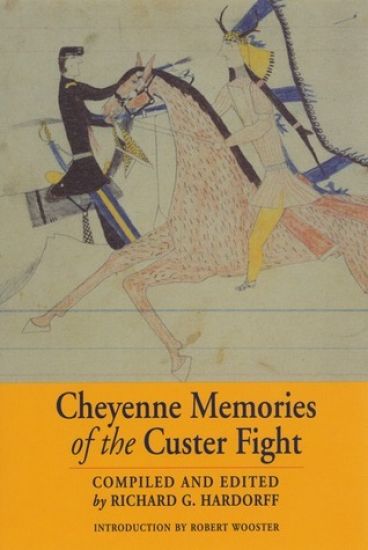
Only six Cheyenne Indians (but thirty-two Sioux) died in the fighting at the Little Bighorn River that wiped out the command of General George Custer. Brave Wolf, the son of the prophet Old Brave Wolf, later recalled the courage of the doomed men in the Seventh Cavalry. He was at the scene on that bloodiest of Sundays in the summer of 1876. Brave Wolf and twelve other members of his tribe tell what happened in Cheyenne Memories of the Custer Fight, compiled and edited by Richard G. Hardorff. Between 1895 and 1908 naturalist George Bird Grinnell talked with Brave Wolf, American Horse, and other combatants at the Little Bighorn. Researcher Walter Mason Camp sought out Tall Bull, Bull Hump, and Little Wolf, whose voices are added to these pages. Casting light on events is the skilled Cheyenne interpreter Long Forehead, also known as Willis Rowland. Tribal historian John Stands in Timber, who gathered material from Cheyenne elders, describes the movements of Custer and his soldiers. Hamlin Garland's interview with Two Moons recreates the noise and dust and smoke and frenzied confusion at the Little Bighorn.
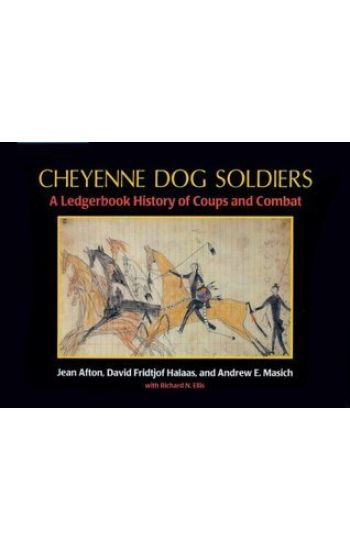
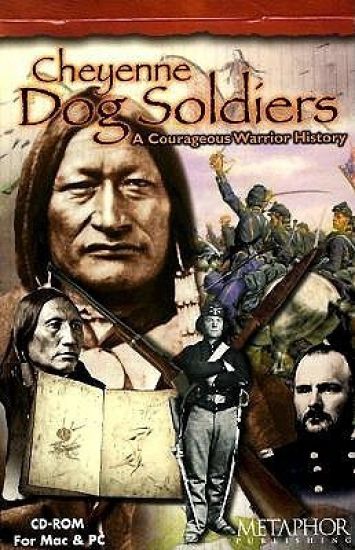
Since the Battle of Summit Springs on July 11, 1869, a ledgerbook of over one hundred color drawings lay neglected in the archives of the Colorado Historical Society for nearly a century. The authors, working in close association with the Cheyenne nation, have produced an unprecedented look at the Dog Soldiers based on this ledgerbook. Unlike other books that interpret ledgerbook art, the authors treat the Summit Springs ledger drawings as historical documents, a history of the Dog Soldiers recorded by the warrior-artists themselves. In "Cheyenne Dog Soldiers, " the earliest of the extant Cheyenne ledgerbooks, the authors have painstakingly matched drawings with known events, such as the 1865 sack of Julesburg, Colorado, and the 1865 battles of Rush Creek, Platte River Bridge, and Tongue River in the Dakota and Montana territories. Also identified are such noted Dog Soldiers as Tall Bull, Big Crow, Whirlwind, and Wolf with Plenty of Hair.
Never before have scholars attempted to match Plains ledgerbook drawings with specific events. But in Cheyenne Dog Soldiers, the earliest of the extant Cheyenne ledgerbooks, the authors have painstakingly matched many of the drawings with known events, such as the 1865 sack of Julesburg, Colorado, and the 1865 battles of Rush Creek, Platte River Bridge, and Tongue River in the Dakota and Montana territories. Also identified are such noted Dog Soliders as Tall Bull, Big Crow, Chirlwind, Feathered Bear, White Horse, Lean Bear and Wolf with Plenty of Hair. Using Cheyenne sources -- both past and present -- as well as US military records, legal depositions, diaries, and contemporary newspaper accounts, the author analyse each drawing, identifying the warriors and describing the actions depicted. With more than 100 beautifully reproduced colour drawings, this volume presents not only a groundbreaking departure from standard ledgerbook interpretation but also a riveting story of the Cheyenne Dog Soldiers making a last stand for their existence as free people.
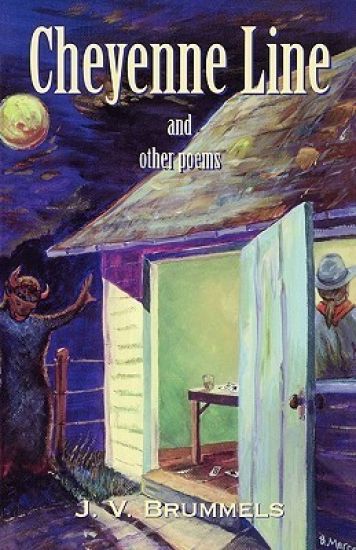
Winside, Nebraska rancher and Wayne State College English and Creative Writing teacher J.V.Brummel's new book of poems, Cheyenne Line is a poetry hat trick: not a word out of place, no baloney, no solipsistic search for self or meaning or some undefined thing in academia we find in so much poetry these days. Brummels' throws are true: the cuts, clips, and brands each poem distinctly as a J.V. Brummels poem. Nobody's going to get these poems mixed up in the herd. Cheyenne Line and other poems is a powerful achievement by this gifted writer in mid-career.