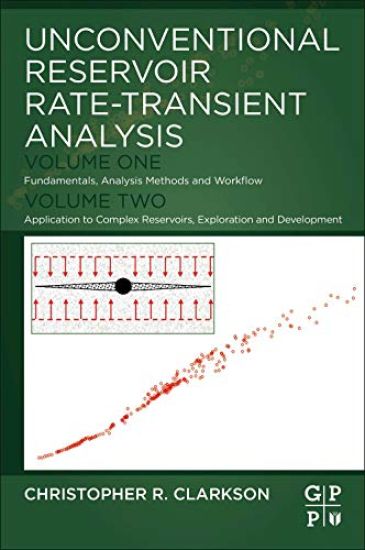
Unconventional Reservoir Rate-Transient Analysis provides petroleum engineers and geoscientists with the first comprehensive review of rate-transient analysis (RTA) methods as applied to unconventional reservoirs. Volume One—Fundamentals, Analysis Methods, and Workflow is comprised of five chapters which address key concepts and analysis methods used in RTA. This volume overviews the fundamentals of RTA, as applied to low-permeability oil and gas reservoirs exhibiting simple reservoir and fluid characteristics.Volume Two—Application to Complex Reservoirs, Exploration and Development is comprised of four chapters that demonstrate how RTA can be applied to coalbed methane reservoirs, shale gas reservoirs, and low-permeability/shale reservoirs exhibiting complex behavior such as multiphase flow. Use of RTA to assist exploration and development programs in unconventional reservoirs is also demonstrated. This book will serve as a critical guide for students, academics, and industry professionals interested in applying RTA methods to unconventional reservoirs.
Arla must continue the search for a cure on her own. Her return to Turkey in search of Michael brings the reality of a post-apocalyptic world into sharp focus and makes the search for a cure all the more urgent. Ani and Purdu have taken to the seas to escape the demons, only to find the world of the Sea Peoples offers no escape from the horrors of the Bronze Age Collapse.
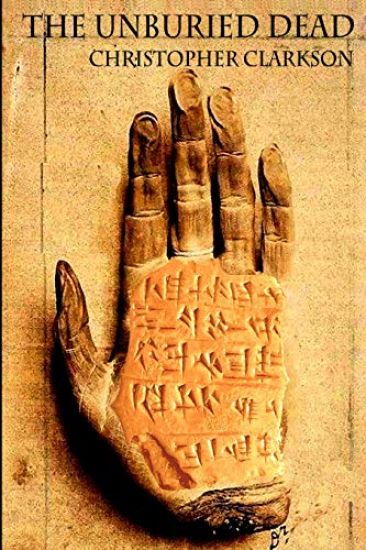
At their excavations high in the Taurus Mountains, archaeologists James and Arla are poised to discover the secret of what caused the Late Bronze Age Collapse and the destruction of the Hittite Empire in 1200 BC. Little do they know that in so doing they have placed themselves and their team in mortal danger. Their search for answers uncovers a hidden past, a sinister secret society and an ancient evil they cannot run from.Two Hittite children, Ani and Purdu, leave their farm to watch a parade of returning soldiers in their local town, only to find it overrun by a horror beyond their worst nightmares. Returning home, they find their farm destroyed. Their flight to safety leads them to an unlikely friend and guardian, and on a terrifying journey north to the great capital of Hattusha. Michael, a pharmacist in a Central Washington hospital, is the only survivor of a bizarre and brutal attack by a sick patient that leaves several doctors dead. Fleeing the scene in terror, he soon finds himself accused of the murders. Desperate to prove his innocence, Michael turns to his IT genius friend, Nathan, for help. Michael and Nathan uncover much more than they bargained for - a deadly disease sweeping through the city, and a secretive group determined to silence them and any that stand in their way.What readers are saying: "It will have you hooked from page one." 5 stars"An enthralling read. Each page and chapter leaves you unable to put the book down." 5 stars"This was a fantastic and interesting read. Great way to rehash the old zombie story line. Highly recommend to people who love a combination of history and fiction." 5 stars"Great read, a real page turner A fun and intriguing balance of fiction and history." 5 stars"Archaeologists are for once presented in an accurate and realistic manner...." 5 starsVisit http: //www.theunburieddead.com for more information on the book and the Hittites.What the top Hittitologists are saying: "Clarkson's style reminded me of Dan Brown. I do admire how he brings the Late Bronze Age world to life, how he portrayed it and it is clear that he knows about archaeology and ancient history. It is very well done." - Professor Theo van den Hout, Arthur and Joann Rasmussen Professor of Hittite and Anatolian Languages, The University of Chicago, author of The Elements of Hittite, 2011, Cambridge University Press, and many other scholarly works on the Hittites"Clarkson has researched his Hittite material well. There is an authentic ring about his description of Hittite people, their cities, and their customs. Clarkson's novel is a good read "- Professor Emeritus Trevor Bryce, The University of Queensland, author of Life and Society in the Hittite World (2002, Oxford University Press) and Kingdom of the Hittites (1999, Oxford University Press)
Most education research is undertaken in western developed countries. While some research from developing countries does make it into research journals from time to time, but these articles only emphasize the rarity of research in developing countries. The proposed book is unique in that it will cover education in Papua New Guinea over the millennia. Papua New Guinea’s multicultural society with relatively recent contact with Europe and the Middle East provides a cameo of the development of education in a country with both a colonial history and a coup-less transition to independence. Discussion will focus on specific areas of mathematics education that have been impacted by policies, research, circumstances and other influences, with particular emphasis on pressures on education in the last one and half centuries. This volume will be one of the few records of this kind in the education research literature as an in-depth record and critique of how school mathematics has been grown in Papua New Guinea from the late 1800s, and should be a useful addition to graduate programs mathematics education courses, history of mathematics, as well as the interdisciplinary fields of cross cultural studies, scholarship focusing on globalization and post / decolonialism, linguistics, educational administration and policy, technology education, teacher education, and gender studies.
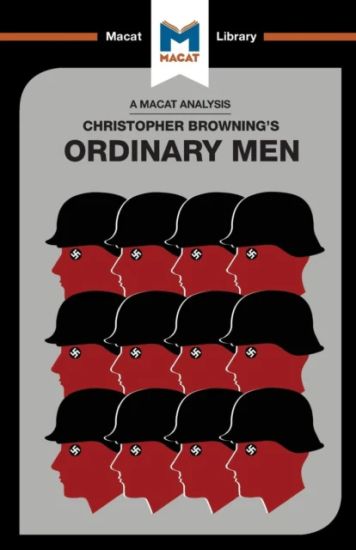
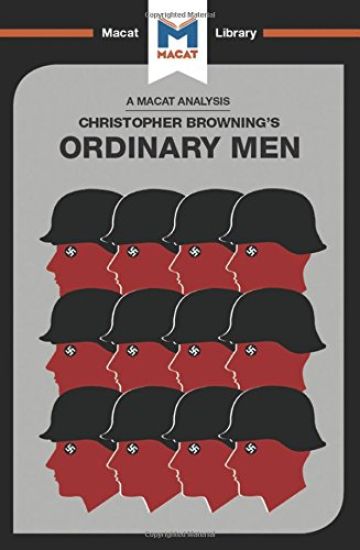
Of all the controversies facing historians today, few are more divisive or more important than the question of how the Holocaust was possible. What led thousands of Germans – many of them middle-aged reservists with, apparently, little Nazi zeal – to willingly commit acts of genocide? Was it ideology? Was there something rotten in the German soul? Or was it – as Christopher Browning argues in this highly influential book – more a matter of conformity, a response to intolerable social and psychological pressure?Ordinary Men is a microhistory, the detailed study of a single unit in the Nazi killing machine. Browning evaluates a wide range of evidence to seek to explain the actions of the "ordinary men" who made up reserve Police Battalion 101, taking advantage of the wide range of resources prepared in the early 1960s for a proposed war crimes trial. He concludes that his subjects were not "evil;" rather, their actions are best explained by a desire to be part of a team, not to shirk responsibility that would otherwise fall on the shoulders of comrades, and a willingness to obey authority. Browning's ability to explore the strengths and weaknesses of arguments – both the survivors' and other historians' – is what sets his work apart from other studies that have attempted to get to the root of the motivations for the Holocaust, and it is also what marks Ordinary Men as one of the most important works of its generation.
Of all the controversies facing historians today, few are more divisive or more important than the question of how the Holocaust was possible. What led thousands of Germans – many of them middle-aged reservists with, apparently, little Nazi zeal – to willingly commit acts of genocide? Was it ideology? Was there something rotten in the German soul? Or was it – as Christopher Browning argues in this highly influential book – more a matter of conformity, a response to intolerable social and psychological pressure? Ordinary Men is a microhistory, the detailed study of a single unit in the Nazi killing machine. Browning evaluates a wide range of evidence to seek to explain the actions of the "ordinary men" who made up reserve Police Battalion 101, taking advantage of the wide range of resources prepared in the early 1960s for a proposed war crimes trial. He concludes that his subjects were not "evil;" rather, their actions are best explained by a desire to be part of a team, not to shirk responsibility that would otherwise fall on the shoulders of comrades, and a willingness to obey authority. Browning's ability to explore the strengths and weaknesses of arguments – both the survivors' and other historians' – is what sets his work apart from other studies that have attempted to get to the root of the motivations for the Holocaust, and it is also what marks Ordinary Men as one of the most important works of its generation.
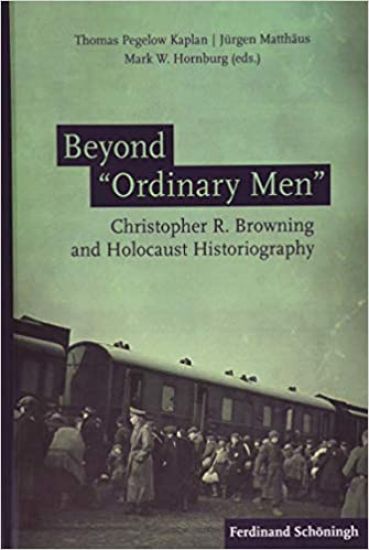
Reflecting on the work of one of the field's most influential scholars, the twenty essays in this book explore the evolution and application of Holocaust historiography, identify key insights into genocidal settings and point to gaps in our knowledge of humanity's most haunting problem. Why do they kill? The publication in 1992 of Christopher R. Browning's Ordinary Men raised crucial, previously unasked questions about the Holocaust: what made the members of a German police battalion - middle-aged family men of working- and lower-class background - become mass murderers of Jewish children, women, and men? How does motivation tie in with other factors that prompt participation in the final solution? And what can survivor accounts convey about genocide perpetration? Reflecting on the work of one of the field's most influential scholars, the twenty essays in this book explore the evolution and application of Holocaust historiography, identify key insights into genocidal settings and point to gaps in our knowledge of humanity's most haunting problem.
Title: An history of Birmingham ... With a new introduction by Christopher R. Erington.Publisher: British Library, Historical Print EditionsThe British Library is the national library of the United Kingdom. It is one of the world's largest research libraries holding over 150 million items in all known languages and formats: books, journals, newspapers, sound recordings, patents, maps, stamps, prints and much more. Its collections include around 14 million books, along with substantial additional collections of manuscripts and historical items dating back as far as 300 BC.The HISTORY OF BRITAIN & IRELAND collection includes books from the British Library digitised by Microsoft. As well as historical works, this collection includes geographies, travelogues, and titles covering periods of competition and cooperation among the people of Great Britain and Ireland. Works also explore the countries' relations with France, Germany, the Low Countries, Denmark, and Scandinavia. ++++The below data was compiled from various identification fields in the bibliographic record of this title. This data is provided as an additional tool in helping to insure edition identification: ++++ British Library Hutton, William; 1809. 8 . 10360.dd.11.
Title: An history of Birmingham ... With a new introduction by Christopher R. Erington.Publisher: British Library, Historical Print EditionsThe British Library is the national library of the United Kingdom. It is one of the world's largest research libraries holding over 150 million items in all known languages and formats: books, journals, newspapers, sound recordings, patents, maps, stamps, prints and much more. Its collections include around 14 million books, along with substantial additional collections of manuscripts and historical items dating back as far as 300 BC.The HISTORY OF EUROPE collection includes books from the British Library digitised by Microsoft. This collection includes works chronicling the development of Western civilisation to the modern age. Highlights include the development of language, political and educational systems, philosophy, science, and the arts. The selection documents periods of civil war, migration, shifts in power, Muslim expansion into Central Europe, complex feudal loyalties, the aristocracy of new nations, and European expansion into the New World. ++++The below data was compiled from various identification fields in the bibliographic record of this title. This data is provided as an additional tool in helping to insure edition identification: ++++ British Library Hutton, William F.S.A. Sco.; Hutton, Catherine; 1819. 8 . 10350.e.19.
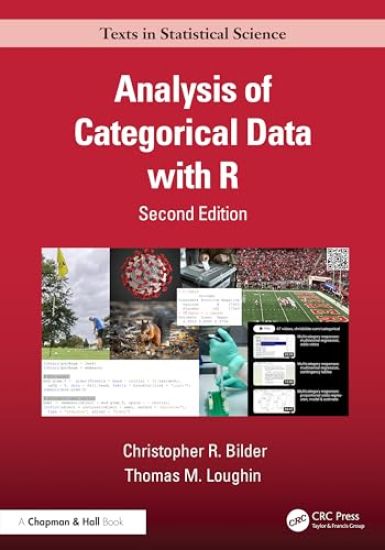
Analysis of Categorical Data with R, Second Edition presents a modern account of categorical data analysis using the R software environment. It covers recent techniques of model building and assessment for binary, multicategory, and count response variables and discusses fundamentals, such as odds ratio and probability estimation. The authors give detailed advice and guidelines on which procedures to use and why to use them.The second edition is a substantial update of the first based on the authors’ experiences of teaching from the book for nearly a decade. The book is organized as before, but with new content throughout, and there are two new substantive topics in the advanced topics chapter—group testing and splines. The computing has been completely updated, with the "emmeans" package now integrated into the book. The examples have also been updated, notably to include new examples based on COVID-19, and there are more than 90 new exercises in the book. The solutions manual and teaching videos have also been updated.Features:Requires no prior experience with R, and offers an introduction to the essential features and functions of RIncludes numerous examples from medicine, psychology, sports, ecology, and many other areasIntegrates extensive R code and outputGraphically demonstrates many of the features and properties of various analysis methodsOffers a substantial number of exercises in all chapters, enabling use as a course text or for self-studySupplemented by a website with data sets, code, and teaching videosAnalysis of Categorical Data with R, Second Edition is primarily designed for a course on categorical data analysis taught at the advanced undergraduate or graduate level. Such a course could be taught in a statistics or biostatistics department, or within mathematics, psychology, social science, ecology, or another quantitative discipline. It could also be used by a self-learner and would make an ideal reference for a researcher from any discipline where categorical data arise.
THIS inspiring collection of short verse of Christopher Mwashinga offers poetry lovers an outstanding sampling of more than 100 poems spanning 25 years of his career as a poet. Although short in length, these poems are fortified with beauty, imagination and originality. They were written on five continents: North America, South America, Africa, Asia, and Europe. Included in this volume are such moving and memorable compositions as "It's Springtime," "A Sunny Morning," "Sailing Solo?" "Nothing but the Bible," "My Youthful Years," "Sleep, Slumber," "A Longing for Sunshine," "Taste of Spring," "Losing Your Mind?" "I Long to Belong," and many, many more. It is our hope that this collection will prove to be a sunshine to many lovers of inspiring verse.
Ordinary Men has been admired all over the world and is now published in the UK for the first time. It takes as its basis the detailed records of one squad from the Nazis' extermination groups and explores in detail its composition, its actions, andthe methods by which it was trained to perform acts of genocide on an industrial scale. He introduces us to cheerful, friendly, ordinary men who killed without hesitation or apparent remorse for years on end, in docile obedience to an authority theyhappily accepted as legitimate. It is a valuable corrective to the idea of German uniqueness and offers a much more chilling picture of human beings as avidly suggestible and desperate for an organising purpose in their lives, however disgusting.
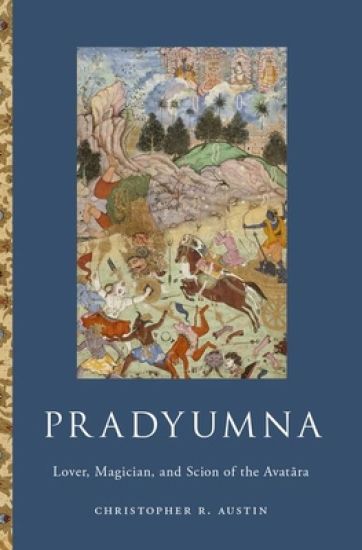
This book provides the first full-scale English-language study of Pradyumna, the son of the Hindu god Krsna. Often represented as a young man in mid-adolescence, Pradyumna is both a handsome double of his demon-slaying father and the rebirth of Kamadeva, the God of Love. Sanskrit epic, puranic, and kavya narratives of the 300-1300 CE period celebrate Pradyumna's sexual potency, mastery of illusory subterfuges, and military prowess in supporting the work of his avatara father. These materials reflect the values of an evolving Brahminical and Vaisnava tradition that was deeply invested in the imperatives of family, patrilines, the violent but necessary defense of the social and cosmic order, and the celebration of beauty and desire as a means to the divine. Pradyumna's evolving narratives, almost completely absent from existing studies of Hindu mythology, provide a point of access to the development of Krsna bhakti and Vaisnava theism more broadly. Conversely, Jain sources cast Pradyumna as an exemplary figure through whom a pointed rejection of these values can be articulated, even while sharing certain of their elementary premises. Pradyumna: Lover, Magician, and Scion of the Avatara assembles these narratives, presents key Sanskrit materials in translation and summary form, and articulates the social, gender, and religious values encoded in them. Most importantly, the study argues that Pradyumna's signature two-handed maneuver--the audacious appropriation of a feminine partner, enabled by the emasculating destruction of her demonic male protector--communicates a persistent fantasy of male power expressed in the language of a mutually implicating sex and violence.
The islands of Britain have been a crossroads of gods, heroes, and kings-those of flesh as well as those of myth-for thousands of years. Successive waves of invasion brought distinctive legends, rites, and beliefs. The ancient Celts displaced earlier indigenous peoples, only to find themselves displaced in turn by the Romans, who then abandoned the islands to Germanic tribes, a people themselves nearly overcome in time by an influx of Scandinavians. With each wave of invaders came a battle for the mythic mind of the Isles as the newcomer's belief system met with the existing systems of gods, legends, and myths. In Gods, Heroes, and Kings, medievalist Christopher Fee and veteran myth scholar David Leeming unearth the layers of the British Isles' unique folkloric tradition to discover how this body of seemingly disparate tales developed. The authors find a virtual battlefield of myths in which pagan and Judeo-Christian beliefs fought for dominance, and classical, Anglo-Saxon, Germanic, and Celtic narrative threads became tangled together. The resulting body of legends became a strange but coherent hybrid, so that by the time Chaucer wrote "The Wife of Bath's Tale" in the fourteenth century, a Christian theme of redemption fought for prominence with a tripartite Celtic goddess and the Arthurian legends of Sir Gawain-itself a hybrid mythology. Without a guide, the corpus of British mythology can seem impenetrable. Taking advantage of the latest research, Fee and Leeming employ a unique comparative approach to map the origins and development of one of the richest folkloric traditions. Copiously illustrated with excerpts in translation from the original sources, Gods, Heroes, and Kings provides a fascinating and accessible new perspective on the history of British mythology.
The Iran-United States Claims Tribunal, which has been called the most significant arbitral body in history, celebrated its 25th anniversary in 2006. As of mid-2005, the Tribunal had issued over 800 awards and decisions--a total of 600 awards (including partial awards and awards on agreed terms), 83 interlocutory and interim awards, and 133 decisions--in resolving almost 3000 cases. The Tribunal's awards have been described as the most important body of international arbitration jurisprudence. The significance of these decisions as persuasive authority is second to none. In this volume, experts in the field identify and comment on the Tribunal awards that are most important for international arbitration; i.e., the cases that everyone needs to know for investor-state and international commercial arbitration. The book approaches the Tribunal's work from a forward-looking perspective with emphasis on the continuing usefulness of awards and decisions issued by the Tribunal in international arbitration practice. In addition to original contributions from an array of eminent authors (all of whom have extensive experience at the Tribunal and/or in investor-State and international arbitration), this book includes excerpts of key awards discussed in the contributions, as well as appendices with foundational documents for the Tribunal. CONTRIBUTORS INCLUDE: Roger P. Alford, Pepperdine University School of Law, former Legal Assistant, Iran-U.S. Claims Tribunal David J. Bederman, Emory Law School, former Legal Assistant, Iran-U.S. Claims Tribunal David D. Caron, C. William Maxeiner Distinguished Professor of Law, University of California, Berkeley, former Legal Assistant, Iran-U.S. Claims Tribunal Jack J. Coe, Jr. Pepperdine University School of Law, former Legal Assistant, Iran-U.S. Claims Tribunal Christopher R. Drahozal, John M. Rounds Professor of Law, University of Kansas School of Law; former Legal Assistant, Iran-U.S. Claims Tribunal Christopher S. Gibson, Suffolk University Law School; former Legal Assistant, Iran-U.S. Claims Tribunal Mark R. Joelson, Law Office of Mark R. Joelson Lucinda A. Low, Steptoe & Johnson Andrea J. Menaker, Office of the Legal Advisor, U.S. Department of State Sean D. Murphy, George Washington University Law School, former U.S. Agent to the Iran-U.S. Claims Tribunal Daniel M. Price, Sidley Austin, former Deputy U.S. Agent to the Iran-U.S. Claims Tribunal Jeffrey F. Pryce, Steptoe & Johnson
In Antitrust Law and Intellectual Property Rights: Cases and Materials, Christopher R. Leslie describes how patents, copyrights, and trademarks confer exclusionary rights on their owners, and how firms sometimes exercise this exclusionary power in ways that exceed the legitimate bounds of their intellectual property rights. Leslie explains that while substantive intellectual property law defines the scope of the exclusionary rights, antitrust law often provides the most important consequences when owners of intellectual property misuse their rights in a way that harms consumers or illegitimately excludes competitors. Antitrust law defines the limits of what intellectual property owners can do with their IP rights. In this book, Leslie explores what conduct firms can and cannot engage in while acquiring and exploiting their intellectual property rights, and surveys those aspects of antitrust law that are necessary for both antitrust practitioners and intellectual property attorneys to understand. This book is ideal for an advanced antitrust course in a JD program. In addition to building on basic antitrust concepts, it fills in a gap that is often missing in basic antitrust courses yet critical for an intellectual property lawyer: the intersection of intellectual property and antitrust law. The relationship between intellectual property and antitrust is particularly valuable as an increasing number of law schools offer specializations and LLMs in intellectual property. This book also provides meaningful material for both undergraduate and graduate business schools programs because it explains how antitrust law limits the marshalling of intellectual property rights.