Kirjojen hintavertailu. Mukana 11 244 527 kirjaa ja 12 kauppaa.

Kirjahaku

Etsi kirjoja tekijän nimen, kirjan nimen tai ISBN:n perusteella.

1000 tulosta hakusanalla Christopher Smart

The Poetical Works of Christopher Smart: Volume V. The Works of Horace, Translated Into Verse
Published here for the first time since 1767, Christopher Smart's verse translation of Horace was made in the prodigiously creative years between his release from the madhouse and his death. The translation strengthens the impression made by all Smart's later verse of a poet of remarkable lyrical virtuosity and boldness of expression. The translation now emerges as testimony to Smart's tireless creativity and poetic energy, and as a significant contribution to the present reappraisal of Horace's influence on English literature. Smart's contemporaries, however, either ignored the project, or treated it with contempt, and it was never reprinted. This edition includes Smart's own critical preface, which is important for its declaration of the writer's principles as translator, and for its unorthodox ideas about poetic language. Karina Williamson's informative introduction discusses Smart's principles and methods in the context of eighteenth century attitudes to the translation of clasical works. Full scholarly apparatus is provided, together with a detailed and clarifying commentary which explains Smart's more obscure passages.
The Poetical Works of Christopher Smart: Volume VI. A Poetical Translation of the Fables of Phaedrus
This is the first literary critical edition of Christopher Smart's translation of Phaedrus' fables, and the first literary commentary on these fables in English. Many of the best known Aesopian fables are in fact the work of the Roman poet Phaedrus, a freed slave of the first century. In the eighteenth century, Phaedrus was in the pantheon of great classical authors, while Christopher Smart was considered the outstanding fabulist of his time. Yet today, while Aesop's fables are a household name, and other works by Smart enjoy critical acclaim, Phaedrus' fables and Smart's translation of them are both largely disregarded or unknown. The fables themselves are familiar yet fresh; their social and political implications often have a startlingly contemporary flavour, and Smart's versions successfully catch the spirit and humour of the Latin originals. This edition provides a full introduction, commentary, and scholarly apparatus, and constitutes a history of the reception of the text. Also presented is the case for a possible new attribution to Smart - the Phaedrus by a Gentleman of the University of Cambridge.
Christopher Smart

Christopher Smart

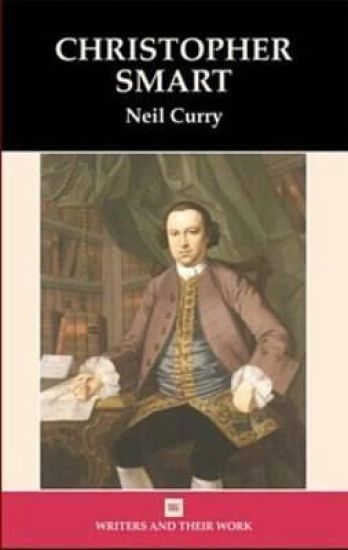
Neil Curry

Northcote House Publishers Ltd
2004
nidottu
This close and sensitive study shows Christopher Smart (1722-1771) to be one of the finest and most important English religious poets between George Herbert and Gerard Manley Hopkins. In contrast to the grimness of much evangelical writing and despite his own personal hardships, Smart is seen here as a poet of adoration and joy.
Christopher Smart

Christopher Smart

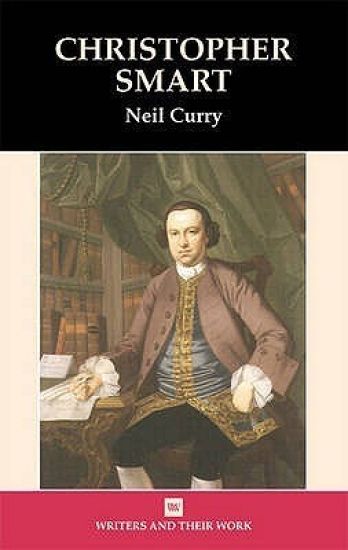
Neil Curry

Northcote House Publishers Ltd
2004
sidottu
This close and sensitive study shows Christopher Smart (1722-1771) to be one of the finest and most important English religious poets between George Herbert and Gerard Manley Hopkins. In contrast to the grimness of much evangelical writing and despite his own personal hardships, Smart is seen here as a poet of adoration and joy.
Christopher Smart

Christopher Smart

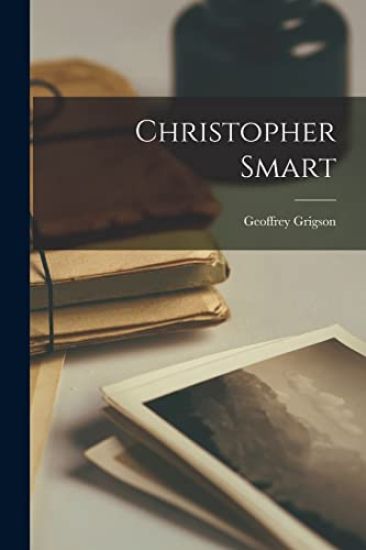
Geoffrey 1905-1985 Grigson

Hassell Street Press
2021
sidottu
This work has been selected by scholars as being culturally important and is part of the knowledge base of civilization as we know it.This work is in the public domain in the United States of America, and possibly other nations. Within the United States, you may freely copy and distribute this work, as no entity (individual or corporate) has a copyright on the body of the work.Scholars believe, and we concur, that this work is important enough to be preserved, reproduced, and made generally available to the public. To ensure a quality reading experience, this work has been proofread and republished using a format that seamlessly blends the original graphical elements with text in an easy-to-read typeface.We appreciate your support of the preservation process, and thank you for being an important part of keeping this knowledge alive and relevant.
Christopher Smart

Christopher Smart

Geoffrey 1905-1985 Grigson

Hassell Street Press
2021
nidottu
This work has been selected by scholars as being culturally important and is part of the knowledge base of civilization as we know it.This work is in the public domain in the United States of America, and possibly other nations. Within the United States, you may freely copy and distribute this work, as no entity (individual or corporate) has a copyright on the body of the work.Scholars believe, and we concur, that this work is important enough to be preserved, reproduced, and made generally available to the public. To ensure a quality reading experience, this work has been proofread and republished using a format that seamlessly blends the original graphical elements with text in an easy-to-read typeface.We appreciate your support of the preservation process, and thank you for being an important part of keeping this knowledge alive and relevant.
Routledge Revivals: The Collected Poems of Christopher Smart (1949)
First published in 1949, this book presents the collected works of Christopher Smart, the eighteenth-century poet whose life has an attraction for the curioso of literature. There is the early marriage with Anne Vane, his secret marriage, eighteenth-century Cambridge life, the intrigues of Grub Street, and, finally, insanity and confinement in an asylum. Smart remains a strange, enigmatic figure, repulsive or attractive according to the temperament of the investigator. His poetry is not easy to disentangle from his character – egocentric, given to exhibitionism, childish, oscillating between the extremes of self-belittlement and self-glorification; but he has his own claim to fame. Few other poets match him in directness of expression. He is a poet with the eye of a painter, developed in an unusually high degree. He has a stereoscopic vision which makes the object leap to the eye, the painter’s sense of physical texture and his skill in composing a picture. Then again, there is his versatility. He practised almost every kind of poetry and gave to each kind his own personal inflection. It is the aim of this edition to present as complete a text as possible in the way that Smart himself would have seen it and, in giving some account of the poet’s life, to link his poetry with it. The book will be of interest to students of eighteenth-century literature and history.
Routledge Revivals: The Collected Poems of Christopher Smart (1949)
First published in 1949, this book presents the collected works of Christopher Smart, the eighteenth-century poet whose life has an attraction for the curioso of literature. There is the early marriage with Anne Vane, his secret marriage, eighteenth-century Cambridge life, the intrigues of Grub Street, and, finally, insanity and confinement in an asylum. Smart remains a strange, enigmatic figure, repulsive or attractive according to the temperament of the investigator. His poetry is not easy to disentangle from his character – egocentric, given to exhibitionism, childish, oscillating between the extremes of self-belittlement and self-glorification; but he has his own claim to fame. Few other poets match him in directness of expression. He is a poet with the eye of a painter, developed in an unusually high degree. He has a stereoscopic vision which makes the object leap to the eye, the painter’s sense of physical texture and his skill in composing a picture. Then again, there is his versatility. He practised almost every kind of poetry and gave to each kind his own personal inflection. It is the aim of this edition to present as complete a text as possible in the way that Smart himself would have seen it and, in giving some account of the poet’s life, to link his poetry with it. The book will be of interest to students of eighteenth-century literature and history.
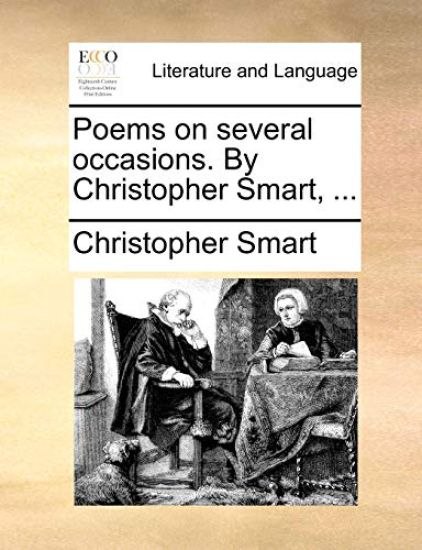
Poems on Several Occasions. By Christopher Smart,

Poems on Several Occasions. By Christopher Smart,

Christopher Smart

Gale Ecco, Print Editions
2018
sidottu
The 18th century was a wealth of knowledge, exploration and rapidly growing technology and expanding record-keeping made possible by advances in the printing press. In its determination to preserve the century of revolution, Gale initiated a revolution of its own: digitization of epic proportions to preserve these invaluable works in the largest archive of its kind. Now for the first time these high-quality digital copies of original 18th century manuscripts are available in print, making them highly accessible to libraries, undergraduate students, and independent scholars.Western literary study flows out of eighteenth-century works by Alexander Pope, Daniel Defoe, Henry Fielding, Frances Burney, Denis Diderot, Johann Gottfried Herder, Johann Wolfgang von Goethe, and others. Experience the birth of the modern novel, or compare the development of language using dictionaries and grammar discourses. ++++The below data was compiled from various identification fields in the bibliographic record of this title. This data is provided as an additional tool in helping to insure edition identification: ++++British LibraryT042626With a list of subscribers.London: printed for the author, by W. Strahan; and sold by J. Newbery, 1752. 16],230p., plates; 4
Christopher Smart's English Lyrics

Christopher Smart's English Lyrics

Rosalind Powell

Routledge
2019
nidottu
In the first full-length study of Christopher Smart’s translations and the place and function of translation in Smart’s poetry, Rosalind Powell proposes a new approach to understanding the relationship between Smart’s poetics and his practice. Drawing on translation theory from the early modern period to the present day, this book addresses Smart's translations of Horace, Phaedrus and the Psalms alongside the better-known religious works such as Jubilate Agno and A Song to David. Five recurrent threads run throughout Powell’s study: the effect of translation on the identity of a narrative voice in a rewritten text; the techniques that are used to present translated texts to a new literary, cultural and linguistic readership; performance and reading contexts; the translation of great works as an attempt to achieve literary permanence; and, finally, the authorial influence of Smart himself in terms of the overt religiosity and nationalism that he champions in his writing. In exploring Smart’s major translation projects and revisiting his original poems, Powell offers insights into classical reception and translation theory; attitudes towards censorship; expressions of nationalism in the period; developments in liturgy and hymnody; and the composition of children’s books and school texts in the early modern era. Her detailed analysis of Smart’s translating poetics places them within a new, contemporary context and locality to uncover the poet's works as a coherent project of Englishing.
Christopher Smart and Satire

Christopher Smart and Satire

Min Wild

Ashgate Publishing Limited
2008
sidottu
Christopher Smart and Satire explores the lively and idiosyncratic world of satire in the eighteenth-century periodical, focusing on the way that writers adopted personae to engage with debates taking place during the British Enlightenment. Taking Christopher Smart's audacious and hitherto underexplored Midwife, or Old Woman's Magazine (1750-1753) as her primary source, Min Wild provides a rich examination of the prizewinning Cambridge poet's adoption of the bizarre, sardonic 'Mary Midnight' as his alter-ego. Her analysis provides insights into the difficult position in which eighteenth-century writers were placed, as ideas regarding the nature and functions of authorship were gradually being transformed. At the same time, Wild also demonstrates that Smart's use of 'Mary Midnight' is part of a tradition of learned wit, having an established history and characterized by identifiable satirical and rhetorical techniques. Wild's engagement with her exuberant source materials establishes the skill and ingenuity of Smart's often undervalued, multilayered prose satire. As she explores Smart's use of a peculiarly female voice, Wild offers us a picture of an ingenious and ribald wit whose satirical overview of society explores, overturns, and anatomises questions of gender, politics, and scientific and literary endeavors.