
Kirjahaku
Etsi kirjoja tekijän nimen, kirjan nimen tai ISBN:n perusteella.
1000 tulosta hakusanalla Clark S.D.

A grotesque, surreal and darkly comic series of tales about the most terrible family on the planet. Mrs Bott, an horrendous "unlanced boil" of a woman and Mr Bott, "a balloon of a man", are very unhappily married. Into this disaster enter two unwanted arrivals: The Bott Twins. Born bad? Or driven bad? It doesn't matter. What you do need to know is that: "If you ever meet the Bott Twins, run. Run and don't look back." Too few people take this advice and the results are not pretty.

The Equality of the Son and Holy Ghost with the Father, in the Ever-Blessed Trinity; ... with a Letter to Mr. Whiston. to Which Is Subjoin'd, a Confutation of Dr. Clark's Scripture Doctrine of the Trinity, ... by a Divine of the Church of England.
Philotriados
Gale Ecco, Print Editions
2010
pokkari

The Equality of the Son and Holy Ghost With the Father, in the Ever-blessed Trinity; ... With a Letter to Mr. Whiston. To Which is Subjoin'd, A Confutation of Dr. Clark's Scripture Doctrine of the Trinity, ... By a Divine of the Church of England
Philotriados
Gale Ecco, Print Editions
2018
sidottu
The 18th century was a wealth of knowledge, exploration and rapidly growing technology and expanding record-keeping made possible by advances in the printing press. In its determination to preserve the century of revolution, Gale initiated a revolution of its own: digitization of epic proportions to preserve these invaluable works in the largest archive of its kind. Now for the first time these high-quality digital copies of original 18th century manuscripts are available in print, making them highly accessible to libraries, undergraduate students, and independent scholars.The Age of Enlightenment profoundly enriched religious and philosophical understanding and continues to influence present-day thinking. Works collected here include masterpieces by David Hume, Immanuel Kant, and Jean-Jacques Rousseau, as well as religious sermons and moral debates on the issues of the day, such as the slave trade. The Age of Reason saw conflict between Protestantism and Catholicism transformed into one between faith and logic -- a debate that continues in the twenty-first century.++++The below data was compiled from various identification fields in the bibliographic record of this title. This data is provided as an additional tool in helping to insure edition identification: ++++British LibraryT065237Signed on p.28: Philotriados. 'A confutation .. ' has separate titlepage, pagination and register.London: printed for W. Mears; and sold by J. Roberts, 1714. 28; 2],38p.; 8
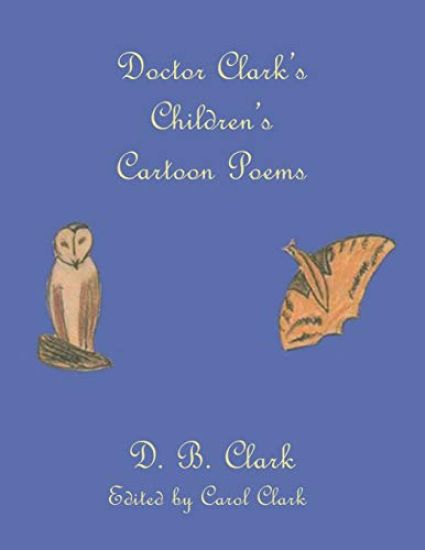
This is a nusery rhyme-poem to intertain both the children and the parents, by a retired clinical pychologist who has some feeling for what children love to hear.

Movements of Political Protest in Canada 1640-1840
S.D. Clark
UNIVERSITY OF TORONTO PRESS
1959
pokkari
In this volume, Professor Clark shows that for two hundred years Canadian society was subject to the same kind of disturbing and disruptive forces that revealed themselves in the United States in the Revolutionary period. In Canada, as in the United States, there was a frontier element which, economically, socially, and culturally, did not feel itself part of the established political order, and which periodically reacted against that order. In Canada, however, the spirit of the frontier regularly met defeat, and the author analyses the causes of this defeat in a thorough and illuminating manner, dealing in sequence with each area of conflict. The study is divided into four parts: The First American War of Independence, 1660-1760; The War of the United Colonies, 1765-1785; The Struggle for the West, 1785-1815; The Canadian Rebellions, 1815-1840. The author, an economist and sociologist, diverges sharply from the traditional historical interpretation of events in Canada from 1640 to 1840, which has been to emphasize the differences between the two countries rather than similarities. His realistic and penetrating study may prompt many to re-examine and re-assess the bases of their interpretations.

The need for a third printing of Church and Sect in Canada reflects the continuing interest in this pioneer study of the development of religious organization in Canadian society. It is one of three studies by Professor Clark; the other two, The Social Development of Canada and Movements of Political Protest in Canada show how the opening up of new areas of development in Canadian society led to the growth of new forms of social organization challenging the position and authority of established forms. In the field of religious organization, it was the evangelical religious sect which mounted the opposition to the established church denominations. By examining religious developments in Canada from 1760 to 1914 Professor Clark demonstrates how every move on the part of established church groups to secure, by union and other means, a greater degree of order in religious organization was accompanied by the rise of new forms of religious organization in those areas of society undergoing rapid change. In face of developments in our society today this study gains particular significance. The strong influence of the functionalist school in sociology in the United States and Canada in the 1950s and early 1960s fitted the mood of a society caught up in economic prosperity and ready to accept the comfortable assumption that the troublous upheavals in economic, political, religious, and other forms of social organization experienced in earlier decades would never recur. As a historical sociologist, Professor Clark gives emphasis to the importance of viewing developments in historical perspective. His examination of the basis of protest in religious organization in Canadian society over a period of nearly two centuries helps us understand the basis of protest, whatever form it takes, in society today.

Stochastic Approximation Methods for Constrained and Unconstrained Systems
H.J. Kushner; D.S. Clark
Springer-Verlag New York Inc.
1978
nidottu
The book deals with a powerful and convenient approach to a great variety of types of problems of the recursive monte-carlo or stochastic approximation type. Such recu- sive algorithms occur frequently in stochastic and adaptive control and optimization theory and in statistical esti- tion theory. Typically, a sequence {X } of estimates of a n parameter is obtained by means of some recursive statistical th st procedure. The n estimate is some function of the n_l estimate and of some new observational data, and the aim is to study the convergence, rate of convergence, and the pa- metric dependence and other qualitative properties of the - gorithms. In this sense, the theory is a statistical version of recursive numerical analysis. The approach taken involves the use of relatively simple compactness methods. Most standard results for Kiefer-Wolfowitz and Robbins-Monro like methods are extended considerably. Constrained and unconstrained problems are treated, as is the rate of convergence problem. While the basic method is rather simple, it can be elaborated to allow a broad and deep coverage of stochastic approximation like problems. The approach, relating algorithm behavior to qualitative properties of deterministic or stochastic differ ential equations, has advantages in algorithm conceptualiza tion and design. It is often possible to obtain an intuitive understanding of algorithm behavior or qualitative dependence upon parameters, etc., without getting involved in a great deal of deta~l.

In The Path of Lee's "Old Warhorse": Essays by Helen D. Longstreet
Clark T. Thornton; Helen Dortch Longstreet
Createspace Independent Publishing Platform
2009
nidottu

The Student's Gibbon Abridged from the Original Work by Sir William Smith New and Revised Edition Part I. from A.D. 98 to the Death of Justinian. by A. H. J. Greenidge, Part II. from A.D. 565 to the Capture of Constantinople by the Turks. Part I
Edward Gibbon; John George Clark Anderson; William Smith
British Library, Historical Print Editions
2011
pokkari
C. S. Johnson Company, Petitioner, V. Merle W. Stromberg, D/B/A California Batching Equipment Co., Et U.S. Supreme Court Transcript of Record with Supporting Pleadings
Jarrett Ross Clark
Gale, U.S. Supreme Court Records
2011
pokkari

The Student's Gibbon. Abridged from the Original Work by Sir William Smith. New and Revised Edition. Part I, from A.D. 98 to the Death of Justinian. Part II, from A.D. 565 to the Capture of Constantinople by the Turks. Part II, New Edition
Abel Hendy Jones Greenidge; John George Clark Anderson; Edward Gibon
British Library, Historical Print Editions
2011
pokkari

"One mighty and strong" as "Thus saith men". Published in the Deseret News in 1905, and in the Improvement Era in 1907 by the L. D. S. Church authorities and "The one mighty and strong" as "Thus saith the Lord" taken from Holy Writ, etc.
John T 1865-1932 Clark; Joseph Fielding Smith
Nabu Press
2010
pokkari

"One Mighty and Strong" as "Thus Saith men". Published in the Deseret News in 1905, and in the Improvement Era in 1907 by the L. D. S. Church Authorities and "The one Mighty and Strong" as "Thus Saith the Lord" Taken From Holy Writ, etc.
Joseph Fielding Smith; John T 1865-1932 Clark
Hutson Street Press
2025
sidottu

"One Mighty and Strong" as "Thus Saith men". Published in the Deseret News in 1905, and in the Improvement Era in 1907 by the L. D. S. Church Authorities and "The one Mighty and Strong" as "Thus Saith the Lord" Taken From Holy Writ, etc.
Joseph Fielding Smith; John T 1865-1932 Clark
Hutson Street Press
2025
pokkari

A unique nugget of Latter-day Saint scripture is Facsimile 2 in the Book of Abraham. It is a picture-scripture called a hypocephalus and it is overflowing with symbolic meaning. Joseph Smith gave partial explanations of the figures and their meaning and then wrote: "The above translation is given as far as we have any right to give at the present time." Joseph knew there was more to discover He left it for later generations to uncover. The original owners knew the original meaning and could easily describe each scenes. These owners, Abrahamic-believers from Ptolemaic-era, Thebes, Egypt, intentionally obscured the meaning of the symbols to protect their pristine mysteries. The message, obscure to some, was clear to the initiated. This book, Joseph's Hypocephalus, allows the student to read the original message of Facsimile 2. The message of Facsimile 2 is the message of the Path of Souls. It describes the path a dead man takes on his journey to Heaven. Egyptologists have equated this path with the path of the sun. This is incorrect Original sources are consistent on this point. The path of the sun god, Re and the path of the dead man, Osiris, are two distinct and different paths. Facsimile 2 depicts Osiris' path, the path of the dead man. The same message painted on the hypocephalus is also enshrined in rituals and etched in the night's sky.Hugh Nibley said the hypocephalus was only one volume in an ancient sacred library of sacred devices that all had the same purpose. This book, Joseph's Hypocephalus, points out a handful of additional volumes. Early Orphics, Hermetic groups, and an early Christian Gnostic group all had remarkable volumes in this library. One volume added to Nibley's library is from pre-Columbus American Indians. Their volume comes in the form of shell gorgets. A gorget-hypocephalus connection is out-of-place because no historical tie between the ancient Near East and Native Americans from a later time is known. Yet, the traditions behind the shell gorgets outline the Path of Souls in remarkable detail and those details align so intricately with the Path of Souls illustrated on the facsimile that the two must be considered the same type of document. What is wonderful about Native American traditions is the relatively recent nature of their records. This means one is able to glean a more intimate understanding of their traditions. For instance, a few first-hand records of beautiful secret initiation rites into holy orders of Indian priesthoods are extant. The most poignant example is the Osage Songs of the Wa-xo'-be, recorded a hundred years ago with the full blessing of the Osage priesthood. What is uncovered is breathtaking. Rituals and myths of the Native peoples find significant parallels with Egyptian myth and rituals. These both compare snuggly with Joseph Smith's modern rituals. The same Path of Souls found on Facsimile 2 and on Mississippian gorgets is also found in the Hebrew Scriptures. Utilizing Margaret Barker's Temple Theology, Joseph's Hypocephalus points out the Path of Souls as a fundamental part of the ancient Hebrew religion. The Path was attacked by King Josiah. Adherents to pathway beliefs scattered to different areas of the world. Some of these people ended up in the Jordanian wilderness, only to reappear centuries later as the Christians. Others ended up in America and others in Egypt. All tell the story of the Path of Souls. The Path of Souls which Facsimile 2 describes is the esoteric essence of revealed religion. It is the secret of the magi, the shaman, and the prophet. Holding up the Path of Souls as a lantern to the words of the ancient scripture produces new images and gives an augmented sense of what the scriptures are really all about. Reading the scriptures in the light of this prism is delightfully insightful.

A unique nugget of Latter-day Saint scripture is Facsimile 2 in the Book of Abraham. It is a picture-scripture called a hypocephalus and it is overflowing with symbolic meaning. Joseph Smith gave partial explanations of the figures and then wrote: "The above translation is given as far as we have any right to give at the present time." Joseph knew there was more to discover The original owners knew the original message. These owners, Abrahamic-believers from Ptolemaic-era, Thebes, Egypt, intentionally obscured the meaning of their symbols to keep their mysteries pristine and hidden. Yet the message was always clear to those who knew the mysteries. This book, Joseph's Hypocephalus, allows the student to read the message of Facsimile 2 once again. The message of Facsimile 2 is the message of the Path of Souls. It describes the path a dead man takes on his postmortem journey to Heaven. Egyptologists have equated this path with the path of the sun. This is incorrect Joseph's Hypocephalus explains why. The message painted on the hypocephalus is also enshrined in rituals and etched in the night's sky.Hugh Nibley said the hypocephalus was only one volume in an ancient sacred library of sacred devices that all had the same purpose. This book, Joseph's Hypocephalus notes additional volumes. Orphics, Hermetic, and early Christian Gnostic groups all had remarkable volumes in this library. One odd volume added to Nibley's library is from pre-Columbus Native Americans. It comes in the form of shell gorgets. A gorget-hypocephalus connection seems absurd. Yet, the traditions behind the shell gorgets outline the Path of Souls in remarkable detail and those details align so intricately with Facsimile 2 that the two must be considered the same type of document.What is wonderful about Native American traditions is the relatively recent nature of their records. Allowing for a more intimate understanding of their traditions. A few first-hand records of beautiful secret initiation rites into holy orders of Indian priesthoods are extant. The best example is the Osage Songs of the Wa-xo'-be, recorded with the full blessing of the Osage priesthood. What is uncovered is breathtaking.The Path of Souls is also found in the Hebrew Scriptures. Utilizing Margaret Barker's Temple Theology, Joseph's Hypocephalus highlights the Path of Souls as a fundamental part of the ancient Hebrew religion. Adherents to pathway beliefs were scattered by Jewish kings. Some of these people reappeared centuries later as the first Christians. Others ended up in America and others in Egypt. All tell the story of the Path of Souls. The Path of Souls, which Facsimile 2 describes, is the esoteric essence of revealed religion. It is the secret of the magi, the shaman, and the prophet. Holding up the Path of Souls as a lantern to the words of the ancient scripture produces new images and gives an augmented sense of what the scriptures are really all about. Reading the scriptures in the light of this prism is delightfully insightful.
