

Kirjahaku
Etsi kirjoja tekijän nimen, kirjan nimen tai ISBN:n perusteella.
1000 tulosta hakusanalla Colin Channer
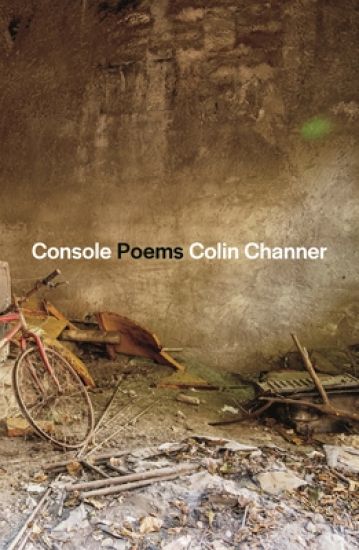
The second collection by "one of the most significant literary figures in the Caribbean" (The Globe and Mail). Assured but chance-inflected, ever rooted in the local but always world-aware, Console reconsiders languages, geographies, and memories as luminous soundscapes. With lyric dexterity, Colin Channer jolts old notions of New England, cross-fading from the Berkshires to Anguilla, from Connecticut to Senegal. A dissolve to the poet's childhood in Jamaica occurs after glimpsing an old record player in Providence, leading to the title poem's meditations on reggae, religion, marriage, justice, and transgressions in the home. With allusive links to photography, music, sea mammals, mistranslation, and the universal ritual of "the walk," Console reorganizes our sense of time, collapses and rebreaks the remembered and certain, renames the familiar, reaches for settled etymologies, and turns words inside out. Includes 8 black-and-white photographs
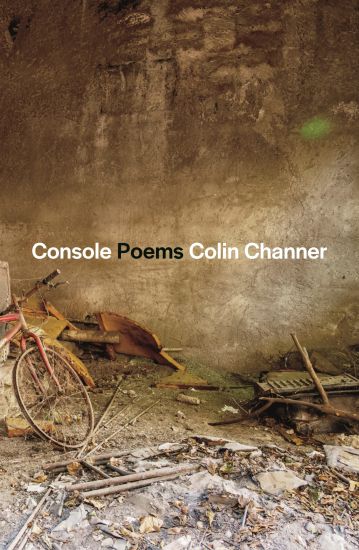
The second collection by "one of the most significant literary figures in the Caribbean" (The Globe and Mail). Assured but chance-inflected, ever rooted in the local but always world-aware, Console reconsiders languages, geographies, and memories as luminous soundscapes. With lyric dexterity, Colin Channer jolts old notions of New England, cross-fading from the Berkshires to Anguilla, from Connecticut to Senegal. A dissolve to the poet's childhood in Jamaica occurs after glimpsing an old record player in Providence, leading to the title poem's meditations on reggae, religion, marriage, justice, and transgressions in the home. With allusive links to photography, music, sea mammals, mistranslation, and the universal ritual of "the walk," Console reorganizes our sense of time, collapses and rebreaks the remembered and certain, renames the familiar, reaches for settled etymologies, and turns words inside out. Includes 8 black-and-white photographs

The art of Yang Fudong (born 1971) reflects the ideals and anxieties of a generation born after China's Cultural Revolution, struggling to find their place amid the country's rapid transformation. His dreamlike films and film-installations feature long, suspended shots and multiple storylines. Yang calls his protagonists "intellectuals," evoking ancient China's literati-artists and intellectuals who avoided participation in worldly affairs. In other works Yang focuses on the sense of isolation and loss increasingly present in China's contemporary society as communities are scattered, traditional rural villages dissolved, and the fight for survival takes precedence. In his most recent multi-channel film-installations, Yang shifts his attention toward a reflection on the process of filmmaking. The book, edited by Philippe Pirotte and Beatrix Ruf, includes a comprehensive selection of Yang Fudong's photographic and film work, as well as essays by film scholar Rey Chow, artists and curators Ho Rui An and Colin Chinnery.

Liberties Journal of Culture and Politics
Martha C. Nussbaum; Samuel Moyn; Maria Stepanova; Pratap Bhanu Mehta; William Deresiewicz; Alastair Macaulay; Michael Kimmage; Nicholas Lemann; Elisabeth Lasch Quinn; Philip Kitcher; Helen Vendler; David Nirenberg; Collin Channer; Andrew Motion; Aaron Fagan
Liberties Journal Foundation
2022
pokkari
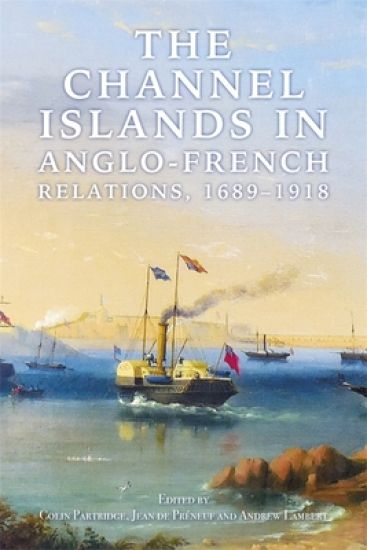
The Channel Islands in Anglo-French Relations, 1689-1918
Colin Partridge; Jean de Préneuf; Andrew Lambert
BOYDELL BREWER LTD
2024
sidottu
Examines how the Channel Islands have been crucial to Britain's successful maritime superiority in the English Channel. The Channel Islands have played a key role in both naval warfare and Anglo-French diplomacy, but this has not always been highlighted sufficiently even though Britain and France were at war for most of the period 1689-1815. This book considers a wide range of maritime subjects where the role of the Channel Islands has been significant, such as intelligence gathering, piracy and privateering, and naval strategy and control of the Channel. It also examines topics in relation to the Channel Islands specifically, such as surveying and hydrography, fortifications, trade and Channel Islands societies. It charts changes over time, including the impact of technological changes, from the wars of Louis XIV and William III, through the many Anglo-French wars of the eighteenth and early nineteenth centuries, and includes planning for wars which were anticipated but avoided. Throughout the issues are discussed from the perspectives of Britain, France and the Channel Islands themselves, equal weight being given to all three perspectives. Andrew Lambert is Professor of War Studies at King's College, London and one of Britain's foremost maritime and naval historians. Colin Partridge is a former consultant to the States of Guernsey's 'Fortress Guernsey' programme for the restoration and interpretation of Guernsey's fortifications. Jean de Préneuf is a Senior Lecturer at the University of Lille and Head of the Research, Teaching and Studies Unit at the Historical Branch of the French Ministry of Defence at Vincennes.


Frank Jones and the Secret War: The Cross Channel exploits of the Coastal Command in World War Two
Colin Bradley; Frank Jones; Peter G. Porter
Createspace Independent Publishing Platform
2009
nidottu
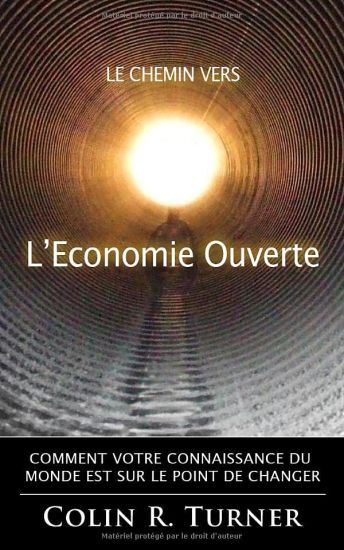
Le Chemin Vers L'Economie Ouverte: Comment Votre Connaissance Du Monde Est Sur Le Point de Changer
Colin R. Turner
APPLIED IMAGE
2017
nidottu
UN MONDE SANS ARGENTUn monde sans argent, d'abondance, de paix et d'accomplissement est r alisable maintenant, ce n'est plus un r ve utopique futuriste.D couvrez pourquoi nous en avons besoin, comment cela fonctionnera, pourquoi cela marchera et comment nous y parviendrons.Ce livre concis est le guide pratique vous menant sur le chemin vers l'Economie Ouverte.
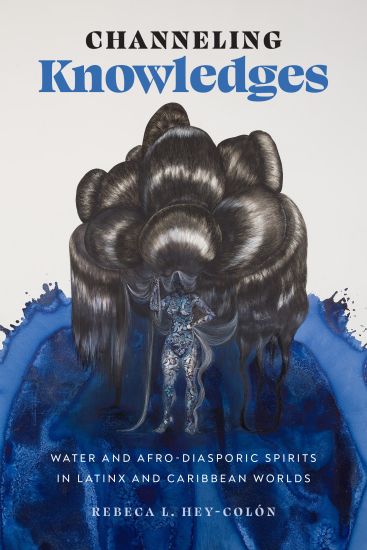
Channeling Knowledges – Water and Afro–Diasporic Spirits in Latinx and Caribbean Worlds
Rebeca L. Hey-Colón
UNIVERSITY OF TEXAS PRESS
2023
sidottu
How water enables Caribbean and Latinx writers to reconnect to their pasts, presents, and futures. Water is often tasked with upholding division through the imposition of geopolitical borders. We see this in the construction of the Rio Grande/Rio Bravo on the US-Mexico border, as well as in how the Caribbean Sea and the Pacific Ocean are used to delineate the limits of US territory. In stark contrast to this divisive view, Afro-diasporic religions conceive of water as a place of connection; it is where spiritual entities and ancestors reside, and where knowledge awaits. Departing from the premise that water encourages confluence through the sustainment of contradiction, Channeling Knowledges fathoms water's depth and breadth in the work of Latinx and Caribbean creators such as Mayra Santos-Febres, Rita Indiana, Gloria Evangelina Anzaldua, and the Border of Lights collective. Combining methodologies from literary studies, anthropology, history, and religious studies, Rebeca L. Hey-Colon's interdisciplinary study traces how Latinx and Caribbean cultural production draws on systems of Afro-diasporic worship--Haitian Vodou, La 21 Division (Dominican Vodou), and Santeria/Regla de Ocha--to channel the power of water, both salty and sweet, in sustaining connections between past, present, and not-yet-imagined futures.

2024 Honorable Mention, Isis Duarte Book Prize, Haiti/ Dominican Republic section, Latin American Studies AssociationHow water enables Caribbean and Latinx writers to reconnect to their pasts, presents, and futures. Water is often tasked with upholding division through the imposition of geopolitical borders. We see this in the construction of the Rio Grande/RÍo Bravo on the US-Mexico border, as well as in how the Caribbean Sea and the Pacific Ocean are used to delineate the limits of US territory. In stark contrast to this divisive view, Afro-diasporic religions conceive of water as a place of connection; it is where spiritual entities and ancestors reside, and where knowledge awaits. Departing from the premise that water encourages confluence through the sustainment of contradiction, Channeling Knowledges fathoms water’s depth and breadth in the work of Latinx and Caribbean creators such as Mayra Santos-Febres, Rita Indiana, Gloria Evangelina AnzaldÚa, and the Border of Lights collective. Combining methodologies from literary studies, anthropology, history, and religious studies, Rebeca L. Hey-ColÓn’s interdisciplinary study traces how Latinx and Caribbean cultural production draws on systems of Afro-diasporic worship-Haitian Vodou, La 21 DivisiÓn (Dominican Vodou), and SanterÍa/Regla de Ocha-to channel the power of water, both salty and sweet, in sustaining connections between past, present, and not-yet-imagined futures.


Following Colin and Felicia's return home, he and his boss have it out. However, his boss sends Tory to Felicia's and they end up flying back to Greece and Aella. Drama follows drama, but how will it end?

Colin
Egmont Books Ltd
2009
nidottu
Colin the crane doesn't have wheels like the engines so can't travel to the winter party. Then Freddie has an idea to bring Colin some winter cheer.

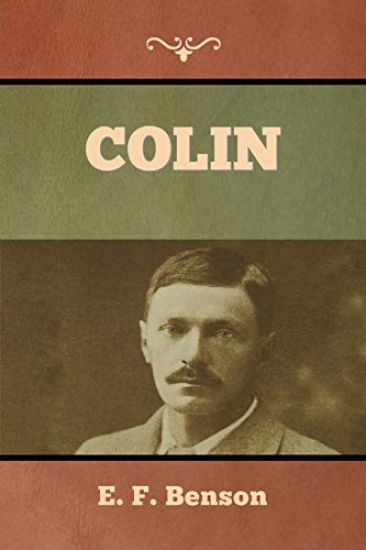
E.F. Benson, in full Edward Frederic Benson, (born July 24, 1867, Wellington College, Berkshire, Eng.-died Feb. 29, 1940, London), writer of fiction, reminiscences, and biographies, of which the best remembered are his arch, satirical novels and his urbane autobiographical studies of Edwardian and Georgian society. The son of E.W. Benson, an archbishop of Canterbury (1883-96), the young Benson was educated at Marlborough School and at King's College, Cambridge. After graduation he worked from 1892 to 1895 in Athens for the British School of Archaeology and later in Egypt for the Society for the Promotion of Hellenic Studies. In 1893 he published Dodo, a novel that attracted wide attention. It was followed by a number of other successful novels-such as Mrs. Ames (1912), Queen Lucia (1920), Miss Mapp (1922), and Lucia in London (1927)-and books on a wide range of subjects, totaling nearly 100. Among them were biographies of Queen Victoria, William Gladstone, and William II of Germany. In 1938 he was made an honorary fellow of Magdalene College, Cambridge. Benson's reminiscences include As We Were (1930), As We Are (1932), and Final Edition (1940). (britannica.com)

E.F. Benson, in full Edward Frederic Benson, (born July 24, 1867, Wellington College, Berkshire, Eng.-died Feb. 29, 1940, London), writer of fiction, reminiscences, and biographies, of which the best remembered are his arch, satirical novels and his urbane autobiographical studies of Edwardian and Georgian society. The son of E.W. Benson, an archbishop of Canterbury (1883-96), the young Benson was educated at Marlborough School and at King's College, Cambridge. After graduation he worked from 1892 to 1895 in Athens for the British School of Archaeology and later in Egypt for the Society for the Promotion of Hellenic Studies. In 1893 he published Dodo, a novel that attracted wide attention. It was followed by a number of other successful novels-such as Mrs. Ames (1912), Queen Lucia (1920), Miss Mapp (1922), and Lucia in London (1927)-and books on a wide range of subjects, totaling nearly 100. Among them were biographies of Queen Victoria, William Gladstone, and William II of Germany. In 1938 he was made an honorary fellow of Magdalene College, Cambridge. Benson's reminiscences include As We Were (1930), As We Are (1932), and Final Edition (1940). (britannica.com)


Colin
Outlook Verlag
2023
sidottu